Baked Ricotta with Green Olives, Lemon and Oregano
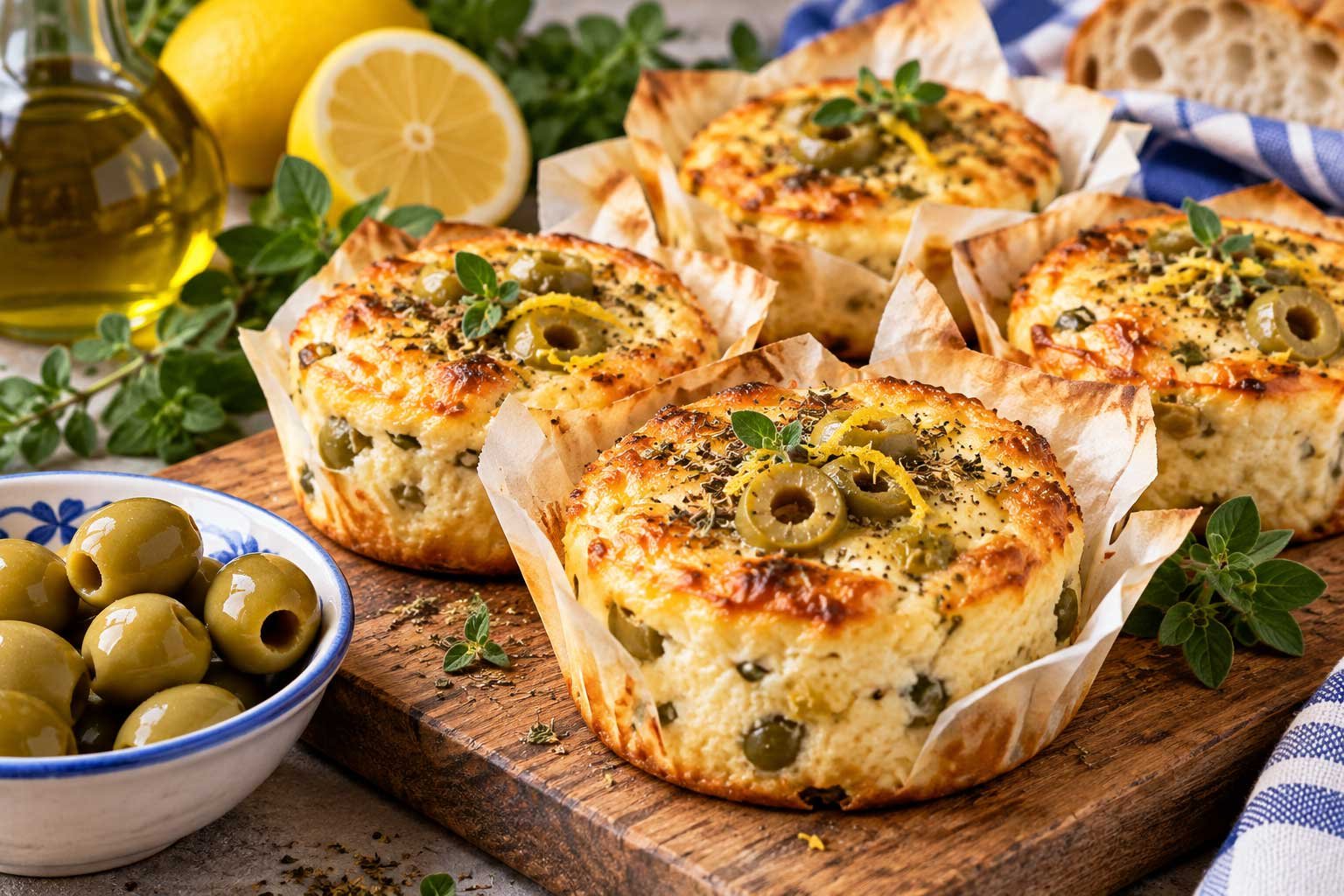
Golden on top, creamy in the middle, and packed with Mediterranean flavor, this Baked Ricotta with Green Olives, Lemon and Oregano makes a wonderful appetizer, side dish, or light vegetarian meal. Ricotta cheese is combined with eggs, sharp cheese, fragrant oregano, fresh lemon zest, and briny green olives, then baked in individual portions until lightly golden.
Although ricotta cheese originated in Italy, baked cheese dishes have become increasingly popular throughout Greece and the Mediterranean, where fresh cheeses, herbs, olives, and citrus are everyday staples. This simple recipe combines those classic ingredients into a rich yet refreshing dish that’s naturally high in protein, calcium, and flavor.
One of the best things about Baked Ricotta with Green Olives is its versatility. Serve it warm as part of a traditional Greek mezze platter, alongside grilled meats or roasted vegetables, with hearty Greek green bean stew (Fasolakia), or simply enjoy it with crusty bread and a fresh seasonal salad. It’s an easy make-ahead recipe that’s equally suitable for family dinners, entertaining guests, or a light Mediterranean lunch.
What Is Baked Ricotta with Green Olives, Lemon and Oregano?
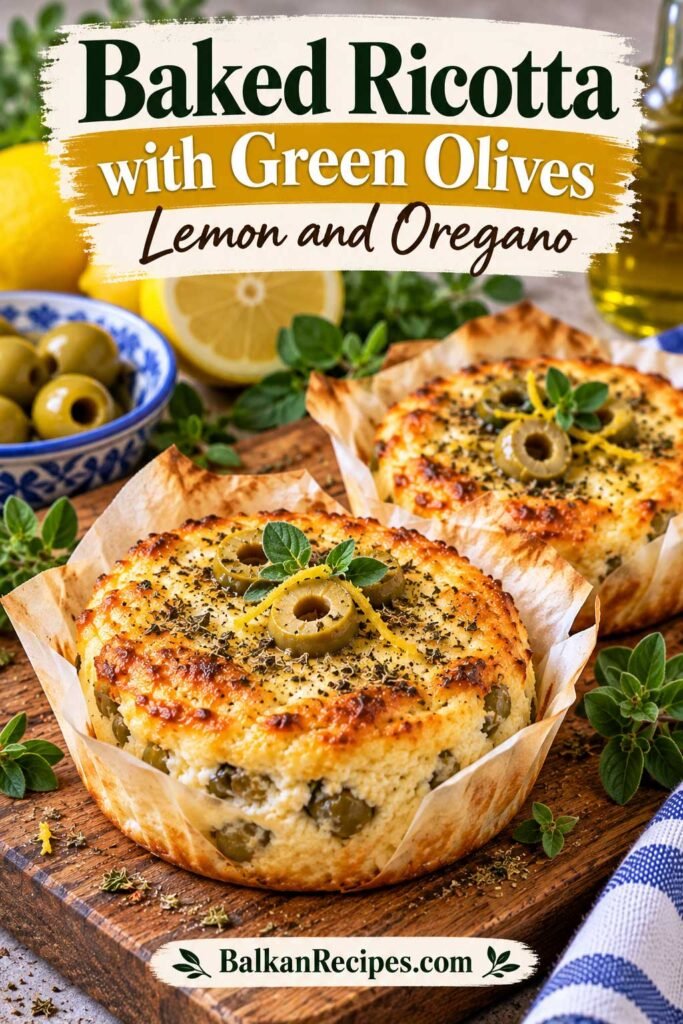
Baked Ricotta with Green Olives, Lemon and Oregano is a savory Mediterranean-inspired cheese dish made by blending firm ricotta with eggs, grated cheese, fresh lemon zest, oregano, and green olives before baking until lightly puffed and golden brown.
As it bakes, the eggs create a soft, airy texture while the ricotta stays creamy and moist. Fresh lemon zest adds brightness, dried oregano brings classic Mediterranean herbal notes, and green olives provide bursts of salty, briny flavor that perfectly complement the mild cheese.
Ricotta has a long history in Italian cheesemaking, but the ingredients in this recipe are also familiar throughout Greek and Mediterranean cooking. Fresh cheeses, olives, oregano, and lemon are widely used in the region, making this baked ricotta a natural fit for a Mediterranean-inspired meal.
Naturally high in protein and calcium, Baked Ricotta with Green Olives is incredibly versatile. It can be served as a vegetarian main course, a delicious appetizer, a satisfying side dish with grilled meats or green bean stew, or as part of a traditional Greek mezze platter alongside olives, fresh vegetables, crusty bread, and seasonal salads.
Affiliate Disclosure: This article may contain affiliate links. If you purchase through these links, I may earn a small commission at no additional cost to you.
Why You’ll Love This Baked Ricotta with Green Olives Recipe

If you’re looking for a simple yet elegant Mediterranean dish, this Baked Ricotta with Green Olives recipe is sure to become a favorite. It combines creamy ricotta, fragrant herbs, fresh lemon, and savory olives into a protein-rich bake that’s easy enough for weeknight dinners yet impressive enough for entertaining. Whether served as an appetizer, side dish, or light vegetarian meal, it’s packed with fresh Mediterranean flavor in every bite.
Rich, Creamy, and Full of Mediterranean Flavor
The mild ricotta lets the salty green olives, lemon zest, and oregano shine. A little sharp cheese adds richness without overwhelming the other ingredients.
High in Protein
Ricotta, eggs, and grated cheese provide plenty of protein, making this dish both satisfying and nutritious. It’s an excellent vegetarian option that can easily be served as a light meal or hearty side dish.
Simple Ingredients
You only need a few everyday ingredients, and most of the preparation happens in a food processor. It’s a convenient recipe when you want something homemade without spending hours in the kitchen.
Perfect for Entertaining
Individual baked ricotta portions look beautiful on the table and are easy to prepare ahead of time. They make an excellent addition to holiday meals, brunches, dinner parties, or mezze platters.
Versatile to Serve
Serve these little ricotta bakes with a fresh salad for lunch, add them to a mezze platter, or enjoy them alongside roasted vegetables and grilled meats.
Naturally Gluten-Free
Since the recipe contains no flour or breadcrumbs, it’s naturally gluten-free, making it suitable for guests with gluten sensitivities while still delivering rich flavor and a wonderfully creamy texture.
Choosing the Best Ricotta, Olives, and Cheese
The ingredients you choose can make a noticeable difference in how your baked ricotta turns out. Since this recipe relies on just a few simple flavors, it’s worth paying attention to the texture of the ricotta, the saltiness of the olives, and the type of grated cheese you use.
What Type of Ricotta Works Best?
Firm, whole-milk ricotta is the best choice for this recipe. It has a richer flavor and generally produces a creamier result than low-fat varieties. Look for ricotta that holds its shape when spooned rather than one that releases a lot of liquid.
If your ricotta is particularly wet, place it in a fine-mesh strainer over a bowl and refrigerate it for 20–30 minutes before preparing the mixture. This simple step helps the individual ricotta cups hold together after baking.
You can also use fresh ricotta from an Italian deli or specialty cheese shop. Just remember that freshly made ricotta varies in moisture content, so draining may still be necessary.
Which Green Olives Should You Use?
Firm, pitted green olives are ideal because they add a pleasant salty contrast without overpowering the delicate cheese.
Greek Halkidiki olives are an excellent option thanks to their firm texture and mild, buttery flavor. Spanish Manzanilla olives also work well and are widely available in grocery stores.
For a stronger olive flavor, try a mixture of green olives and Kalamata olives. Avoid olives packed in strongly flavored marinades unless you want those additional seasonings in the finished dish.
If your olives taste particularly salty, give them a quick rinse and pat them dry before adding them to the mixture.
Parmesan, Pecorino, or Greek Cheese?
The original recipe calls for grated sharp cheese, giving you some flexibility.
Parmesan adds a nutty, savory flavor, while Pecorino Romano provides a sharper, saltier finish. For a more distinctly Greek-inspired version, try Kefalotyri or Graviera.
Because aged cheeses vary in saltiness, start with very little additional salt. Also, if you’re preparing this dish for vegetarians, choose a cheese made with microbial or vegetarian rennet, as some traditional hard cheeses contain animal rennet.
Fresh Lemon Makes a Difference
Fresh lemon zest gives the baked ricotta a bright citrus aroma without adding excess liquid. Use a fine grater or microplane to remove only the yellow outer layer of the peel, avoiding the bitter white pith underneath.
One medium lemon usually provides enough zest for the recipe. For a slightly stronger citrus flavor, you can sprinkle a little additional zest over the baked ricotta just before serving.
How to Make Baked Ricotta with Green Olives
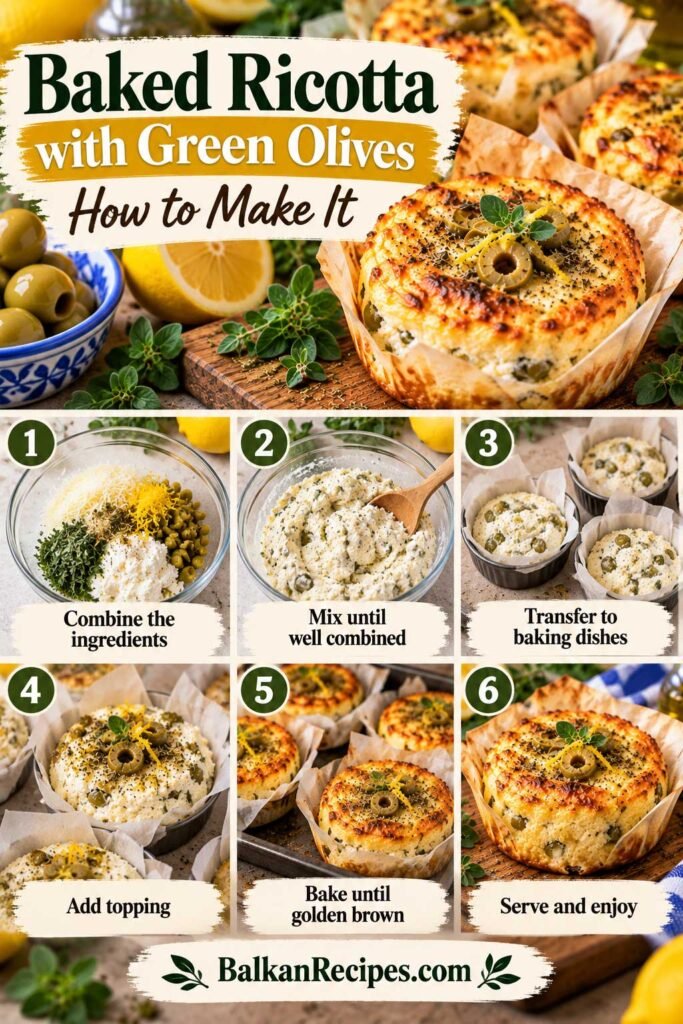
Making this Baked Ricotta with Green Olives recipe is incredibly easy and requires just a few simple steps. Once everything is blended together, the oven does most of the work, creating a beautifully golden and creamy Mediterranean bake.
Step 1: Prepare the Oven and Baking Cups
Preheat your oven to 180°C (350°F). Lightly grease six small ramekins or baking cups and line them with baking paper, leaving enough paper hanging over the edges to make removing the baked ricotta easier.
Step 2: Blend the Ingredients
Place the ricotta, eggs, grated sharp cheese, lemon zest, dried oregano, and green olives into a food processor. Season lightly with salt and freshly ground black pepper, then blend until the mixture is smooth but still has a little texture from the olives.
Step 3: Fill the Baking Cups
Divide the ricotta mixture evenly among the prepared baking cups, smoothing the tops with a spoon so they bake evenly.
Step 4: Bake Until Golden
Bake for about 35 minutes, or until the tops are lightly puffed and beautifully golden brown while the centers are just set.
Step 5: Cool and Remove
Allow the baked ricotta to cool for several minutes before carefully lifting each portion out using the baking paper. Remove the paper and serve warm or at room temperature.
Step 6: Garnish and Serve
Finish with a drizzle of extra virgin olive oil, a sprinkle of dried oregano or fresh herbs, and a few extra sliced green olives if desired. Serve with crusty bread, fresh salads, roasted vegetables, grilled meats, or traditional Greek green bean stew.

Baked Ricotta with Green Olives, Lemon and Oregano recipe
Ingredients
- 600g firm ricotta cheese (roughly chopped)
- 2 eggs
- 1 zest of 1 lemon (finely grated)
- ½ cup grated sharp cheese (Parmesan, Pecorino, or Kefalotyri)
- ½ tsp dried oregano
- 20 pitted green olives (roughly chopped)
- salt and pepper to taste
- olive oil or butter (for greasing)
Instructions
- Preheat the oven: Preheat your oven to 180°C (350°F). Lightly grease six small ramekins or baking cups and line them with parchment paper, leaving enough overhang for easy removal.
- Prepare the ricotta mixture: Add the ricotta, eggs, grated cheese, lemon zest, dried oregano, and green olives to a food processor. Season lightly with salt and black pepper.
- Blend the ingredients: Pulse until everything is well combined, leaving a little texture from the olives. Avoid overprocessing.
- Fill the baking cups: Divide the ricotta mixture evenly among the six prepared ramekins. Smooth the tops gently with a spoon.
- Bake until golden: Place the ramekins on a baking tray and bake for approximately 35 minutes, or until the tops are lightly golden and the centers are set.
- Allow to rest: Remove from the oven and let the baked ricotta cool for 5–10 minutes to help the portions firm up.
- Remove and serve: Carefully lift each portion from its ramekin using the parchment paper. Remove the paper and serve warm or at room temperature.
Notes
- Ricotta: Use firm, well-drained ricotta to prevent a watery texture.
- Olives: Choose good-quality pitted green olives and adjust the salt accordingly.
- Cheese: Parmesan, Pecorino, or Kefalotyri add a delicious savory flavor. For a strictly vegetarian version, use cheese made with non-animal rennet.
- Variations: Add chopped spinach, sun-dried tomatoes, fresh herbs, or crumbled feta.
- Storage: Refrigerate leftovers in an airtight container for up to 4 days.
- Reheating: Warm in a 180°C (350°F) oven until heated through.
- Serving: Enjoy with Greek salad, roasted vegetables, crusty bread, or traditional Fasolakia.
How to Tell When Baked Ricotta Is Done
Unlike a traditional casserole or cheese pie, baked ricotta should remain soft and creamy inside. The goal is to cook the eggs completely without drying out the cheese.
Look for a Lightly Golden Top
After approximately 35 minutes in a 180°C (350°F) oven, the tops should develop a light golden color, particularly around the edges. Some ovens may brown the ricotta faster than others, so begin checking a few minutes before the recommended baking time.
Check the Center
The center should look set rather than wet or runny. A slight softness is normal, but the mixture shouldn’t appear liquid when you gently move the baking cup.
For food safety, an egg-based dish should reach an internal temperature of 160°F (71°C). A kitchen thermometer is the most reliable way to check.
Allow Time for Resting
Freshly baked ricotta is delicate and may break apart if removed immediately. Let the ramekins rest for 5–10 minutes before lifting out the portions using the parchment paper.
During this short resting period, the baked ricotta firms up slightly while retaining its creamy interior.
What Should the Texture Be Like?
The finished ricotta should be tender, moist, and easy to cut with a fork. It will be firmer than whipped ricotta but softer than a traditional cheesecake.
If it turns out dry or rubbery, it may have baked too long. If it falls apart or releases excess liquid, the ricotta may have contained too much moisture or the center may not have cooked sufficiently.
Expert Tips for the Best Baked Ricotta with Green Olives

A few simple techniques will help you achieve perfectly creamy baked ricotta with a light texture and rich Mediterranean flavor every time.
Use Firm, Well-Drained Ricotta
If your ricotta contains excess moisture, drain it in a fine-mesh sieve or cheesecloth for 20 to 30 minutes before mixing. This helps create a firmer texture after baking.
Choose Good-Quality Olives
Since green olives are one of the main flavor components, use high-quality Mediterranean olives for the best taste. Be sure they’re pitted before blending.
Don’t Overmix
Blend the ingredients only until combined. Overprocessing can make the mixture too smooth and reduce some of the pleasant texture from the olives.
Season Sparingly
Green olives and aged cheese already bring plenty of saltiness to the mixture. Start with a little black pepper and only a small pinch of salt. You can always add extra seasoning after baking.
Bake Until Just Set
The centers should be set but still slightly soft when removed from the oven. Overbaking can make the ricotta less creamy.
Let Them Cool Slightly
Allow the baked ricotta to rest for 5 to 10 minutes before removing it from the ramekins. This helps them hold their shape while remaining wonderfully tender inside.
Garnish Before Serving
For an attractive presentation, drizzle with extra virgin olive oil and garnish with fresh oregano, parsley, or dill, along with a little grated lemon zest and a few sliced green olives.
Common Mistakes to Avoid When Making Baked Ricotta

Although this Baked Ricotta with Green Olives recipe is easy to prepare, a few common mistakes can affect its texture and flavor. Here’s what to watch out for.
Using Watery Ricotta
Excess moisture can prevent the ricotta from setting properly. Drain wet ricotta before preparing the mixture.
Adding Too Much Salt
Olives and aged cheese are naturally salty. Use a light hand with additional seasoning.
Overbaking the Ricotta
Remove the ricotta when the tops are golden and the centers have set. Leaving it in the oven too long can make it dry.
Variations of Baked Ricotta with Green Olives
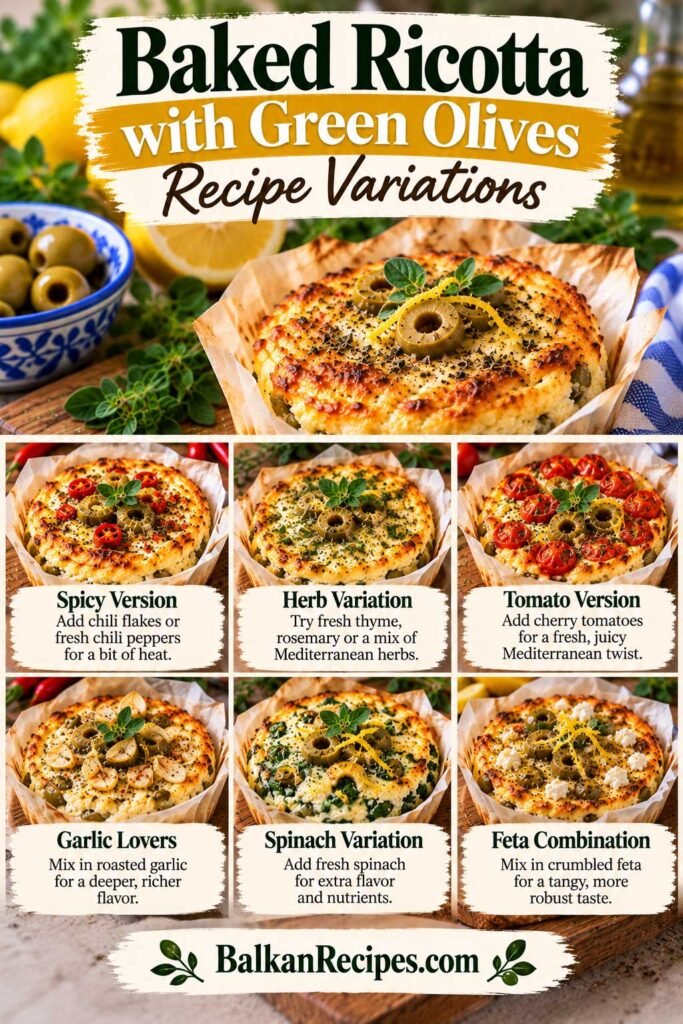
One of the best things about this Baked Ricotta with Green Olives recipe is how easy it is to customize. A few simple ingredient swaps can create new flavors while maintaining its creamy texture and Mediterranean character.
Add Fresh Herbs
Replace or combine the dried oregano with fresh dill, parsley, basil, thyme, or mint for a brighter, fresher flavor.
Make It Extra Cheesy
Stir in crumbled feta, grated Kefalotyri, Pecorino Romano, or Parmesan to give the baked ricotta a richer, more complex taste.
Include Sun-Dried Tomatoes
Finely chopped sun-dried tomatoes add sweetness and a concentrated tomato flavor that pairs beautifully with the olives and lemon.
Add Spinach
Fold in a small handful of chopped spinach for extra color and a mild earthy flavor. If using cooked spinach, squeeze out the excess moisture first to prevent the ricotta from becoming watery.
Use Mixed Olives
Instead of only green olives, try combining green and Kalamata olives for a deeper, more robust Mediterranean flavor.
Add Garlic
A clove of minced garlic or a little roasted garlic adds wonderful savory depth without overpowering the delicate ricotta.
Spice It Up
For a little heat, stir in crushed red pepper flakes, a pinch of Aleppo pepper, or a dash of paprika before baking.
Individual or Family-Style
Bake the mixture in individual ramekins for elegant servings, or use one medium baking dish and slice it into portions after baking for easy family-style serving.
What to Serve with Baked Ricotta with Green Olives
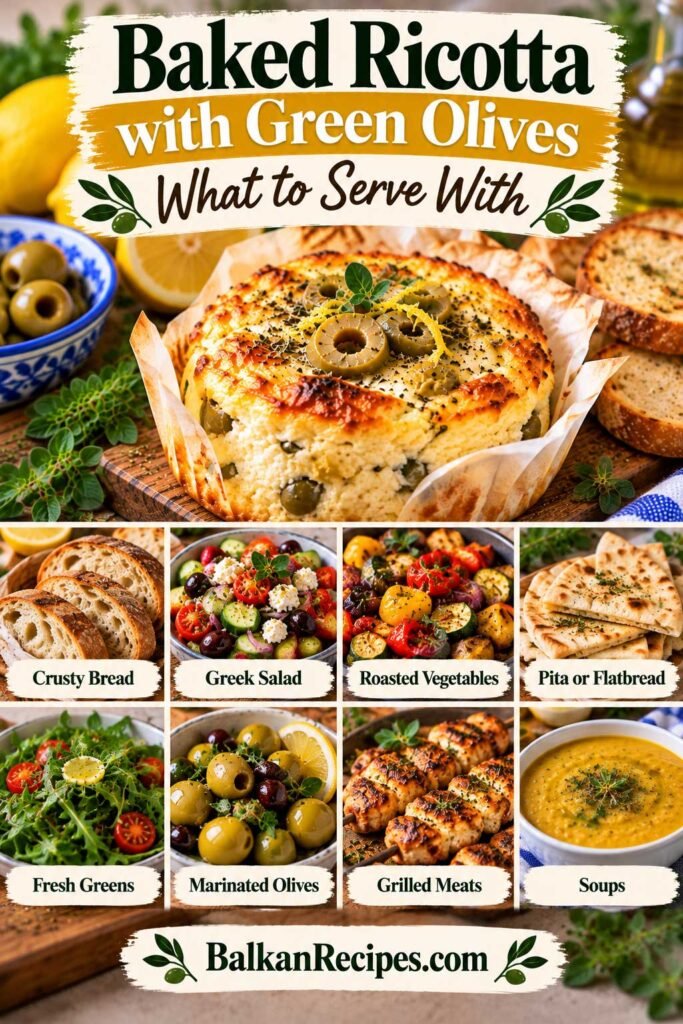
This Baked Ricotta with Green Olives is incredibly versatile and pairs beautifully with many Mediterranean dishes. Whether you’re serving it as an appetizer, side dish, or light meal, these accompaniments complete the experience.
Crusty Bread
Warm artisan bread, toasted sourdough, or slices of rustic country bread are perfect for enjoying every creamy bite of the baked ricotta.
Green Bean Stew
A traditional Greek green bean stew (Fasolakia) makes a wonderful pairing. The tender green beans and rich tomato sauce complement the creamy baked ricotta beautifully.
Fresh Greek Salad
A crisp Greek Horiatiki Salad made with tomatoes, cucumbers, onions, olives, feta cheese, and olive oil adds freshness and balances the richness of the baked cheese.
Roasted Vegetables
Serve alongside roasted zucchini, eggplant, bell peppers, asparagus, or cherry tomatoes for a colorful Mediterranean-inspired meal.
Grilled Meats
This baked ricotta makes an excellent side dish for grilled chicken, lamb, pork chops, or beef skewers.
Mezze Platter
Serve the baked ricotta alongside Greek tzatziki, Tirokafteri, marinated olives, roasted peppers, fresh vegetables, and warm pita bread. It’s an easy way to create a colorful Mediterranean spread for sharing.
For a little extra flavor, serve the baked ricotta alongside Greek Tirokafteri, a spicy feta dip that adds a delicious contrast to the mild ricotta.
Health Benefits of Baked Ricotta with Green Olives
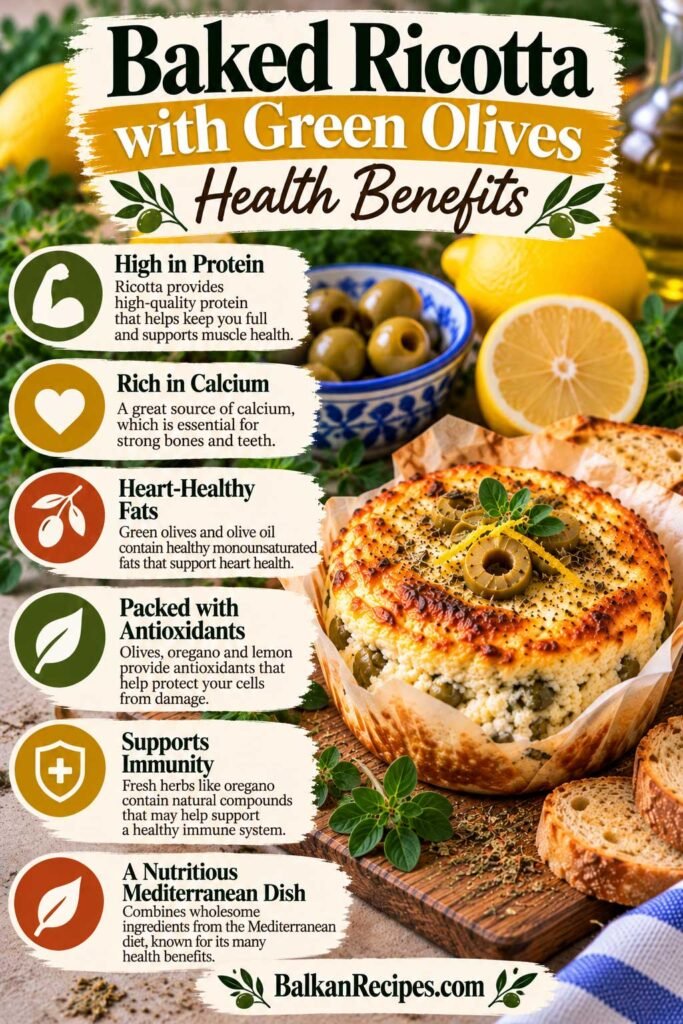
This Baked Ricotta with Green Olives recipe combines protein-rich cheese and eggs with flavorful Mediterranean ingredients. Here are a few nutritional benefits worth knowing.
Rich in Protein
Ricotta cheese and eggs provide high-quality protein that supports muscle health and helps keep you feeling satisfied. You can explore the nutritional composition of these ingredients using the USDA FoodData Central database.
Supports Bone Health
Ricotta and grated cheese contain calcium and phosphorus, two essential minerals that help maintain strong bones and teeth.
Contains Healthy Fats
Green olives provide monounsaturated fats, which can support heart health when they replace saturated fats in a balanced diet. The American Heart Association explains why choosing unsaturated fats is beneficial for cardiovascular health.
Provides Essential Nutrients
Eggs and ricotta supply important nutrients, including vitamin B12, selenium, and choline, while oregano and lemon zest add natural plant compounds.
Naturally Low in Carbohydrates
With no flour or breadcrumbs, this baked ricotta is relatively low in carbohydrates compared with many savory pastries. It’s also naturally gluten-free, provided all the ingredients are suitable.
For a balanced Mediterranean meal, serve it with fresh Greek salad, roasted vegetables, or green bean stew. Since olives and cheese contain sodium, add extra salt sparingly.
How to Store and Reheat Baked Ricotta with Green Olives
Leftover baked ricotta is easy to store and makes a convenient addition to lunches or Mediterranean-inspired meals throughout the week. Here’s how to keep it fresh and reheat it without drying it out.
Refrigerate
Allow the baked ricotta to cool before transferring it to an airtight container. Refrigerate promptly and store for up to 3–4 days at 4°C (40°F) or below, following the FoodSafety.gov cold food storage guidelines.
Freeze
You can freeze baked ricotta for up to 2 months. Wrap each portion individually in plastic wrap and place them in a freezer-safe container or zip-top freezer bag. Thaw overnight in the refrigerator before reheating.
Reheat in the Oven
For the best texture, place the ricotta in an oven-safe dish, cover loosely with foil, and warm in a 350°F (180°C) oven for about 10–15 minutes, or until heated through.
Reheat in the Microwave
Individual portions can be reheated in the microwave for 30 to 60 seconds. Heat gently to prevent the ricotta from becoming rubbery.
Enjoy Cold
Baked Ricotta with Green Olives can also be enjoyed chilled straight from the refrigerator. Serve it with fresh vegetables, salad, or crusty bread. If serving at room temperature, don’t leave it unrefrigerated for more than two hours, or one hour in temperatures above 90°F (32°C).
Frequently Asked Questions About Baked Ricotta with Green Olives
Baked Ricotta with Green Olives is a simple recipe, but a few common questions can help ensure perfect results every time.
Can I make Baked Ricotta with Green Olives ahead of time?
Yes. You can prepare and bake the ricotta a day in advance. Store it in the refrigerator and gently reheat before serving, or enjoy it chilled as part of a mezze platter.
Can I use low-fat ricotta?
You can, but whole milk ricotta produces a creamier texture and richer flavor. Low-fat ricotta may result in a slightly drier finished dish.
What type of olives work best?
Firm, pitted green olives work particularly well because their briny flavor balances the mild ricotta. You can also use Kalamata olives or a combination of both for a stronger flavor.
Can I substitute the sharp cheese?
Absolutely. Parmesan, Pecorino Romano, Kefalotyri, Graviera, or another aged hard cheese all add excellent flavor and help create a golden crust.
Is this recipe gluten-free?
Yes. This recipe naturally contains no flour or breadcrumbs, making it suitable for a gluten-free diet. Always check packaged ingredients to ensure they are certified gluten-free if needed.
Can I add vegetables?
Yes. Chopped spinach, roasted red peppers, sun-dried tomatoes, caramelized onions, or sautéed mushrooms all make delicious additions while keeping the Mediterranean character of the dish.
Why is my baked ricotta watery?
Ricotta naturally contains moisture. If your ricotta seems very wet, drain it in a fine-mesh sieve or cheesecloth for 20 to 30 minutes before mixing to achieve a firmer texture after baking.
Can I serve Baked Ricotta with Green Olives as a main dish?
Definitely. Pair it with a fresh Greek salad, roasted vegetables, or crusty bread for a satisfying vegetarian lunch or light dinner.
A Delicious Mediterranean Dish Worth Making Again
There’s something satisfying about turning a few simple ingredients into a dish that looks and tastes special. These little baked ricotta cups come out lightly golden, with a soft center and just enough saltiness from the green olives. The lemon and oregano give them a fresh finish that keeps the cheese from feeling too heavy.
I especially like the idea of serving them with Greek Fasolakia or a crisp salad for an easy Mediterranean lunch. They’re also a lovely addition to a mezze platter when you’re cooking for family or friends. However you serve them, this is the kind of straightforward recipe that’s worth keeping in your collection.
More Delicious Greek Recipes to Try
If you enjoyed this Baked Ricotta with Green Olives, here are a few more delicious Greek recipes to add to your Mediterranean menu:
- Fasolakia (Greek Green Beans) – Tender green beans simmered in a rich tomato and olive oil sauce.
- Greek Horiatiki Salad – A refreshing village salad with tomatoes, cucumbers, olives, and feta.
- Santorini Tomato Fritters – Crispy Greek tomato fritters packed with fresh herbs.
- Greek Tirokafteri – A creamy, spicy feta cheese dip perfect for a mezze platter.
- Greek Turnip and Feta Fritters – Golden vegetable fritters with feta, mint, and cumin.
- Greek Tzatziki Sauce – A cool, creamy yogurt and cucumber dip with garlic.
- Greek Skordalia – A traditional garlic dip made with potatoes, almonds, and olive oil.
Explore our complete collection of traditional Greek recipes for more Mediterranean appetizers, salads, vegetable dishes, and homemade favorites.
Did You Make This Baked Ricotta with Green Olives Recipe?
I’d love to hear how your Baked Ricotta with Green Olives, Lemon and Oregano turned out! Did you follow the original recipe or add your own Mediterranean twist? Share your experience, favorite variations, or serving ideas in the comments below.
If you enjoyed this recipe, please leave a star rating and share it with friends and family. You can also save it to Pinterest so it’s easy to find whenever you’re craving a delicious Mediterranean appetizer or side dish.
For more inspiration, explore our collection of traditional Greek recipes on BalkanRecipes.com, featuring everything from fresh salads and savory pies to comforting homemade meals.
Happy cooking!
Recipe inspiration and references: greekvegetarian.blogspot.com, Wikipedia, and Fandom.