


Orange Cake with Honeyed Yogurt
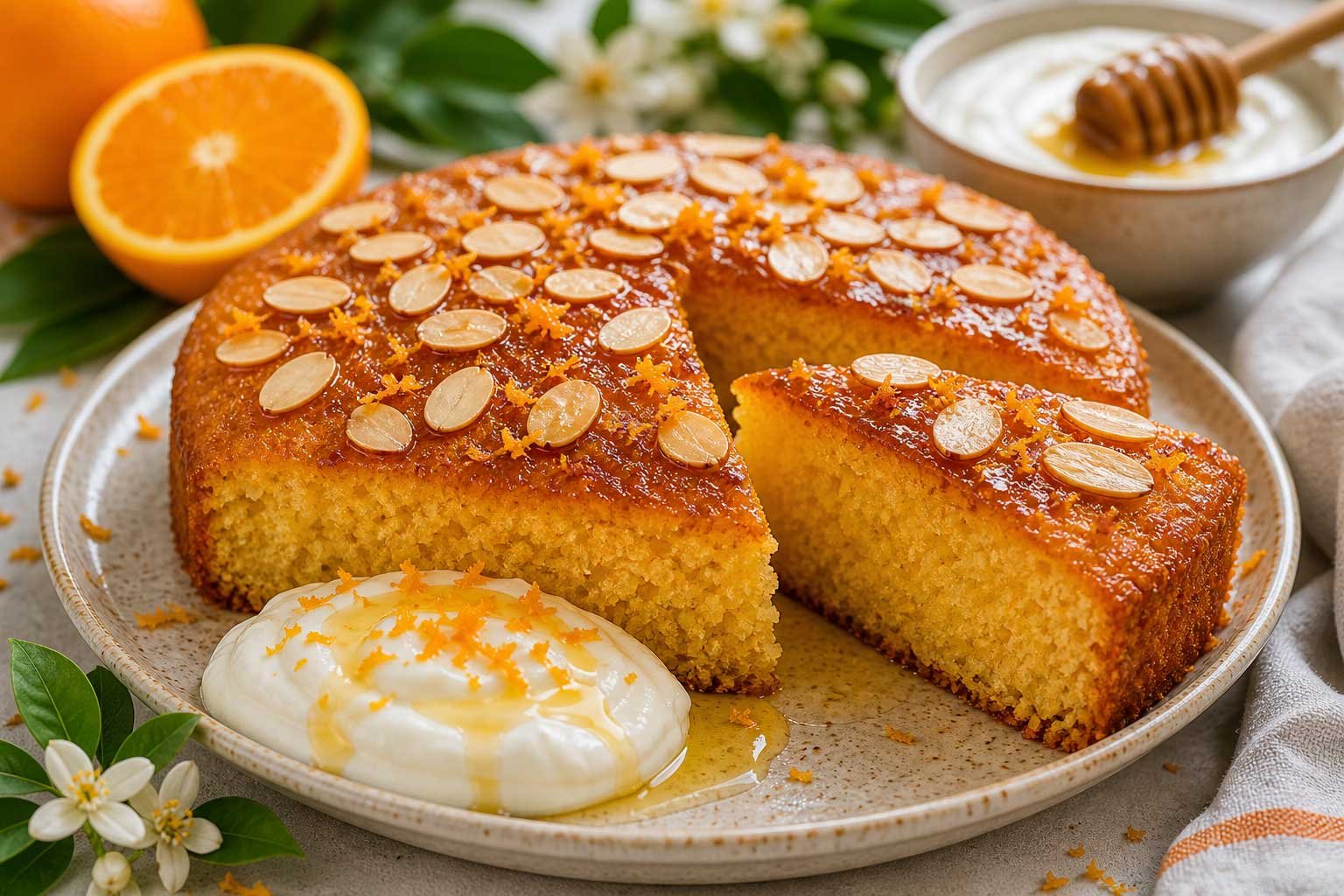
Orange Cake with Honeyed Yogurt is a bright, fragrant, Mediterranean-inspired dessert that combines the sunny flavor of fresh oranges with the rich creaminess of yogurt and the soft sweetness of honey. This cake is light yet satisfying, with a tender crumb from semolina and almond meal, a delicate citrus aroma from orange zest and juice, and a syrup finish that gives it that irresistible moist texture found in many beloved Greek and Balkan desserts.
It is the kind of cake that feels elegant enough to serve to guests but simple enough to make for a weekend family dessert. The orange flavor is fresh and cheerful, the almonds add depth and texture, and the honeyed yogurt served alongside transforms every slice into something special. While this recipe is Greek in spirit, it also fits beautifully into the wider Balkan dessert tradition, where citrus, yogurt, semolina, syrup-soaked cakes, and honey have long played an important role in home baking.
If you enjoy desserts that are not overly heavy, not too frosted, and full of real flavor, this orange cake deserves a place in your kitchen. It is perfect for spring and summer, but also comforting in winter when oranges are at their peak and you want something bright on the table.
This Greek orange cake combines semolina, almond meal, citrus syrup, and creamy yogurt into one light yet deeply flavorful Mediterranean dessert.
In this full guide, you’ll learn exactly how to make the cake, why the ingredients work, how this recipe connects to Greek and Balkan baking traditions, how to serve it, how to store it, the best variations to try, and how to make it truly exceptional every single time.
If you enjoy citrus-based Mediterranean sweets, explore more traditional Greek desserts that combine honey, semolina, yogurt, and nuts in beautifully simple ways.
What Is Orange Cake with Honeyed Yogurt?

Orange Cake with Honeyed Yogurt is a moist citrus dessert made with a mixture of self-raising flour, almond meal, fine semolina, sugar, eggs, milk, butter, orange juice, and orange zest. It is baked until golden, then finished with a simple orange syrup that seeps into the cake and keeps it soft and flavorful. Finally, it is served with thick yogurt mixed with honey, creating a delicious contrast between the sweet citrus cake and the cool tangy topping.
This dessert belongs to a broader family of Mediterranean cakes that use semolina and syrup rather than relying only on flour and butter. That is one of the reasons it feels lighter and more textured than a standard butter cake. The semolina gives it a subtle grain and rustic character, while the almond meal keeps it tender and slightly nutty.
The yogurt topping is not just decorative. It balances the sweetness of the syrup and adds a creamy finish that makes the whole dessert feel more complete. In many ways, this is the kind of dessert that reflects Mediterranean cooking at its best: a few simple ingredients, brought together with care, creating something far more elegant than the ingredient list might suggest.
This orange semolina cake is inspired by traditional Mediterranean baking, where citrus, honey, yogurt, and nuts are commonly used together in syrup-soaked desserts.
Why You’ll Love This Orange Cake
One of the things that makes this Orange Cake with Honeyed Yogurt so special is its balance of flavor and texture. The combination of semolina and almond meal creates a crumb that is soft, moist, and slightly rustic without feeling heavy or dense.
The orange flavor also tastes bright and natural rather than artificial. Fresh orange zest and juice bring freshness to the cake, while the citrus syrup deepens the flavor and keeps every slice tender.
Despite its rich appearance, this Mediterranean-inspired dessert feels surprisingly light. The yogurt topping adds creaminess and tang that balance the sweetness beautifully, making the cake feel refreshing rather than overly indulgent.
Another reason this recipe stands out is its versatility. It works just as well for brunch and afternoon coffee as it does for holidays, dinner parties, or seasonal gatherings. Served warm, chilled, or at room temperature, it always feels elegant yet approachable.
For readers interested in Balkan and Mediterranean baking, this cake also bridges several beloved regional traditions. Ingredients like semolina, yogurt, honey, citrus, and almonds are deeply connected to Greek and Balkan desserts, giving the recipe both familiarity and cultural depth.
The Cultural Connection: Why This Cake Belongs on Balkan Recipes

Although this particular recipe is presented as Greek, it fits very naturally into the larger culinary world of the Balkans. Across Greece, Bulgaria, North Macedonia, Serbia, Bosnia, Albania, Romania, Turkey, and beyond, there is a long tradition of cakes and desserts built around semolina, yogurt, honey, nuts, and citrus.
In Balkan home baking, desserts often fall into a few broad families. There are yeasted festive breads, custard-filled pastries, walnut cakes, syrup-soaked semolina desserts, fruit-based bakes, and rustic cakes designed to be served alongside coffee. This orange cake touches several of those traditions at once.
This dessert shares many similarities with the classic Revani cake recipe, especially its semolina base and syrup-soaked texture.
The use of semolina links it to revani- or ravani-style cakes that appear in Greek, Turkish, and Balkan cuisines in different forms. The use of yogurt connects it to one of the most iconic ingredients in Balkan food culture. The use of honey adds another deeply traditional element, since honey has long been used as a sweetener and finishing ingredient throughout the region. And the use of orange syrup reflects the Mediterranean love of citrus in desserts.
This dessert feels both authentic and adaptable, making it appealing to readers across the Mediterranean and Balkan regions alike.
Orange in Greek and Balkan Desserts
Orange has a special place in Mediterranean and Balkan cooking. In savory dishes, it may appear in marinades, salads, or festive roasts. In desserts, though, it truly shines.
Orange zest gives cakes and pastries an aromatic lift that lemon cannot quite replicate. Orange juice adds a soft sweetness rather than sharp acidity. Orange syrup, when poured over warm cake, creates a fragrant finish that feels luxurious and old-world at the same time.
In Greek desserts especially, citrus often balances sweetness. Syrup cakes can easily become heavy if they rely on sugar alone, but orange brings freshness, perfume, and a sense of brightness. That is why orange cakes remain so beloved: they feel comforting and sunny at once.
Orange cakes and syrup desserts remain some of the best Balkan desserts because they balance richness with bright citrus flavor.
For Balkan audiences, orange cakes also have an emotional resonance. They often remind people of festive baking, family gatherings, holiday tables, or desserts served with Turkish coffee, espresso, or tea. Even when the cake is not tied to one exact old village recipe, it still belongs to the same broad tradition of simple, generous hospitality.
Affiliate Disclosure: This post may contain affiliate links. We may earn a commission at no extra cost to you.
Essential Baking Tools for Perfect Orange Cake
To get the perfect moist texture and bakery-style results every time, these are the essential tools used for this Orange Cake with Honeyed Yogurt recipe.
| Tool | Why It Matters | Check Price |
|---|---|---|
| Springform Cake Pan | Easy release, perfect shape | Check Price |
| Citrus Zester | Strong orange flavor | Check Price |
| Mixing Bowl Set | Smooth batter mixing | Check Price |
| Measuring Cups & Spoons | Accurate baking | Check Price |
| Cooling Rack | Prevents soggy bottoms | Check Price |
Ingredient Breakdown: Why Every Ingredient Matters

One of the reasons this cake works so well is that every ingredient has a clear job to do.
Self-Raising Flour
This provides the basic structure of the cake and helps it rise. Because the recipe also contains semolina and almond meal, the flour helps bind everything together and prevents the crumb from becoming too loose.
Almond Meal
Almond meal adds moisture, tenderness, and a rich nutty background flavor. It also makes the cake feel slightly more luxurious without requiring extra butter or cream. Almond and orange are a classic pairing, and they complement each other beautifully here.
The combination of almond meal and semolina gives this moist orange cake recipe its soft texture and rich Mediterranean character.
Fine Semolina
Semolina is one of the defining ingredients. It gives the cake its rustic Mediterranean character. It also absorbs syrup especially well, which is why semolina cakes often stay moist for days.
Caster Sugar
The sugar sweetens the batter and helps create a balanced crumb. Because the cake also gets syrup later, the sugar in the batter works together with the final soak rather than carrying the entire sweetness alone.
Cold Unsalted Butter
Butter adds richness and flavor. Using it cold and rubbing it into the dry ingredients helps create a texture that is soft and slightly sandy before the wet ingredients go in, which contributes to the final crumb.
Orange Rind
The zest is one of the most important ingredients in the entire recipe. This is where the strongest orange aroma lives. Always use fresh orange zest for the best result.
Orange Juice
Orange juice gives both flavor and moisture. It appears in the batter and in the syrup, reinforcing that citrus note in layers.
Eggs
Eggs help bind the ingredients, add richness, and support the cake’s rise.
Milk
Milk softens the batter and gives the cake a gentle richness without making it too heavy.
Flaked Almonds
These add crunch and visual appeal on top. They toast in the oven and create a beautiful contrast to the soft cake underneath.
Icing Sugar
A light dusting of icing sugar at serving time gives the cake a delicate finish and makes it look bakery-worthy.
Syrup Ingredients
Sugar, water, and orange juice create a simple syrup that is crucial to the final texture. It keeps the cake moist and gives it that signature Mediterranean dessert feel.
Greek Yogurt
The yogurt topping adds coolness, tang, and creaminess. It balances the sweetness of the cake and syrup.
Honey
Honey brings floral sweetness and depth. When stirred into yogurt, it becomes a luxurious topping with minimal effort.
Best Ingredients for Rich Mediterranean Flavor
Using high-quality ingredients makes a huge difference in the flavor, texture, and aroma of this Mediterranean orange cake.
| Ingredient | Why Use It | Check Price |
|---|---|---|
| Organic Honey | Rich natural sweetness | Check Price |
| Fine Semolina | Authentic Mediterranean texture | Check Price |
| Almond Meal | Moist, nutty crumb | Check Price |
| Greek Yogurt | Creamy topping and balance | Check Price |
| Pure Vanilla Extract | Enhances citrus flavor | Check Price |
Choosing the Best Oranges
Because orange is the star of the recipe, the fruit you use matters.
Choose oranges that feel heavy for their size, smell fragrant, and have firm skin. Since you’ll be using the zest, it’s best to use oranges with skin that is clean and unwaxed if possible. If they are waxed, scrub them well before zesting.
For flavor, sweet and aromatic oranges work best. Standard navel oranges are a good everyday choice. Valencia oranges are also excellent when available. Blood oranges can be used for a more dramatic flavor and color variation.
Fresh juice is always better than bottled here. Bottled orange juice can flatten the flavor and make the cake taste generic, while fresh juice gives it brightness and a more natural sweetness.
Citrus Baking Essentials for Better Flavor
Fresh citrus flavor is what makes this Greek-inspired orange cake truly unforgettable.
| Product | Why It Helps | Check Price |
|---|---|---|
| Hand Citrus Juicer | Fresh juice with no bitterness | Check Price |
| Microplane Zester | Ultra-fine fragrant zest | Check Price |
| Organic Oranges | Better aroma and flavor | Check Price |
| Citrus Storage Container | Keeps fruit fresh longer | Check Price |
Greek Yogurt vs Bulgarian Yogurt
The original recipe mentions Greek yogurt, but Bulgarian yogurt is a wonderful substitute and, for a Balkan-focused recipe site, a great option to mention.
Greek Yogurt
Greek yogurt is thick, creamy, tangy, and smooth. It creates a luxurious topping that holds its shape nicely on the plate.
The creamy yogurt topping helps balance the sweetness of the citrus syrup, giving this Greek orange cake a fresher and more balanced flavor.
Bulgarian Yogurt
Bulgarian yogurt tends to be slightly looser and pleasantly tangy, with a classic cultured flavor that many Balkan readers will know and love. It brings a little more brightness and authenticity for those who want a Balkan-style serving twist.
If you want an even more authentic flavor, try making your own yogurt using this homemade yogurt guide.
If using Bulgarian yogurt, you can serve it as is, or strain it briefly if you want a thicker consistency. Both versions work beautifully with honey.
Equipment You’ll Need
One of the reasons this Orange Cake with Honeyed Yogurt is so approachable is that it doesn’t require specialized baking equipment. Most home kitchens already have everything needed to prepare it successfully.
A springform pan is especially helpful because it allows the syrup-soaked cake to release cleanly while maintaining its shape. A citrus zester or fine grater is equally important since fresh orange zest provides much of the cake’s aroma and flavor.
You’ll also need a few basic baking essentials, including mixing bowls, measuring cups, a whisk, and a small saucepan for preparing the syrup.
Simple tools, combined with quality ingredients, are what make this Mediterranean dessert feel elegant without becoming complicated.
Best Yogurt & Honey Pairings for This Cake
The creamy yogurt topping is one of the most important parts of this dessert, balancing the sweet citrus cake beautifully.
| Product | Why It Works | Check Price |
|---|---|---|
| Greek Yogurt | Thick, creamy texture | Check Price |
| Bulgarian Yogurt | Tangier Balkan-style flavor | Check Price |
| Raw Wildflower Honey | Floral Mediterranean sweetness | Check Price |
| Honey Serving Pot | Stylish presentation | Check Price |

Orange Cake with Honeyed Yoghurt
Ingredients
- 1¼ cup self-raising flour
- 1 cup almond meal
- 1 cup fine semolina
- 1¼ cup caster sugar
- 150g cold unsalted butter
- 1 tbsp finely grated orange rind
- ⅓ cup orange juice
- 3 eggs
- ⅔ cup milk
- ⅓ cup flaked almonds
- Icing sugar for dusting
For the syrup
- ¼ cup caster sugar
- ½ cup water
- 2 tbsp orange juice
For the honeyed yogurt
- 2 tbsp Greek honey
- 1 cup thick Greek yogurt
Instructions
- Preheat your oven to 180°C. Line a springform pan with baking paper and lightly grease it or spray it with oil. This helps the cake release cleanly after baking.
- In a large mixing bowl, combine the self-raising flour, almond meal, semolina, and caster sugar. Stir them together so everything is evenly distributed.
- Add the cold unsalted butter and rub it into the dry ingredients until the mixture resembles coarse crumbs. This method helps create a tender, slightly textured cake.
- Stir in the orange rind, orange juice, eggs, and milk. Mix until the batter is combined and relatively smooth. Avoid overmixing, because too much stirring can make the cake heavier.
- Pour the batter into the prepared pan and smooth the surface. Scatter the flaked almonds over the top.
- Bake for about 1 hour, or until the cake is golden and cooked through. A skewer inserted into the center should come out mostly clean.
- While the cake is baking, add the water, sugar, and orange juice to a small saucepan. Bring it gently to a simmer and stir until the sugar dissolves. Let it bubble very lightly for a few minutes.
- When the cake comes out of the oven, use a skewer or toothpick to poke holes all over the surface. Slowly pour the syrup over the warm cake, allowing it to absorb gradually. Let the cake sit for at least 10 minutes.
- In a small bowl, stir together the Greek yogurt and honey until smooth. Taste and add a little more honey if desired.
- Dust the cake lightly with icing sugar. Slice and serve warm or at room temperature with a generous spoonful of honeyed yogurt.
What Does This Cake Taste Like?

This cake is bright, citrusy, moist, and gently sweet, with a soft semolina texture that feels both rustic and elegant.
The first thing you notice is the aroma. The orange zest makes the cake smell incredibly inviting even before the first bite. Then comes the texture: soft, moist, slightly grainy from the semolina, and tender from the almond meal. The syrup gives the crumb a luscious quality without making it soggy.
The yogurt cuts through the sweetness and adds a creamy tang that makes each bite more balanced. The honey rounds everything out with floral warmth.
It is not a sharp citrus cake. It is a soft, mellow, honey-orange dessert with depth and elegance.
Beautiful Serving & Dessert Presentation Ideas
Want to serve this orange cake like a café-quality Mediterranean dessert? These presentation tools make a big difference.
| Item | Why It Matters | Check Price |
|---|---|---|
| Ceramic Dessert Plates | Elegant serving presentation | Check Price |
| Cake Stand | Elevates food photography | Check Price |
| Honey Drizzler | Cleaner honey finish | Check Price |
| Gold Dessert Forks | Beautiful table styling | Check Price |
| Linen Table Runner | Rustic Mediterranean aesthetic | Check Price |
Common Mistakes to Avoid
Even a simple cake can go wrong if a few small details are overlooked.
Overbaking
This is the fastest way to lose moisture. Check the cake near the end of the baking time and remove it as soon as it is done.
Using Bottled Juice
Fresh orange juice gives much better flavor.
Skipping the Zest
The zest is where the strongest aroma lives. Without it, the cake can taste flat.
Pouring Syrup Too Fast
A slow pour gives better absorption.
Not Letting It Rest
The cake needs a few minutes after the syrup is added so the texture can settle.
Overmixing the Batter
Too much mixing can make the crumb heavier.
Greek Orange Cake Recipe Variations to Try

This recipe is wonderfully adaptable. This orange almond cake can easily be adapted with pistachios, walnuts, blood oranges, or even lemon for different Mediterranean flavor variations.
Lemon Cake with Honeyed Yogurt
Swap the orange zest and juice for lemon for a brighter, tangier version.
Blood Orange Cake
Use blood oranges when in season for a dramatic color and slightly deeper citrus flavor.
Walnut Version
Replace some or all of the almond meal topping with chopped walnuts for a more Balkan feel.
Many Mediterranean dessert recipes use citrus, nuts, and honey in similar ways, making this cake wonderfully versatile.
Pistachio Version
Top with pistachios instead of almonds for a more Middle Eastern twist.
Cardamom Orange Cake
Add a pinch of ground cardamom for a warm spice note.
Cinnamon Orange Cake
A little cinnamon in the batter adds comfort and warmth, especially for colder months.
Olive Oil Variation
You can experiment by replacing some of the butter with mild olive oil for a more Mediterranean profile, though the texture will change slightly.
Dairy-Free Adaptation
Use plant milk, dairy-free yogurt, and vegan butter. It will not be identical, but still very enjoyable.
Is This Orange Cake with Honeyed Yogurt Healthy?
This is still a dessert, but compared to many heavily frosted cakes, it has a few appealing qualities.
It contains yogurt, almonds, and fresh orange juice. It is served with cultured dairy rather than whipped frosting. The flavor comes from real ingredients rather than extract-heavy sweetness. It also feels lighter and less overwhelming than many bakery-style cakes.
That said, it does contain sugar and butter, and it is meant to be enjoyed as a dessert. The best way to describe it is as a balanced, ingredient-driven cake that feels a bit fresher and more wholesome than richer layer cakes.
Storage & Serving Tips
This Mediterranean citrus dessert with honey yogurt cake stores well, which is another reason it is such a good recipe for home bakers.
Room Temperature
You can keep the cake covered at room temperature for about a day if your kitchen is cool.
Refrigerator
For longer storage, refrigerate it in an airtight container for up to 4 days. Keep the yogurt separate if possible.
Freezer
The cake can be frozen without the yogurt topping. Wrap slices individually or freeze the whole cake tightly wrapped. Thaw in the refrigerator and bring to room temperature before serving.
Because it is syrup-soaked, this semolina orange cake with yogurt often tastes even better on day two.
| Method | Recommendation |
|---|---|
| Room Temperature | Up to 1 day covered |
| Refrigerator | 3–4 days airtight |
| Freezer | Up to 2 months |
| Best Served | Slightly warm or room temp |
| Best Pairing | Honeyed yogurt + coffee |
Make-Ahead Tips
If you are preparing for guests, this is a fantastic make-ahead dessert.
Bake the cake a day ahead and soak it with syrup once it cools slightly. Store it covered. Make the honeyed yogurt the same day you plan to serve it, or stir it together shortly before serving.
This resting time actually improves the flavor and texture, which means less stress and a better dessert.
How This Recipe Fits Into a Greek Dessert Collection
If you’re building a collection of traditional Greek desserts, this orange cake fits beautifully alongside classics like baklava, galaktoboureko, and revani. These desserts share many of the same Mediterranean flavor principles—citrus, honey, semolina, nuts, and syrup-soaked textures that create richness without excessive heaviness.
Because this recipe bridges citrus cake and semolina dessert traditions, it also works extremely well as an internal linking hub for broader Greek and Balkan dessert content.
Desserts like this cake pair beautifully with classics such as Galaktoboureko recipe and other syrup-soaked Greek pastries.
It can serve as both a dessert post and a linking bridge between citrus desserts, semolina cakes, and yogurt-based recipes.
How This Recipe Fits Into a Balkan Dessert Collection
This Orange Cake with Honeyed Yogurt fits naturally into the wider tradition of Balkan desserts that combine simple ingredients with rich flavor and comforting texture. Across the Balkans, cakes and pastries often rely on semolina, yogurt, nuts, honey, and syrup rather than heavy frostings or overly elaborate decoration.
Because of its semolina base and citrus syrup, this dessert shares many similarities with traditional Balkan revani cake recipes, especially the soft, moist texture that develops after soaking. The use of yogurt and honey also connects it to the region’s long tradition of dairy-based desserts and rustic home baking.
What makes this cake especially valuable for a Balkan dessert collection is the way it bridges several beloved regional traditions at once. It combines the bright freshness of citrus cakes, the moist texture of syrup-soaked desserts, the tang of yogurt-based sweets, and the rustic comfort of semolina baking into one elegant recipe.
That makes it an excellent linking point between Greek desserts and broader Balkan baking traditions.
This dessert belongs naturally among traditional Balkan cakes that balance bright citrus flavor with rich, comforting textures. Recipes like revani, walnut cakes, honey pastries, and yogurt desserts all share the same philosophy of simple ingredients transformed into something deeply satisfying and memorable.
Serving Ideas for Orange Cake with Honeyed Yogurt

One of the best things about this Orange Cake with Honeyed Yogurt is how effortlessly it adapts to different occasions. Because it’s light, citrusy, and not overly sweet, it works beautifully as both an everyday treat and a more elegant dessert for guests.
Served slightly warm with creamy yogurt and a drizzle of honey, the cake becomes comforting and indulgent without feeling heavy. The bright orange flavor pairs especially well with coffee, making it perfect for slow afternoons, weekend brunches, or relaxed gatherings with friends and family.
In many homes across the Mediterranean region and the Balkans, desserts like this are often enjoyed casually rather than only during celebrations. A slice of syrup-soaked citrus cake served with espresso, tea, or even Greek coffee feels both simple and deeply comforting.
This cake also works beautifully for brunch spreads and spring or summer entertaining. Its fresh citrus aroma and soft texture complement fruit, coffee, and lighter dishes especially well. Unlike rich frosted cakes, it finishes a meal gently, leaving guests satisfied without feeling overwhelmed.
For a more elegant presentation, serve each slice with honeyed yogurt, fresh orange zest, toasted almonds or pistachios, and a light drizzle of warm honey. These simple additions make the dessert feel bakery-quality while still preserving its rustic Mediterranean charm.
Serve this orange cake alongside a traditional Greek coffee recipe for a truly authentic Mediterranean dessert experience.
Recipe Tips for Perfect Orange Cake Every Time
Even though this Orange Cake with Honeyed Yogurt is simple, a few key techniques will take it from good to bakery-level perfect.
These small details control the texture, moisture, and flavor—so don’t skip them.
Key Tips for Best Results
| Tip | Why It Matters | Pro Result |
|---|---|---|
| Use room-temperature eggs | Mixes more evenly into batter | Smooth, even crumb |
| Zest before juicing | Keeps citrus oils intact | Strong orange flavor |
| Pour syrup slowly on warm cake | Helps absorption | Moist, tender texture |
| Use proper pan size | Controls baking depth | Even baking, no dryness |
| Let cake rest before slicing | Allows structure to set | Clean slices, no crumbling |
| Taste yogurt before adding honey | Adjusts sweetness balance | Perfect flavor harmony |
Quick Pro Insight
The syrup step is the most important part of this recipe.
👉 Always pour it over a warm cake, slowly, and let it fully absorb.
This is what transforms a simple orange cake into a true Mediterranean-style dessert.
Bonus Tip
For even better results, always use freshly squeezed orange juice rather than bottled juice, avoid overmixing the batter, and allow the cake to rest for at least an hour before serving so the syrup fully settles into the crumb.
Although the recipe itself is simple, paying attention to small details makes a major difference in texture, moisture, and flavor.
Following these small techniques helps create a cake with a moist interior, balanced citrus flavor, and the soft syrup-soaked texture that makes Mediterranean semolina cakes so memorable.
Common Orange Cake Baking Mistakes
Avoiding these common mistakes will dramatically improve the texture and flavor of your orange cake.
| Mistake | Result |
|---|---|
| Overbaking | Dry cake |
| Skipping syrup rest | Uneven moisture |
| Bottled juice | Weak citrus flavor |
| No orange zest | Flat aroma |
| Cutting too early | Crumbly slices |
Perfect Orange Cake vs Dry Orange Cake

What Separates a Moist Orange Cake from a Dry One
| Feature | ✅ Perfect Orange Cake | ❌ Bad Orange Cake |
|---|---|---|
| Texture | Moist, soft, slightly grainy (semolina) | Dry, dense, crumbly |
| Flavor | Bright orange + balanced sweetness | Flat or overly sweet |
| Syrup | Fully absorbed, juicy crumb | Dry or soggy on top only |
| Appearance | Golden, slightly crisp top, almond crunch | Pale or burnt, uneven |
| Yogurt Balance | Creamy, slightly tangy contrast | Too sweet or too sour |
| Slice Quality | Clean slices, holds shape | Falls apart or too wet |
Most orange cake problems come down to three things: incorrect syrup timing, overbaking, or imbalance between citrus and sweetness. Getting those details right is what transforms this cake from average to truly exceptional.
Texture Notes: What Makes It Different from Standard Orange Cake?
A standard orange cake made only with flour often has a soft, fluffy crumb. This cake is different because the semolina changes the texture completely. It gives the cake a more substantial bite and makes it particularly good at absorbing syrup.
The almond meal also changes the mouthfeel, making the cake richer and more tender. Together, semolina and almond meal create a dessert that feels more rustic, traditional, and deeply satisfying.
That’s why this cake feels closer to classic Mediterranean home baking than to a bakery sponge or frosted layer cake.
Unlike standard sponge cakes, this semolina orange cake has a slightly rustic texture that absorbs syrup beautifully while remaining soft and tender.
A Note on Sweetness
If you are used to American bakery desserts, this cake may feel more balanced and less sugary, especially if you keep the honeyed yogurt tangy. If you want a sweeter finish, you can add a little more honey to the yogurt or drizzle extra honey over the slice before serving.
If you want the cake less sweet, you can reduce the sugar slightly in the syrup, though the syrup is important for moisture as well as sweetness.
The beauty of serving the cake with yogurt is that the tang naturally balances the sugar without needing to alter the cake drastically.
Can You Serve It Without the Yogurt?
If you prefer serving the cake without yogurt, there are still several delicious options. Lightly whipped cream creates a softer dessert-style finish, while crème fraîche or mascarpone add richness and tang similar to yogurt. Vanilla ice cream works beautifully when serving the cake warm, and even labneh with a drizzle of honey can create a more traditional Mediterranean-style presentation.
Still, the honeyed yogurt remains the most balanced and regionally authentic pairing for this citrus semolina cake.
FAQs About Orange Cake with Honeyed Yogurt Recipe
Can I use Bulgarian yogurt instead of Greek yogurt?
Yes. Bulgarian yogurt works very well and gives the dessert a lovely Balkan twist. If it seems too thin, strain it slightly before mixing with honey.
Can I make this cake ahead of time?
Yes. In fact, it often tastes even better the next day after the syrup has had more time to settle into the cake.
Can I freeze Orange Cake with Honeyed Yogurt?
You can freeze the cake, but it is best to freeze it without the yogurt topping. Add fresh yogurt when serving.
What does semolina do in this cake?
Semolina gives the cake a slightly rustic texture and helps absorb the syrup, making it moist and flavorful.
Can I use regular flour instead of semolina?
You can, but the cake will lose much of its traditional character. The texture will be softer and less distinctive.
Is this cake very sweet?
It is moderately sweet. The yogurt helps balance the sweetness nicely.
Can I make it gluten-free?
You would need to experiment with gluten-free flour and ensure your semolina substitute works structurally, but the texture will be different.
Can I use mandarin or clementine juice?
Yes, though the flavor will be slightly sweeter and softer.
How do I know when the cake is done?
It should be golden on top and set in the center. A skewer inserted into the middle should come out mostly clean.
Can I add spices?
Yes. Cinnamon and cardamom both pair beautifully with orange.
If you enjoy Mediterranean orange cake recipes with fresh citrus flavor and moist texture, this honey yogurt dessert is one of the easiest and most rewarding cakes to make at home.
Looking for more Mediterranean-inspired dishes? Browse these easy Greek recipes for more traditional favorites.
Final Thoughts
Orange Cake with Honeyed Yogurt is the kind of dessert that feels both comforting and elegant at the same time. The fresh citrus flavor, soft semolina texture, and creamy honeyed yogurt create a dessert that is deeply rooted in Mediterranean and Balkan baking traditions while still feeling approachable for modern home cooks.
It is easy enough for an everyday bake, beautiful enough for guests, and culturally grounded enough to fit naturally into both Greek and wider Balkan recipe collections. The use of orange, semolina, almonds, honey, and yogurt makes it feel deeply connected to the flavors of the region, while the final result remains approachable for modern home cooks everywhere.
Whether served for brunch, coffee, or dessert, this orange cake reflects the warmth, simplicity, and generosity that make Mediterranean and Balkan baking traditions so enduring.
If you loved this Orange Cake with Honeyed Yogurt, don’t miss our collection of the best Mediterranean desserts and Balkan sweets.
Did You Make This Orange Cake with Honeyed Yogurt?
Please let me know how it turned out for you. I’d love to hear whether you made it with Greek yogurt or Bulgarian yogurt, and if you added your own twist with pistachios, blood oranges, or extra honey on top.
If you enjoyed this recipe, explore more traditional Greek and Balkan desserts and share this one with someone who loves citrus cakes just as much as you do.
Inspiration and adaptation: greekvegetarian.blogspot.com, vegehomecooking.com, reluctantentertainer.com
Explore other recipes from the traditional Greek cuisine.

