


Traditional Slovenian Recipes
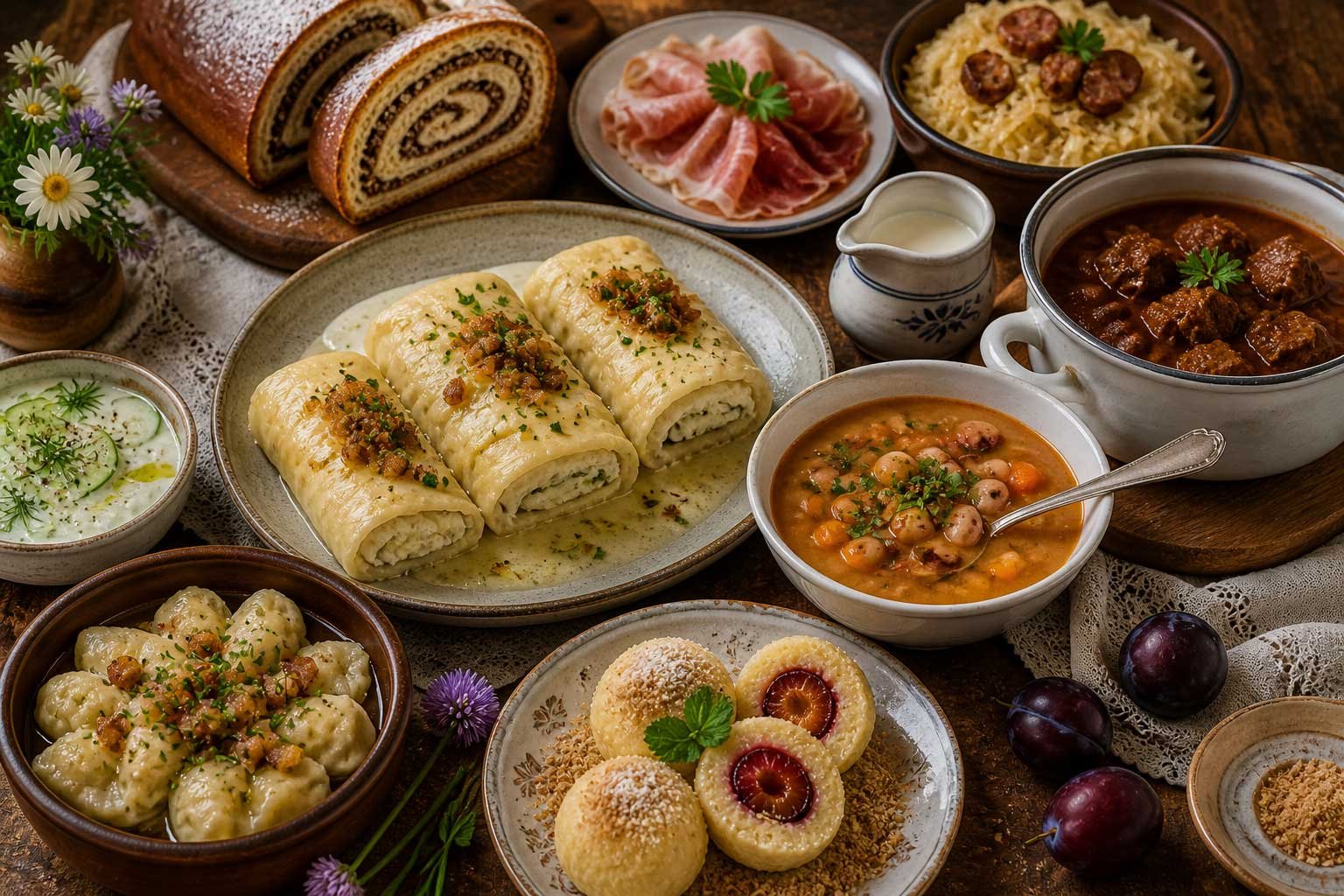
Slovenian cuisine is one of Europe’s most underrated culinary traditions—where simple, wholesome ingredients are transformed into rich, comforting dishes shaped by centuries of history. Influenced by Central European, Mediterranean, and Balkan cooking, food in Slovenia blends rustic techniques with remarkable regional diversity.
From rolled dumplings like štruklji to hearty meat dishes, fresh dairy, and delicate desserts, Slovenian recipes offer a perfect balance of tradition, flavor, and versatility. Whether you’re looking for comforting everyday meals or authentic dishes for special occasions, this cuisine has something for every taste.
What You’ll Discover in This Guide
👉 In this complete Slovenian recipes guide, you’ll find:
- Traditional Slovenian recipes organized by category
- Must-try dishes and regional specialties
- Essential cooking techniques and ingredients
- How to build authentic Balkan-style meals
- Easy access to all your key recipes through internal links
👉 Looking for quick inspiration? Check out our 20 traditional Slovenian recipes you must try (easy & authentic dishes).
Traditional Slovenian Recipe
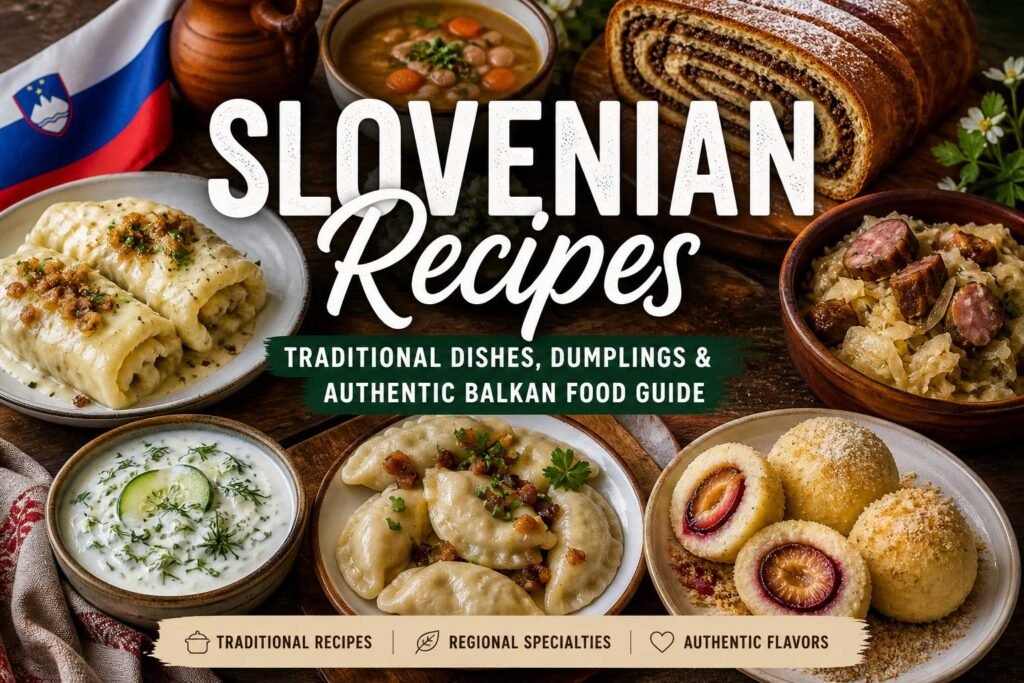
Traditional Slovenian recipes are built on simplicity, seasonal ingredients, and time-tested cooking techniques passed down through generations. In Slovenia, meals are designed to be both nourishing and balanced—combining hearty dishes like dumplings and stews with lighter elements such as soups, dairy, and fresh vegetables.
This cuisine reflects a blend of regional influences, where alpine, Central European, Mediterranean, and Balkan traditions come together to create a diverse and comforting food culture. Whether you’re preparing a full meal or exploring individual dishes, Slovenian recipes emphasize flavor, tradition, and practicality.
Food Traditions & Culture in Slovenia
Food in Slovenia is more than just nourishment—it’s a central part of family life, seasonal celebrations, and cultural identity. Traditional Slovenian recipes are often prepared during holidays, gatherings, and Sunday meals, where food brings people together around the table.
Many dishes are tied to specific regions and occasions, reflecting the country’s agricultural roots and deep connection to seasonal ingredients. From homemade dumplings to slow-cooked stews, Slovenian cuisine emphasizes sharing, tradition, and simplicity.
👉 This cultural foundation is what makes Slovenian recipes not only delicious—but meaningful.
Regional Food of Slovenia
Slovenian cuisine varies significantly by region, reflecting geography, climate, and cultural influences. Each area has its own specialties, ingredients, and cooking traditions.
Key Culinary Regions
| Region | What It’s Known For |
|---|---|
| Dolenjska | Hearty dishes like bean štruklji |
| Gorenjska | Alpine flavors, dairy, and lighter meals |
| Štajerska | Rich meats, pumpkin seed oil, and bold flavors |
| Prekmurje | Famous desserts like gibanica |
| Primorska | Mediterranean influence, seafood, herbs |
Why This Matters
- Regional diversity = more recipe variety
- Explains why dishes differ
- Adds cultural depth
👉 Exploring regional dishes is the best way to truly understand Slovenian cuisine.
Traditional vs Modern Slovenian Recipes
Slovenian cuisine has evolved over time, blending traditional techniques with modern cooking styles. While classic recipes focus on simplicity and local ingredients, modern versions often introduce new flavors and presentation styles.
Key Differences
| Feature | Traditional Slovenian Recipes | Modern Slovenian Recipes |
|---|---|---|
| Ingredients | Local, seasonal, simple | Global, diverse, experimental |
| Cooking Methods | Boiling, baking, slow cooking | Fusion techniques, faster methods |
| Flavor Profile | Hearty, rustic, balanced | Refined, lighter, creative |
| Presentation | Simple and home-style | Plated, restaurant-style |
| Purpose | Nourishment & tradition | Experience & innovation |
What Should You Choose?
- Want authenticity → traditional recipes
- Prefer creativity → modern versions
- Best experience → combine both
👉 The strength of Slovenian cuisine lies in preserving tradition while embracing innovation.
How a Traditional Slovenian Meal Is Structured
A traditional meal in Slovenia follows a thoughtfully balanced structure, combining light and hearty elements to create a complete and satisfying dining experience. This approach reflects the country’s emphasis on harmony, seasonality, and simple, nourishing food.
Typical Meal Structure
| Course | What It Includes | Purpose |
|---|---|---|
| Starter | Soup or light dish (like jota or beef soup) | Prepares the appetite |
| Main | Meat dishes or dumplings (štruklji, goulash) | Core of the meal |
| Side | Salad, cabbage, or vegetables | Adds freshness & balance |
| Dessert | Sweet dishes or pastries (potica, knedle) | Finishes the meal |
Why This Works
- Balances rich and light flavors
- Uses seasonal ingredients
- Creates a complete, satisfying meal experience
👉 The secret to authentic Slovenian cooking isn’t just the recipes—it’s how dishes are combined into a balanced meal.
Traditional Slovenian Soups & Light Dishes
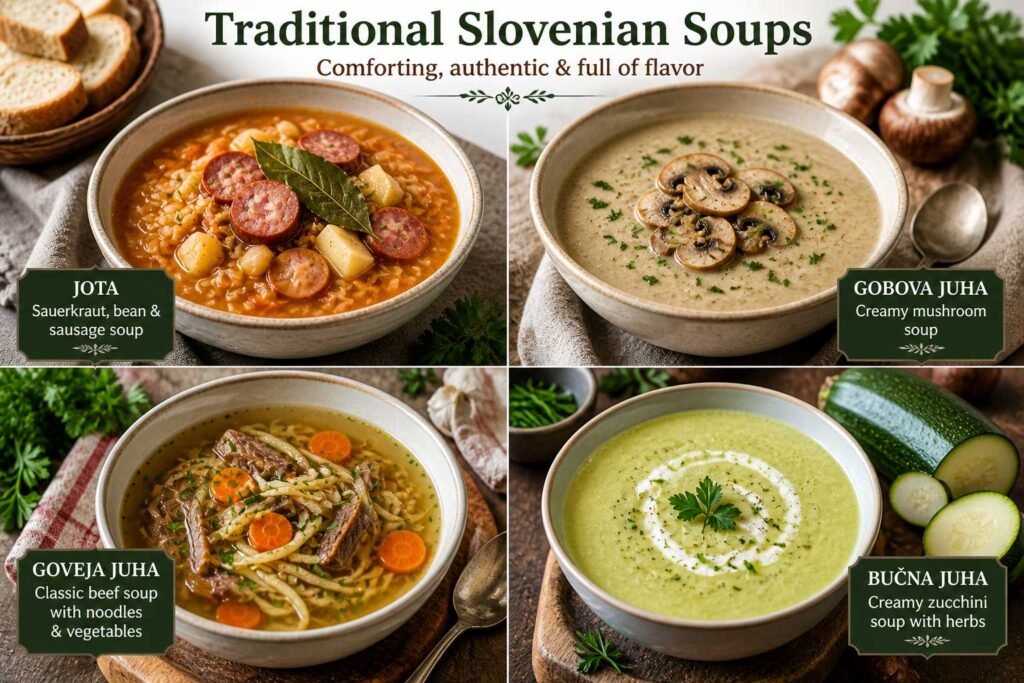
Light dishes play an important role in balancing traditional Slovenian meals. While many recipes are rich and hearty, soups and yogurt-based dishes bring freshness, acidity, and a cooling contrast—especially during warmer months.
Jota (Sauerkraut, Bean & Sausage Soup)
Jota is one of the most traditional Slovenian soups, made with sauerkraut, beans, potatoes, and often sausage. It’s hearty, slightly tangy, and deeply comforting—perfect for colder seasons.
👉 Explore how to make jota (traditional Slovenian sauerkraut soup recipe).
Gobova Juha (Mushroom Soup)
Gobova juha is a creamy mushroom soup made with wild mushrooms, herbs, and cream. It has a rich, earthy flavor and is especially popular in forested regions.
👉 Try it here → creamy mushroom soup recipe (Slovenian gobova juha traditional recipe).
Goveja Juha (Beef Soup)
Goveja juha is a clear beef broth served with noodles or vegetables. It’s a classic Sunday meal starter in Slovenia and known for its clean, comforting flavor.
👉 Learn more at our classic beef soup recipe (traditional Slovenian goveja juha).
Tarator (Cold Yogurt Soup)
While not originally Slovenian, tarator is popular across the Balkans and often served alongside heavier meals for contrast.
👉 Make it → tarator recipe (cold yogurt cucumber soup).
Yogurt-Based Dishes
Yogurt is a key ingredient in many Balkan and Slovenian-inspired recipes. It adds creaminess, tang, and balance to both savory meals and light dishes.
👉 Explore more → traditional yogurt-based dishes and Balkan recipes.
When to Serve These
- As a starter before dumplings or meat dishes
- As a light summer meal
- To balance rich, hearty foods
Pro Tip: Pair a light yogurt dish with dumplings or roasted meat to create a perfectly balanced Slovenian meal.
Traditional Slovenian Salads & Appetizers
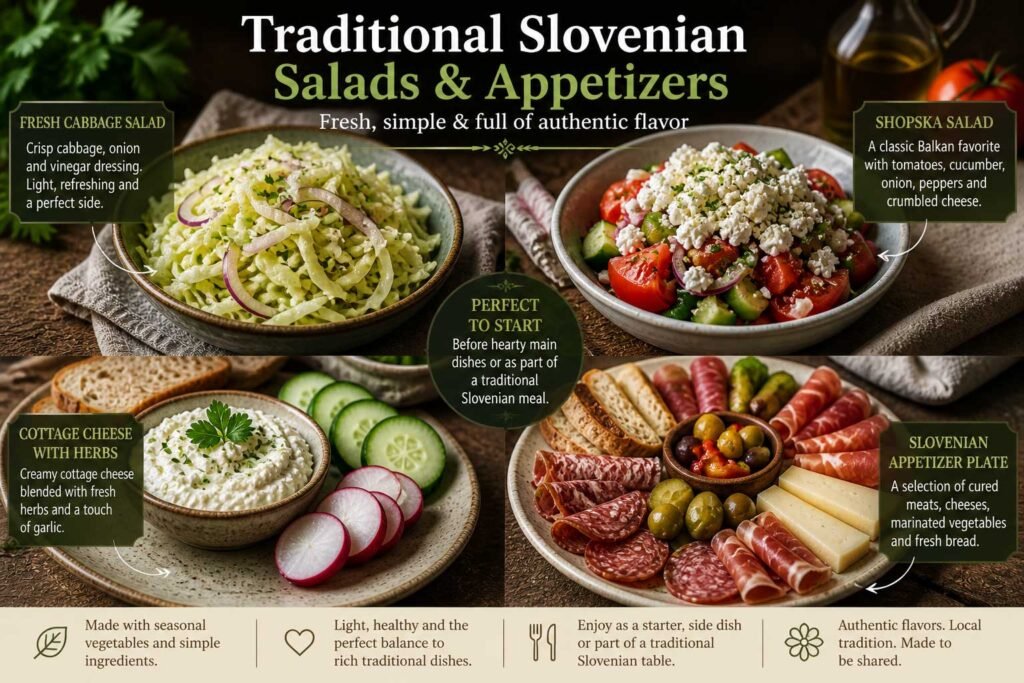
Salads and appetizers in Slovenia are simple, fresh, and designed to complement heavier dishes. They often use seasonal vegetables, light dressings, and minimal ingredients to create balance in a traditional meal.
Fresh & Simple Salads
Slovenian salads are typically light and refreshing, often made with:
- Cabbage
- Beans
- Onions
- Vinegar-based dressings
👉 Explore → traditional Slovenian salad recipes and side dishes.
Cold Appetizers & Small Plates
Appetizers are usually served as part of a shared table and may include:
- Cheese and dairy-based dishes
- Bread and spreads
- Light vegetable plates
👉 Discover → Slovenian appetizers and Balkan mezze-style dishes
When to Serve These
- As a starter before main dishes
- Alongside dumplings and meats
- To add freshness and balance
Pro Tip: A simple salad is often the key to balancing rich Slovenian meals.
Traditional Slovenian Main Dishes
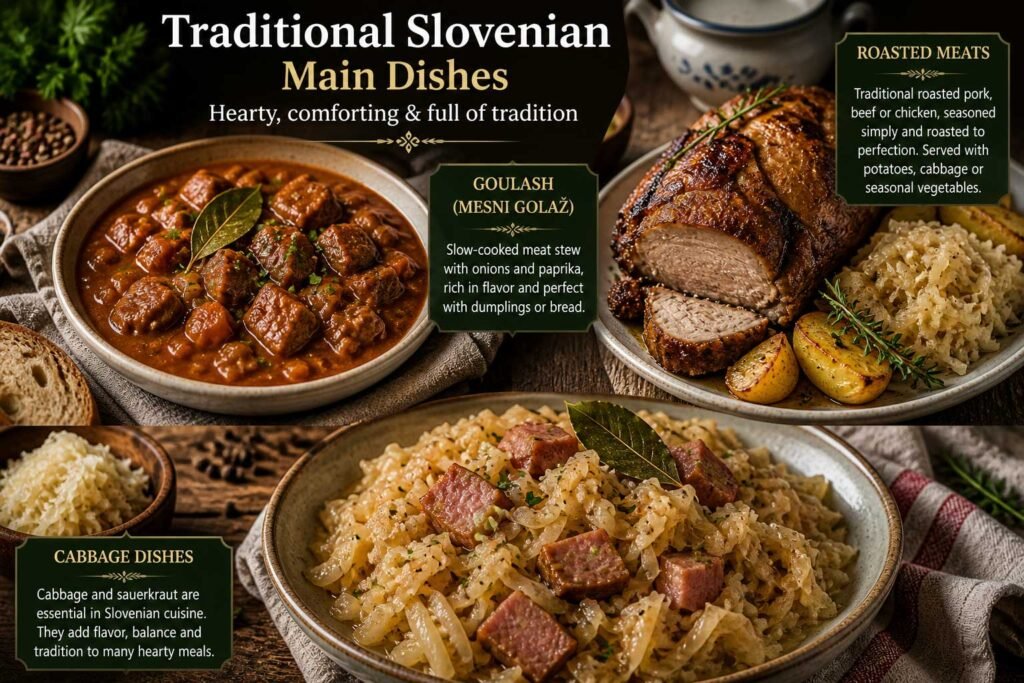
Slovenian main dishes are hearty, comforting, and built around simple ingredients cooked with care. These meals often combine slow-cooked meats, vegetables, and rich sauces—perfectly paired with dumplings or fresh sides for balance.
Goulash (Hearty Meat Stew)
Goulash is a slow-cooked stew made with tender meat, onions, and paprika-based seasoning. It’s deeply flavorful and one of the most popular comfort dishes in the region.
👉 Try it here → goulash recipe (traditional Balkan meat stew)
Roasted Meats
Roasted meats—such as pork, beef, or chicken—are a staple in Slovenian cuisine. They’re often seasoned simply and cooked until tender with crispy edges, then served with sides like potatoes, cabbage, or dumplings.
👉 Explore more → traditional roasted meat recipes (Slovenian style)
Cabbage Dishes
Cabbage is widely used in Slovenian cooking, especially in braised or fermented forms like sauerkraut. It adds acidity and balance to heavier meals.
👉 Learn more → cabbage dishes and sauerkraut recipes (traditional Balkan cooking).
When to Serve These
- 👉 As the main course in a traditional meal
- 👉 Paired with dumplings for a complete dish
- 👉 During colder seasons for hearty comfort
Pro Tip: The best Slovenian meals combine rich main dishes with lighter sides like yogurt or fresh vegetables for perfect balance.
Traditional Slovenian Desserts
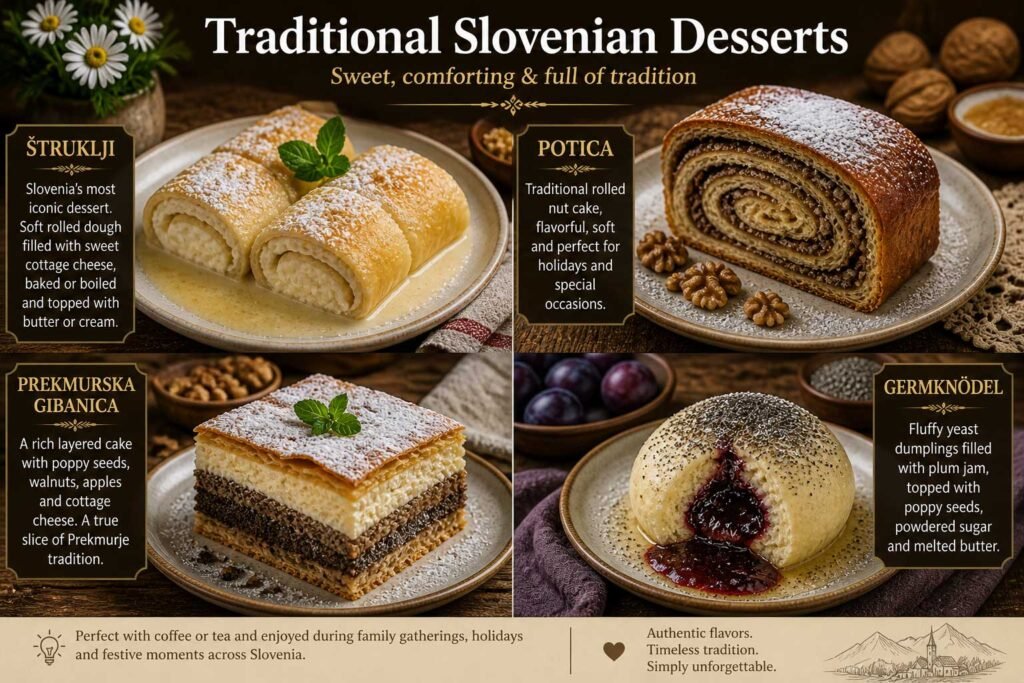
Slovenian desserts are rich, comforting, and often built around nuts, fruit, and dairy. These sweets balance simple ingredients with traditional techniques, creating flavors that feel both nostalgic and indulgent.
Potica (Slovenian Nut Roll)
Potica is one of the most famous Slovenian desserts—a rolled pastry filled with ground walnuts, sugar, and sometimes honey or cream. It’s especially popular during holidays and celebrations.
👉 Try it here → potica recipe (traditional Slovenian nut roll)
Knedle (Fruit Dumplings)
Knedle are soft dumplings filled with fruit like plums or apricots, then coated in buttered breadcrumbs and sugar. They are a classic comfort dessert with a perfect balance of sweetness and texture.
👉 Make it here → plum dumplings (knedle) traditional recipe guide
Sweet Štruklji
Sweet štruklji are a dessert version of rolled dumplings, filled with ingredients like cottage cheese, walnuts, or fruit. They’re soft, creamy, and often served warm with a light topping.
👉 Step-by-step → sweet štruklji recipe (dessert dumplings)
When to Serve These
- 👉 As a dessert after a traditional meal
- 👉 During holidays and family gatherings
- 👉 As a sweet main dish (very common in the Balkans)
Pro Tip: The best Slovenian desserts combine soft textures + light sweetness, rather than overly sugary flavors.
👉 Explore all variations in our complete Slovenian dumplings guide (types, methods & recipes).
Traditional Slovenian Dairy & Ingredients
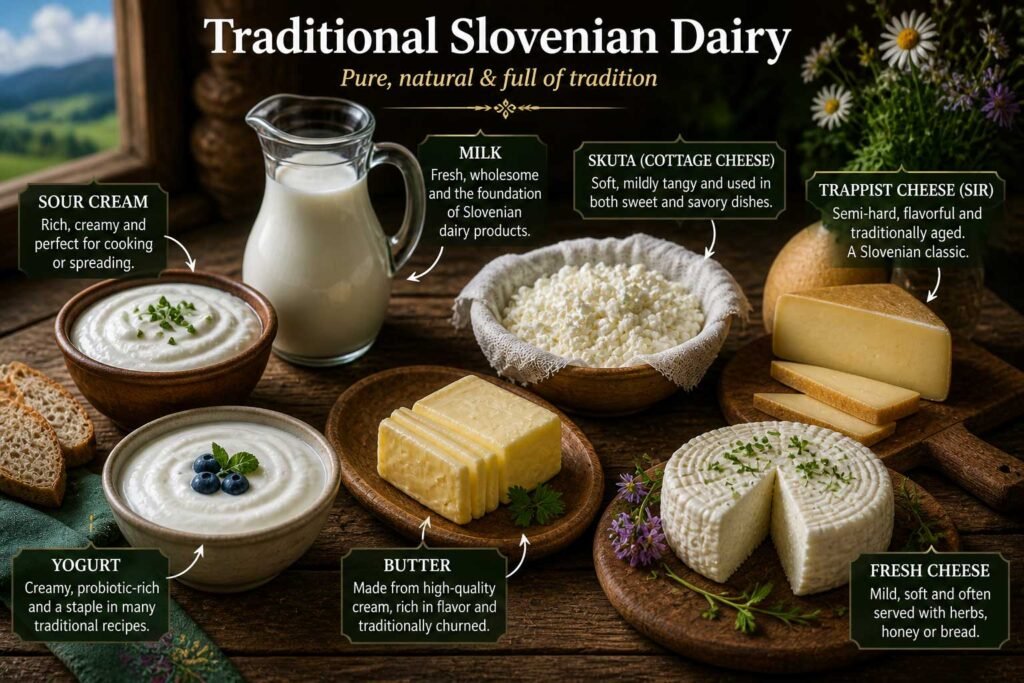
Dairy is a cornerstone of traditional Slovenian cooking, adding richness, balance, and texture to both savory dishes and desserts. Many classic recipes rely on simple, fresh dairy ingredients that enhance flavor without overpowering it.
Yogurt & Sour Milk Products
While yogurt is used across the Balkans, in Slovenia it appears in lighter dishes, sauces, and soups. Sour milk products add freshness and help balance heavier meals.
👉 Explore → yogurt-based dishes and light Balkan recipes.
Skuta (Slovenian Cottage Cheese)
Skuta is one of the most important ingredients in Slovenian cuisine. It’s used in both sweet and savory recipes, including:
- Štruklji fillings
- Desserts
- Light meals
👉 Learn more → traditional skuta recipes and uses.
Sour Cream & Cream-Based Dishes
Sour cream is widely used to:
- Enrich sauces
- Add creaminess to dumplings
- Balance savory flavors
👉 Discover → creamy Slovenian dishes and traditional recipes.
Cheese-Based Dishes
Various regional cheeses are used in Slovenian cooking, from fresh soft cheeses to aged varieties. These appear in:
- Dumpling fillings
- Baked dishes
- Traditional meals
👉 Explore → cheese-based Slovenian recipes.
Why Dairy Matters
- Adds creaminess and depth
- Balances rich, hearty dishes
- Enhances both sweet and savory recipes
Pro Tip: The key to authentic Slovenian flavor is not heavy sauces—but balanced dairy that complements the dish.
👉 These traditional Slovenian recipes form the foundation of the country’s cuisine, influencing everything from everyday meals to modern interpretations.
Pro Tips for Perfect Slovenian Recipes
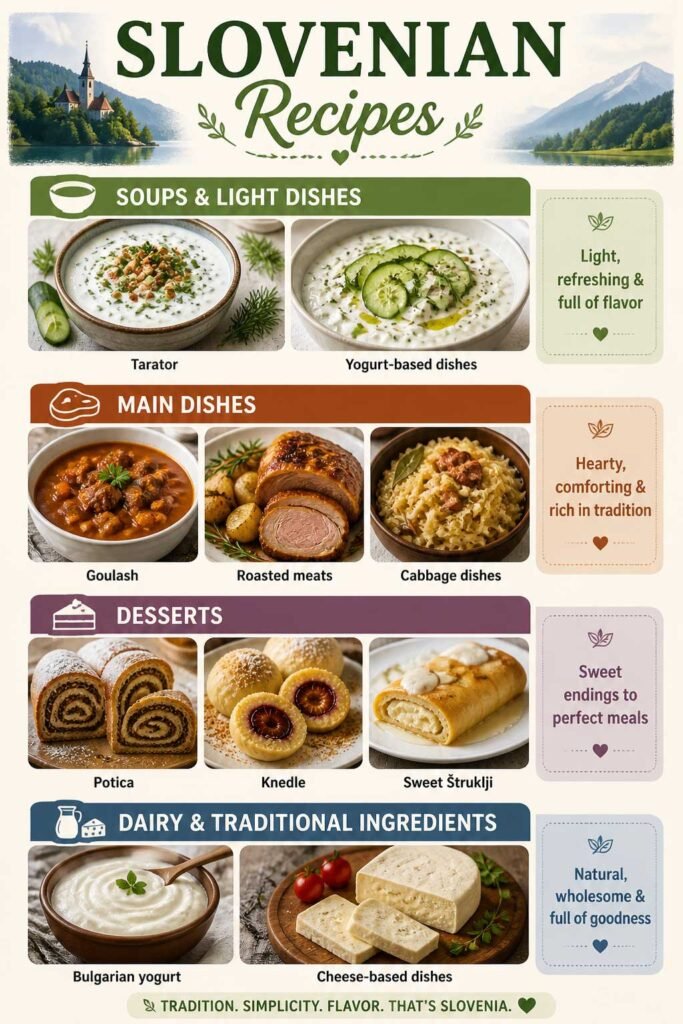
Mastering Slovenian recipes isn’t about complexity—it’s about getting the fundamentals right. These simple tips can dramatically improve your results.
Expert Tips That Make a Difference
| Tip | Why It Matters |
|---|---|
| Use simple, high-quality ingredients | Traditional Slovenian cooking relies on freshness and simplicity |
| Focus on technique over complexity | Proper dough handling and cooking methods matter more than fancy ingredients |
| Balance rich and fresh elements | Combine hearty dishes with something light (like yogurt or vegetables) |
| Let dough rest before shaping | Improves elasticity and texture |
| Don’t rush the cooking process | Slow cooking enhances flavor and structure |
👉 Great Slovenian food comes down to simple ingredients + proper technique + balanced flavors
Common Mistakes vs Pro Fixes
Even simple Slovenian recipes can go wrong if a few key details are missed. Here’s how to avoid the most common mistakes—and fix them like a pro.
Fix Your Dumplings Like an Expert
| Common Mistake | What Happens | Pro Fix |
|---|---|---|
| Dough too thick | Heavy, dense dumplings | Roll dough thin for authentic texture |
| Overfilling | Dumplings break or leak | Spread filling evenly and leave space |
| Boiling too fast | Dumplings fall apart | Keep water at a gentle simmer |
| Not resting dough | Hard to shape, tears easily | Let dough rest 20–30 minutes |
| Under-seasoned filling | Bland flavor | Season filling before shaping |
| Skipping toppings | Flat taste | Add breadcrumbs, yogurt, or sauce |
Quick Fix Guide
👉 Soft & authentic texture? → Thin dough
👉 Perfect shape? → Don’t overfill
👉 Best flavor? → Season + finish with toppings
FAQs About Traditional Slovenian Cuisine
What is the most famous Slovenian dish?
The most famous Slovenian dish is štruklji, a traditional rolled dumpling that can be prepared with both sweet and savory fillings. It’s widely considered a national dish of Slovenia and is served in homes and restaurants across the country.
Is Slovenian food healthy?
Yes, Slovenian food is generally considered healthy because it is based on whole, natural ingredients. Many traditional recipes use:
- Fresh vegetables
- Dairy products like yogurt and cottage cheese
- Simple cooking methods such as boiling, baking, and steaming
👉 The balance between hearty and light dishes makes it a well-rounded cuisine.
Is Slovenian food similar to Balkan cuisine?
Yes, Slovenian food shares similarities with Balkan cuisine, but it also has strong Central European and Mediterranean influences.
- Balkan influence → hearty dishes, dumplings, grilled meats
- Central European influence → pastries, desserts, stews
- Mediterranean influence → herbs, lighter preparations
👉 This blend makes Slovenian cuisine uniquely diverse.
What are must-try Slovenian foods?
Some of the most popular dishes include:
- Štruklji (rolled dumplings)
- Žlikrofi (stuffed dumplings)
- Potica (nut roll dessert)
- Goulash (hearty stew)
Can you make Slovenian recipes at home easily?
Yes—most Slovenian recipes use simple ingredients and traditional techniques, making them very approachable for home cooks.
👉 Dumplings like štruklji are especially beginner-friendly because they don’t require complex shaping.
What are traditional Slovenian ingredients?
Traditional Slovenian recipes rely on simple, locally sourced ingredients such as:
- Flour, potatoes, and bread dough
- Dairy products like yogurt, cottage cheese, and sour cream
- Fresh herbs and seasonal vegetables
👉 These ingredients create the foundation of many classic dishes in Slovenia.
What types of dumplings are popular in Slovenia?
Some of the most popular Slovenian dumplings include:
- Štruklji (rolled dumplings)
- Žlikrofi (stuffed dumplings)
- Knedle (fruit dumplings)
👉 Each type has different fillings, shapes, and cooking methods.
What cooking methods are used in Slovenian cuisine?
The most common cooking methods are:
- Boiling → for dumplings and soups
- Baking → for richer dishes and desserts
- Steaming → for lighter preparations
👉 These traditional techniques help preserve flavor and texture.
Why is dairy important in Slovenian recipes?
Dairy plays a key role in many dishes, adding creaminess and balance. Ingredients like yogurt, cottage cheese, and sour cream are often used in both savory and sweet recipes.
Are Slovenian recipes seasonal?
Yes, many Slovenian dishes are based on seasonal ingredients:
- Spring/summer → lighter, vegetable-based dishes
- Fall/winter → hearty, rich meals
👉 This keeps the cuisine fresh and aligned with local agriculture.
Can Slovenian recipes be made vegetarian?
Absolutely. Many traditional recipes can be made vegetarian or already are, especially dumplings filled with:
- Spinach
- Cottage cheese
- Herbs
👉 These variations are just as authentic and widely enjoyed.
Final Thoughts
Slovenian recipes are a perfect example of how tradition, simplicity, and flavor come together. Rooted in the culinary heritage of Slovenia, these dishes transform everyday ingredients into comforting meals that have been passed down for generations.
From rich, savory dumplings to delicate desserts and hearty main courses, Slovenian cuisine offers a unique balance of rustic techniques and regional diversity. It’s not just about the food—it’s about the experience, the tradition, and the connection behind every recipe.
Where to Start
👉 New to Slovenian cooking? Start with these reader favorites:
- how to make traditional štruklji (complete recipe & methods) → the most iconic and versatile dish
- bean štruklji recipe (rolled dumplings with beans) → hearty, rustic comfort food
- spinach štruklji recipe (light & creamy dumplings) → balanced and beginner-friendly
Join the Conversation
👉 Have you tried making Slovenian recipes at home?
Tell us which dish you’re starting with—we’d love to hear your experience!
