Kranjska Klobasa (Carniolan Sausage) Recipe
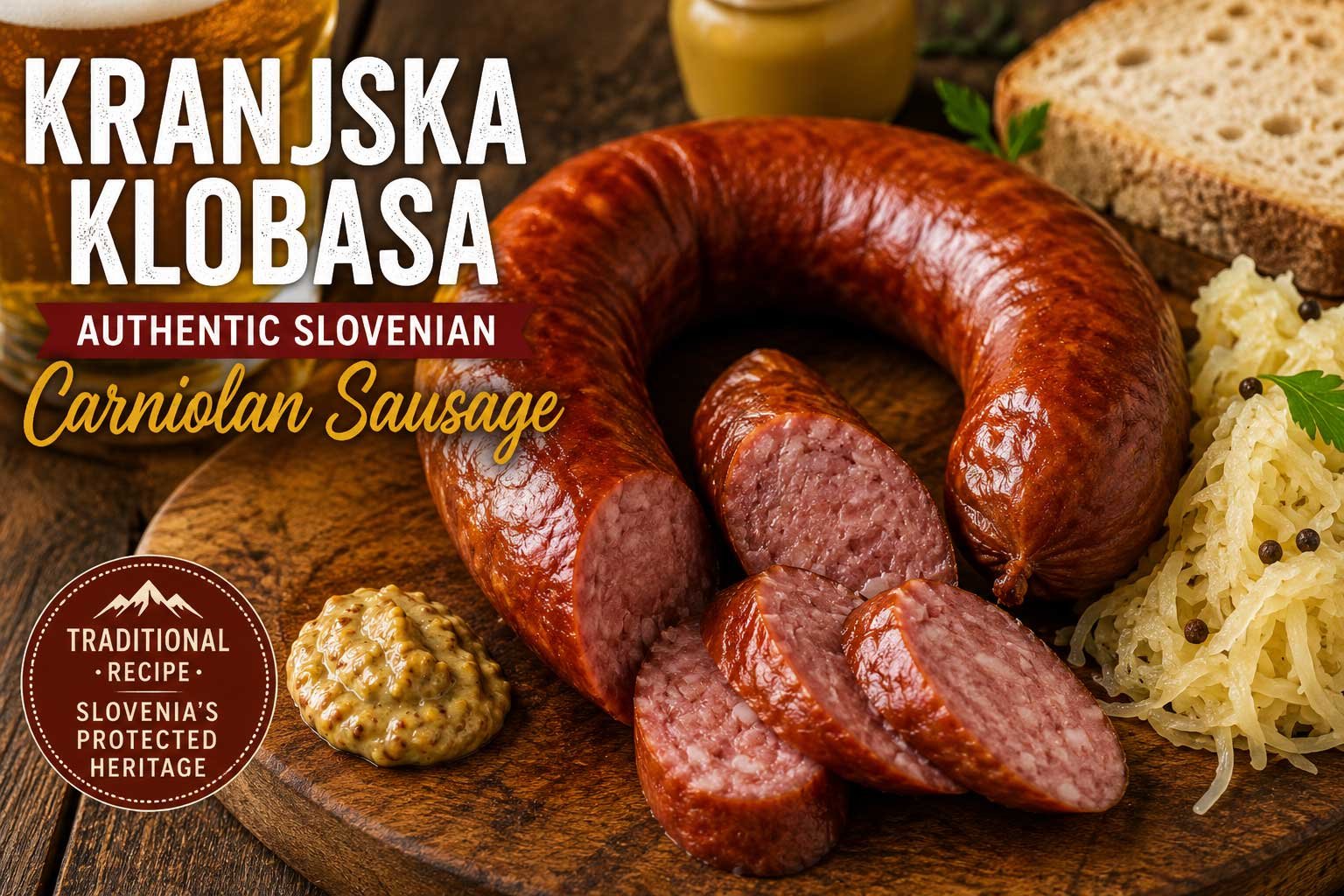
Smoky, juicy, rich, and deeply rooted in centuries of tradition, Kranjska klobasa is one of the most iconic foods of Slovenia. Known internationally as Carniolan sausage, this famous Slovenian specialty is celebrated for its simple ingredients, coarse texture, and unmistakable beechwood-smoked flavor.
Unlike heavily seasoned sausages, authentic Kranjska klobasa relies on high-quality pork, garlic, sea salt, and black pepper to create a clean, savory taste that has been loved across the Balkans and Central Europe for generations. Traditionally served with sauerkraut, mustard, rustic bread, and cold beer, it remains one of the most beloved comfort foods in Slovenian cuisine.
What makes this sausage truly special is its protected status and strict traditional standards. Authentic versions must follow official Slovenian production rules, preserving the heritage and craftsmanship that made Kranjska klobasa famous during the days of the Austro-Hungarian Empire.
In this guide, you’ll learn:
- How to make authentic homemade Kranjska klobasa
- Traditional smoking and cooking techniques
- The history behind Slovenia’s most famous sausage
- Common mistakes to avoid
- The best ways to serve Carniolan sausage at home
Whether you’re passionate about Balkan food, traditional sausage making, or authentic Eastern European recipes, this Kranjska klobasa recipe brings a true taste of Slovenia straight to your kitchen.
If you enjoy authentic Balkan comfort food, explore more traditional Slovenian dishes that showcase the country’s rich culinary heritage.
What is Kranjska Klobasa?
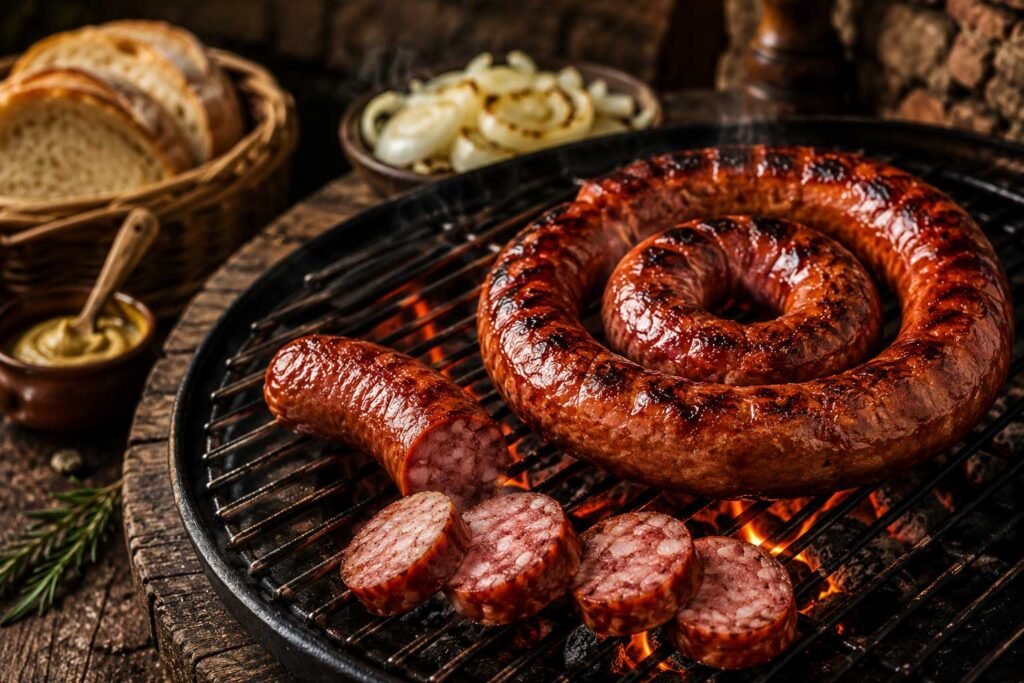
Kranjska klobasa, also known as Carniolan Sausage, is a traditional Slovenian smoked sausage originating from the historic region of Carniola (Kranjska). It is considered one of the most famous and recognizable dishes in Slovenia and is celebrated for its simple ingredients, coarse texture, and delicate smoky flavor.
Authentic Kranjska klobasa follows a traditional recipe made with:
- 80% lean pork
- 20% pork back fat
- Garlic
- Sea salt
- Black pepper
The sausage is lightly smoked, traditionally using beech wood, which gives it a mild smoky aroma without overpowering the natural flavor of the pork.
Unlike many heavily seasoned sausages, Kranjska klobasa focuses on balance and simplicity. Its flavor is:
- Rich and meaty
- Mildly garlicky
- Lightly smoky
- Juicy with a coarse texture
Fans of smoked meats and Eastern European sausage recipes will appreciate the balance and simplicity that make Kranjska klobasa unique.
It is often compared to kielbasa and other Eastern European smoked sausages, but the Slovenian version is generally:
- Less spicy
- More lightly smoked
- More pork-forward in flavor
- Traditionally minimalist in seasoning
Today, authentic Kranjska klobasa remains one of the best-known examples of traditional Slovenian sausage making and continues to be enjoyed both in Slovenia and around the world.
👉 Authentic Kranjska klobasa is naturally high-protein, low-carb, and deeply flavorful thanks to its traditional Slovenian preparation methods.
Flavor Profile (Why Kranjska Klobasa Is Special)
What makes Kranjska klobasa stand out from other smoked sausages is its balance of simplicity, texture, and clean pork flavor.
Signature Flavor Characteristics
| Flavor Element | Description |
|---|---|
| Rich & meaty | High-quality pork gives the sausage a deep savory flavor |
| Mild garlic notes | Garlic enhances the meat without overpowering it |
| Light smoky aroma | Traditional beech wood smoking adds subtle depth |
| Juicy texture | Pork fat keeps the sausage moist and flavorful |
| Coarse bite | Larger meat grind creates authentic rustic texture |
Kranjska klobasa remains one of the most famous Balkan smoked meat recipes thanks to its delicate smoke and rich pork flavor.
Unlike many heavily seasoned sausages, Kranjska klobasa keeps the spice profile intentionally minimal. There are no strong herbs or spicy additives competing with the natural flavor of the pork.
👉 The result is a classic Carniolan sausage that tastes:
- Clean
- Balanced
- Smoky but delicate
- Rich without being overwhelming
This minimalist approach is one of the reasons why authentic Carniolan sausage remains one of the most respected traditional foods in Slovenia.
To legally be labeled “authentic Kranjska klobasa,” the sausage must meet official Slovenian production standards — you cannot simply use the name for any smoked pork sausage.
Kranjska Klobasa vs Kielbasa vs Čevapi
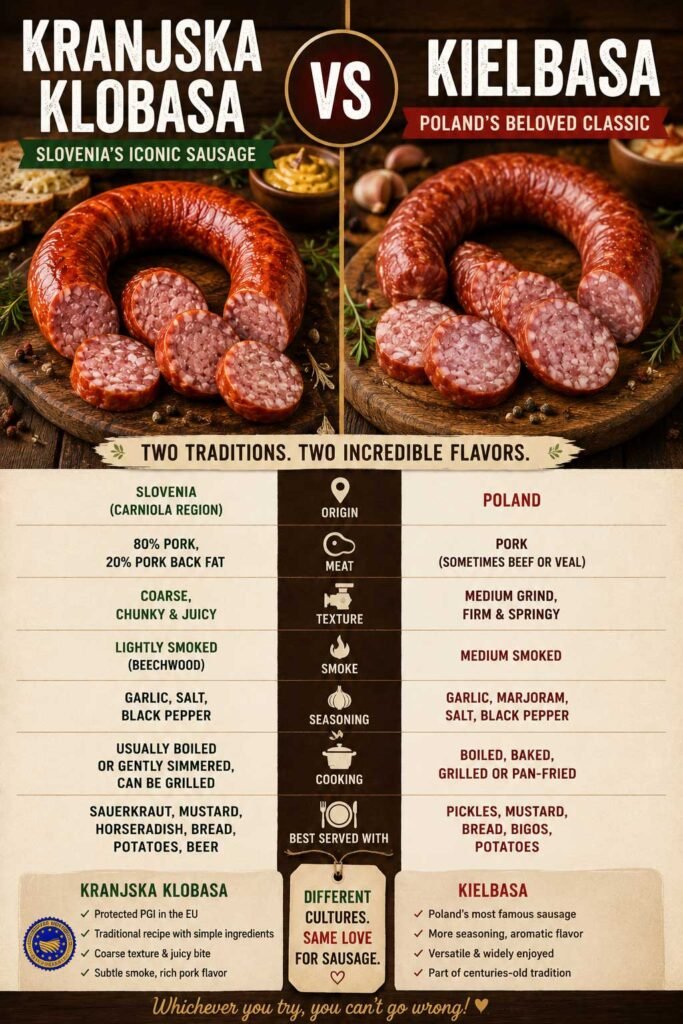
Although Kranjska klobasa is often compared to kielbasa and Ćevapi, each sausage reflects very different culinary traditions, flavors, and cooking methods across Central and Southeastern Europe.
Kranjska klobasa focuses on simplicity, high-quality pork, and delicate smoke, while kielbasa tends to feature stronger garlic seasoning and a heavier smoked flavor. Ćevapi, on the other hand, are completely different in texture and preparation, traditionally grilled over charcoal without smoking.
| Sausage | Region | Texture | Smoke Level | Typical Seasoning |
|---|---|---|---|---|
| Kranjska Klobasa | Slovenia | Coarse | Light | Minimal |
| Kielbasa | Poland | Medium | Medium | Garlic-heavy |
| Ćevapi | Balkan region | Ground & soft | None | Paprika & spices |
What Makes Kranjska Klobasa Different?
Unlike many sausages that rely heavily on spices or smoke, Kranjska klobasa highlights:
- Clean pork flavor
- Coarse meat texture
- Mild garlic notes
- Delicate beechwood smoke
- Traditional minimalist seasoning
This lighter and more balanced approach reflects Slovenia’s Alpine and Central European culinary influences.
Cooking Methods Compared
| Sausage | Traditional Cooking Method |
|---|---|
| Kranjska Klobasa | Light smoking + gentle cooking |
| Kielbasa | Smoking and boiling |
| Ćevapi | Charcoal grilling |
While kielbasa is commonly smoked more aggressively and ćevapi are known for their smoky grilled crust, authentic Kranjska klobasa is designed to remain juicy, mildly smoky, and balanced.
Explore more traditional Balkan sausage recipes to compare regional flavors, grilling methods, and smoking traditions across Eastern Europe.
👉 These differences make each sausage unique, but Kranjska klobasa remains one of the most refined and protected traditional sausages in European cuisine.
Cultural & Historical Significance
Kranjska klobasa holds a special place in the cultural identity of Slovenia and is widely considered one of the country’s most iconic traditional foods. Deeply connected to the historic region of Carniola (Kranjska), the sausage has become a symbol of Slovenian heritage, craftsmanship, and rural culinary tradition.
First officially documented during the 19th century, Kranjska klobasa gradually gained recognition throughout Central Europe and eventually evolved from a regional specialty into a nationally celebrated dish. Today, it is strongly associated with:
- Traditional Slovenian festivals
- Family gatherings and holidays
- Alpine village traditions
- Local food markets
- Rural food heritage
For many Slovenians, the sausage represents comfort, nostalgia, and a connection to generations of village life and traditional food preparation.
Protected Slovenian Heritage
Few European sausages are as carefully protected as authentic Kranjska klobasa. The sausage holds Protected Geographical Indication (PGI) status in the European Union, helping preserve the traditional production methods and regional identity connected to the recipe.
To legally use the name “Kranjska klobasa,” producers must follow official Slovenian standards regarding:
- Ingredients
- Meat ratios
- Texture
- Production methods
- Appearance
👉 This protected status helps ensure that authentic Carniolan sausage continues to preserve the traditions and craftsmanship that made it famous for generations.
Kranjska klobasa remains one of the most respected examples of traditional Balkan food still made using protected methods today.
Even today, Kranjska klobasa remains one of the strongest culinary symbols of Slovenia, proudly representing the country’s rich food culture both locally and internationally.
Traditional Sausage Making Traditions in Slovenia
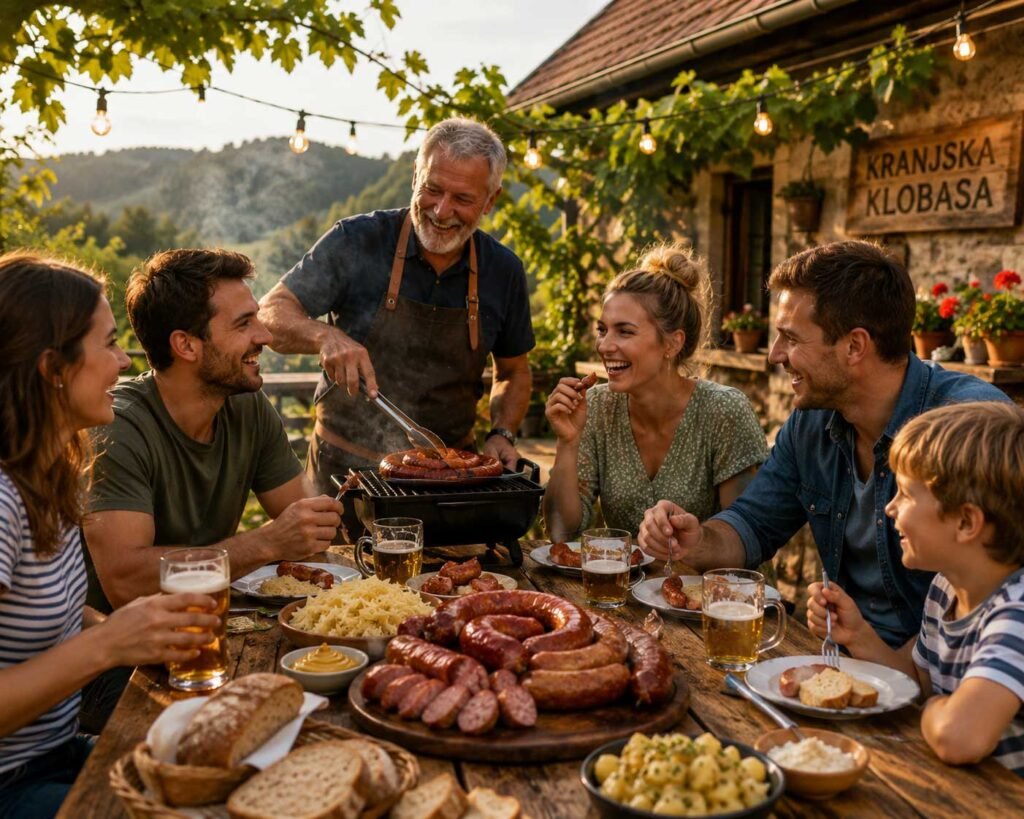
Long before modern refrigeration existed, rural families in Slovenia depended on smoking, salting, drying, and curing to preserve pork through harsh Alpine winters. Over time, these practical preservation methods evolved into one of the country’s most respected culinary traditions: traditional sausage making.
In mountain villages and farming communities, preparing sausages was far more than a cooking task — it became an important seasonal ritual connected to family gatherings, winter preparation, and local craftsmanship. During late autumn, families traditionally processed large quantities of pork to ensure enough food for the colder months ahead. Nearly every part of the animal was carefully used, reflecting the resourceful and sustainable nature of traditional Slovenian village life.
Alpine Preservation Traditions
Slovenia’s mountainous climate played a major role in shaping its smoked and cured meat culture. Cold temperatures naturally supported preservation, while smoking and salting allowed families to safely store meat for extended periods throughout winter.
Traditional Slovenian preservation techniques included slow smoking over beech wood, salting pork before curing, air-drying sausages in cool environments, and hanging meats inside village smokehouses. These methods helped preserve a variety of foods including sausages, bacon, ham, pork belly, and other cured meats commonly eaten during the winter season.
| Traditional Preservation Method | Purpose |
|---|---|
| Smoking | Added flavor and extended preservation |
| Salting | Helped prevent spoilage |
| Air drying | Reduced moisture naturally |
| Cool storage | Extended shelf life during winter |
👉 Many of these old-world techniques are still practiced in rural Slovenian communities today, especially during seasonal meat preparation traditions and family gatherings.
Many of these traditional food preservation methods are still practiced throughout rural parts of Central and Eastern Europe today.
Village Butcher Culture
In traditional Slovenian villages, butchers and skilled sausage makers played an important role within the community. Families carefully passed recipes, smoking methods, and seasoning ratios down through generations, preserving techniques that often remained unchanged for decades.
Making high-quality sausage required experience and precision. Skilled sausage makers understood how to properly balance lean pork and fat, control smoking temperatures, and preserve meat safely through the winter months. Because these skills were so valuable, sausage making became both a respected craft and an important part of rural family life.
Many traditional Slovenian recipes continue to preserve these old-world cooking and preservation traditions.
During autumn and early winter, communal sausage-making days often brought together relatives, friends, and neighbors to prepare large quantities of meat for the colder season ahead. Even today, many Slovenian households continue these traditions during holidays, festivals, and family gatherings.
The Importance of Pork in Slovenian Cuisine
Pork has historically been one of the most important ingredients in Slovenian cuisine because of its rich flavor, versatility, and ability to be preserved through smoking, curing, and drying.
Traditional Slovenian cooking features pork in many forms, including smoked sausages, roasted meats, hearty stews, cured products, and rustic winter dishes commonly served throughout rural regions of the country.
| Traditional Pork Dish Type | Common Use |
|---|---|
| Smoked sausages | Winter preservation |
| Roasted pork | Holiday meals |
| Cured meats | Long-term storage |
| Stews and soups | Everyday comfort food |
The famous balance of lean pork and pork fat found in authentic Kranjska klobasa reflects Slovenia’s long-standing culinary philosophy: simple ingredients prepared carefully using traditional methods that maximize flavor naturally.
Today, sausage making remains one of the strongest symbols of Slovenia’s rural food heritage, connecting modern kitchens with centuries of Alpine village tradition.
Equipment Needed for Authentic Kranjska klobasa

Making authentic Kranjska klobasa at home requires a few specialized tools to achieve the traditional coarse texture, delicate smoke flavor, and proper sausage shape. While traditional Slovenian families often used handcrafted village equipment, modern home cooks can recreate the process with reliable sausage-making tools and smokers.
Essential Equipment
| Equipment | Purpose |
|---|---|
| Meat grinder | Creates the traditional coarse texture |
| Sausage stuffer | Fills natural casings evenly |
| Smoker | Adds authentic smoky flavor |
| Meat thermometer | Monitors safe internal temperature |
| Mixing bowls | Helps evenly distribute seasoning |
| Natural hog casings | Creates authentic sausage snap |
For the most authentic flavor, many traditional recipes recommend using a smoker capable of maintaining low steady temperatures and mild smoke circulation.
👉 Good equipment makes a huge difference when preparing homemade Slovenian sausage, especially when working with smoking temperatures and sausage texture consistency.
If you’re new to smoking meats, our guide on how to smoke sausage at home explains beginner-friendly techniques and temperature control.
Affiliate Disclosure: This article may contain affiliate links. If you purchase through these links, I may earn a small commission at no additional cost to you.
Best Sausage-Making Equipment for Homemade Kranjska Klobasa
Making authentic Kranjska klobasa at home becomes dramatically easier when you use the right sausage-making equipment and traditional smoking tools.
| Product | Why It’s Great | Best For | Check Price |
|---|---|---|---|
| KitchenAid Metal Food Grinder Attachment | Reliable coarse meat grinding | Beginners | Check Price on Amazon |
| LEM Products Sausage Stuffer | Professional sausage stuffing | Authentic texture | Check Price on Amazon |
| ThermoPro Digital Meat Thermometer | Accurate internal temp readings | Smoking meats | Check Price on Amazon |
| Masterbuilt Electric Smoker | Easy home smoking setup | Traditional smoking | Check Price on Amazon |

Kranjska klobasa
Ingredients
- 800 g lean pork
- 200 g back fat
- 3 tbsp sea salt
- 2 cloves garlic (minced)
- 2 oz water
- 1½ tsp black pepper
- 60 ml cold water
- 34 mm natural hog casings
Instructions
- Prepare the meat by cutting back fat through into 3/8” (10 mm) cubes. Grind the lean pork using a coarse grinder plate for authentic texture through 1/2” (12 mm).
- Combine the pork with salt and knead until sticky. Add garlic, black pepper, and cold water. Fold in the pork fat cubes evenly.
- Use 32-34 mm hog casings to stuff the meat mixture into and use wooden skewer to make pairs linked together.
- Hang the sausages at low temperature until the casing surface becomes dry.
- Preheat a smoke barbecue to 50° C (122° F) and place it inside.
- When the sausages are dry you can hot smoke them at around 55° C (130° F) to obtaining a brownish red color.
- The traditional recipe uses smoking with beech wood for 30-60 minutes.
- Slowly increase the temperature to 85° C (185° F) until the sausages reach 70° C (158° F) internal temperature.
- Sprinkle some cold water to cool the sausages then refrigerate. You can consume the sausages or you can boiled in a hot water for a few minutes.
Quick Tips for Better Kranjska Klobasa
✅ Keep meat and fat very cold during grinding and mixing
✅ Use coarse grinding plates for authentic rustic texture
✅ Let sausages dry before smoking for better color
✅ Avoid over-smoking — authentic Slovenian sausage uses gentle smoke
✅ Always cook by internal temperature, not cooking time
✅ Beech wood creates the most traditional flavor profile
👉 Small details make a huge difference when preparing authentic homemade Slovenian sausage.
Homemade vs Store-Bought Kranjska Klobasa
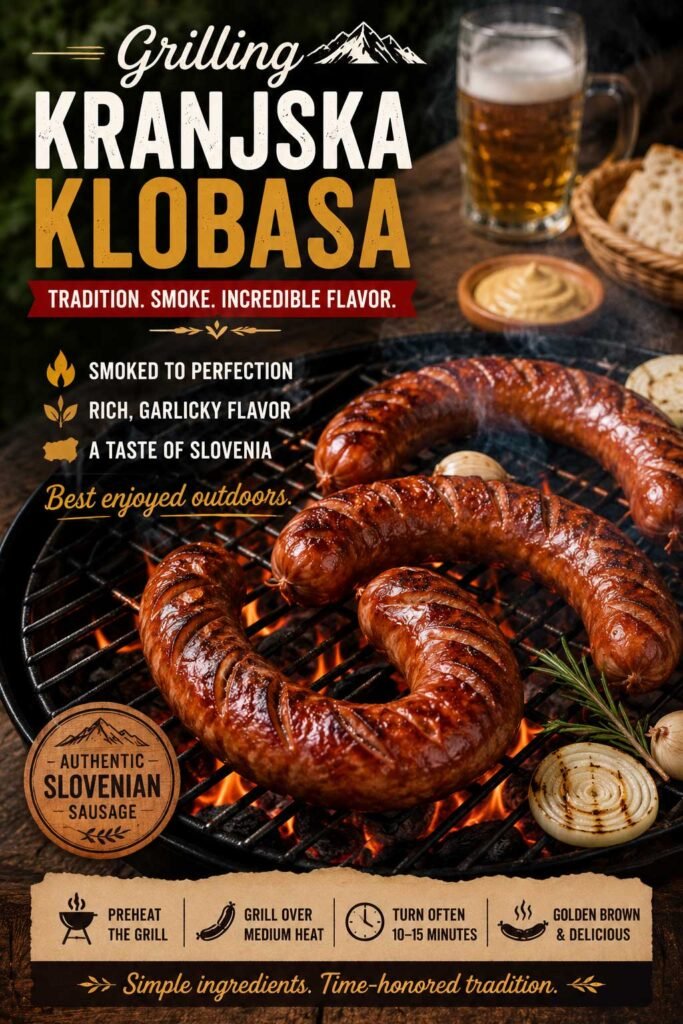
While store-bought versions of Kranjska klobasa can be convenient, homemade sausage offers a level of freshness, texture, and authenticity that is difficult to match commercially. This protected Slovenian delicacy is making focus on quality pork, careful smoking, and simple ingredients — something many mass-produced sausages often compromise with preservatives or overly processed textures.
Homemade Kranjska klobasa allows you to:
- Control ingredient quality
- Adjust smoke intensity
- Use authentic beech wood
- Preserve the traditional coarse texture
- Avoid unnecessary fillers and additives
| Feature | Homemade Kranjska Klobasa | Store-Bought Version |
|---|---|---|
| Flavor | Rich and fresh | Often milder or processed |
| Texture | Coarse and juicy | Sometimes softer or uniform |
| Smoke Quality | Natural beechwood smoke | Artificial or heavier smoke |
| Ingredients | Simple and authentic | May include additives |
| Authenticity | Traditional preparation | Varies by brand |
| Preservatives | Usually none | Common in packaged products |
Why Homemade Often Tastes Better
Traditional Slovenian sausage making is built around simplicity and craftsmanship. Because the ingredient list is so minimal, the quality of the pork and the smoking process make an enormous difference in the final flavor.
Homemade versions typically have:
- Better meat texture
- Fresher garlic flavor
- More balanced smoke
- Higher-quality fat distribution
- Cleaner overall taste
Many commercial sausages also use finer grinding methods, which can remove the rustic coarse bite that authentic Kranjska klobasa is known for.
The Traditional Advantage
Making homemade Kranjska klobasa also preserves traditional techniques that have been passed down for generations in rural Slovenia. Slow smoking, natural casings, and careful temperature control all contribute to the authentic flavor and texture that define this famous sausage.
👉 While high-quality store-bought options certainly exist, homemade Kranjska klobasa offers the closest experience to authentic Slovenian village-style sausage making.
If you want authentic Slovenian sausage flavor, these traditional tools help create the texture, smoke, and quality that store-bought versions often lack.
| Product | Why It’s Useful | Best For | Check Price |
|---|---|---|---|
| Natural Hog Casings for Sausage | Authentic snap and texture | Homemade sausage | Check Price on Amazon |
| Beech Wood Smoking Chips | Traditional Slovenian smoke flavor | Authentic smoking | Check Price on Amazon |
| Heavy Duty Meat Mixer | Even seasoning distribution | Large batches | Check Price on Amazon |
| Pink Butcher Paper Roll | Resting and storing smoked meats | Meat prep | Check Price on Amazon |
Why Simplicity Matters in Slovenian Cuisine

One of the defining characteristics of traditional Slovenia cuisine is its emphasis on simplicity. Rather than relying on heavy sauces or aggressive spice blends, Slovenian cooking focuses on high-quality local ingredients, careful preparation, and balanced flavors developed through traditional techniques.
This philosophy is especially visible in Kranjska klobasa, where only a handful of ingredients — pork, garlic, salt, pepper, and light smoke — create a rich and deeply satisfying flavor.
Alpine Influences & Seasonal Cooking
Slovenian cuisine developed in Alpine farming communities where families cooked with ingredients that were:
- Local
- Seasonal
- Easy to preserve
- Naturally flavorful
Because ingredients were limited during long winters, recipes focused on making the most of simple foods through smoking, curing, fermenting, and slow cooking rather than masking flavors with excessive seasoning.
This philosophy of simple, ingredient-focused cooking is common across many rustic Balkan comfort food traditions.
| Traditional Slovenian Food Philosophy | Result |
|---|---|
| Minimal ingredients | Cleaner natural flavors |
| Seasonal cooking | Fresher meals |
| Preservation traditions | Richer textures and aromas |
| High-quality meat | Better overall taste |
Letting the Ingredients Shine
Unlike some cuisines that depend heavily on spice mixtures, Slovenian cooking often highlights the natural flavor of the main ingredient itself.
In Kranjska klobasa, the pork remains the star of the dish. The seasoning is intentionally restrained so the:
- Meat quality
- Fat balance
- Smoke aroma
- Texture
can stand out naturally.
“In Slovenia, great food is often defined not by complexity — but by the quality of the ingredients themselves.”
This minimalist approach creates food that feels:
- Rustic
- Comforting
- Balanced
- Authentic
A Reflection of Traditional Village Life
The simplicity of Slovenian cuisine also reflects the country’s rural heritage and practical approach to cooking. Village families traditionally prepared meals using ingredients they raised, preserved, or produced locally, resulting in dishes built around:
- Fresh pork
- Bread
- Potatoes
- Sauerkraut
- Dairy products
- Seasonal vegetables
These humble ingredients became the foundation of Slovenia’s most beloved comfort foods.
👉 In many ways, the beauty of Slovenian cuisine comes from restraint — proving that a few carefully prepared ingredients can create extraordinary flavor without unnecessary complexity.
Traditional Slovenian Smoking Methods
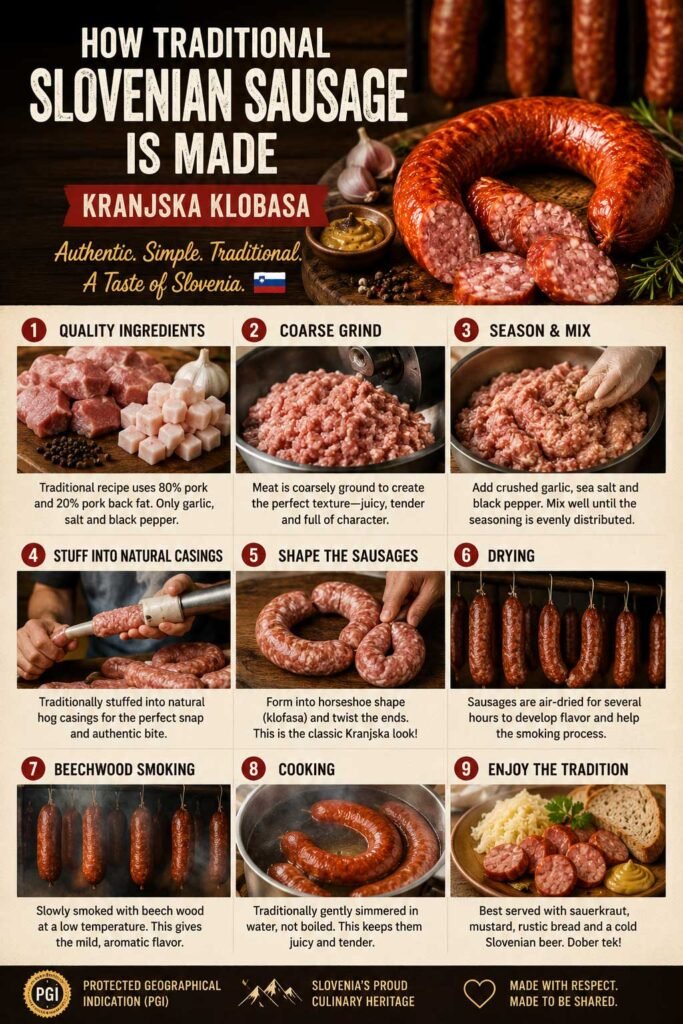
Smoking is one of the most important parts of making authentic Kranjska klobasa. In Slovenia, smoking meat is not simply a cooking technique — it is a centuries-old preservation tradition deeply connected to village life, winter preparation, and mountain cuisine.
Unlike heavily smoked barbecue meats, traditional Slovenian specialty are known for their lighter, cleaner smoke flavor that enhances the pork rather than overpowering it.
Why Beech Wood Is Preferred
Traditional Slovenian sausage makers almost always use beech wood for smoking.
Beech wood is traditionally preferred because it produces a mild, balanced smoke that enhances the pork without overpowering it. It also helps create the classic reddish-brown casing color associated with authentic Slovenian sausages while burning steadily at low smoking temperatures.
👉 This is one of the defining characteristics of authentic Slovenian smoked sausage.
Compared to stronger woods like hickory or mesquite, beech wood creates a softer and more balanced smoke profile that complements the minimalist seasoning used in authentic Kranjska klobasa.
Best Woods for Smoking Sausage
| Wood Type | Smoke Strength | Flavor Profile | Best Use |
|---|---|---|---|
| Beech Wood | Mild | Clean and balanced | Traditional Slovenian sausage |
| Hickory | Strong | Bold and smoky | American BBQ meats |
| Applewood | Mild-Sweet | Slight sweetness | Poultry and lighter sausages |
| Oak | Medium | Earthy and rich | General meat smoking |
| Mesquite | Very Strong | Intense smoke flavor | Fast grilling only |
👉 Authentic Kranjska klobasa traditionally uses beech wood because it enhances the pork without overpowering the delicate flavor balance.
Cold Smoke vs Hot Smoke
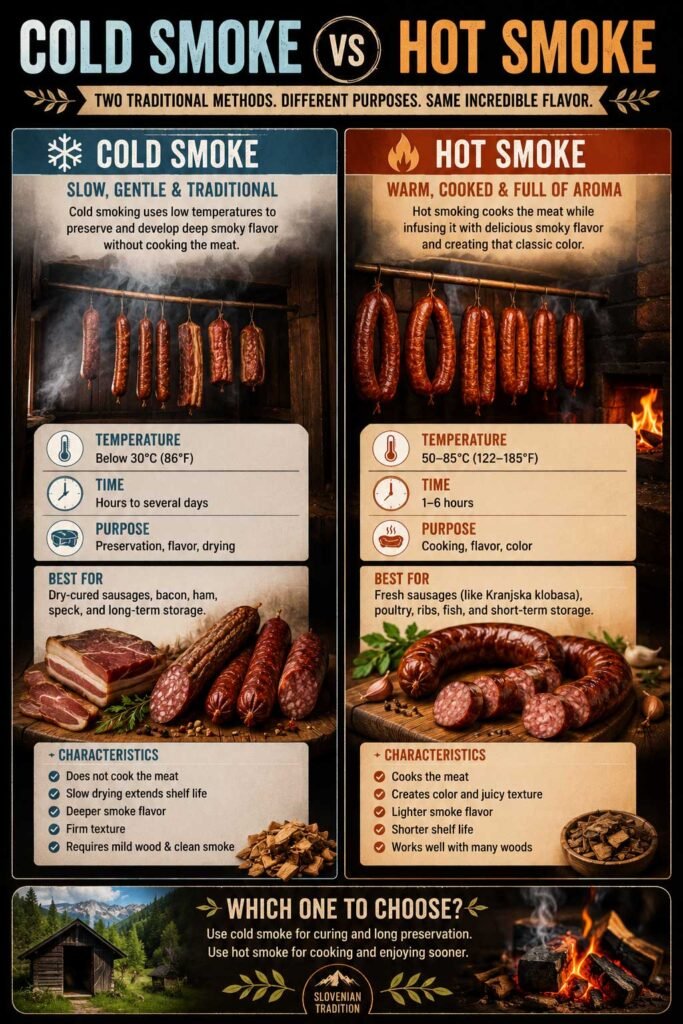
Traditional European sausage making often uses two smoking styles.
| Smoking Style | Temperature | Purpose |
|---|---|---|
| Cold Smoking | Below 30°C (86°F) | Preservation and flavor |
| Hot Smoking | 50–85°C (122–185°F) | Cooking + smoking |
Cold Smoking
Cold smoking is slower and gentler. It:
- Dries the sausage gradually
- Adds deep smoky aroma
- Helps preserve meat for longer storage
Traditional cold smoking could last anywhere from several hours to multiple days depending on the type of meat being preserved.
Hot Smoking
Kranjska klobasa is usually made using a lighter hot-smoking process.
This method:
- Cooks the sausage
- Adds mild smoke flavor
- Creates the classic reddish casing
- Keeps the sausage juicy
👉 Authentic Slovenian sausages are smoked carefully at lower temperatures than American barbecue meats.
If you’re new to meat smoking, our beginner smoking guide explains the differences between hot smoking, cold smoking, and curing methods.
Traditional Slovenian sausage making depends heavily on temperature control, gentle smoke, and proper airflow — and the right tools make a massive difference.
| Product | Why It’s Great | Best For | Check Price |
|---|---|---|---|
| Masterbuilt Digital Electric Smoker | Excellent beginner smoker | Low-temp smoking | Check Price on Amazon |
| ThermoPro Wireless Meat Thermometer | Monitor temps accurately | Smoking sausage | Check Price on Amazon |
| Beech Wood Smoking Chunks | Authentic mild smoke flavor | Slovenian-style smoking | Check Price on Amazon |
| Stainless Steel Sausage Hooks | Easy hanging and drying | Smokehouse setup | Check Price on Amazon |
The Role of Traditional Smokehouses
For generations, rural families in Slovenia built small smokehouses beside homes, barns, or mountain cottages to prepare and preserve meat for winter. These traditional structures became an essential part of village life, especially in colder Alpine regions where preserving food was critical for survival.
Unlike modern barbecue smoking, traditional Slovenian smokehouses focused on slow, gentle smoking designed to enhance the meat without overpowering it. The smokehouses were carefully built to maintain:
- Low steady temperatures
- Slow natural airflow
- Consistent drying conditions
- Mild smoke circulation
Inside, families would slowly smoke and cure:
- Homemade sausages
- Bacon slabs
- Hams
- Pork belly
- Other meats prepared for winter storage
| Traditional Smokehouse Feature | Purpose |
|---|---|
| Low temperatures | Prevented meat from drying too quickly |
| Slow airflow | Created balanced smoke flavor |
| Gentle smoke | Preserved the natural pork taste |
| Long smoking process | Improved texture and aroma |
This slow-smoking tradition helped create the clean, delicate flavor profile still associated with authentic Kranjska klobasa today.
Even now, some rural Slovenian communities continue using traditional smokehouses during seasonal meat preparation festivals and family gatherings, preserving techniques that have been passed down for centuries.
These traditional smoked meat recipes helped shape the rich preservation culture found throughout Slovenia and the Balkans.
How Smoking Preserves Meat
Before refrigeration existed, smoking was one of the most effective ways to preserve meat across Central Europe and the Balkans. Combined with salt and cool temperatures, smoking helped slow spoilage and allowed families to safely store sausages and cured meats throughout winter.
The smoking process works by gradually reducing surface moisture while exposing the meat to natural compounds found in wood smoke. These compounds help protect the meat while also creating the rich aroma and savory flavor associated with traditional smoked sausages.
| Smoking Benefit | Result |
|---|---|
| Reduced moisture | Slower spoilage |
| Protective smoke compounds | Improved preservation |
| Slow drying | Better texture |
| Natural smoke flavor | Richer taste |
👉 Traditional Slovenian cuisine developed around these preservation techniques, making smoked meats an essential part of everyday village life.
Why Slovenian Sausages Use Lighter Smoke
One of the biggest differences between Slovenian sausages and many Balkan grilled meats is the intensity of the smoke flavor.
Authentic Kranjska klobasa uses a lighter smoking approach designed to complement the pork rather than overpower it. Slovenian sausage making emphasizes:
- Clean meat flavor
- Delicate smoke balance
- Minimal seasoning
- Gentle cooking techniques
By contrast, many Balkan grilled meats focus on stronger charcoal flavor, heavier charring, and more aggressive spice profiles.
Unlike heavily charred Balkan grilled meat recipes, traditional Slovenian sausages focus on delicate smoke and balanced pork flavor.
| Slovenian Sausage Style | Balkan Grilled Meat Style |
|---|---|
| Light beechwood smoke | Strong charcoal flavor |
| Mild seasoning | Heavier spice blends |
| Gentle cooking | Open-fire grilling |
| Pork-focused flavor | Smoke and char emphasis |
For example:
- Kranjska klobasa is lightly smoked and gently cooked
- Ćevapi is traditionally grilled directly over charcoal with no smoking
This lighter Slovenian approach reflects the country’s Alpine and Central European culinary influences, where balance and ingredient quality are prioritized over intense smoke or spice.
Traditional Smoking Tips
Successful Slovenian sausage making depends on patience, low temperatures, and gentle smoke. Using mild woods like beech and maintaining steady airflow helps preserve the juicy texture and delicate flavor that define authentic Kranjska klobasa.
👉 Traditional sausage should be smoked slowly and never rushed.
👉 Great traditional sausage is never rushed — slow smoking is what creates the authentic flavor, texture, and aroma that define Slovenian smoked meats.
Traditional Kranjska Klobasa Smoking Process
| Step | Temperature | Purpose |
|---|---|---|
| Drying | ~50°C (122°F) | Removes surface moisture |
| Light Smoking | ~55°C (130°F) | Adds flavor and color |
| Final Cooking | ~85°C (185°F) | Fully cooks sausage |
| Internal Temp Goal | 70°C (158°F) | Safe finished temperature |
Traditional Smoking Essentials:
- Mild beech wood smoke
- Slow airflow
- Low steady temperatures
- Patience and gradual cooking
👉 This smoking guide makes it easier to recreate authentic Slovenian sausage-making methods at home.
How to Serve Kranjska Klobasa (Authentic Slovenian Style)
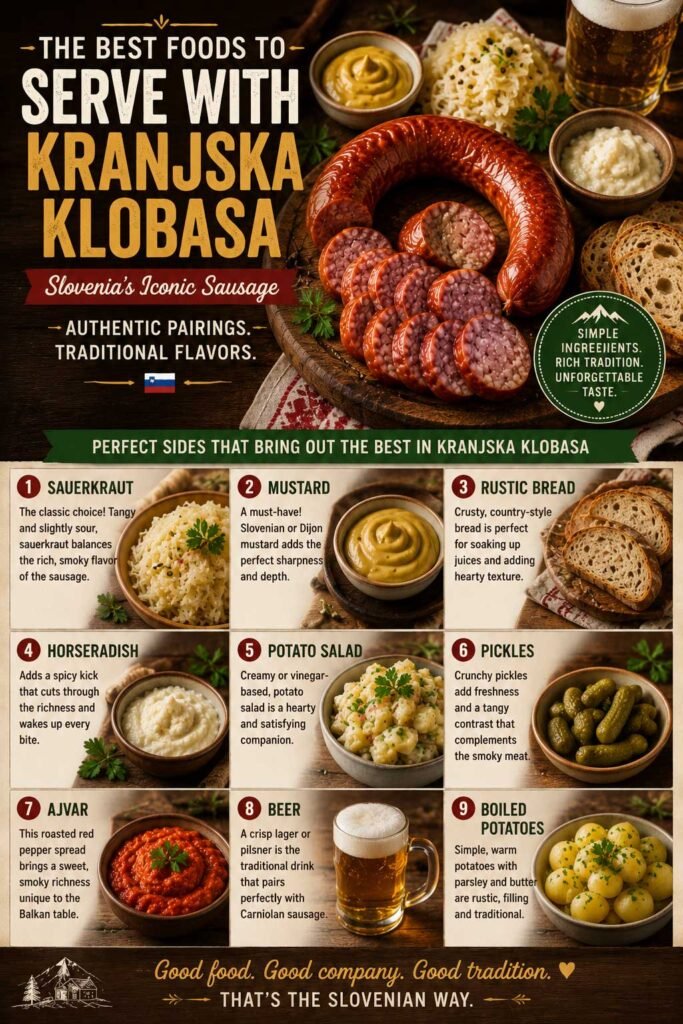
In Slovenia, Kranjska klobasa is traditionally served in a simple, rustic way that highlights the sausage’s rich smoky flavor and juicy texture.
Best Side Dishes for Kranjska Klobasa
| Side Dish | Why It Pairs Well |
|---|---|
| Sauerkraut | Adds acidity and balances the richness |
| Sour turnip | Traditional Slovenian winter pairing |
| Fresh rustic bread | Perfect for soaking up juices and mustard |
| Strong mustard | Adds sharpness and depth |
| Horseradish | Brings heat and freshness |
| Mustard | Traditional sharp contrast |
| Cold beer | Traditional and refreshing with smoked meats |
Pair this sausage with homemade Slovenian bread recipes for a truly authentic village-style meal.
Traditional Serving Method
Authentic Kranjska klobasa is often:
- Gently boiled or simmered for a few minutes
- Served hot immediately after reheating
- Paired with hearty side dishes rather than complex sauces
👉 Unlike many grilled sausages, traditional Slovenian preparation focuses on preserving the sausage’s natural flavor and juicy texture.
Modern Serving Ideas
Today, many modern cooks also enjoy Kranjska klobasa grilled over charcoal for extra crispness or served inside rustic sandwich rolls with mustard, onions, and roasted potatoes. Food markets and festivals across Slovenia often present the sausage in more casual street-food style preparations while still preserving its traditional flavor.
No matter how it’s served, Kranjska klobasa remains one of the most beloved comfort foods in Slovenian cuisine.
Rustic Serving Essentials for Kranjska Klobasa
Serving Kranjska klobasa traditionally becomes even more memorable with rustic tableware and authentic serving accessories inspired by Slovenian village kitchens.
| Product | Why It’s Great | Best For | Check Price |
|---|---|---|---|
| Acacia Wood Serving Board | Rustic sausage presentation | Entertaining | Amazon |
| German Beer Stein Mug Set | Traditional beer serving | Sausage dinners | Amazon |
| Stone Ground Dijon Mustard Gift Set | Perfect sausage pairing | Serving | Amazon |
| Laguiole Style Steak Knife Set | Elegant slicing and serving | Rustic meals | Amazon |
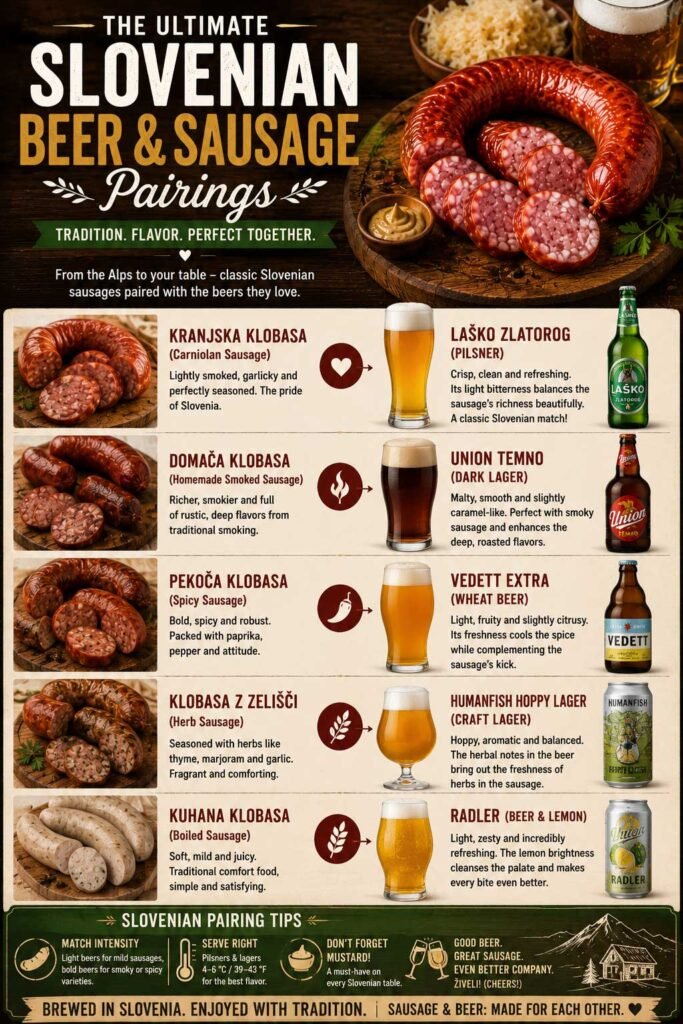
Best Beer Pairings for Kranjska Klobasa
The rich pork flavor and delicate smoke of Kranjska klobasa pair exceptionally well with crisp Central European-style beers.
Traditional favorites include:
- Pale lagers
- Pilsners
- Amber lagers
- Light wheat beers
The carbonation and bitterness help balance the richness of the sausage while refreshing the palate between bites.
👉 In Slovenia, sausage and beer remain one of the country’s most beloved comfort food pairings.
Best Drinks to Pair With Kranjska Klobasa
| Drink | Why It Pairs Well |
|---|---|
| Lager Beer | Refreshes the palate between bites |
| Pilsner | Crisp bitterness balances pork fat |
| Dark Beer | Complements smoky flavors |
| Apple Cider | Adds slight sweetness and acidity |
| Dry White Wine | Cuts through richness cleanly |
👉 In traditional Slovenian taverns, sausage is often paired with cold local lager or lightly bitter Central European-style beer.
Variations (Modern Twists)
While authentic Kranjska klobasa follows a protected traditional recipe, modern cooks have created several creative variations inspired by Balkan and Central European sausage traditions.
Some versions include melted cheese for extra richness, while spicier adaptations use paprika, chili flakes, or additional garlic for a bolder flavor profile.
Today, the sausage is also commonly grilled instead of gently simmered, creating a crispier casing and stronger smoky flavor. In food markets and festivals, Kranjska klobasa is often served street-food style inside rustic bread rolls with mustard, onions, or roasted potatoes.
Explore more authentic Balkan recipes featuring smoked meats, grilled dishes, and traditional comfort foods.
👉 Despite these modern twists, authentic Carniolan sausage remains famous for its simplicity, delicate smoke, and pork-forward flavor.
Where Kranjska Klobasa Is Most Popular in Slovenia
Although Kranjska klobasa is enjoyed throughout Slovenia, it remains especially connected to the country’s Alpine regions, traditional villages, and historic towns where sausage making has been part of local culture for generations.
The sausage originated in the historic region of Carniola (Kranjska), which today includes parts of central and northwestern Slovenia. Over time, it became one of the country’s most recognized traditional foods and is now commonly served in:
- Mountain inns and alpine guesthouses
- Village festivals and local markets
- Traditional Slovenian taverns
- Holiday gatherings and family celebrations
Alpine & Rural Regions
In Slovenia’s mountain regions, smoked sausages have long been an important part of winter food culture. Rural communities traditionally relied on smoking, curing, and preserving pork to prepare for colder months, making Kranjska klobasa a staple of village kitchens and farmhouse meals.
Even today, visitors traveling through Alpine areas often find authentic Carniolan sausage served alongside:
- Sauerkraut
- Rustic bread
- Potatoes
- Mustard
- Local beer
The simple, hearty nature of the dish reflects the practical cooking traditions of Slovenia’s rural mountain communities.
Ljubljana & Traditional Markets
The capital city of Ljubljana also plays an important role in preserving Slovenia’s culinary traditions. Traditional food markets, festivals, and local restaurants throughout the city frequently feature Kranjska klobasa as a symbol of Slovenian heritage cuisine.
In many food festivals and open-air markets, the sausage is commonly served:
- Freshly reheated
- With mustard and horseradish
- Inside rustic bread rolls
- Alongside regional beers
👉 For many Slovenians, Kranjska klobasa represents not only a beloved comfort food, but also an important connection to the country’s Alpine roots, village traditions, and culinary identity.
Common Mistakes to Avoid When Making Kranjska Klobasa

Even though Kranjska klobasa uses simple ingredients, a few small mistakes can dramatically affect the final texture and flavor.
Following proper sausage smoking tips can dramatically improve texture, moisture, and overall flavor.
| Mistake | Why It’s a Problem | How to Avoid It |
|---|---|---|
| Over-grinding the meat | Creates a soft, mushy sausage instead of the traditional coarse texture | Use a coarse grind (10–12 mm plate) |
| Adding too much garlic | Overpowers the clean pork flavor and loses authenticity | Keep seasoning simple and balanced |
| Smoking at high temperatures | Causes dry texture and fat loss | Smoke slowly at low temperatures |
| Skipping the drying phase | Leads to uneven color and poor smoke adhesion | Let sausages dry before smoking |
| Using warm meat | Fat smears during mixing and stuffing | Keep meat and fat cold at all times |
| Overstuffing the casings | Can cause bursting during cooking | Stuff firmly but not too tight |
| Using too much smoke | Masks the delicate traditional flavor | Use light beech wood smoke only |
👉 Authentic Kranjska klobasa is all about balance, texture, and simplicity — small details make a huge difference.
Pro Tips (Chef Secrets)
Making authentic Kranjska klobasa is all about precision, temperature control, and respecting tradition. These professional tips will help you achieve the best texture and flavor possible.
| Pro Tip | Why It Matters |
|---|---|
| ✅ Use very cold meat and fat | Prevents fat smearing and keeps the sausage juicy with a clean texture |
| ✅ Keep the grind coarse | Traditional Carniolan sausage should have visible meat texture, not a fine paste |
| ✅ Don’t over-smoke the sausage | Kranjska klobasa is known for a delicate smoke flavor, not a heavy barbecue taste |
| ✅ Use beech wood if possible | Beech wood creates the authentic Slovenian aroma and color |
| ✅ Cook by internal temperature | Always cook until the sausage reaches 70°C (158°F) internally for proper texture and safety |
| ✅ Let sausages dry before smoking | Dry casings absorb smoke more evenly and develop better color |
| ❌ Avoid fillers or breadcrumbs | Authentic recipes use only meat, fat, salt, garlic, and pepper |
| ❌ Don’t rush the smoking process | Slow heating preserves juiciness and prevents dry sausage |
👉 Traditional Slovenian sausage making focuses on simplicity, patience, and high-quality pork rather than heavy seasoning or additives.
Nutrition Snapshot (Approximate)
Kranjska Klobasa is a rich, protein-packed traditional sausage that fits well into low-carb and keto-style diets.
| Nutrient | Approximate Amount |
|---|---|
| Calories | 320–380 kcal |
| Protein | 16–20 g |
| Fat | 28–32 g |
| Carbohydrates | 1–2 g |
| Sugar | 0 g |
| Sodium | Moderate to High |
👉 Because authentic Kranjska klobasa contains mostly pork and pork fat, it is naturally:
- High in protein
- Low in carbohydrates
- Keto-friendly
- Very filling and energy-dense
Like most traditional smoked sausages, it’s best enjoyed in moderation alongside fresh bread, mustard, sauerkraut, or vegetables.
Beginner Sausage-Making Kit
Ready to start making homemade smoked sausage yourself? These beginner-friendly tools are some of the easiest ways to recreate authentic Balkan and Slovenian flavors at home.
| Product | Why It’s Useful | Best For | Check Price |
|---|---|---|---|
| Complete Sausage Making Kit | All-in-one starter setup | Beginners | Amazon |
| Electric Meat Grinder and Sausage Stuffer Combo | Multi-purpose sausage making | Home cooks | Amazon |
| Digital Kitchen Scale | Accurate meat ratios | Precision prep | Amazon |
| Vacuum Sealer Machine | Preserve smoked sausages longer | Storage | Amazon |
Storage & Reheating Tips
Proper storage helps preserve the flavor, texture, and smoky aroma of homemade Kranjska klobasa.
| Storage Method | Recommended Time |
|---|---|
| Refrigerated | 4–5 days |
| Frozen | 2–3 months |
| Vacuum sealed | Longer freshness |
Best Reheating Methods
| Method | Result |
|---|---|
| Gentle simmering | Traditional and juicy |
| Grilling | Crispier casing |
| Pan searing | Rich caramelized flavor |
| Oven reheating | Even warming |
Avoid overheating the sausage, as excessive heat can dry out the meat and reduce the delicate smoke flavor.
👉 This classic Carniolan sausage is best reheated slowly to preserve its juicy texture and balanced flavor.
FAQ About Kranjska Klobasa (Carniolan Sausage)
Is Kranjska Klobasa fully cooked?
Yes — after the smoking and heating process, Kranjska klobasa is fully cooked and safe to eat. Traditionally, it’s simply reheated in hot water before serving.
Can I grill Kranjska Klobasa instead of boiling it?
Yes, you can grill it for extra smoky flavor and crisp texture. However, authentic Slovenian preparation usually involves gently boiling or simmering the sausage rather than grilling.
What wood is traditionally used for smoking?
Authentic Kranjska klobasa is traditionally smoked with beech wood, which gives the sausage its mild, delicate smoky aroma without overpowering the pork flavor.
Is Kranjska Klobasa the same as kielbasa?
Not exactly. While Kranjska klobasa is similar to kielbasa or Polish sausage in appearance, the Slovenian version follows stricter traditional standards, uses fewer spices, and has a cleaner pork-forward flavor.
Why is Kranjska Klobasa considered special?
Kranjska klobasa is one of the most famous foods of Slovenia and holds Protected Geographical Indication (PGI) status in the European Union. Its recipe and production methods are carefully regulated to preserve authenticity.
Can I make Kranjska Klobasa without a smoker?
Yes, although traditional flavor comes from light smoking. You can still make a homemade version by baking or poaching the sausages, but the taste will be less authentic.
What is the best way to serve Carniolan sausage?
The traditional Slovenian serving style includes:
- Sauerkraut
- Mustard
- Fresh rustic bread
- Horseradish
- Cold beer
How long does homemade Kranjska Klobasa last?
Properly refrigerated homemade sausages typically last:
- 4–5 days fresh
- Up to 2–3 months frozen
What meat is used in authentic Kranjska Klobasa?
Traditional recipes use:
- 80% lean pork
- 20% pork back fat
The seasoning is intentionally simple: salt, garlic, black pepper, and a touch of smoke.
Browse more traditional European sausage recipes to discover regional smoking and seasoning styles.
Final Thoughts
Kranjska Klobasa is more than just a traditional sausage — it’s a proud symbol of Slovenia’s culinary heritage, craftsmanship, and simplicity. Made with only a handful of ingredients, this iconic Carniolan sausage proves that authentic flavor comes from quality meat, careful preparation, and time-honored techniques.
For more Balkan comfort food recipes, explore our growing collection of traditional dishes from Slovenia and across the Balkans.
Whether served with sauerkraut, mustard, or fresh rustic bread, Kranjska klobasa delivers the rich, smoky comfort that has made it one of the most beloved dishes in Slovenian cuisine for generations. Once you try homemade Carniolan sausage, you’ll understand why this traditional Balkan specialty continues to earn recognition around the world.
Inspiration and adaptation: cosmopolitan.si, greenhills.si, wikipedia.org
Explore other recipes from the traditional Slovenian cuisine.
Did you make this Kranjska Klobasa (Carniolan Sausage) recipe?
Please let me know how it turned out for you! Leave a comment below and don’t forget to follow us. Sharing is caring!