


Idrija Žlikrofi (Dumplings)

Idrija Žlikrofi is a very traditional Slovenian dish from Idrija, a small town in the Western part of the country. An interesting note here is that Idrija žlikrofi is so important in Slovenian cuisine. In 2002 they were officially protected at the national level and a few years later in 2010, they were protected at the European level and became the first Slovenian dish to do so.
This popular Idrija Žlikrofi potato filled pasta dish can be described as a variety of ravioli. Žlikrofi recipe uses two layers of thin pasta dough wrapped around the filling, which is a small mashed potato ball and then resembling a shape of a bicorne hat.
Soft pasta dough wrapped around a savory potato filling and traditionally served with lamb sauce (bakalca), this dish sits somewhere between Italian ravioli and Central European dumplings—but with a distinctly Balkan and Alpine identity.
The history of one of the most popular Slovenian dishes can be traced back to the mid 19th century.
Žlikrofi are often served as part of a larger Balkan-style meal, alongside comforting dishes like sarma or hearty stews such as pasulj, creating a rich and satisfying traditional table.
What are Idrija žlikrofi?
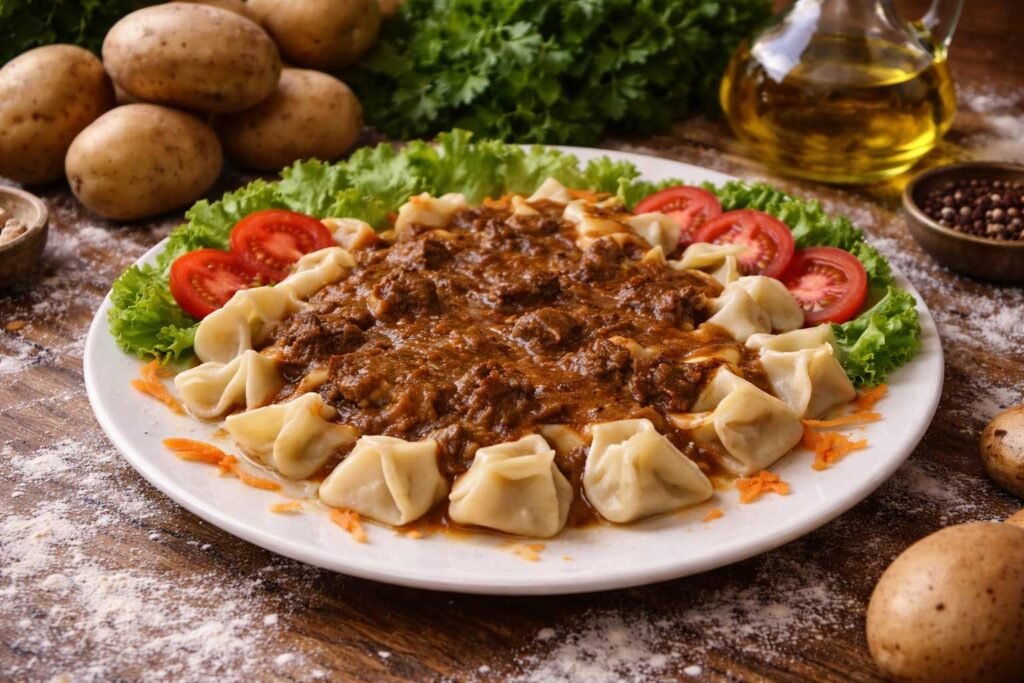
At their core, Idrija žlikrofi are small dumplings made from thin pasta dough and filled with a seasoned potato mixture. While this description may sound simple, what sets them apart is their distinctive shape and cultural identity.
Each dumpling is carefully formed to resemble a small hat, often described as Napoleon’s hat. This shape is not accidental—it is a defining characteristic of authentic žlikrofi and one of the elements that contributed to their protected status.
Žlikrofi are traditionally:
- handmade
- bite-sized
- filled with potato-based mixture
- served with lamb sauce or butter-based toppings
The dish Idrija Žlikrofi recipe with potato filled pasta occupies a unique space between several well-known European foods. It shares similarities with Italian ravioli, Polish pierogi, and even certain Balkan dumplings, yet it remains entirely its own. The dough is thinner than pierogi, the filling is simpler than most ravioli, and the shaping technique is uniquely Slovenian.
Žlikrofi are traditionally served either as a standalone dish with butter or, more commonly, with a rich lamb sauce known as bakalca. This pairing transforms them into a deeply satisfying and culturally significant meal.
They are one of the rare Balkan-region dishes with official protected status, meaning the preparation method and ingredients are culturally preserved.
Like many traditional Balkan dishes, žlikrofi are simple in ingredients but deeply connected to regional cooking traditions, much like slow-cooked recipes such as pasulj or preserved foods found in Balkan pickled foods.
The history of žlikrofi in Slovenia
To understand žlikrofi, you have to understand the history of Idrija itself.
Idrija rose to prominence as one of the world’s most important mercury mining centers. Life in the town revolved around the mines, and the population consisted largely of miners and their families. These workers needed meals that were:
- filling
- affordable
- made from accessible ingredients
- easy to prepare in large quantities
While Idrija Žlikrofi are not typically considered a breakfast dish, they belong to the same rich culinary tradition that includes hearty morning meals found in traditional Balkan breakfast foods, where simple ingredients are transformed into satisfying and energy-rich recipes.
Žlikrofi emerged from this environment. Potatoes, introduced to Europe centuries earlier, became a staple ingredient. Flour was readily available, and simple fats like butter or lard were commonly used. Combining these elements into dumplings created a dish with potato filled pasta that could sustain workers through long, physically demanding days.
Over time, what began as a practical meal evolved into a cherished regional specialty. Families developed their own techniques, shaping styles became standardized, and the dish gained recognition beyond Idrija.
These traditional dumplings reflect a broader pattern in Balkan cuisine, where humble ingredients are transformed into deeply satisfying meals, much like sarma or other family-style recipes passed down through generations.
Eventually, žlikrofi were recognized as a cultural treasure, and today they are protected under European Union designation, ensuring that their preparation remains true to tradition.
Why Idrija žlikrofi are protected
One of the most fascinating aspects of this dish is its official recognition as a protected traditional food.
Idrija žlikrofi have received Protected Geographical Indication (PGI) status, which means they are legally tied to their region and must meet specific criteria to be considered authentic.
This includes:
- the shape of the dumplings
- the composition of the filling
- the method of preparation
- the regional origin
This protection elevates žlikrofi beyond a simple recipe. It places them in the same category as famous European foods like Parmigiano Reggiano or Champagne, where authenticity and origin are essential.
For your site, this is a huge authority signal. It means you are not just sharing a recipe—you are documenting a culturally protected culinary tradition.dumplings” to a recognized cultural product, similar to how certain cheeses or wines are protected.
What žlikrofi taste like
The flavor of žlikrofi is subtle, balanced, and deeply comforting.
The potato filling provides a soft, earthy base. When combined with sautéed onions and butter, it gains a gentle sweetness and richness. The dough, being thin and delicate, does not overpower the filling but instead acts as a soft wrapper that enhances the overall texture.
When served with lamb sauce, the dish becomes more complex. The richness of the meat, the depth of the sauce, and the softness of the dumplings create a combination that is both rustic and refined.
Without sauce, žlikrofi are lighter and more delicate. With butter or a simple topping, they can feel almost like a comfort food version of pasta.
This balance is what makes them special. They are not heavy in the way some dumpling dishes are, nor are they overly rich. They sit perfectly in between, making them versatile and widely appealing.
The taste comes from:
- smooth potato filling
- sautéed onions
- subtle fat (butter or lard)
- gentle seasoning
The dough is thin and delicate, allowing the filling to shine.
When served with lamb sauce, the dish becomes:
- rich
- savory
- deeply satisfying
Without sauce, they are lighter and more similar to dumplings or ravioli.
Ingredients for traditional Idrija Žlikrofi Recipe
Dough
- 300 g flour
- 1 egg
- water (as needed)
- pinch of salt
Filling
- 500 g potatoes
- 1 onion
- 2 tbsp butter or lard
- salt
- black pepper
Understanding the filling
The filling is simple but critical.
It should be:
- smooth but not watery
- well-seasoned
- slightly buttery
- soft enough to shape
The onion is sautéed until golden, adding depth and sweetness. This transforms basic potatoes into a flavorful dumpling filling.
The filling is the heart of žlikrofi, and getting it right is essential.
Potatoes must be cooked until soft and then mashed into a smooth consistency. The goal is not a chunky filling, but a cohesive, almost creamy mixture that can be easily shaped.
The onion is finely chopped and sautéed until golden. This step adds depth and transforms the filling from plain to flavorful. Butter or lard is added to create richness and help bind the mixture together.
Seasoning should be balanced but not overpowering. Žlikrofi are not meant to be heavily spiced. Instead, the focus is on natural flavors.
How to shape žlikrofi (signature technique)
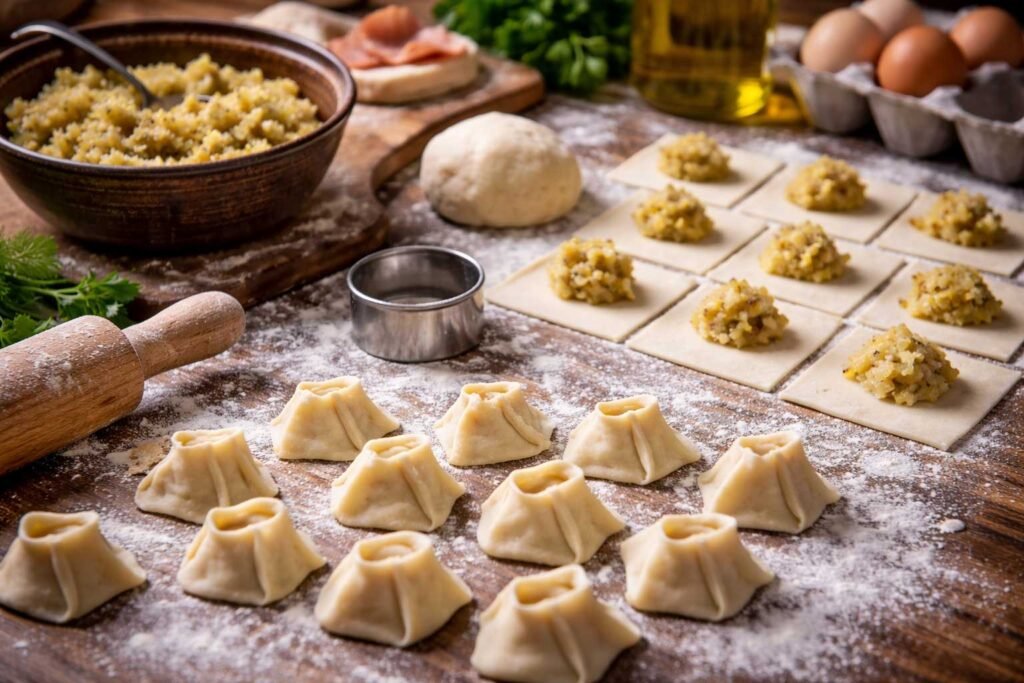
Shaping is what truly defines žlikrofi.
The dough is rolled thin and cut into strips. Small portions of filling are placed along the strip, and the dough is folded over them. Each section is then pressed and pinched to create the signature “hat” shape.
This process takes practice. It is not just about enclosing the filling—it is about creating a uniform, recognizable form that reflects tradition.
In Slovenia, experienced cooks can shape dozens of žlikrofi quickly and consistently, each one nearly identical.
Idrija Žlikrofi
Ingredients
For the dough:
- 1-2 eggs
- 1 tbs oil
- water or milk
For the filling:
- 500 g potatoes
- 50 g oil
- salt
- chives
- 50 g onions
- black pepper
- sweet marjoram
Instructions
- Mix from eggs, flour, and water or you can substitute with milk and knead dough until it becomes elastic and does not stick to your hands.
- Transfer it to a large bowl and apply oil on the surface, and cover it and let it rest for 1 hour.
- In a large pot fill with water bring it to boil and add the potatoes. Boil them until tender then while still warm mash them.
- Place a frying pan over medium heat with lard or oil and saute the chopped onion, then add the herbs, and spices and mix well.
- Add the mixture to the mashed potatoes and mix well and form even, large hazelnut balls.
- Roll out the rested dough to a thickness of one to two millimeters and place the filling onto the dough.
- Roll the dough thinly (1 – 2 mm), and place the filling onto the dough then roll the dough over the filling, and pinch it together.
- Press each one down in the middle to get the shape Coat the dough around the balls with scrambled egg.
- Prepare boiling salty water, then add the žlikrofi and cover with a lid.
- When you see they start to float they are ready.
- Drain them and serve hot with a vegetable sauce ¨bakalca¨.
Traditional lamb sauce (bakalca)
Žlikrofi are most traditionally served with a lamb sauce known as bakalca.
This sauce is slow-cooked and deeply flavorful, made with lamb, onions, garlic, herbs, and sometimes wine. It adds richness and complexity to the dish, turning simple dumplings into a full, satisfying meal.
It adds:
- depth
- richness
- traditional authenticity
While žlikrofi can be served without it, bakalca is what gives the dish its traditional identity in Idrija.
Without it, žlikrofi are still delicious—but bakalca makes them iconic.
Cooking tips for perfect žlikrofi
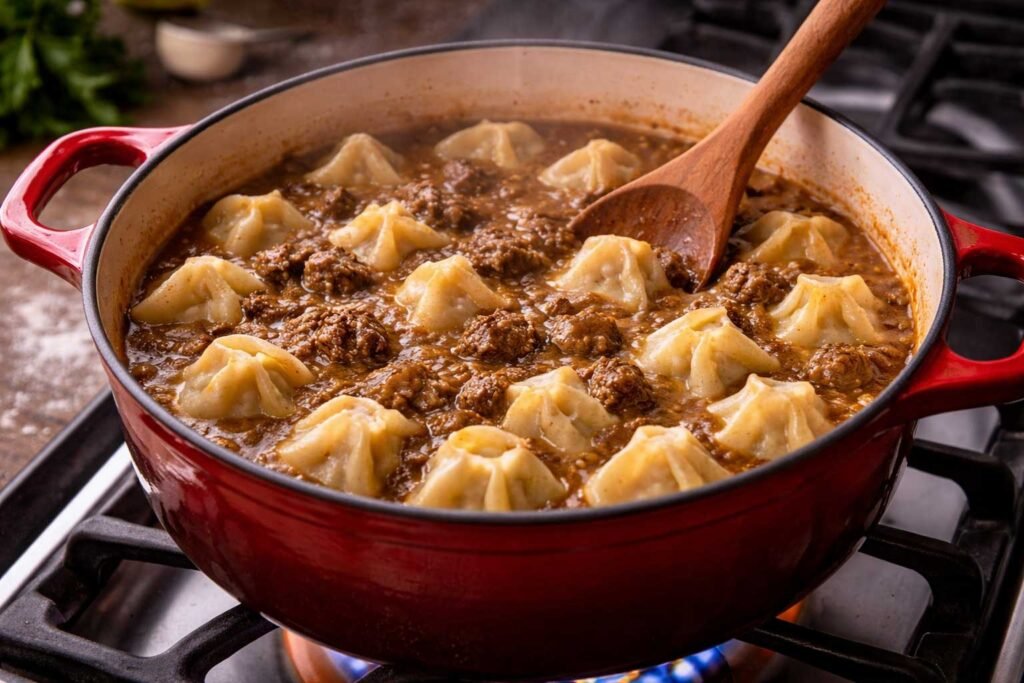
Making žlikrofi successfully depends on technique more than ingredients.
The dough must be thin but strong enough to hold the filling. If it is too thick, the dumplings will feel heavy. If it is too thin, they may break.
The filling should be smooth and well-seasoned. A bland filling will result in a bland dish.
Shaping should be consistent. This ensures even cooking and a better presentation.
Finally, cooking time is short. Overcooking can cause the dumplings to fall apart.
Common mistakes to avoid
One of the most common mistakes is making the dough too thick. This results in dumplings that feel dense and heavy instead of light and delicate.
Another issue is underseasoning the filling. Because the ingredients are simple, seasoning plays a crucial role.
Improper sealing can also cause problems. If the edges are not pressed properly, the dumplings may open during cooking.
Finally, rushing the process often leads to uneven shapes and inconsistent results.
Žlikrofi vs ravioli vs pierogi
| Dish | Dough | Filling | Origin |
|---|---|---|---|
| Žlikrofi | thin pasta | potato | Slovenia |
| Ravioli | pasta | cheese/meat | Italy |
| Pierogi | thicker | potato/cheese | Poland |
👉 Žlikrofi are closest to ravioli, but culturally distinct.
What to serve with žlikrofi
Žlikrofi can be served in several ways depending on the occasion.
They pair well with:
- lamb sauce
- butter and herbs
- sour cream
- roasted meats
- light salads
- pickled vegetables
For a full Balkan meal, they can be combined with dishes like:
- Sarma
- Pasulj
- Ajvar
- Shopska salad
These combinations create a balanced table with both rich and fresh elements.
Žlikrofi are traditionally served with rich meat-based sauces, but they also pair beautifully with other Balkan dishes. You can serve them alongside ajvar, a roasted red pepper spread that adds depth and sweetness, or complement them with fresh dishes like Shopska salad for balance. Žlikrofi can be part of a larger spread that includes tangy sides from Balkan pickled foods. For a more complete meal, consider adding classic comfort dishes such as sarma or a warm bowl of pasulj.
Storage and reheating
Žlikrofi are best enjoyed fresh, but they can be stored if necessary.
Cooked dumplings can be refrigerated for up to two days. When reheating, it is best to use gentle heat and add a bit of butter or water to maintain moisture.
They can also be frozen before cooking, making them a practical option for meal preparation.
Žlikrofi across the region
While žlikrofi are specific to Slovenia, similar dishes exist across the Balkans and Central Europe.
In Bosnia, dumplings like klepe are filled with meat and served with yogurt or garlic sauce.
In Serbia, dough-based dishes often include cheese or potato fillings, though the shapes differ.
In Croatia, pasta influences are stronger along the coast, leading to dishes more similar to Italian ravioli.
These connections show how food traditions overlap across the region while still maintaining unique identities.
FAQ About Idrija Žlikrofi Recipe
What are žlikrofi?
Žlikrofi are traditional Slovenian dumplings from the town of Idrija, typically filled with a seasoned potato mixture and shaped into small, hat-like forms.
Are Idrija Žlikrofi Recipe difficult to make?
They are not difficult, but they require patience and attention to detail, especially when shaping the dumplings properly.
What is the traditional filling?
The classic filling includes potatoes, onion, butter (or pork fat), and simple seasonings like salt and pepper.
Are žlikrofi similar to ravioli?
They are similar in concept, but žlikrofi have a unique shape, texture, and cultural identity specific to Slovenia.
Can žlikrofi be frozen?
Yes, they can be frozen before cooking. This makes them convenient for preparing in advance.
What sauce is traditionally served with žlikrofi?
They are most traditionally served with bakalca, a rich lamb stew sauce from the Idrija region.
What dishes pair well with žlikrofi?
Žlikrofi pair well with traditional Balkan dishes like sarma, pasulj, ajvar, and fresh sides such as Shopska salad, creating a balanced and authentic meal.
This post contains affiliate links. This means I may earn a small commission if you purchase through these links, at no additional cost to you. I only recommend products that are relevant to traditional Balkan cooking and that I believe will genuinely help you in your kitchen.
Dumpling cooking equipment
To make authentic Idrija žlikrofi at home, having the right tools can make preparation easier and more precise. From shaping dumplings to rolling thin dough, these essential kitchen tools help achieve the traditional texture and appearance of this classic Slovenian dish. Using a pasta roller can dramatically improve consistency when making the dough thin.
| Product | Use | Price | Check price |
|---|---|---|---|
| Dumpling press | Faster shaping | $ | Check price |
| Dough scraper | Clean cutting | $ | Check price |
| Mixing bowls set | Prep work | $ | Check price |
| Kitchen scale | Accurate measurements | $ | Check price |
| Pasta roller | Thin dough | $$ | Check price |
| Dumpling cutter | Uniform shape | $ | Check price |
| Rolling pin | Dough prep | $ | Check price |
Balkan cooking essentials
| Product | Use | Price | Check price |
|---|---|---|---|
| Dutch oven | Sauces and stews | $$$ | Check price |
| Wooden spoon | Traditional cooking | $ | Check price |
| Serving plates | Presentation | $$ | Check price |
| Herb chopper | Prep work | $ | Check price |
Final thoughts
Idrija žlikrofi are a perfect example of how a simple dish can carry centuries of tradition. From miners’ kitchens to protected culinary heritage, these dumplings represent the heart of Slovenian cooking.
Soft, rich, and deeply authentic, they deserve a place in every serious Balkan recipe collection.
Inspiration and adaptation: homemadeslovenianfood.blogspot.com, wikipedia.org, total-slovenia-news.com
Explore other recipes from the traditional Slovenian cuisine.
Did you make this Idrija Žlikrofi recipe?
Please let me know how it turned out for you! Leave a comment below and don’t forget to follow us. Sharing is caring!

