


Knedle Recipe (Plum Dumplings)
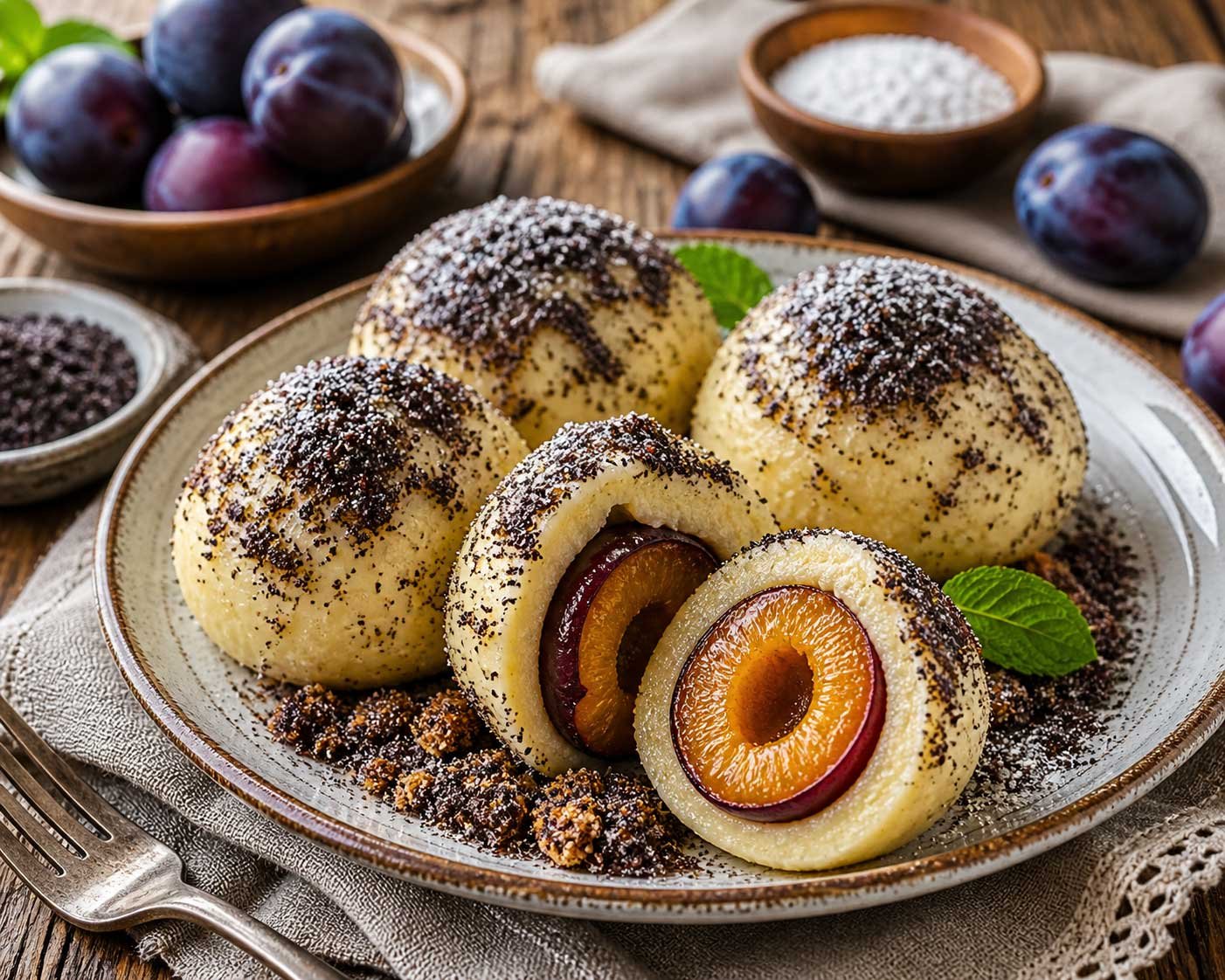
Knedle (plum dumplings) are one of the most beloved comfort foods across the Balkans and Central Europe—soft, pillowy potato dough wrapped around juicy plums, then coated in buttery toasted breadcrumbs, sugar, and cinnamon. This traditional dish has been passed down for generations, originating from the rich culinary heritage of the Austro-Hungarian Empire and still enjoyed today in Croatia, Slovenia, Poland, Hungary, and beyond.
What makes this knedle recipe truly special is its perfect balance of simplicity and flavor. With just a handful of humble ingredients—potatoes, flour, eggs, and fresh plums—you can create a dish that feels both nostalgic and indulgent. Whether served as a dessert, a main meal, or even a side dish, these plum dumplings deliver a unique combination of sweet, buttery, and slightly tangy flavors that make them unforgettable.
Knedle, also known as plum dumplings, are a traditional dish enjoyed across the Balkans and Central Europe, especially in Croatia, Slovenia, Hungary, and Poland.
In this ultimate Balkan Recipes guide, you’ll learn how to make authentic knedle step-by-step, avoid common mistakes, explore regional variations, and discover pro tips that guarantee soft, fluffy dumplings every time. If you’ve ever wanted to master traditional plum dumplings at home, this is the only recipe you’ll need.
In Slovenia, this dish is known as Slovenian plum dumplings (cmoki), a slightly lighter variation worth trying.
👉 Looking for the best knedle recipe with plum dumplings that turn out soft, fluffy, and perfectly balanced every time? This traditional Balkan method is the gold standard used for generations.
What Are Knedle (Plum Dumplings)?
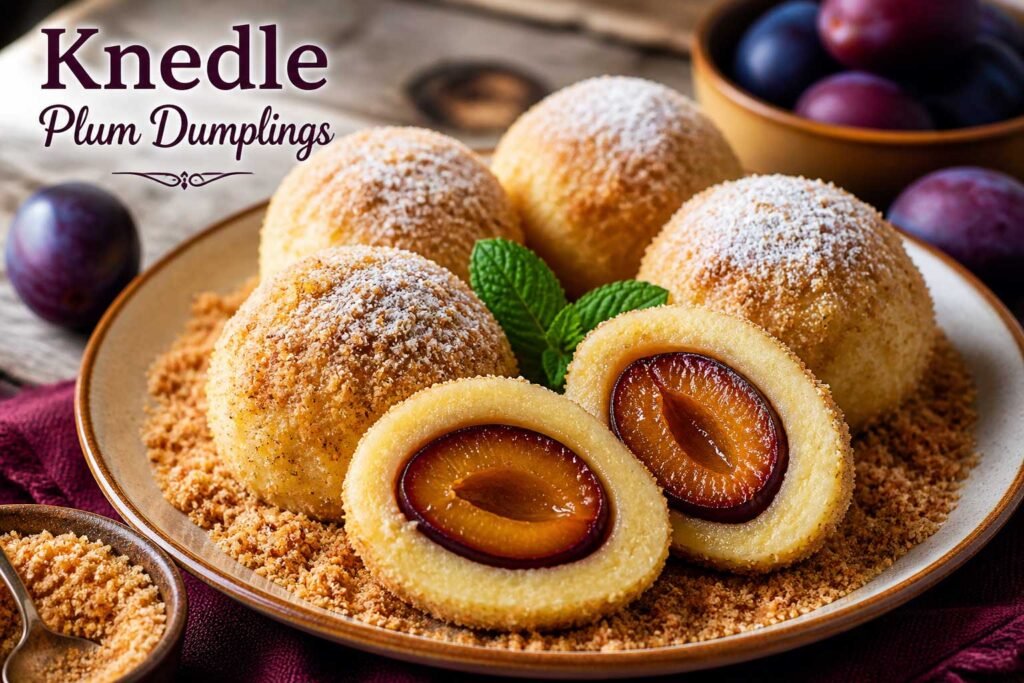
Knedle are traditional Central and Eastern European dumplings made from soft potato dough, filled with whole plums, then boiled until tender and coated in buttery toasted breadcrumbs, sugar, and cinnamon. This comforting dish can be served as a dessert, a main course, or even a side dish, depending on the region and occasion. They are especially popular in countries like Croatia, Slovenia, Poland, Hungary, and Romania.
In Slovenia, this dish is known as cmoki—a slightly lighter and more delicate variation of the same concept. 👉 Read the full Slovenian version here → Slovenian Cmoki Recipe.
Across Eastern Europe, these traditional dumplings are considered a staple of traditional home cooking. Made from simple ingredients like potatoes, flour, and seasonal fruit, they reflect a style of cooking that is both practical and deeply rooted in family tradition. The use of plums—especially during the late summer harvest—adds natural sweetness and makes this dish a perfect balance of comfort and flavor.
Knedle are one of the most beloved traditional Balkan desserts, enjoyed across multiple countries.
History of Knedle (Austro-Hungarian Origins)
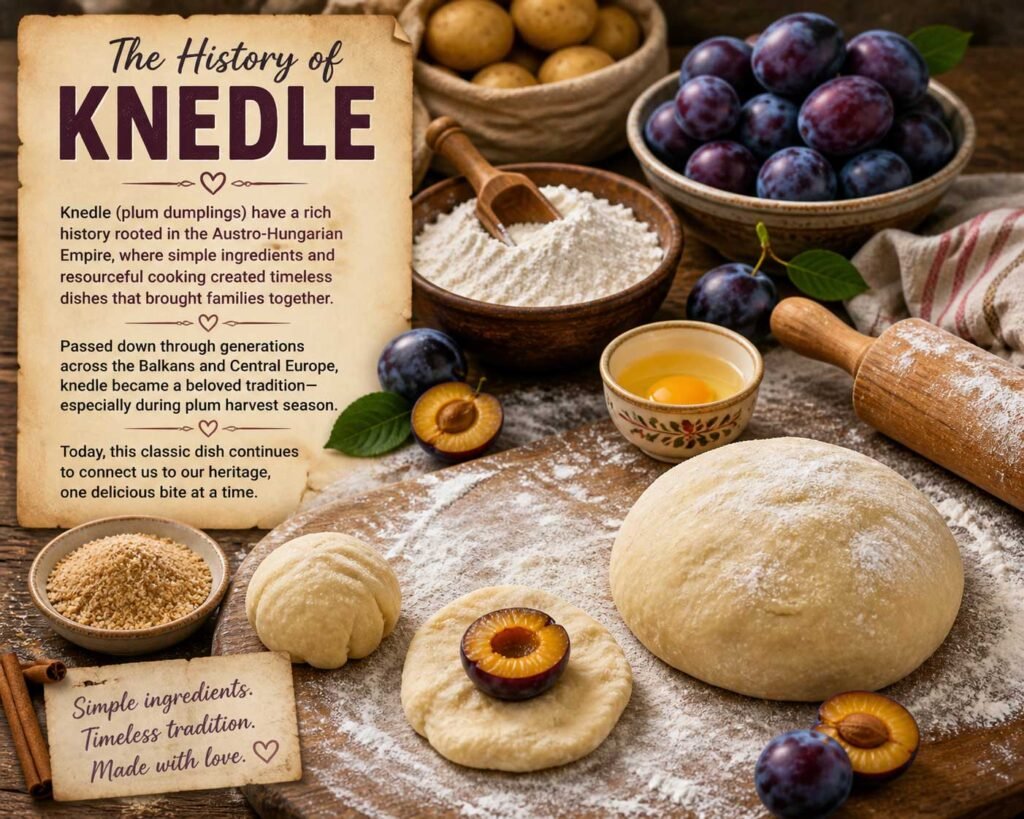
The origins of knedle (plum dumplings) trace back to the Austro-Hungarian Empire, a vast region where culinary traditions moved freely across borders. As people, ingredients, and techniques traveled between what are now Slovenia, Croatia, Hungary, Poland, and Austria, simple dishes like dumplings evolved into regional staples.
During this time, everyday cooking was defined by practicality. Families relied on affordable, filling ingredients that could feed many people, and dumplings quickly became essential because they stretched small amounts of food into satisfying meals. The widespread adoption of potatoes in the 18th and 19th centuries played a major role in shaping this classic dish, creating the soft dough that defines the dish today.
What made plum dumplings especially popular was their versatility. With just a few ingredients—potatoes, flour, and seasonal fruit—they could be adapted to different tastes and occasions. In rural households, they were filling enough to serve as a main dish, yet sweet enough to be enjoyed as a dessert, making them a practical solution for everyday cooking.
Plums, in particular, became central to the dish. Across Central and Eastern Europe, plum trees were common in home orchards, especially in late summer when the fruit was abundant. Instead of letting the harvest go to waste, families incorporated plums into dumplings, creating a dish that balanced natural sweetness with hearty dough.
Over time, knedle became more than just a meal—they became a tradition. In village kitchens, families gathered to prepare large batches together, passing down techniques and recipes through generations. While each region developed its own variation, the essence of the dish remained unchanged: simple ingredients transformed into something deeply comforting.
Today, knedle are recognized across the Balkans and Central Europe, from Croatian knedle to Slovenian cmoki and Hungarian szilvás gombóc. Despite these regional differences, the dish continues to represent a shared culinary heritage rooted in tradition, seasonality, and resourceful cooking.
Across the region, each country developed its own variation—from Slovenian cmoki to Hungarian gombóc—while preserving the same core concept.
👉 Knedle are not just dumplings—they are a living connection to history, family, and the enduring food culture of Central and Eastern Europe.
This dish reflects the broader story of Balkan food history and traditions, shaped by centuries of cultural exchange.
Authentic Knedle Recipe (Step-by-Step Instructions)
Making traditional knedle (plum dumplings) may seem intimidating at first, but once you understand the process, it becomes a simple and rewarding recipe. The key is working with the right texture at each stage—from the potatoes to the final shaping—so the dumplings turn out soft, light, and perfectly balanced.
This authentic knedle recipe follows the traditional Balkan method, using a soft potato-based dough filled with whole plums and finished with buttery toasted breadcrumbs. With just a few ingredients and the right technique, you can recreate this comforting dish at home with consistent results.
Ingredients Overview
The recipe relies on a small number of pantry staples: potatoes, flour, eggs, and fresh plums. Each ingredient plays an important role in achieving the perfect texture. Potatoes provide the structure of the dough, flour helps bind it, and eggs add richness and elasticity. The plums bring natural sweetness and moisture, creating that signature contrast between soft dough and juicy filling.
Potatoes are a staple in many potato-based Balkan dishes, forming the base of countless traditional recipes.
👉 Using fresh, high-quality ingredients makes a noticeable difference, especially when it comes to the potatoes and fruit.
Time & Servings
This recipe takes just under an hour from start to finish, making it practical for both weekend cooking and special occasions. Most of the time is spent preparing the dough and shaping the dumplings, while the cooking process itself is quick and straightforward.
These plum dumplings are typically made in batches, and this recipe yields enough to serve a family. They can be enjoyed as a dessert, a main dish, or even saved for later, as they store and reheat well.
👉 Looking for the Slovenian version? Try our Slovenian Cmoki Recipe for a lighter variation.
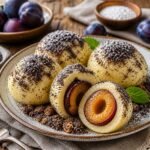
Knedle
Ingredients
Dumplings
- 12 oz flour
- 2.2 lb potatoes
- 1.7 oz sugar
- 1.7 oz butter
- 2 eggs
- 1 lemon
- Pinch of salt
Filing
- 20 plums
- 18 tsp sugar
Coating
- 3.5 oz breadcrumbs
- 5.2 oz butter
- 1 tsp cinnamon
- Sugar to taste
Instructions
- Boil whole potatoes until tender. Drain well and mash while warm. Let them cool slightly so excess moisture evaporates.
- Mix potatoes with butter, eggs, sugar, lemon zest, and salt. Add flour gradually and mix gently until a soft dough forms. Dough should be smooth and NOT sticky.
- Add in the flour, mix together and knead well, adding a bit of water if necessary.
- Roll out the dough on a floured cutting board. Divide the dough into pieces and flatten each into a disc.
- Add one plum and 1 tsp of sugar on top per piece, then roll each dumpling, flatten it and wrap it around a pitted plum. Carefully seal and roll into smooth balls.
- Bring salted water to a gentle boil. Add dumplings and cook until they float. Continue cooking for 4–5 minutes.
- Pour water to a big pot and bring it boiling, add a bit of salt. Put in the dumplings when the water is boiling, and cook until they float to the surface. Once they do, cook for another 5 minutes and remove from water.
- Melt butter in a pan, add breadcrumbs, and toast until golden. Stir in cinnamon and sugar.
- Serve with melted butter, sweetened cream and sprinkle with cinnamon.
Perfect vs Bad Knedle (What to Avoid)
What Perfect Knedle Look Like
Perfect knedle are soft, light, and slightly elastic, with a smooth dough that holds together without feeling heavy. When you cut into one, the plum inside should be juicy and intact, creating a balanced contrast between the tender dough and the sweet filling. The outside should be evenly coated in golden, buttery breadcrumbs that add a light crisp texture without being greasy or overpowering.
Common Texture Problems
Bad knedle are usually dense, gummy, or fall apart during cooking. This often happens when the dough is overworked or contains too much flour, making it heavy instead of fluffy. If the dough is too wet, the dumplings may lose their shape or break open in the water. Using overripe plums can also cause the filling to collapse and leak, while poorly toasted breadcrumbs can result in a bland or overly oily finish.
How to Fix Mistakes
To achieve perfect results, focus on balance and technique. Add flour gradually and stop as soon as the dough becomes soft and workable. Handle the dough gently to avoid developing too much structure, which leads to toughness. Always seal the dumplings well around the plum, and use slightly firm fruit to maintain shape during cooking. Finally, toast breadcrumbs slowly over medium heat so they turn evenly golden and enhance the overall flavor instead of overpowering it.
👉 Mastering these small details is what transforms simple knedle into authentic, restaurant-quality dumplings.
Common Mistakes When Making Knedle
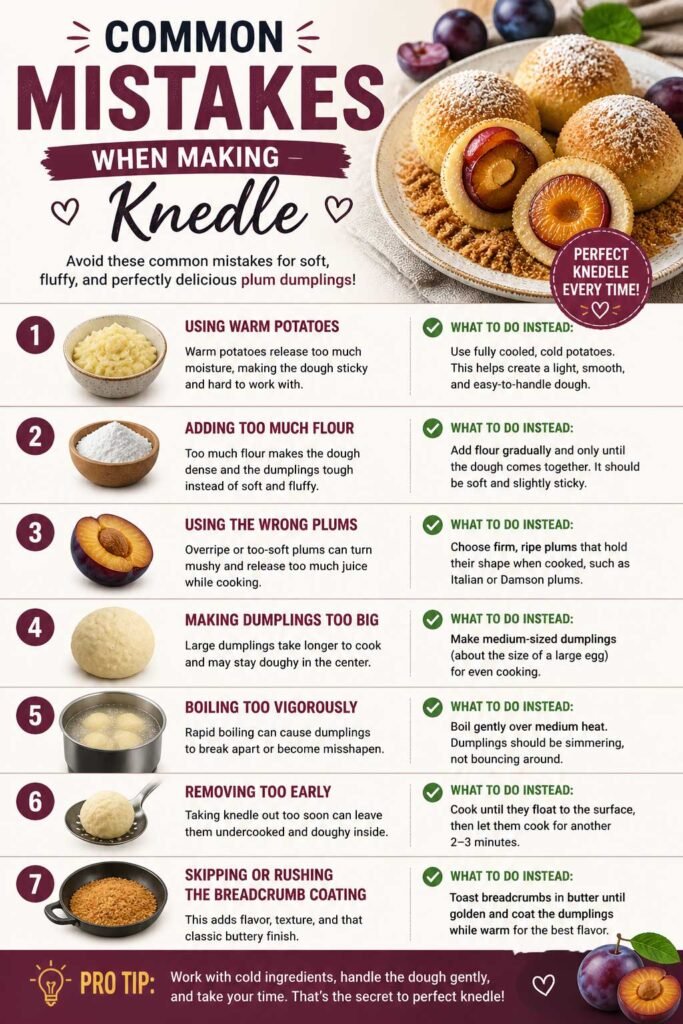
Dough Issues (Too Sticky or Dense)
The most common problem with knedle starts in the dough. If it’s too sticky, it usually means the potatoes held too much moisture or too little flour was added. On the other hand, adding too much flour or overworking the dough creates dense, heavy dumplings instead of soft and fluffy ones. The key is balance—use starchy potatoes, let them release steam after boiling, and add flour gradually until the dough is smooth and just workable.
Fruit Mistakes (Overripe Plums)
While ripe plums add sweetness, overly soft fruit can break down during cooking, causing the dumplings to collapse or leak. This not only affects texture but also makes the dough harder to seal properly. Slightly firm plums are ideal because they hold their shape and create that perfect juicy center without falling apart.
Cooking Errors (Boiling & Coating)
Cooking mistakes can ruin even well-made dumplings. A rolling boil can cause knedle to break apart, while insufficient cooking time leaves the dough undercooked inside. Always cook in gently simmering water and allow the dumplings to float before giving them a few extra minutes. When it comes to coating, breadcrumbs can burn quickly if the heat is too high, resulting in a bitter taste. Toast them slowly in butter until golden for the best flavor and texture.
👉 Avoiding these mistakes will dramatically improve your knedle, turning them from average to truly authentic and perfectly balanced.
Regional Variations of Knedle Across the Balkans
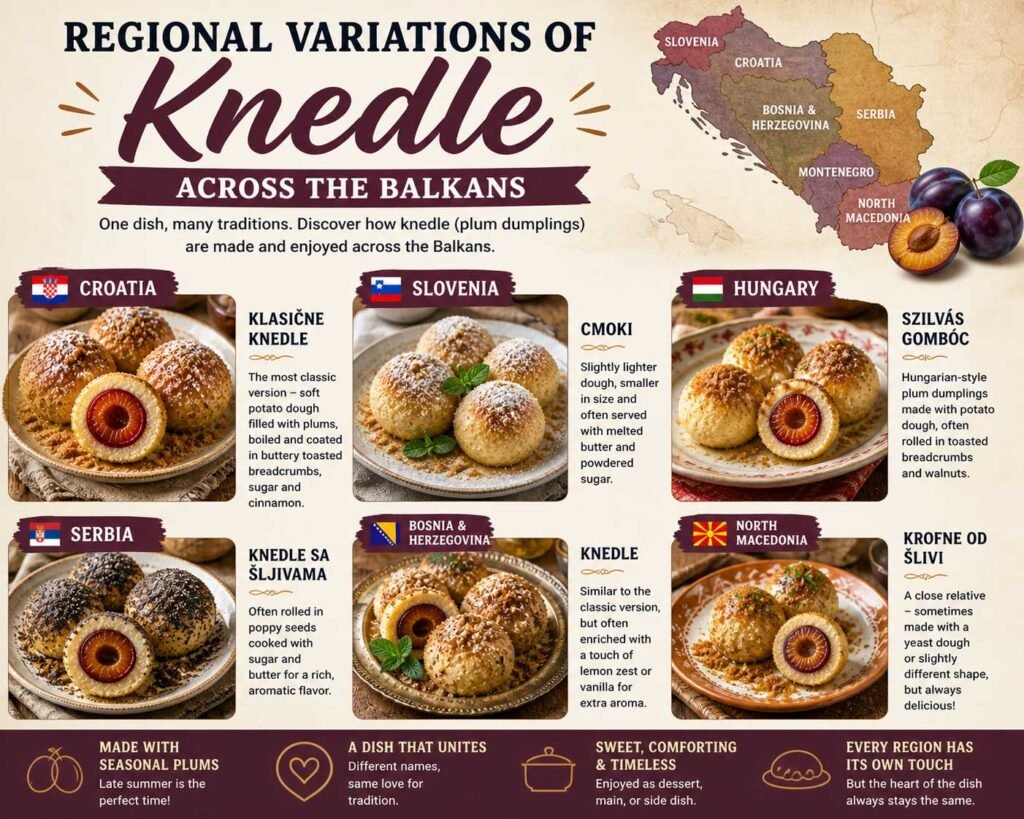
Knedle may share the same foundation—potato dough and fruit filling—but each country adds its own twist, shaped by local ingredients, traditions, and taste preferences. These regional variations show how one simple dish evolved across Central and Eastern Europe.
Croatian Knedle
In Croatia, knedle sa šljivama are one of the most classic versions. They are typically coated generously in buttery toasted breadcrumbs and served warm with sugar or cinnamon. This version is often enjoyed as both a dessert and a main dish, especially in home cooking.
Slovenian Cmoki
In Slovenia, these dumplings are known as cmoki, and they tend to be slightly lighter and more delicate in texture. Some variations even include dairy, such as cottage cheese, in the dough. They are often served with powdered sugar or a lighter coating compared to the Croatian version.
👉 See full recipe → Authentic Slovenian Cmoki Recipe.
Polish Plum Dumplings
Known as knedle ze śliwkami, the Polish version is very similar but often served with cream, butter, or a dusting of sugar instead of a heavy breadcrumb coating. The texture can be slightly firmer, depending on the dough ratio.
Hungarian Gombóc
Hungarian szilvás gombóc are typically larger dumplings with a strong emphasis on cinnamon and sugar in the coating. They are often rolled in breadcrumbs and served as a sweet main course or dessert.
Romanian Găluște
In Romania, găluște cu prune follow a similar concept but may sometimes be filled with apricots instead of plums. They are usually finished with powdered sugar and can have subtle regional differences in dough texture.
👉 Despite these variations, all versions of knedle share the same comforting essence—simple ingredients transformed into a deeply satisfying traditional dish.
Pro Cooking Techniques for Perfect Knedle
Choosing the Right Potatoes
The foundation of great knedle starts with the right potatoes. Always use starchy varieties like Russet, which are naturally drier and create a lighter, fluffier dough. Waxy potatoes tend to hold too much moisture, making the dough sticky and harder to work with. After boiling, allow the potatoes to release steam before mixing—this small step prevents excess moisture and improves texture significantly.
Selecting the Best Plums
Plums should be ripe but still slightly firm. If they are too soft, they will break down during cooking and cause the dumplings to leak or collapse. Firmer plums hold their shape and create that perfect juicy center without overpowering the dough. If your plums are very sweet, you can slightly reduce the added sugar to keep the flavor balanced.
Perfect Dough Balance
The key to soft, tender dumplings is getting the dough just right. Too much flour results in dense, heavy knedle, while too little makes the dough sticky and difficult to handle. Add flour gradually and stop as soon as the dough becomes smooth and workable. It should feel soft but not cling to your hands.
Dough Handling Tips
Handling the dough gently is just as important as the ingredients. Avoid over-kneading, as this develops too much structure and makes the dumplings tough. Letting the dough rest for 10–15 minutes before shaping can make it easier to handle and improve consistency. Work on a lightly floured surface and shape the dumplings carefully to maintain a smooth, even texture.
👉 These small techniques make a big difference, turning simple knedle into soft, fluffy, and perfectly balanced dumplings every time.
Serving Ideas for Knedle (Best Ways to Enjoy)
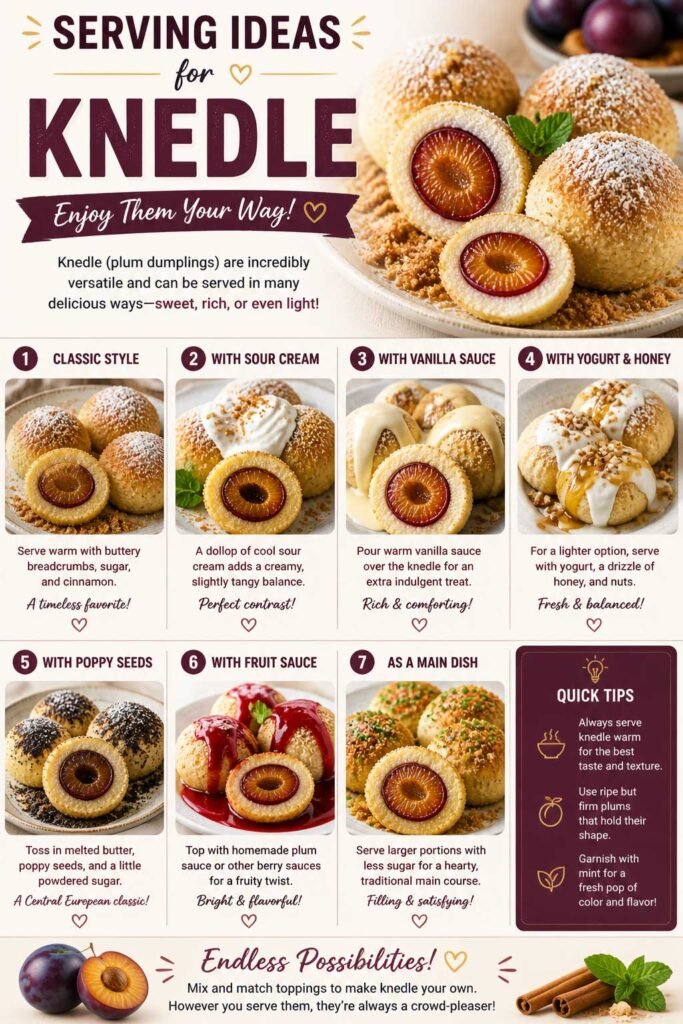
Knedle are incredibly versatile and can be served in both traditional and modern ways, depending on your preference. The most classic approach is simple and comforting—warm dumplings coated in buttery breadcrumbs, finished with sugar and cinnamon. This style highlights the natural sweetness of the plums while keeping the dish true to its roots.
For a more balanced flavor, many people enjoy knedle with a side of sour cream or yogurt. The slight tanginess cuts through the sweetness and adds a creamy contrast that enhances the overall experience. This combination is especially popular across the Balkans, where sweet and savory elements are often paired together.
If you want to elevate the dish, you can serve knedle with vanilla sauce, whipped cream, or a light drizzle of honey. These variations turn a simple homemade recipe into a more indulgent dessert while still preserving its traditional character.
👉 Explore more desserts → Balkan Desserts Guide
Best Tools for Making Knedle
Making perfect knedle becomes much easier with the right tools. While the recipe itself is simple, proper equipment can significantly improve texture, consistency, and overall results.
A potato ricer is especially important, as it creates a smooth, lump-free base for the dough. A large stock pot ensures even cooking, while a slotted spoon allows you to remove dumplings gently without breaking them. Together, these essentials help you achieve consistent, high-quality results every time.
For those looking to go further, tools like a digital scale or stand mixer can improve precision and make the process more efficient. Even small additions—such as a silicone mat for shaping or proper serving dishes—can elevate both the cooking experience and final presentation.
👉 See the full breakdown → Balkan Cooking Tools Guide (Top Picks for Every Kitchen).
Affiliate Disclosure: This article may contain affiliate links. If you purchase through these links, I may earn a small commission at no additional cost to you.
👉 We tested dozens of tools—these are the BEST for making perfect knedle at home.
These are the exact tools traditional cooks and modern chefs use to get perfect dumplings every time.
If your knedle ever turned out dense, sticky, or fell apart — it’s usually because of the tools. Here’s exactly what makes the difference.
Essential Knedle Tools (Best Overall)
| Product | Why It’s a Game-Changer | Best For | Check Price |
|---|---|---|---|
| OXO Good Grips Potato Ricer | Creates ultra-smooth, lump-free potato dough | Perfect texture | 👉 Check Price on Amazon |
| Cuisinart 12-Quart Stainless Steel Stockpot | Even heat distribution for boiling dumplings | Consistent cooking | 👉 Check Price on Amazon |
| Zulay Kitchen Stainless Steel Slotted Spoon | Lifts dumplings without breaking them | Easy removal | 👉 Check Price on Amazon |
Budget vs Premium vs Pro
Exactly What to Buy (Based on Your Budget)
| Level | Setup | Best For | Check Price |
|---|---|---|---|
| 💲 Budget | Basic pot + spoon | Beginners | 👉 Check Price |
| ⭐ Best Value | Potato ricer + stockpot | Most users | 👉 Check Price |
| 🔥 Pro | Mixer + scale + ricer | Perfect results | 👉 Check Price |
👉 Want restaurant-quality results? Upgrade your kitchen setup with these tools.
Upgrade Your Knedle Game (Pro Level)
| Product | Why It Matters | Result | Check Price |
|---|---|---|---|
| KitchenAid Artisan Stand Mixer | Even mixing without overworking dough | Fluffier dumplings | 👉 Check Price on Amazon |
| Escali Primo Digital Kitchen Scale | Precise flour-to-potato ratio | Consistent results | 👉 Check Price on Amazon |
| Amazon Basics Silicone Baking Mat | Prevents sticking during shaping | Cleaner workflow | 👉 Check Price on Amazon |
👉 Presentation matters—these simple additions elevate your dish instantly.
Serving & Presentation Essentials
| Product | Why It Matters | Result | Check Price |
|---|---|---|---|
| Sweese Porcelain Dessert Plates | Clean, elegant plating | Professional look | 👉 Check Price on Amazon |
| OXO Good Grips Sugar Duster | Even powdered sugar finish | Bakery-style presentation | 👉 Check Price on Amazon |
| Acacia Wood Serving Board | Rustic Balkan aesthetic | Pinterest-ready visuals | 👉 Check Price on Amazon |
👉 These tools make the difference between average and perfect knedle—if you’re serious about getting that soft, fluffy texture, they’re absolutely worth it.
Average vs Perfect Knedle
| Without Proper Tools ❌ | With Proper Tools ✅ |
|---|---|
| Lumpy dough | Smooth, fluffy texture |
| Dumplings break | Perfect shape holds |
| Uneven cooking | Consistent results |
| Messy process | Easy workflow |
Nutrition Overview of Knedle
Knedle are a classic comfort food, naturally rich in carbohydrates due to the potato-based dough, making them both filling and energy-dense. The addition of plums brings natural sugars and a moderate amount of fiber, creating a balanced contrast between sweetness and substance.
Nutritional Breakdown (Per Serving)
| Nutrient | Value | Notes |
|---|---|---|
| Calories | ~300–340 kcal | Depends on butter & sugar |
| Carbohydrates | High (50–60g) | From potatoes + plums |
| Protein | Moderate (5–7g) | From eggs & flour |
| Fat | Moderate (8–12g) | Mainly from butter coating |
| Fiber | Moderate | Natural from plums |
| Sugar | Moderate–High | Added + natural fruit sugars |
How to Make Knedle Lighter
For a lighter version, small adjustments can make a noticeable difference. Reducing the butter in the breadcrumb coating or serving knedle with yogurt instead of cream can lower overall calories while still preserving their traditional flavor.
| Adjustment | Impact |
|---|---|
| Use less butter in coating | Reduces fat & calories |
| Cut added sugar | Lowers overall sweetness |
| Serve with yogurt instead of cream | Adds protein, lowers fat |
| Make smaller dumplings | Better portion control |
👉 With a few small tweaks, you can enjoy knedle as a lighter, balanced version while keeping their traditional flavor.
Like many traditional Balkan meals, knedle are designed to be filling and satisfying.
Cultural Significance of Knedle in the Balkans

Knedle are deeply rooted in Balkan and Central European culture, representing far more than just a meal. They reflect a way of cooking built on simplicity, seasonality, and making the most of available ingredients—values that have shaped traditional cuisine for generations.
In many households, preparing knedle is a shared experience that brings families together. Techniques are passed down through practice rather than written recipes, with each generation learning how to shape the dough, choose the right fruit, and achieve the perfect texture. This hands-on tradition keeps the dish alive in a way that goes beyond ingredients alone.
The dish is closely tied to late summer, when plum trees are at their peak and fresh fruit is readily available. During this time, knedle become part of a seasonal rhythm—made in batches, enjoyed fresh, and often shared among family and neighbors.
This connection to both seasonality and family life is what gives knedle their lasting significance. They are not just a traditional dish, but a living expression of cultural heritage, where food, memory, and tradition come together.
Frequently Asked Questions About Knedle
Can you freeze knedle?
Yes, knedle freeze very well. For best results, freeze them uncooked on a tray first, then transfer to a bag. When ready to use, cook them directly from frozen—no need to thaw.
Can you use other fruits instead of plums?
Absolutely. While plums are traditional, you can also use apricots, strawberries, or peaches. Each fruit gives a slightly different flavor and texture, but the method stays the same.
Why are my knedle dense or heavy?
This usually happens when too much flour is added or the dough is overworked. Use starchy potatoes and mix gently to keep the dumplings soft and fluffy.
Why is my dough too sticky?
Sticky dough is often caused by excess moisture in the potatoes. Let them cool and release steam before mixing, and add flour gradually until the dough becomes smooth and workable.
Why do my knedle fall apart while cooking?
This can happen if the dough is too wet or not sealed properly around the plum. Make sure each dumpling is tightly closed and cook them in gently simmering water—not a rolling boil.
How do I know when knedle are done?
Knedle are ready when they float to the surface. After floating, cook them for another 4–5 minutes to ensure the inside is fully cooked.
Are knedle served as a dessert or a main dish?
Both. In many Balkan countries, knedle are served as a dessert, but they are also filling enough to be enjoyed as a main meal.
Can I make knedle ahead of time?
Yes. You can prepare them in advance and refrigerate uncooked dumplings for up to 24 hours, or freeze them for longer storage.
👉 These tips will help you avoid common issues and make perfect knedle every time.
Related Recipes
Looking to explore more traditional dishes like knedle? These recipes will help you dive deeper into Balkan and Central European cuisine:
- Slovenian Cmoki Recipe — a lighter, delicate version of plum dumplings popular in Slovenia
- Balkan Desserts Guide — discover the most loved sweet recipes across the region
- Potato-Based Balkan Dishes — explore more comforting recipes built around potatoes
- Traditional Croatian Recipes — classic dishes from one of the heartlands of knedle
👉 These recipes are perfect for building your own Balkan cooking collection and expanding your kitchen skills.
Final Thoughts on Knedle (Plum Dumplings)
Knedle are one of the most comforting and satisfying dishes in Balkan cuisine, turning simple ingredients into something deeply memorable. Their soft texture, sweet fruit filling, and buttery coating create a perfect balance that has stood the test of time.
Beyond the recipe itself, knedle represent a connection to tradition, family, and seasonal cooking. Whether you’re making them for the first time or continuing a long-standing tradition, they offer a taste of authentic Central and Eastern European culture.
Once you master this dish, you’ll not only gain a versatile recipe but also a deeper appreciation for the simplicity and richness of Balkan cooking.
👉 Try experimenting with different fruits or serving styles to make the recipe your own, while still preserving its traditional essence.
Ready to keep cooking? Explore more Balkan recipes and discover the flavors of the region.
Inspiration and adaptation: polishfoodies.com, croatiaweek.com, foodpeopleplaces.com
Explore other recipes from the traditional Croatian cuisine.
Did you make this Knedle (Plum Dumplings) recipe?
Please let me know how it turned out for you! Leave a comment below and don’t forget to follow us. Sharing is caring!

