


Slovenian Cmoki Recipe (Plum Dumplings)
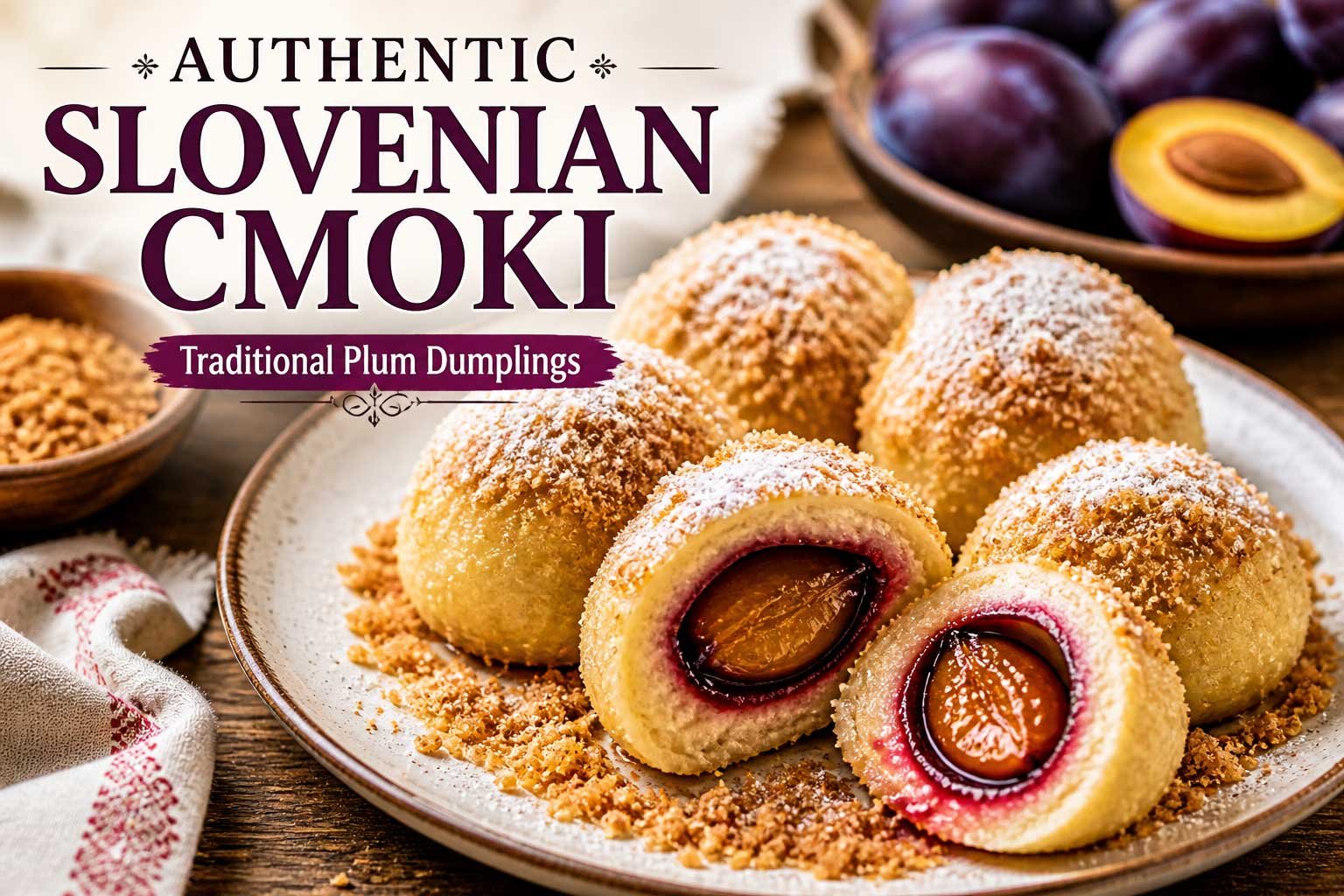
Slovenian cmoki (plum dumplings) are one of the most comforting and nostalgic dishes in Central European cuisine—soft, pillowy potato dough wrapped around juicy plums, then rolled in golden buttered breadcrumbs with sugar and cinnamon. This simple yet deeply satisfying recipe has been passed down for generations in Slovenia, where seasonal cooking and family traditions play a central role in everyday life.
While similar dishes exist across the Balkans and neighboring countries, Slovenian cmoki stand out for their delicate texture, balanced sweetness, and slightly lighter dough. Often enjoyed as both a dessert and a main dish, these dumplings perfectly reflect the Slovenian approach to food: simple ingredients, thoughtful preparation, and rich, comforting flavors.
In this complete Balkan Recipes guide, you’ll learn how to make authentic Slovenian cmoki step-by-step, discover regional variations, avoid common mistakes, and master pro techniques that guarantee perfectly soft dumplings every time.
This Slovenian recipe is part of a wider Balkan tradition known as knedle. See the full Balkan guide here.
👉 Looking for the best Slovenian cmoki recipe that turns out soft, fluffy, and perfectly balanced every time? This traditional method delivers authentic plum dumplings just like in Slovenia.
This authentic Slovenian cmoki recipe is one of the most popular traditional Slovenian cmoki dishes, known for its soft texture and rich flavor. If you’re searching for a potato plum dumplings recipe or a reliable homemade cmoki recipe, this guide walks you through every step. It’s also an easy cmoki recipe step by step, perfect for beginners who want to recreate this classic Central European plum dumplings dish at home.
What are Slovenian cmoki?
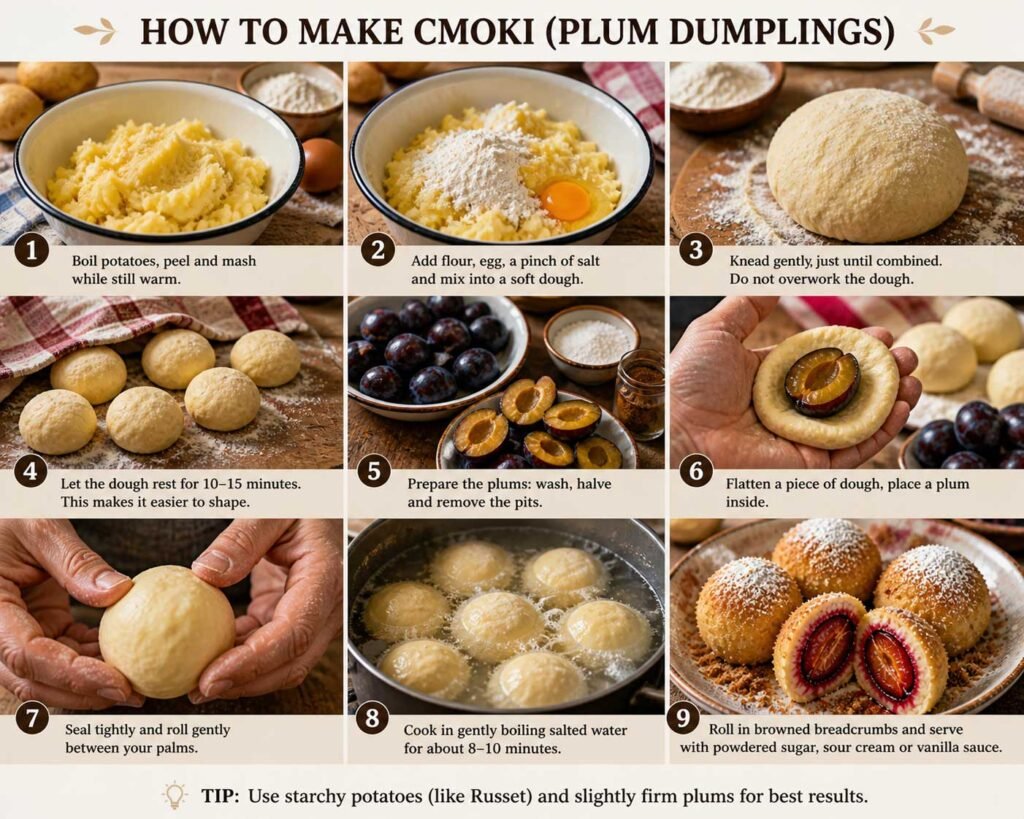
Slovenian cmoki are soft potato-dough dumplings filled with whole plums, boiled until tender, and coated in buttery toasted breadcrumbs, sugar, and cinnamon. They are a traditional Slovenian dish served as a dessert or main meal, especially popular during plum harvest season.
If you’re looking for a Slovenian cmoki recipe that delivers authentic flavor, this guide shows you exactly how to make Slovenian cmoki step by step. These soft and comforting dumplings are a classic Slovenian plum dumplings recipe, often considered one of the most beloved traditional Slovenian dessert cmoki dishes.
This plum dumplings recipe Slovenian style uses simple ingredients like potatoes and fresh plums to create a rich and satisfying meal. Whether you’re exploring eastern European plum dumplings or searching for the best balkan plum dumplings recipe, this method guarantees soft, fluffy results every time.
You’ll also learn how to prepare potato dumplings with plums recipe techniques that have been passed down through generations. If you’ve ever wanted to try a homemade Slovenian plum dumplings dish, this recipe is the perfect place to start.
History of Cmoki
The story of Slovenian cmoki is deeply rooted in the culinary traditions of Central Europe, shaped during the time of the Austro-Hungarian Empire. This vast empire connected regions that today include Slovenia, Croatia, Hungary, Austria, and parts of Poland and the Czech Republic, allowing food traditions to travel, evolve, and blend across borders.
During this period, everyday cooking was defined by resourcefulness and seasonality. Ingredients were simple, local, and affordable—and dishes like dumplings became essential because they could stretch small amounts of food into filling, nourishing meals.
How Cmoki Became a Slovenian Staple
In Slovenia, cmoki developed their own identity through local ingredients and rural traditions:
- Potatoes became a foundation
Introduced widely across Europe in the 18th century, potatoes quickly became a staple in Slovenian households due to their affordability and versatility. They formed the base of the soft dough used in cmoki. - Plums were abundant and seasonal
Slovenia’s climate is ideal for growing plums, especially in countryside orchards. During late summer, families used ripe plums as filling, naturally sweetening the dish without needing expensive ingredients. - Rural home cooking shaped the recipe
In village kitchens, recipes were rarely written down. Instead, techniques were passed from generation to generation, refined over time, and adapted based on what was available.
A Dish Born from Practicality → Turned Tradition
What began as a practical, economical meal gradually became something more meaningful:
👉 Cmoki evolved into:
- A harvest-season favorite, closely tied to late summer plum picking
- A family ritual, often prepared together in large batches
- A comfort food, associated with warmth, home, and nostalgia
In many Slovenian homes, making cmoki wasn’t just cooking—it was an experience shared across generations, where grandparents taught children how to shape the dough, fill the dumplings, and recognize the perfect texture.
Cultural Identity Today
Today, cmoki remain a beloved part of Slovenian cuisine, representing:
- Simplicity done perfectly
- Respect for seasonal ingredients
- A deep connection between food, family, and tradition
Even as modern kitchens evolve, this humble dumpling continues to hold its place as a timeless Slovenian classic—one that brings together history, culture, and flavor in every bite.
These dumplings are also considered a classic example of central European plum dumplings, enjoyed across multiple countries with regional variations.

Authentic Slovenian Cmoki Recipe
Ingredients
Dough
- 2.2 lb potatoes (starchy)
- 340 g flour
- 2 eggs
- 50 g butter
- 50 g sugar
- Zest of 1 lemon
- Pinch of salt
Filling
- 20 small plums (pitted)
- Sugar cubes or teaspoons of sugar
Coating
- 150 g butter
- 100 g breadcrumbs
- 1 tsp cinnamon
- Extra sugar
Instructions
Cook and Prepare the Potatoes
- Place the potatoes in a large pot and cover them with cold water. Boil until fork-tender, about 20–25 minutes, depending on size.
- Drain well, then mash while still warm using a potato ricer or masher. Spread the mashed potatoes on a plate or tray and let them cool slightly so excess steam escapes.
- 👉 Tip: Too much moisture makes the dough sticky, so let the potatoes dry out a little before mixing.
Make the Potato Dough
- Transfer the cooled mashed potatoes to a large mixing bowl. Add softened butter, eggs, sugar, lemon zest, and a pinch of salt.
- Mix gently until combined, then begin adding flour gradually. Knead lightly until a soft dough forms.
- The dough should feel smooth, soft, and workable — not wet or sticky. Add a little more flour only if needed.
- 👉 Tip: Do not over-knead. Overworking the dough can make the cmoki dense instead of tender.
Shape the Cmoki
- Lightly flour your work surface. Roll the dough into a thick log, then cut it into equal pieces.
- Flatten each piece into a round disc. Place one pitted plum in the center and add a small spoonful of sugar, or place sugar inside the plum if the pit has been removed.
- Fold the dough around the plum and pinch the edges tightly to seal. Roll gently between your hands to form a smooth ball.
- 👉 Tip: Make sure each dumpling is fully sealed so the plum juice does not leak during boiling.
Boil the Dumplings
- Bring a large pot of salted water to a gentle boil. Carefully lower the cmoki into the water, a few at a time, so they do not stick together.
- Cook until they rise to the surface, then continue boiling for another 4–5 minutes.
- Remove with a slotted spoon and let them drain briefly.
- 👉 Tip: Keep the boil gentle. A hard rolling boil can break the dumplings apart.
Make the Breadcrumb Coating
- While the cmoki cook, melt butter in a large skillet over medium heat.
- Add breadcrumbs and stir constantly until they turn golden brown and fragrant. Remove from heat, then mix in sugar and cinnamon.
- 👉 Tip: Breadcrumbs can burn quickly, so stir often and lower the heat if they darken too fast.
Coat and Serve
- Add the cooked cmoki to the skillet with the breadcrumb mixture. Gently roll each dumpling until fully coated.
- Serve warm with extra cinnamon sugar, powdered sugar, melted butter, or a spoonful of sour cream or yogurt.
- 👉 Best served: Fresh and warm, while the breadcrumb coating is still buttery and crisp.
Notes
Do not over-knead. Overworking the dough can make the cmoki dense instead of tender.
Perfect Cmoki vs Bad Cmoki
Perfect cmoki are soft, pillowy, and light, with a smooth potato dough that gently wraps around a juicy plum without breaking. When you cut into them, the filling should be tender and slightly sweet, with the dough holding its shape while staying fluffy.
The breadcrumb coating should be golden, buttery, and lightly crisp, adding texture without overpowering the dumpling. In contrast, bad cmoki are often dense or gummy due to too much flour or overworked dough, and they may fall apart if the dough is too wet or poorly sealed. The filling can leak or collapse if overripe plums are used, and poorly toasted breadcrumbs can leave the dish either greasy or bland. Getting the balance right is what transforms simple ingredients into an authentic, restaurant-quality Slovenian dish.
| Feature | ✅ Perfect Cmoki | ❌ Bad Cmoki |
|---|---|---|
| Texture | Soft & fluffy | Dense |
| Dough | Smooth | Sticky |
| Filling | Juicy | Leaking |
| Coating | Golden | Burnt |
Common Mistakes (Avoid These!)
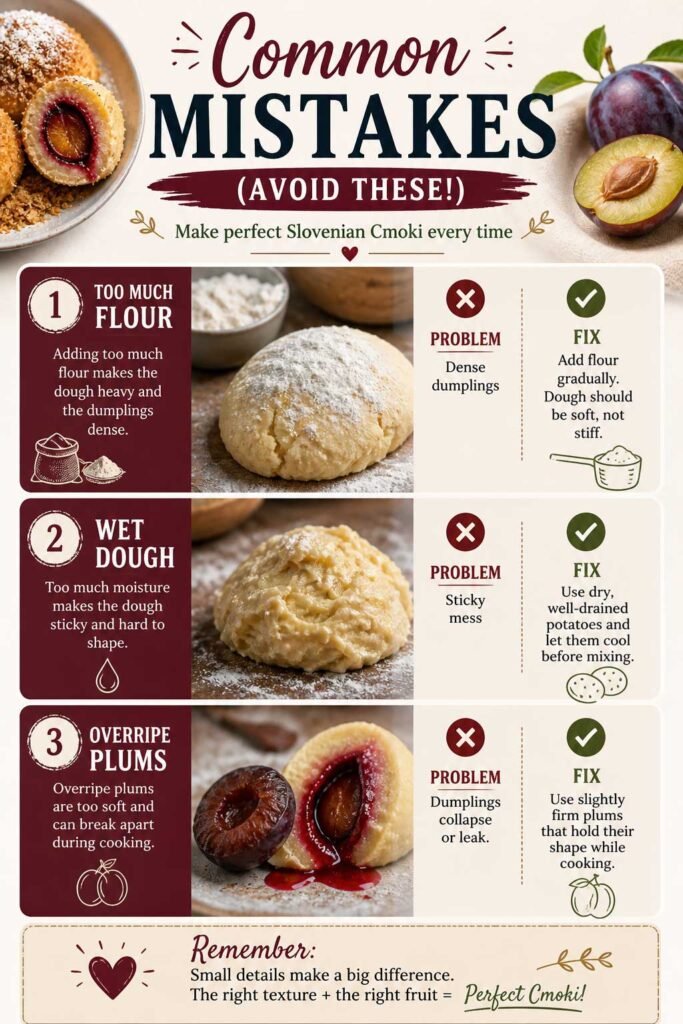
| Mistake | Problem | Fix |
|---|---|---|
| Too much flour | Dense dumplings | Add gradually |
| Wet dough | Sticky mess | Use dry potatoes |
| Overripe plums | Collapse | Use firm fruit |
Even though cmoki use simple ingredients, small missteps can dramatically affect the final result. The most common issue is imbalance in the dough—either too much flour, which creates heavy, dense dumplings, or too much moisture, which makes the dough sticky and difficult to handle. The key is to add flour slowly and work with potatoes that have released excess steam after cooking. This helps you achieve that soft, pillowy texture that defines authentic Slovenian cmoki.
Another critical factor is the fruit itself. Overripe plums may taste sweeter, but they tend to break down during cooking, causing the dumplings to collapse or leak. Slightly firm plums hold their shape better and create that perfect contrast between the soft dough and juicy filling. Paying attention to these small details will take your cmoki from average to truly traditional, just like homemade versions in Slovenia.
Cmoki vs Knedle
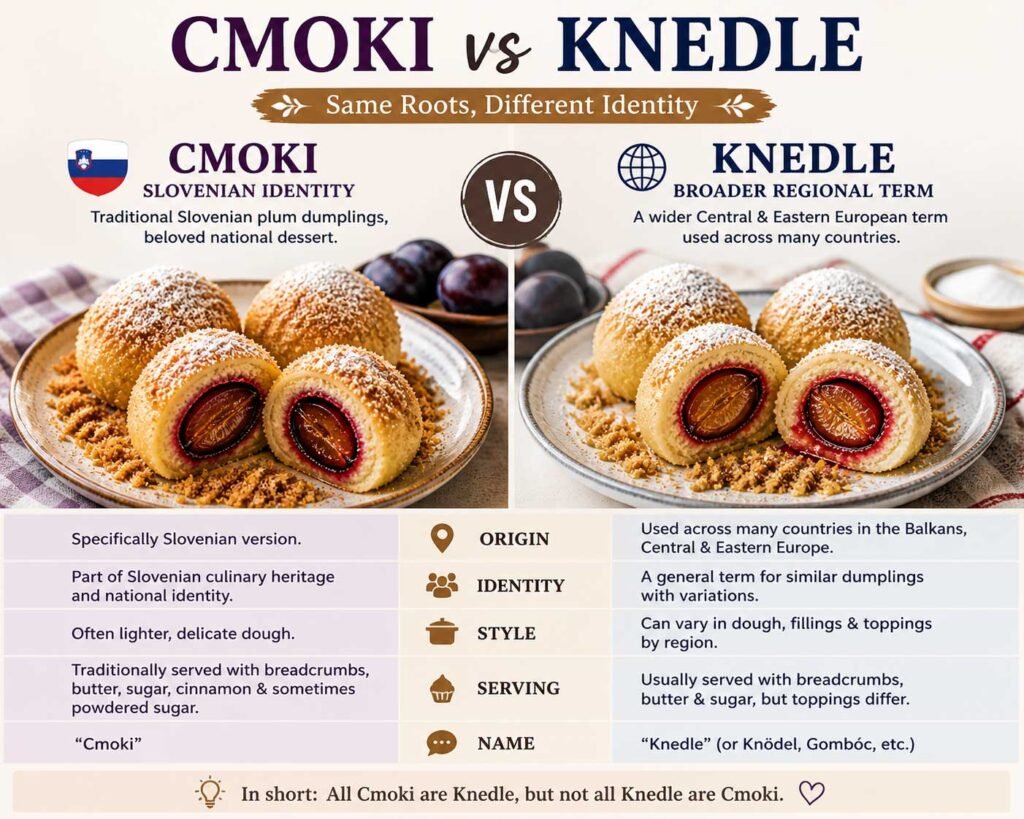
Love this comparison? Save it for later!
Pin this Cmoki vs Knedle guide to your Balkan recipes or dessert board so you can easily come back to it when cooking or planning your next meal.
Slovenian cmoki are closely related to Balkan knedle, sharing the same roots from Central European cuisine and the time of the Austro-Hungarian Empire. While the ingredients and preparation are nearly identical, the key difference lies in how the dish is identified and positioned culturally.
👉 Main Difference:
- Cmoki → specifically the Slovenian version, often slightly lighter and sometimes finished with powdered sugar
- Knedle → a broader regional term used across Croatia, Hungary, Poland, and other parts of the Balkans and Central Europe
In simple terms, all cmoki are knedle, but not all knedle are cmoki.
For the full Balkan version of this dish, read our complete guide → Knedle Recipe (Plum Dumplings).
Pro Cooking Techniques
Mastering cmoki comes down to a few small but powerful techniques. These tips are what separate average dumplings from soft, fluffy, perfectly balanced ones you’d find in a traditional Slovenian kitchen.
Potato Choice (Foundation of the Dough)
Use starchy potatoes like Russet for the best texture. These potatoes are drier and absorb less water, which helps create a light, fluffy dough instead of a sticky or dense one.
👉 Avoid waxy potatoes (like red or Yukon Gold) — they hold too much moisture and can make the dough heavy.
Plum Selection (Flavor + Structure)
Choose slightly firm plums that are ripe but not soft.
- Hold their shape during cooking
- Provide a juicy but structured filling
- Overripe plums → collapse and leak
👉 Pro tip: If plums are very sweet, reduce the sugar slightly inside the dumpling.
Dough Handling Tip (Game Changer)
After mixing the dough, let it rest or chill for 10–15 minutes.
👉 Why it works:
- Makes dough easier to handle
- Reduces stickiness
- Helps dumplings hold their shape better
Bonus Chef Tip
Always work on a lightly floured surface and handle the dough gently. The less you overwork it, the softer and more delicate your cmoki will be.
These small adjustments make a huge difference in texture, structure, and overall flavor, turning your cmoki into authentic, restaurant-quality dumplings.
Serving Ideas
Serving cmoki is where you can really customize the experience—from simple and traditional to rich and dessert-style. These dumplings are incredibly versatile and pair beautifully with a variety of toppings:
- With powdered sugar
The most classic and simple option. Lightly dusted powdered sugar enhances the natural sweetness of the plums without overpowering the dish. - With sour cream
A traditional Balkan pairing. The slight tang of sour cream balances the sweetness and adds a creamy contrast. - With vanilla sauce
Perfect for a more indulgent dessert version. Warm vanilla custard or sauce adds richness and elevates the dish. - With honey
A natural and lighter sweetener. Drizzle honey over warm cmoki for a subtle floral sweetness.
👉 Pro Tip: Serve cmoki warm for the best texture—the contrast between the soft dough, juicy filling, and buttery coating is at its peak right after cooking.
Affiliate Disclosure: This article may contain affiliate links. If you purchase through these links, I may earn a small commission at no additional cost to you.
Best Tools for Perfect Cmoki
👉 Want perfectly smooth dough and professional results? These tools make a huge difference.
Essential Tools
| Product | Why It Matters | Check Price |
|---|---|---|
| Potato Ricer | Smooth dough | Check Price on Amazon |
| Large Stock Pot | Even cooking | Check Price on Amazon |
| Slotted Spoon | Easy removal | Check Price on Amazon |
Nutrition Overview
| Nutrient | Value |
|---|---|
| Calories | ~300 |
| Carbs | High |
| Fiber | Moderate |
Cmoki are a carbohydrate-rich, energy-dense dish, thanks to the potato-based dough and natural sugars from the plums. While they are considered an indulgent comfort food, they also provide some fiber from the fruit and can be enjoyed in moderation as part of a balanced diet.
👉 Tip: For a lighter version, reduce the sugar topping or serve with yogurt instead of butter-heavy breadcrumbs.
Cultural Role in Slovenia

In Slovenia, cmoki are more than just a recipe—they are a reflection of everyday life, tradition, and seasonal cooking. Rooted in rural kitchens and family gatherings, these dumplings represent the beauty of making something special from simple, local ingredients.
What Cmoki Represent
- A family dish
Often prepared together, with recipes passed down from grandparents to younger generations - A seasonal tradition
Closely tied to the rhythm of nature and local harvests - A symbol of simple cooking done right
Minimal ingredients, maximum flavor
When Cmoki Are Traditionally Made
👉 Cmoki are most commonly prepared during:
- Late summer
- Plum harvest season
During this time, fresh plums are at their peak, and families take advantage of the abundance to make large batches. In many homes, this becomes a shared activity—peeling potatoes, shaping dumplings, and cooking together—turning a simple meal into a meaningful tradition.
👉 Cultural Insight: In Slovenian households, dishes like cmoki are not just about eating—they’re about preserving heritage, sharing moments, and celebrating seasonal ingredients.
Frequently Asked Questions (FAQs) About Slovenian Cmoki Recipe (Plum Dumplings)
What is cmoki?
Cmoki are traditional Slovenian dumplings made from soft potato dough, typically filled with whole plums, then boiled and coated in buttery toasted breadcrumbs, sugar, and cinnamon.
Are cmoki the same as knedle?
They are very similar and share the same origins from the Austro-Hungarian Empire, but cmoki refers specifically to the Slovenian version, while knedle is the broader Central and Balkan term used in countries like Croatia, Hungary, and Poland.
Can you freeze cmoki?
Yes, cmoki freeze very well. For best results, freeze them uncooked on a tray, then transfer to a bag. When ready to cook, boil directly from frozen—no need to thaw.
Why are my cmoki dense or heavy?
This usually happens when too much flour is added or the dough is overworked. Use starchy potatoes and mix the dough gently to keep it soft and fluffy.
Why do my cmoki fall apart while cooking?
This can be caused by dough that is too wet or not sealed properly. Make sure to:
- Add flour gradually
- Seal each dumpling tightly around the plum
What type of potatoes are best for cmoki?
Use starchy potatoes like Russet. They create a lighter dough and absorb less moisture compared to waxy potatoes.
Can I make cmoki without eggs?
Yes, you can skip the eggs, but the texture will be slightly softer and more delicate. Add a bit more flour if needed to help bind the dough.
What other fillings can I use besides plums?
Cmoki are very versatile. You can use:
- Apricots
- Strawberries
- Peaches
- Even sugar cubes for a simple sweet version
How do I know when cmoki are fully cooked?
Cmoki are done when they float to the surface of the water. After floating, cook them for an additional 4–5 minutes to ensure the inside is fully cooked.
Can I make cmoki ahead of time?
Yes. You can:
- Prepare and refrigerate uncooked cmoki for up to 24 hours
- Or freeze them for longer storage
Do cmoki have to be sweet?
Not necessarily. While the plum version is the most popular, savory variations exist, especially in broader Balkan cuisine, using cheese or other fillings.
How should cmoki be served traditionally?
They are typically served warm with:
- Buttered breadcrumbs
- Sugar and cinnamon
- Sometimes sour cream or yogurt
Why is my dough sticky?
Sticky dough usually means too much moisture in the potatoes. Let potatoes cool and dry slightly before mixing, and add flour gradually until workable.
Final Thoughts
Slovenian cmoki are a perfect example of how simple, humble ingredients can be transformed into something truly comforting and unforgettable. With their soft, pillowy potato dough, juicy plum filling, and golden buttery breadcrumb coating, they capture the essence of traditional home cooking at its best.
More than just a dessert, cmoki represent a deep connection to Slovenian culture—where seasonal ingredients, family traditions, and time-honored techniques come together in one dish. Whether enjoyed during late-summer harvest or prepared as a nostalgic comfort meal, they continue to hold a special place on the table.
Once you master this recipe, you’re not just making dumplings—you’re preserving a tradition that has been passed down for generations, bringing a taste of Slovenia into your own kitchen.
If you enjoyed this recipe, you’ll definitely want to explore more dishes that highlight the richness of the region:
- Traditional Slovenian meals
- Classic Balkan desserts
- Authentic comfort food recipes
👉 Don’t forget to:
- Save this recipe for later
- Share it with fellow food lovers
- Try your own variations at home
Once you master štruklji, you’re not just making a recipe—you’re recreating a piece of Balkan tradition in your own kitchen.
Explore other recipes from the traditional Slovenian cuisine.
Did you make this Slovenian Cmoki Recipe (Plum Dumplings)?
Please let me know how it turned out for you! Leave a comment below and don’t forget to follow us. Sharing is caring!
