


Lyutenitsa (Bulgarian Vegetable Spread)
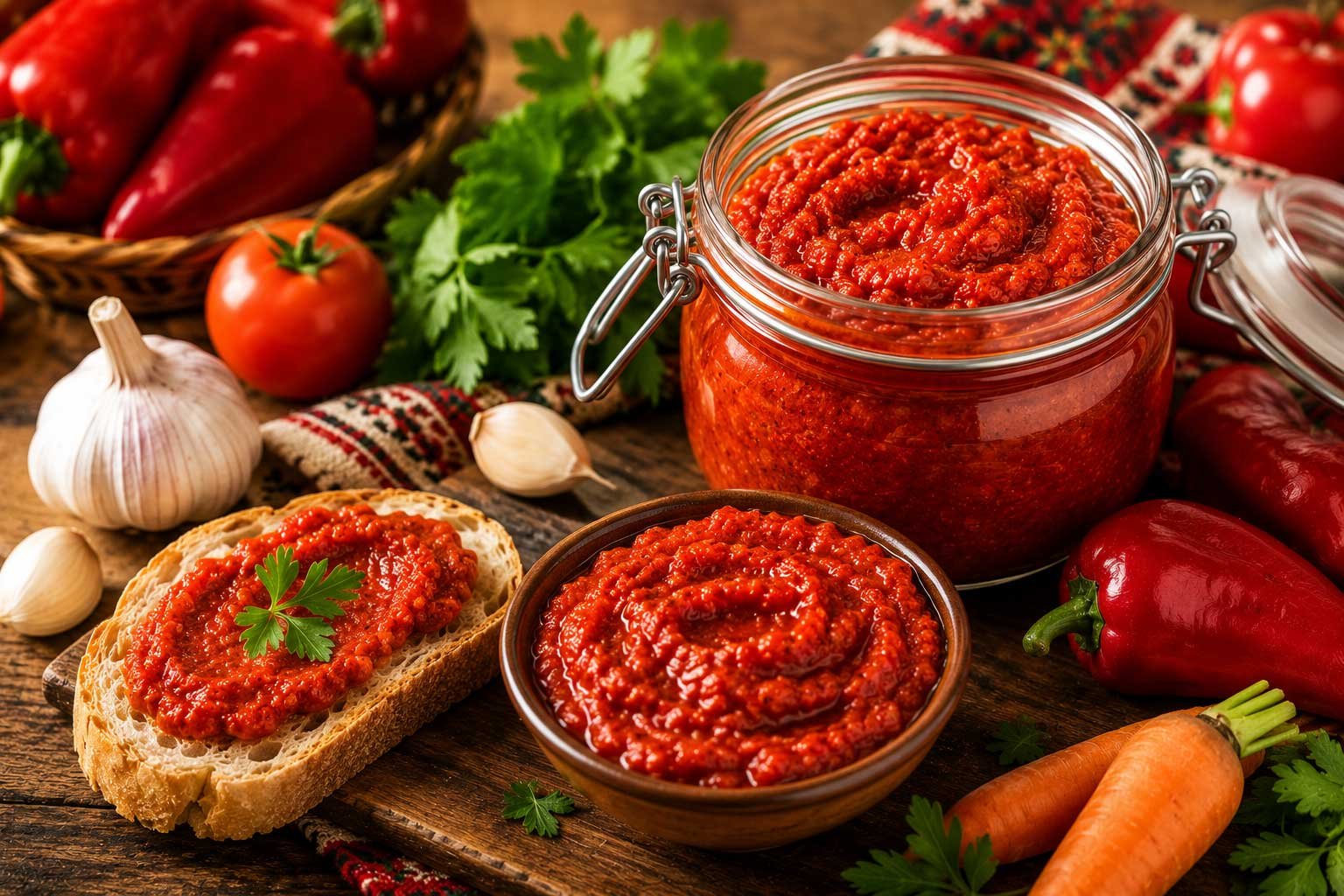
Lutenitsa, also spelled lyutenitsa, is one of Bulgaria’s most beloved traditional vegetable spreads made from roasted peppers, tomatoes, carrots, garlic, and oil. Rich, smoky, slightly sweet, and deeply flavorful, this classic Bulgarian spread has been part of family kitchens and autumn food traditions for generations.
Across Bulgaria, homemade lutenitsa is much more than just a condiment. Every year during late summer and autumn, families gather to roast peppers, cook huge batches in large pots, and preserve jars for the winter months ahead. The smell of roasted peppers and simmering tomatoes during lutenitsa season is instantly recognizable in many Bulgarian homes and villages.
Unlike ajvar, which is usually smokier and pepper-focused, Bulgarian lutenitsa combines roasted peppers with tomatoes and carrots for a sweeter, more complex flavor and a slightly chunkier texture. It is commonly served spread on bread, alongside sirene cheese, with grilled meats, eggs, potatoes, or as part of a traditional Bulgarian breakfast.
If you want to explore the differences further, read our full comparison of Ajvar vs Lutenitsa and learn how these iconic Balkan spreads compare across flavor, ingredients, and texture.
This authentic Bulgarian lutenitsa recipe shows you how to make homemade lyutenitsa the traditional way, including roasting methods, ingredient tips, regional variations, storage advice, and everything you need to create one of the Balkans’ most iconic comfort foods.
For many Bulgarians, the smell of roasted peppers and simmering lutenitsa instantly brings back memories of autumn family gatherings and homemade food traditions.
What Is Lutenitsa?
Lutenitsa, also spelled lyutenitsa, is a traditional Bulgarian vegetable spread made primarily from roasted red peppers, tomatoes, carrots, garlic, and oil. Known for its rich roasted flavor, slight sweetness, and thick spreadable texture, lutenitsa is one of the most iconic preserved foods in Bulgarian cuisine.
Although recipes vary by region and family tradition, authentic Bulgarian lutenitsa is usually slow-cooked for hours until the vegetables become deeply flavorful, slightly caramelized, and richly concentrated. Some versions are smooth and silky, while others remain chunky and rustic with visible vegetable pieces.
Affiliate Disclosure: This article may contain affiliate links. If you purchase through these links, I may earn a small commission at no additional cost to you.
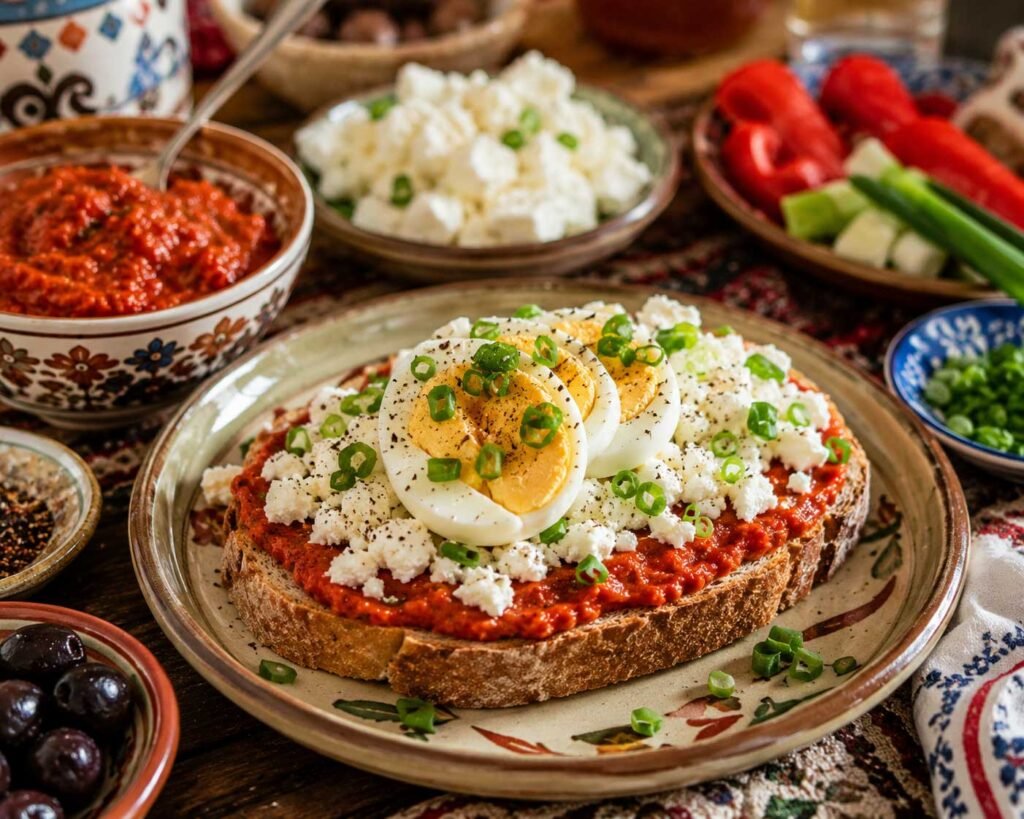
Lutenitsa is commonly served spread over bread, paired with Bulgarian sirene cheese, beside grilled meats, or as part of a traditional Bulgarian breakfast.
Lutenitsa is often served alongside dishes found in a traditional Bulgarian breakfast, especially fresh bread, sirene cheese, eggs, and roasted vegetables.
Across Bulgaria, homemade lutenitsa is deeply connected to autumn harvest season and winter food preservation traditions. Many families still prepare large batches every year using freshly roasted peppers and tomatoes from local gardens and markets.
Compared to ajvar, Bulgarian lutenitsa is usually sweeter, more tomato-forward, slightly chunkier, and richer in overall vegetable flavor.
In many Bulgarian homes, a jar of homemade lutenitsa is considered just as essential as bread or cheese on the table.
While both spreads are popular throughout the Balkans, traditional Balkan Ajvar usually focuses more heavily on roasted peppers and smoky flavor.
Its balance of roasted peppers, tomatoes, and carrots creates a comforting flavor that has remained a staple of Bulgarian home cooking for generations.
Why Bulgarian Lutenitsa Is Special
Bulgarian lutenitsa is special because it combines simple garden vegetables with slow traditional cooking methods that create incredibly deep flavor. Unlike many modern spreads or sauces, authentic homemade lutenitsa is built around patience, roasting, and seasonal preparation.
What makes traditional Bulgarian lutenitsa unique is the balance between smoky roasted peppers, sweet tomatoes, carrots, garlic, and slow-cooked richness.
The roasted peppers provide depth and smokiness, while the tomatoes and carrots add natural sweetness and a softer, more comforting flavor. This combination creates a spread that is rich and savory without feeling too heavy.
Another reason lutenitsa stands out is its strong connection to Bulgarian family traditions. Across Bulgaria, autumn is known as lutenitsa season, when families gather together to roast peppers outdoors, stir large cooking pots for hours, and preserve jars for winter. In many homes, recipes are passed down through generations and every family has its own preferred texture, sweetness level, or spice balance.
Homemade Bulgarian lutenitsa is also incredibly versatile and can be served spread over warm bread, paired with Bulgarian sirene cheese, beside grilled meats, with eggs or potatoes, or as part of breakfast and traditional meze platters
It pairs especially well with Balkan barbecue favorites like Bulgarian Kebapche and Bulgarian Kyufte.
For many Bulgarians, the taste and smell of homemade lutenitsa brings memories of childhood, grandparents, village gardens, and traditional home cooking. That deep cultural connection is part of what makes authentic Bulgarian lutenitsa much more than just a vegetable spread.
Some families prefer smoother lutenitsa, others like it chunky and rustic, but almost everyone has strong opinions about how it should taste.
What Does Lutenitsa Taste Like?
Lutenitsa has a rich, comforting flavor that combines smoky roasted peppers, sweet tomatoes, carrots, garlic, and slow-cooked vegetable depth. The taste is savory and slightly sweet with a mild roasted smokiness that becomes deeper and richer the longer the mixture cooks.
Compared to ajvar, Bulgarian lutenitsa is usually sweeter, more tomato-forward, slightly chunkier, less smoky, and richer in overall vegetable flavor.
The roasted peppers create the signature smoky flavor, while the tomatoes add freshness and the carrots provide natural sweetness and balance. Garlic adds a gentle savory depth without overpowering the spread.
Traditional homemade lutenitsa can range from smooth and silky to thick and rustic with visible pieces of roasted vegetables depending on regional style and family preference.
Depending on the recipe, some versions may taste slightly tangy, mildly spicy, lightly caramelized, or deeply earthy and roasted.
Good homemade Bulgarian roasted pepper spread should feel rich and flavorful without being too acidic or overly sweet. The best versions have a balanced roasted vegetable flavor with deep red color, thick texture, and a comforting homemade taste that pairs perfectly with bread, cheese, grilled meats, and traditional Bulgarian dishes.
The longer lutenitsa cooks, the deeper and richer the flavor becomes, which is why traditional homemade versions often simmer for hours.
Best Peppers for Lutenitsa
The quality of the peppers has a huge impact on the final flavor of homemade Bulgarian lutenitsa. Because roasted peppers form the foundation of the spread, choosing sweet, ripe, and flavorful peppers is essential for achieving authentic taste and texture.
Traditional Bulgarian lutenitsa is usually made with sweet red roasting peppers that become deeply smoky and slightly caramelized during cooking. In Bulgaria, many families prefer long red peppers or paprika-style peppers because they contain less water and develop richer flavor after roasting.
Good peppers for lutenitsa should feel heavy, firm, and fully ripe with deep red color. Watery or under-ripe peppers can produce thinner texture and weaker flavor. The best homemade lutenitsa develops its rich sweetness naturally from properly roasted peppers and slow cooking rather than relying on added sugar.
In Bulgaria, many families wait all year for late-summer peppers because the flavor is noticeably sweeter and better suited for homemade lutenitsa.
How to Roast Peppers Properly
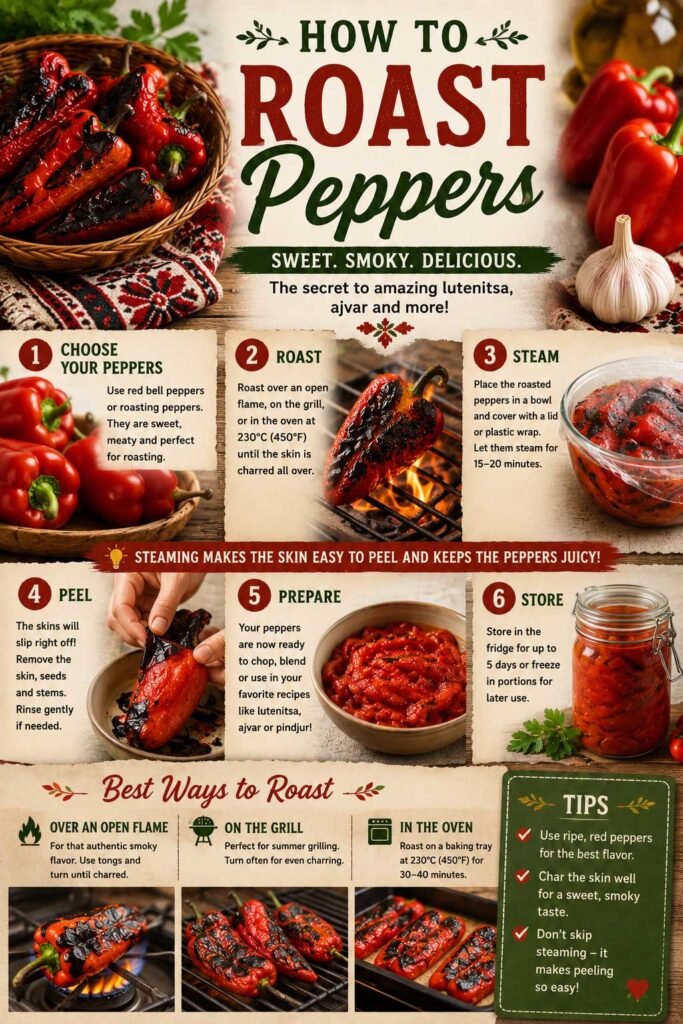
Properly roasting the peppers is one of the most important steps in making authentic Bulgarian lutenitsa. Good roasting develops the deep smoky flavor, slight sweetness, and rich aroma that give homemade lutenitsa its signature taste.
The goal is to roast the peppers until the skins become heavily blistered and blackened while the inside becomes soft, juicy, and slightly caramelized. This process concentrates the natural sweetness of the peppers and adds the smoky depth that makes traditional lutenitsa so flavorful.
Many Bulgarian families traditionally roast peppers outdoors over charcoal, wood fire, or metal plates during autumn harvest season. This method creates the strongest smoky flavor and gives homemade lutenitsa its authentic rustic character. However, oven roasting and grilling also work very well for home cooking.
After roasting, the peppers are usually placed into a covered bowl or large pot to steam for several minutes. The steam loosens the skins and makes peeling much easier. Once cooled slightly, the skins, stems, and seeds are removed by hand before the peppers are blended or ground into the lutenitsa mixture.
Properly roasted peppers are often considered the heart of truly good homemade lutenitsa.
Proper roasting should leave the peppers soft, smoky, deeply sweet, and easy to peel.
Under-roasted peppers can create weak flavor and tougher texture, while properly charred peppers develop the rich roasted complexity that makes homemade Bulgarian vegetable spread so distinctive.
Traditional Homemade Lutenitsa in Bulgaria
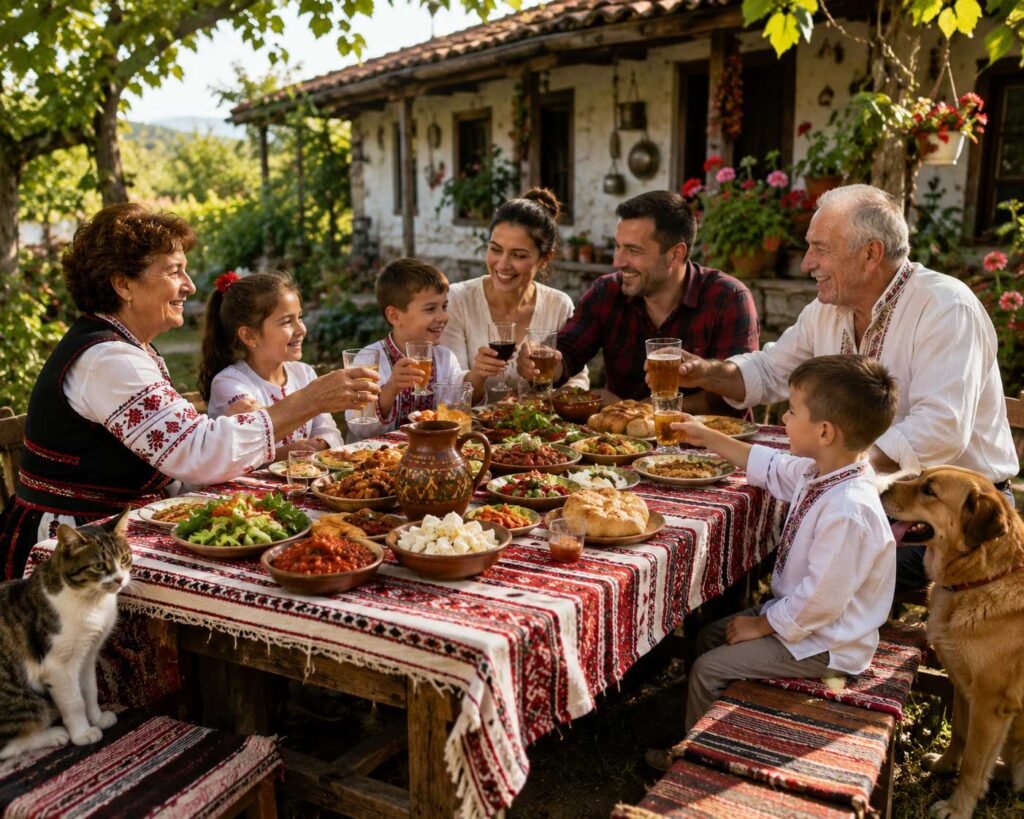
Homemade lutenitsa has been part of Bulgarian family life for generations and remains one of the country’s most recognizable autumn food traditions. Every year during late summer and early autumn, families across Bulgaria prepare large batches of lutenitsa using freshly harvested peppers, tomatoes, and carrots that will be preserved and enjoyed throughout the winter.
In many Bulgarian homes and villages, making lutenitsa is much more than simply preparing a spread. It is often a full-day family gathering centered around roasting peppers outdoors, peeling vegetables by hand, slowly simmering large pots, and preparing jars for storage. During lutenitsa season, the smell of roasted peppers and tomatoes fills neighborhoods and village streets, creating an atmosphere strongly connected to childhood memories and traditional home cooking.
Similar autumn preservation traditions can also be found in recipes like Pindjur, another beloved Balkan roasted vegetable spread.
Authentic homemade lutenitsa is usually cooked slowly over wood fire, charcoal, or outdoor burners to develop deeper flavor and thicker texture. The vegetables are stirred continuously for hours as the mixture gradually becomes richer, sweeter, and more concentrated. Some families prefer smooth lutenitsa with silky texture, while others leave it chunkier and more rustic with visible vegetable pieces.
In villages especially, lutenitsa-making still feels like a social event where entire families spend the day cooking together outdoors.
Because recipes are often passed down through generations, every household has its own version. Some recipes contain more carrots for sweetness, others focus on stronger roasted pepper flavor, while some families add mild spice or extra smokiness. These small differences are part of what makes traditional Bulgarian lutenitsa such an important and deeply personal part of Bulgarian food culture.
Step-by-Step Bulgarian Lutenitsa Recipe
Making homemade Bulgarian lyutenitsa takes time, but the process itself is part of what gives this traditional spread its deep flavor and authentic character. Slow roasting and gentle simmering allow the peppers, tomatoes, and carrots to become rich, smoky, and naturally sweet.
The most important part is patience. Proper homemade lutenitsa should cook slowly until thick, concentrated, and deeply flavorful rather than rushed or watery.
Although making homemade lutenitsa takes time, most people agree the flavor is worth every hour of roasting and slow cooking.

Lyutenitsa
Ingredients
- 5 lb red peppers
- 3 lb ripe tomatoes
- 2 large carrots
- ½ cup vegetable oil
- 1 tbsp salt
- 1 tsp sugar optional
- chili peppers for spice optional
- black pepper optional
Instructions
- Wash the peppers and tomatoes, then transfer to a large bowl with a cover.
- Roast the peppers until the skins become blackened and blistered on all sides. This step is essential for developing the smoky flavor that gives traditional Bulgarian lutenitsa its signature taste.
- Once roasted, place the peppers into a covered bowl or pot and allow them to steam for about 15 minutes. This loosens the skins and makes peeling easier.
- Carefully peel the peppers and remove the stems and seeds.
- Peel the tomatoes if desired, then chop them roughly. Many traditional recipes simmer the tomatoes separately first to reduce excess liquid before combining them with the peppers.Reducing moisture helps create thicker and richer homemade lutenitsa.
- You could also boil a large pot with water over medium heat and add tomatoes and boil for 1 minute. Then remove the tomatoes and rinse with cold water, peel and chop them.
- Boil or roast the carrots until fully softened. The carrots add natural sweetness and help balance the acidity of the tomatoes.Once softened, blend or finely chop them before adding them to the mixture.
- Traditionally, Bulgarian families use meat grinders for a slightly rustic texture. Modern recipes often use food processors or blenders depending on whether a smoother or chunkier lutenitsa is preferred.Blend the peppers, tomatoes, and carrots until the mixture reaches your desired consistency.
- Transfer the vegetable mixture into a large heavy pot and oil and cook slowly over medium-low heat for 2 to 4 hours, stirring frequently to prevent sticking or burning.
- As the lutenitsa cooks, it gradually thickens and develops deeper roasted flavor, richer color, and a more concentrated texture.
- This slow simmering process is one of the most important parts of authentic homemade lutenitsa.
- Toward the end of cooking, stir in the garlic, oil, salt, and optional sugar or spices.
- Taste and adjust the seasoning carefully. Some families prefer slightly sweeter lutenitsa, while others focus on stronger roasted pepper flavor.
- Transfer the hot lutenitsa into sterilized glass jars and seal immediately.
- Allow the jars to cool slowly before storing them in a cool dark place.
- You can keep in the fridge for up to 10 days or sterilize.
- Once opened, refrigerate and consume within 1–2 weeks.
- Homemade Bulgarian lutenitsa also freezes very well for longer storage.
Smooth vs Chunky Lutenitsa
One of the most noticeable differences between homemade Bulgarian lutenitsa recipes is the texture. Some families prefer smooth and silky lutenitsa that spreads easily on bread, while others make a chunkier, more rustic version with visible pieces of roasted vegetables.
Smooth lutenitsa is usually blended more thoroughly and cooked longer until it becomes thick, creamy, and uniform. This style is often easier to spread and is commonly found in commercial jars and modern recipes. The texture feels rich and velvety, making it perfect for toast, sandwiches, and breakfast spreads.
Chunky lutenitsa has a more traditional homemade character and often contains small pieces of roasted peppers, tomatoes, and carrots. Many Bulgarians consider this version more rustic and flavorful because the individual vegetables remain more noticeable. Chunkier lutenitsa also tends to feel heartier and more closely connected to village-style homemade cooking.
Texture is one of the biggest debates in Bulgarian households when it comes to homemade lutenitsa.
Texture usually depends on regional traditions, family preference, cooking methods, and how finely the vegetables are ground or blended during preparation.
Some households even prepare both versions depending on how the lutenitsa will be served. Smooth lutenitsa works especially well as a spread, while chunkier versions pair beautifully with grilled meats, roasted potatoes, and traditional Bulgarian meals.
Bulgarian Lutenitsa vs Ajvar
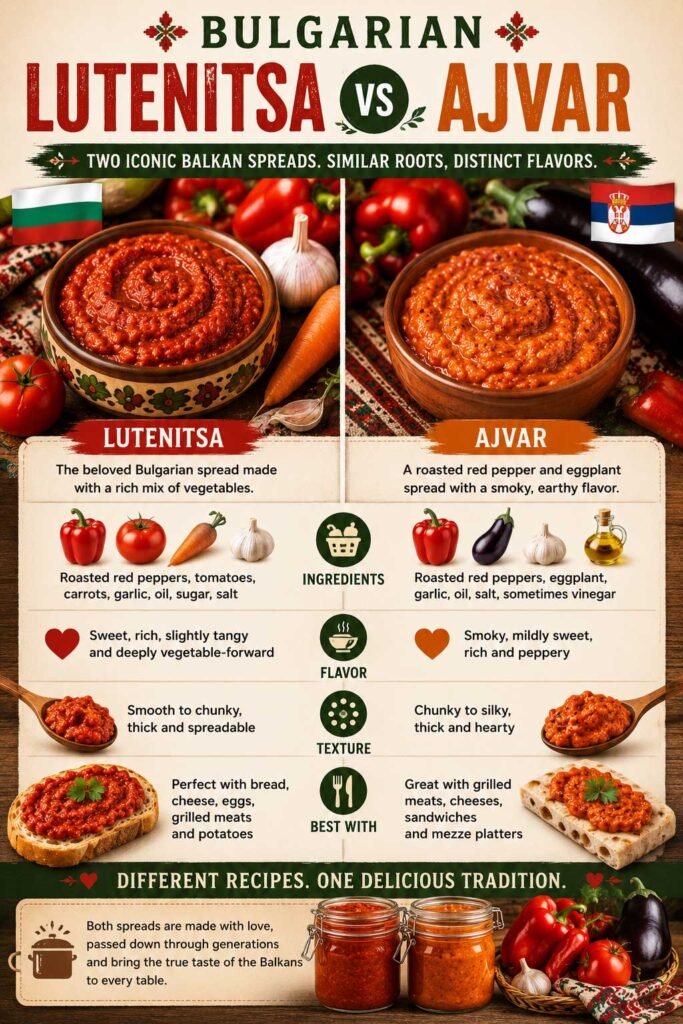
Bulgarian lutenitsa and ajvar are two of the Balkans’ most famous roasted vegetable spreads, and although they may look similar at first glance, they have very different flavors, textures, and traditional ingredients.
Ajvar, which is especially popular in Serbia and North Macedonia, focuses heavily on roasted red peppers and often includes eggplant. The flavor is usually smokier, richer, and more concentrated with a smoother texture.
Bulgarian lutenitsa, on the other hand, combines roasted peppers with tomatoes and carrots, creating a sweeter, slightly lighter, and more vegetable-forward spread. The tomatoes add freshness while the carrots contribute natural sweetness and softer balance.
Another major difference is texture. Ajvar is typically smoother and silkier, while lutenitsa is often chunkier and more rustic with visible pieces of vegetables. Some Bulgarian families prefer very smooth lutenitsa, but many homemade versions still maintain a hearty homemade texture.
Across the Balkans, families often grow up eating both spreads, although most people strongly favor the version they grew up with.
Traditionally, both spreads are prepared during autumn harvest season and preserved in jars for winter. They are also served in similar ways alongside bread, grilled meats, cheese, potatoes, and Balkan breakfasts.
Here is a simple comparison between the two:
| Bulgarian Lutenitsa | Ajvar |
|---|---|
| Tomato-forward flavor | Pepper-forward flavor |
| Slightly sweeter | Smokier |
| Often chunkier | Usually smoother |
| Includes carrots | Often includes eggplant |
| Rich vegetable flavor | Deep roasted pepper flavor |
Although the two spreads are different, both are deeply connected to Balkan food culture and homemade cooking traditions. Many families across the Balkans prepare both lutenitsa and ajvar every autumn, each bringing its own unique flavor and character to the table.
If you enjoy Balkan spreads and condiments, explore our complete Balkan Condiments Guide featuring ajvar, pindjur, lutenitsa, and other traditional regional favorites.
What to Serve With Lutenitsa

Bulgarian lutenitsa is incredibly versatile and can be served in both simple everyday meals and larger traditional spreads. Its rich roasted pepper flavor, slight sweetness, and thick texture make it one of the easiest Balkan condiments to pair with a wide variety of foods.
One of the most traditional ways to enjoy lutenitsa is simply spread over warm bread with Bulgarian sirene cheese. The salty cheese balances the sweetness of the roasted peppers perfectly and creates one of the most recognizable comfort food combinations in Bulgarian cuisine.
The salty and creamy flavor of Bulgarian Sirene Cheese balances the sweetness of roasted peppers perfectly.
Lutenitsa is also commonly served beside grilled meats such as kebapche, kyufte, grilled sausages, and pork dishes. The smoky vegetable flavor pairs beautifully with Balkan barbecue and adds moisture and richness to grilled foods.
Some Bulgarians enjoy lutenitsa so much that they eat it with almost every meal during winter.
These grilled dishes are staples of traditional Balkan cuisine and are often served with Shopska Salad and roasted pepper spreads.
Many Bulgarians also enjoy lutenitsa as part of breakfast served with toast, eggs, sirene cheese, tomatoes, and fresh cucumbers.
Its thick texture makes it perfect for sandwiches and wraps, while chunkier homemade versions work especially well beside roasted potatoes and rustic village-style meals.
Its thick texture also makes lutenitsa perfect as a dip for bread and vegetables, a spread for sandwiches and burgers, or part of a traditional Balkan meze platter alongside cheeses, olives, and roasted vegetables.
Because of its balance of sweetness, smokiness, and roasted-vegetable flavor, homemade Bulgarian lyutenitsa fits naturally into both traditional Balkan meals and modern everyday cooking.
Is Lutenitsa Healthy?
Lutenitsa is considered relatively healthy because it is made primarily from roasted vegetables such as peppers, tomatoes, carrots, and garlic. Traditional homemade versions are rich in natural flavor while remaining relatively low in heavily processed ingredients.
Roasted red peppers and tomatoes provide antioxidants, vitamins, carotenoids, and fiber, while carrots contribute additional nutrients and natural sweetness. Because homemade lutenitsa develops flavor slowly through roasting and simmering, it often relies less on artificial ingredients and heavy processing than many commercial spreads and sauces.
Another reason homemade Bulgarian lyutenitsa is popular is that it is naturally vegan and can fit into a variety of diets when prepared with simple traditional ingredients. The combination of roasted vegetables, garlic, and olive or sunflower oil creates a spread that feels rich and satisfying without requiring large amounts of dairy or processed additives.
Compared to store-bought versions, homemade lutenitsa is often healthier because families can control the amount of oil, salt, sugar, and overall ingredient quality used in each batch.
Many commercial jars may contain extra preservatives, stabilizers, or added sugar to extend shelf life and standardize flavor, while traditional homemade recipes usually focus on simple vegetables and slow cooking for natural depth and sweetness.
Traditional homemade recipes often rely on simple seasonal vegetables rather than heavily processed ingredients.
When enjoyed in moderation with bread, cheese, grilled meats, or vegetables, homemade Bulgarian lutenitsa can be part of a balanced and flavorful meal while still delivering the rich roasted taste that makes it one of Bulgaria’s most beloved traditional foods.
Common Mistakes to Avoid When Making It
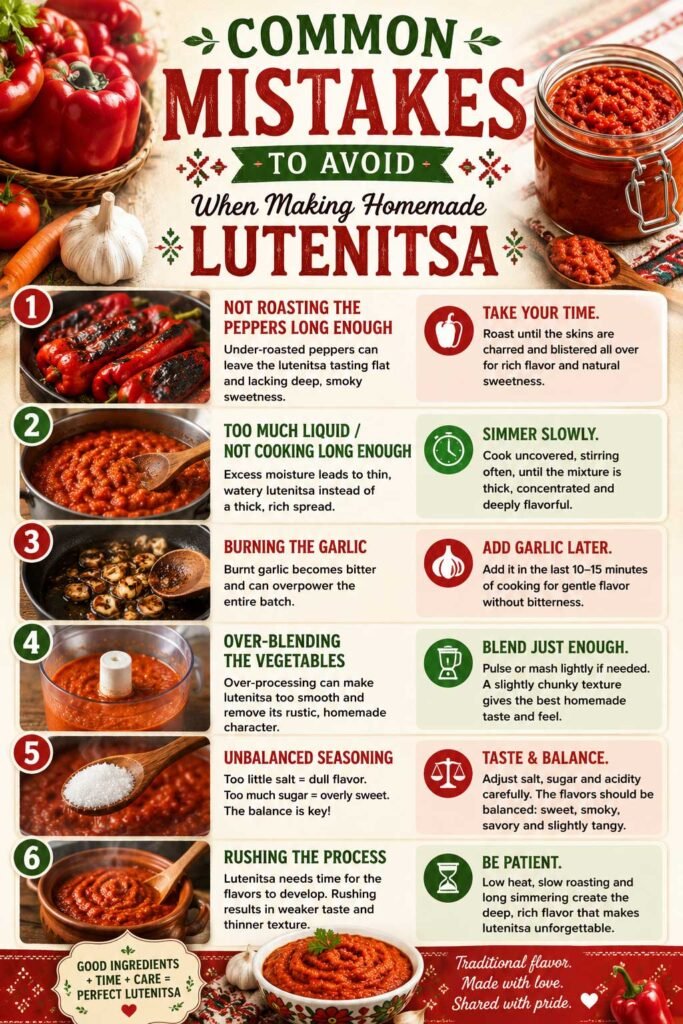
One of the most common mistakes when making homemade Bulgarian lutenitsa is not roasting the peppers long enough. Proper roasting is what gives lutenitsa its deep smoky flavor and natural sweetness. Under-roasted peppers can leave the spread tasting flat and lacking the rich roasted depth that defines authentic homemade lutenitsa.
Another frequent problem is using tomatoes with too much liquid or not reducing the mixture long enough during cooking. Excess moisture can create thin, watery lutenitsa instead of the thick, rich texture traditional recipes are known for. Slow simmering is essential because it allows the vegetables to become concentrated, slightly caramelized, and deeply flavorful.
Burning the garlic is another mistake that can affect the entire batch. Garlic should enhance the flavor gently rather than overpower it with bitterness. Many Bulgarian cooks add the garlic later in the cooking process to preserve its balanced flavor.
Texture can also become an issue if the vegetables are over-blended. Some homemade lutenitsa recipes are smooth, but over-processing can remove the rustic homemade character that makes traditional versions feel richer and more authentic.
Seasoning is equally important. Too little salt can make the spread taste dull, while too much sugar can overpower the roasted vegetable flavor. The best homemade Bulgarian lutenitsa maintains balance between sweetness, smokiness, acidity, and savory depth.
Patience is one of the most important parts of successful lutenitsa-making. Traditional recipes take time, and rushing the roasting or simmering process usually results in weaker flavor and thinner texture.
Good homemade lutenitsa cannot really be rushed, which is why traditional recipes often take several hours from start to finish.
How to Store Homemade Lutenitsa

Proper storage is important for preserving the rich flavor, thick texture, and freshness of homemade Bulgarian lutenitsa. Because traditional lutenitsa is often prepared in large autumn batches, many families store jars for weeks or even months to enjoy throughout the winter.
Once opened, homemade lutenitsa should always be refrigerated in an airtight glass container or jar. In the refrigerator, it will usually stay fresh for about 1 to 2 weeks. Many people also add a thin layer of oil on top after opening to help reduce air exposure and preserve freshness longer.
For longer storage, lutenitsa freezes very well. Allow the spread to cool completely before placing it into freezer-safe containers or jars, leaving a little extra space for expansion. Frozen homemade lutenitsa can maintain good flavor and texture for several months.
Many Bulgarian families still prepare enough jars to last through the entire winter season.
Traditional Bulgarian households often preserve lutenitsa using sterilized jars and canning methods. The hot lutenitsa is transferred directly into clean jars, sealed tightly, and allowed to cool slowly to create a vacuum seal. Properly sealed jars can last for many months when stored in a cool, dark place such as a pantry, cellar, or basement.
It is important to watch for signs of spoilage such as mold, bubbling, sour smells, swollen lids, or unusual color changes, especially when storing homemade lutenitsa for longer periods.
Because homemade lutenitsa contains natural ingredients without heavy preservatives, proper sterilization and storage are essential for maintaining both flavor and food safety.
Regional Variations Across Bulgaria
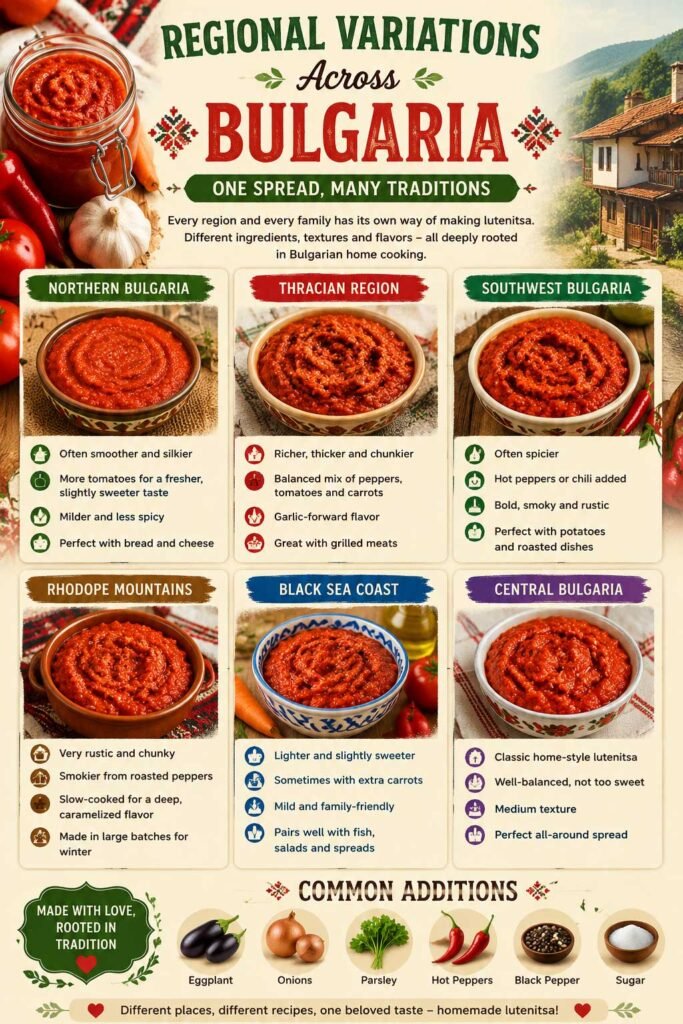
Like many traditional Bulgarian foods, lutenitsa varies from region to region and even from family to family. Although the core ingredients usually include roasted peppers, tomatoes, carrots, garlic, and oil, the exact balance of flavors and texture can change significantly depending on local traditions and personal preference.
Traveling across Bulgaria, you will quickly notice that almost every region — and often every household — prepares lutenitsa a little differently.
In some parts of Bulgaria, lutenitsa is made smoother and silkier with a texture similar to a spreadable sauce, while other regions prefer a chunkier and more rustic version with visible pieces of roasted vegetables. Village-style homemade lutenitsa is often thicker, smokier, and cooked for longer periods over outdoor fires to develop deeper flavor.
Some recipes focus more heavily on roasted pepper flavor, while others contain extra tomatoes or carrots for additional sweetness. In certain households, small amounts of sugar are added to balance acidity, while others rely entirely on the natural sweetness of slow-roasted vegetables.
Some regional recipes may also include ingredients such as eggplant, onions, parsley, black pepper, or mild chili peppers, depending on local traditions and family preferences.
Across Bulgaria, homemade lutenitsa remains deeply personal, and many families proudly protect recipes that have been passed down for generations. These regional and family differences are part of what makes Bulgarian lutenitsa such an important and beloved part of the country’s culinary identity.
In many Bulgarian homes, opening a jar of homemade lutenitsa during winter brings back memories of family gatherings, garden harvests, roasted peppers, and long autumn afternoons spent cooking together outdoors.
FAQ About Bulgarian Lutenitsa Recipe
Is lutenitsa the same as lyutenitsa?
Yes. Lutenitsa and lyutenitsa are two English spellings of the Bulgarian word “лютеница.” Both refer to the same traditional Bulgarian roasted vegetable spread.
What is the difference between lutenitsa and ajvar?
Lutenitsa usually contains tomatoes and carrots, giving it a sweeter and more vegetable-forward flavor, while ajvar focuses more heavily on roasted peppers and often includes eggplant for a smokier and richer taste.
Is traditional Bulgarian lutenitsa spicy?
Most traditional Bulgarian lutenitsa recipes are mild, although some families add hot peppers or chili for extra heat.
Can you freeze homemade lutenitsa?
Yes. Homemade lutenitsa freezes very well and can maintain its flavor and texture for several months when stored properly.
How long does homemade lutenitsa last?
Once opened, homemade lutenitsa usually lasts about 1 to 2 weeks in the refrigerator. Properly sterilized sealed jars can last for several months when stored in a cool dark place.
What does lutenitsa taste like?
Lutenitsa tastes rich, smoky, slightly sweet, and deeply roasted with balanced flavors from peppers, tomatoes, carrots, and garlic.
Is lutenitsa healthy?
Homemade lutenitsa is relatively healthy because it is made primarily from roasted vegetables and contains vitamins, antioxidants, and natural ingredients without heavy processing.
Final Thoughts on Bulgarian Lutenitsa
Bulgarian lutenitsa is much more than a simple vegetable spread. Its rich combination of roasted peppers, tomatoes, carrots, garlic, and slow-cooked flavor represents generations of Bulgarian home cooking, autumn traditions, and family gatherings.
Whether served with warm bread, Bulgarian sirene cheese, grilled meats, potatoes, or eggs, homemade lutenitsa brings comforting flavor and authentic Balkan character to every meal. The slow roasting and long simmering process create a deep roasted sweetness that makes traditional homemade versions especially memorable.
Across Bulgaria, families continue preparing lutenitsa every autumn using recipes passed down through generations, keeping one of the country’s most beloved culinary traditions alive. Once you taste authentic homemade Bulgarian lutenitsa, it becomes easy to understand why it remains such an important part of Bulgarian food culture today.
For many people, homemade lutenitsa is not just food but part of childhood memories, family traditions, and the feeling of home.
If you enjoy traditional Balkan comfort foods, you may also love exploring recipes like Ajvar, Pindjur, and other classic roasted vegetable spreads from across the Balkans.
Inspiration and adaptation: cuisinebgcr.wordpress.com, tasteatlas.com, recipesbg.com
Explore other recipes from the traditional Bulgarian cuisine.
Did you make this Bulgarian Vegetable Spread Lyutenitsa recipe?
Please let me know how it turned out for you! Leave a comment below and don’t forget to follow us. Sharing is caring!

