Traditional Santorini Tomato Fritters (Domatokeftedes)
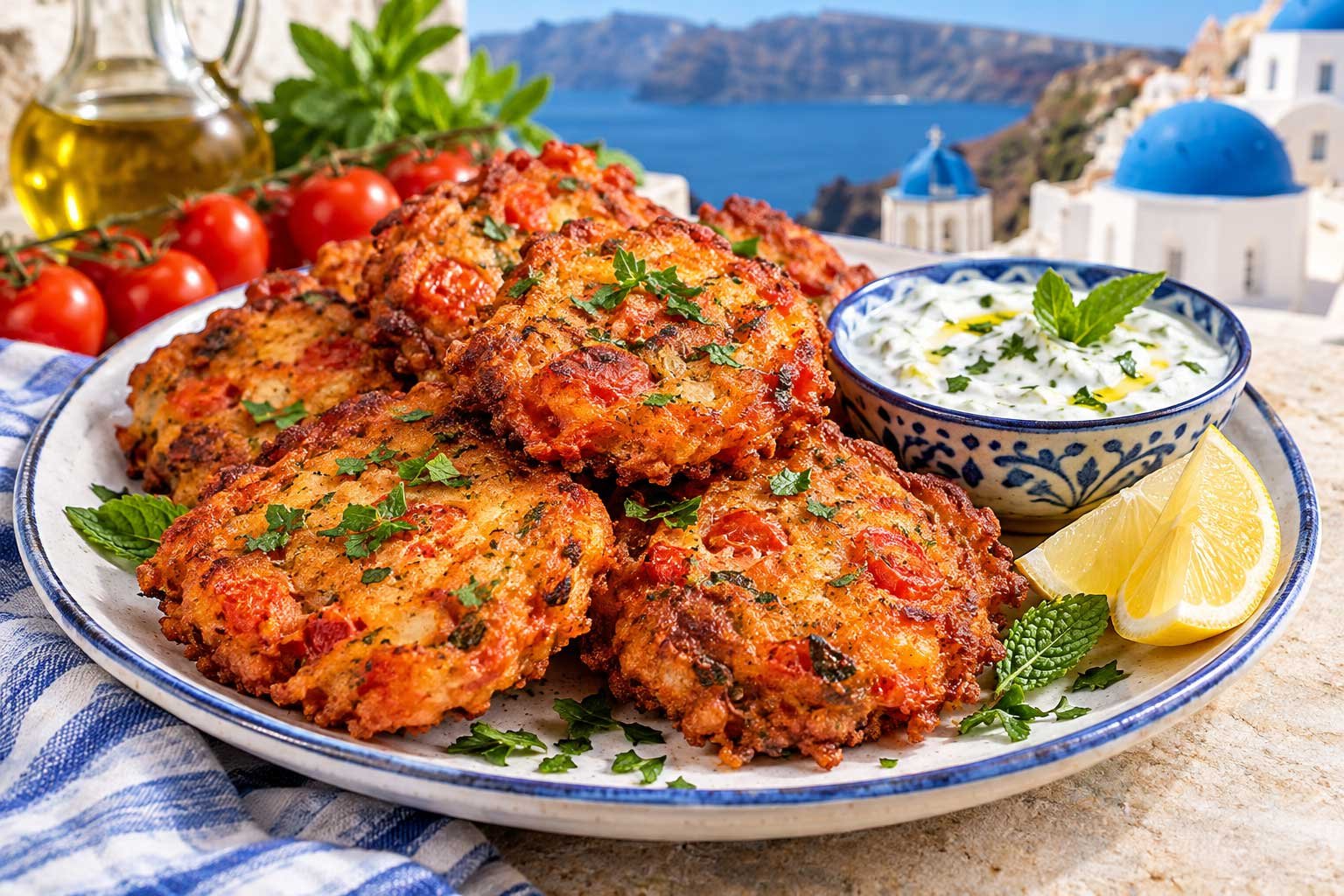
Golden and crispy around the edges, with sweet tomatoes and fresh herbs tucked inside, Santorinian Tomato Fritters are one of those Greek appetizers that are hard to stop eating. Known as Domatokeftedes, these little fritters are a Santorini specialty, where tomatoes have long been an important part of the island’s cooking.
What makes them so good is the combination of ripe tomatoes, red onion, fresh mint, and parsley, all held together in a simple batter and fried until golden. Santorini’s famous small tomatoes have a particularly concentrated flavor, but you don’t need to track them down to make this recipe. Sweet cherry tomatoes or mini Roma tomatoes work well, too.
Serve these Greek tomato fritters warm with a spoonful of thick Greek yogurt or homemade tzatziki. They’re lovely as a starter, part of a meze spread, or a light lunch with a fresh salad on the side.
What Are Santorini Tomato Fritters?
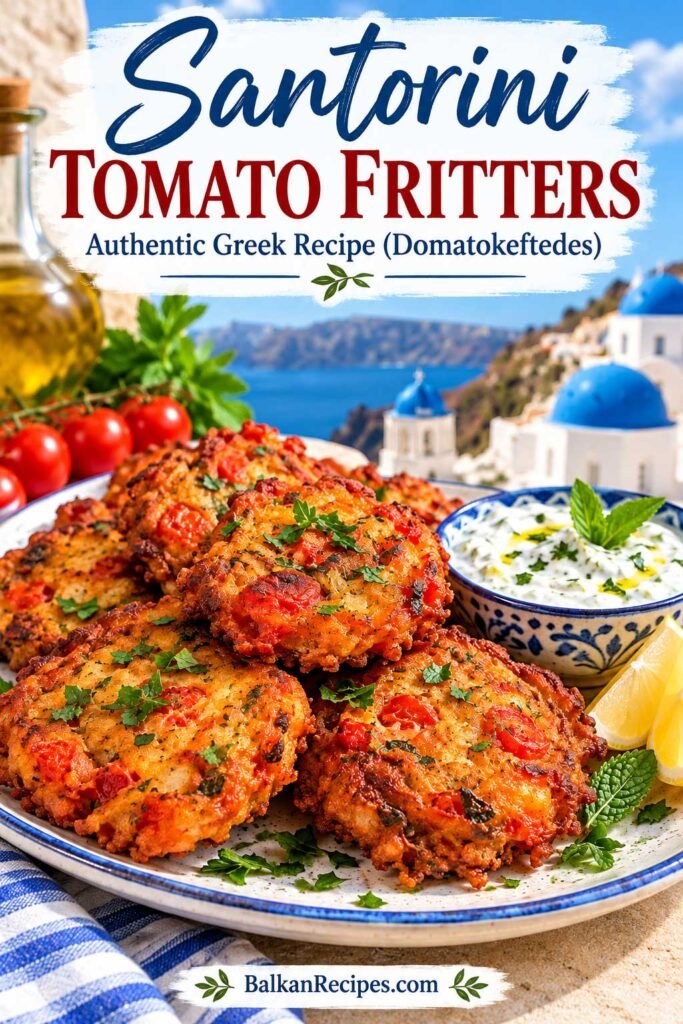
Santorini has a long history of growing small, intensely flavored tomatoes. Cultivation dates back to at least the 1870s, and over time, the island’s dry climate, volcanic soil, and traditional farming methods helped shape the distinctive character of its local tomato variety.
Santorini’s famous cherry tomatoes, known as Tomataki Santorinis, have become an important part of the island’s agricultural heritage. In 2013, the variety received Protected Designation of Origin (PDO) recognition from the European Union, recognizing its close connection to the island’s geography and traditional cultivation methods.
Santorini tomatoes are also valued for their concentrated sweetness and relatively high solids content. The European Cooperative Programme for Plant Genetic Resources documents this traditional variety and its adaptation to the island’s dry growing conditions.
Fortunately, you can still make delicious Domatokeftedes without the island’s famous tomatoes. Ripe cherry or mini Roma tomatoes are practical substitutes, especially when you remove excess moisture before preparing the batter.
If you enjoy discovering regional specialties like Domatokeftedes, explore our collection of traditional Greek recipes for more appetizers, salads, and homemade Mediterranean dishes.
Affiliate Disclosure: This article may contain affiliate links. If you purchase through these links, I may earn a small commission at no additional cost to you.
Why You’ll Love These Santorini Tomato Fritters

These traditional Greek tomato fritters are simple to prepare yet full of bold Mediterranean flavor. There’s something especially satisfying about biting into a freshly fried tomato fritter. The edges are golden and crisp, the middle stays soft, and the mint and parsley add a lovely freshness. They’re also surprisingly easy to make with ingredients you probably already have in your kitchen.
Crispy Outside, Tender Inside
The light batter fries to a delicate golden crust while the tomatoes remain soft, juicy, and bursting with flavor.
Authentic Taste of Santorini
These fritters are inspired by the tomato patties served in Santorini’s traditional tavernas, where they’re often enjoyed as a starter with a cool yogurt dip.
Easy Everyday Ingredients
While authentic Santorini tomatoes are ideal, ripe cherry or cocktail tomatoes work wonderfully and are easy to find in most grocery stores.
Perfect for Entertaining
Serve these fritters as an appetizer, part of a Greek meze platter, or a flavorful side dish for family dinners, summer barbecues, and gatherings.
Naturally Vegetarian
Made with tomatoes, herbs, egg, and flour, these fritters are a tasty meat-free appetizer. If you enjoy crispy vegetable patties, you might also like our Greek Turnip and Feta Fritters, another delicious addition to a Greek meze platter.
Great Way to Use Summer Tomatoes
If your garden is overflowing with ripe tomatoes, this recipe is one of the most delicious ways to turn them into something truly special.
Ingredients You’ll Need

Cherry Tomatoes
Authentic Santorini cherry tomatoes deliver the most traditional flavor, but ripe cherry, grape, or cocktail tomatoes are excellent substitutes. Choose firm, sweet tomatoes with minimal excess moisture.
Red Onion
Grated red onion adds natural sweetness and a subtle sharpness that complements the tomatoes.
Tomato Paste
A small amount of tomato paste intensifies the tomato flavor and gives the fritters a richer color.
Fresh Mint
Fresh mint is one of the signature ingredients in traditional Domatokeftedes, adding a refreshing aroma that balances the sweetness of the tomatoes.
Fresh Flat-Leaf Parsley
Parsley brings freshness, color, and a mild herbal flavor that enhances the overall taste.
Self-Rising Flour
Self-rising flour binds the ingredients together while creating a light, crispy texture when fried.
Egg
The egg helps hold the mixture together and gives the fritters a tender interior.
Olive Oil
Use olive oil for sautéing the onion and shallow-frying the fritters. You don’t need to submerge them completely; just use enough oil to develop a golden crust on both sides.
Salt and Black Pepper
Simple seasonings enhance the natural sweetness of the tomatoes and bring all the flavors together.
Helpful Kitchen Tools for Making Santorini Tomato Fritters
You don’t need any special equipment to make these Greek tomato fritters, but a few basic kitchen tools can make the preparation easier and help you get consistently crispy results.
| Kitchen Tool | Why It’s Useful | Shop |
|---|---|---|
| Nonstick Frying Pan | Helps the fritters cook evenly and makes flipping easier. | Shop Frying Pans |
| Digital Cooking Thermometer | Helps you monitor the frying oil temperature around 350°F (175°C). | Shop Thermometers |
| Stainless Steel Box Grater | Makes it easy to grate the red onion finely. | Shop Box Graters |
| Stainless Steel Spider Strainer | Lifts the cooked fritters from hot oil while allowing excess oil to drain. | Shop Spider Strainers |
These are optional tools. A regular frying pan, kitchen grater, and slotted spoon will work just fine.
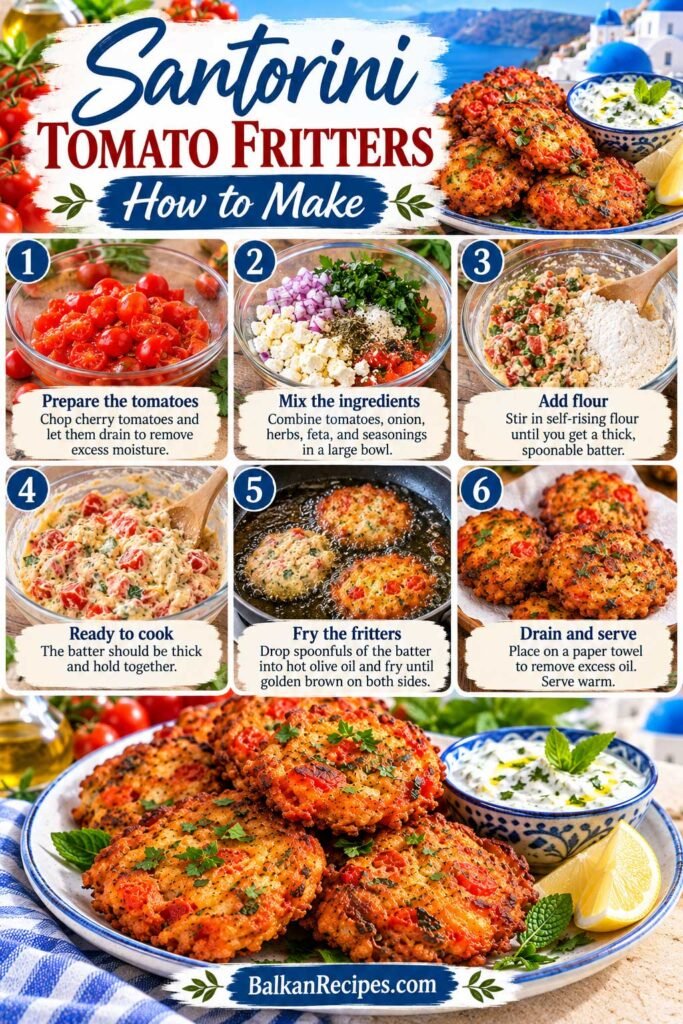
How to Make Santorini Tomato Fritters
Step 1: Sauté the Onion
Heat a small drizzle of olive oil in a medium saucepan over medium heat. Add the grated red onion and cook for 2 to 3 minutes until softened and fragrant without allowing it to brown.
Step 2: Cook the Tomatoes
Stir in the finely chopped cherry tomatoes and cook over low heat for about 3 minutes. This helps remove some of their moisture while concentrating their natural sweetness.
Step 3: Prepare the Tomato Mixture
Transfer the cooked tomatoes and onions to a large mixing bowl. Stir in the tomato paste, chopped mint, parsley, salt, and black pepper until everything is evenly combined. Let the mixture cool slightly.
Step 4: Make the Batter
Add the lightly beaten egg to the cooled tomato mixture and stir until combined. Gradually add the self-rising flour, mixing gently until you have a thick, spoonable batter.
If the mixture spreads too easily, add another tablespoon of flour. The batter should hold together when dropped from a spoon without becoming overly stiff.
Step 5: Fry the Fritters
Pour enough olive oil into a large frying pan for shallow frying and heat over medium heat to approximately 350°F (175°C).
Carefully drop heaping tablespoons of batter into the hot oil, leaving space between each fritter. Flatten them slightly with the back of the spoon and cook for 2–3 minutes per side, until golden brown and cooked through.
Work in small batches, adjusting the heat as needed to prevent the outside from browning too quickly.
Kitchen tip: A wide, heavy-bottomed frying pan gives the fritters enough room to cook without crowding. If you’re looking to upgrade your everyday cookware, a good nonstick frying pan is useful for everything from vegetable fritters to pancakes and eggs.
Step 6: Drain and Serve
Transfer the cooked fritters to a plate lined with paper towels to absorb any excess oil. Serve immediately while hot with Greek yogurt, tzatziki, or a squeeze of fresh lemon for the best flavor.
For easier frying: A stainless steel spider strainer makes it easier to lift the fritters from the oil without breaking them. Its open mesh also lets excess oil drain away before serving.

Santorini Tomato Fritters (Traditional Greek Domatokeftedes) Recipe
Ingredients
- 400 g cherry or mini roma tomatoes (finely chopped)
- 1 small red onion (grated)
- 2 tsp tomato paste
- 2 tbsp fresh mint (finely chopped)
- 2 tbsp fresh flat-leaf parsley (finely chopped)
- salt and pepper
- 120 g self-rising flour
- 1 large egg (lightly beaten)
- ½ tsp salt, or to taste
- ¼ tsp freshly ground black pepper
- ⅓ cup olive oil (for sautéing and shallow frying)
Optional for serving:
- Greek yogurt or tzatziki
- Fresh lemon wedges
- Chopped parsley or mint
Instructions
Sauté the Onion
- Heat 1 teaspoon of olive oil in a medium saucepan over medium heat. Add the grated red onion and sauté for 2–3 minutes until softened and fragrant.
Cook the Tomatoes
- Add the finely chopped tomatoes to the saucepan. Reduce the heat to medium-low and cook for approximately 3 minutes, stirring occasionally, until slightly softened. Drain off excess liquid if necessary.
Combine the Tomato Mixture
- Transfer the cooked tomatoes and onion to a large mixing bowl. Stir in the tomato paste, chopped mint, parsley, salt, and black pepper. Allow the mixture to cool for 5 minutes.
Prepare the Batter
- In a separate bowl, whisk the egg with the self-rising flour, then gradually fold in the tomato mixture. Stir until everything is evenly combined.
- The batter should be thick and spoonable, holding its shape when dropped from a tablespoon. If it seems too wet, add another tablespoon of flour.
Fry the Tomato Fritters
- Heat approximately ½ inch (1 cm) of olive oil in a large non-stick frying pan over medium heat, aiming for around 350°F (175°C).
- Drop heaping tablespoons of batter into the hot oil, gently flattening each fritter with the back of the spoon.
- Fry for 2–3 minutes per side until golden brown, crispy, and cooked through. Work in batches to avoid overcrowding.
Drain and Serve
- Transfer the cooked fritters to a paper towel-lined plate or wire rack to remove excess oil.
- Serve warm with Greek yogurt, homemade tzatziki, or fresh lemon wedges.
Notes
- Best tomatoes: Use ripe but firm cherry, grape, or mini Roma tomatoes. Authentic Santorini tomatoes are ideal when available.
- Moisture control: Drain excess tomato liquid before mixing to prevent soggy fritters.
- Batter consistency: Add flour one tablespoon at a time if the mixture is too thin.
- Fresh herbs: Mint and parsley provide the traditional Mediterranean flavor.
- Oil temperature: Maintain approximately 350°F (175°C) for a crispy exterior without excessive oil absorption.
- Storage: Refrigerate cooked fritters in an airtight container for up to 3 days.
- Reheating: Warm in a 375°F (190°C) oven for 8–10 minutes or in an air fryer at 350°F (175°C) for 4–5 minutes.
- Freezing: Freeze cooked fritters for up to 2 months.
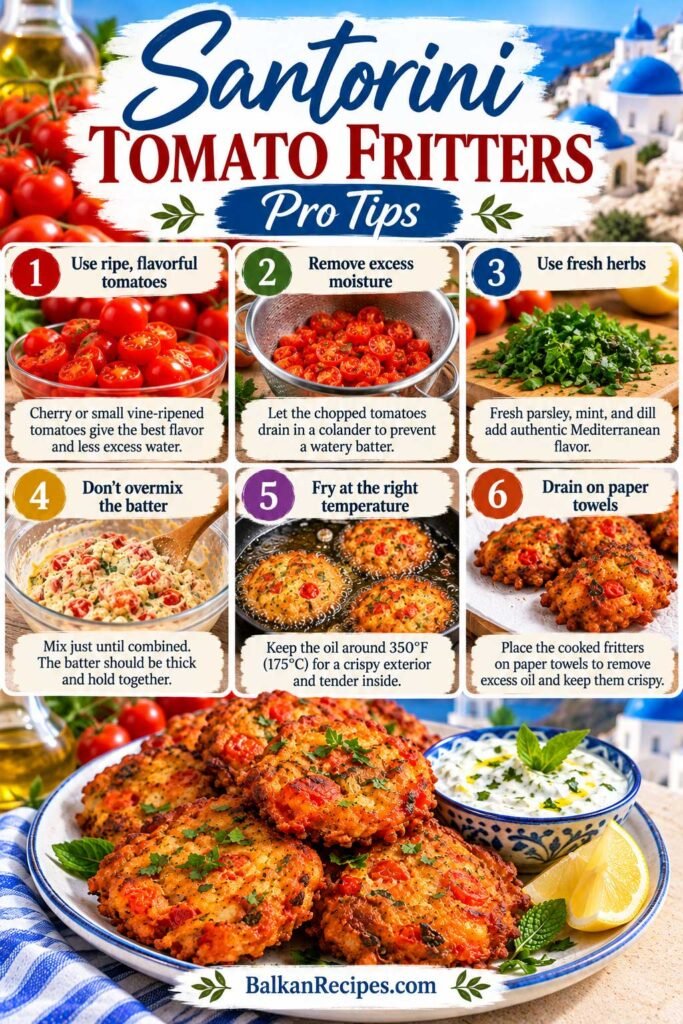
Tips for the Best Santorini Tomato Fritters
Choose Firm, Ripe Tomatoes
Use ripe cherry, grape, or cocktail tomatoes that are sweet but still firm. Overripe tomatoes release too much liquid, making the batter difficult to work with.
Remove Excess Moisture
If your tomatoes are particularly juicy, let the cooked mixture cool for a few minutes and drain off any excess liquid before adding the flour and egg. This helps the fritters hold their shape.
Don’t Skip the Fresh Herbs
Fresh mint gives these tomato fritters their distinctive aroma, while parsley adds a mild, earthy freshness. Dried herbs work in a pinch, but the flavor won’t be quite the same.
Adjust the Batter if Needed
The consistency should be thick enough to scoop with a spoon without spreading too much. If the batter seems too wet, stir in a little extra self-rising flour, one tablespoon at a time.
Fry at the Right Temperature
Heat the olive oil over medium heat, aiming for approximately 350°F (175°C). If the oil is too hot, the fritters may brown before the centers cook. If it’s too cool, they’ll absorb more oil and turn greasy.
Helpful kitchen tool: A digital cooking thermometer suitable for frying oil makes it easier to check the oil temperature, especially when cooking several batches.
Fry in Small Batches
Avoid overcrowding the pan, as this lowers the oil temperature and prevents the fritters from becoming evenly crisp.
Common Mistakes When Making Santorini Tomato Fritters
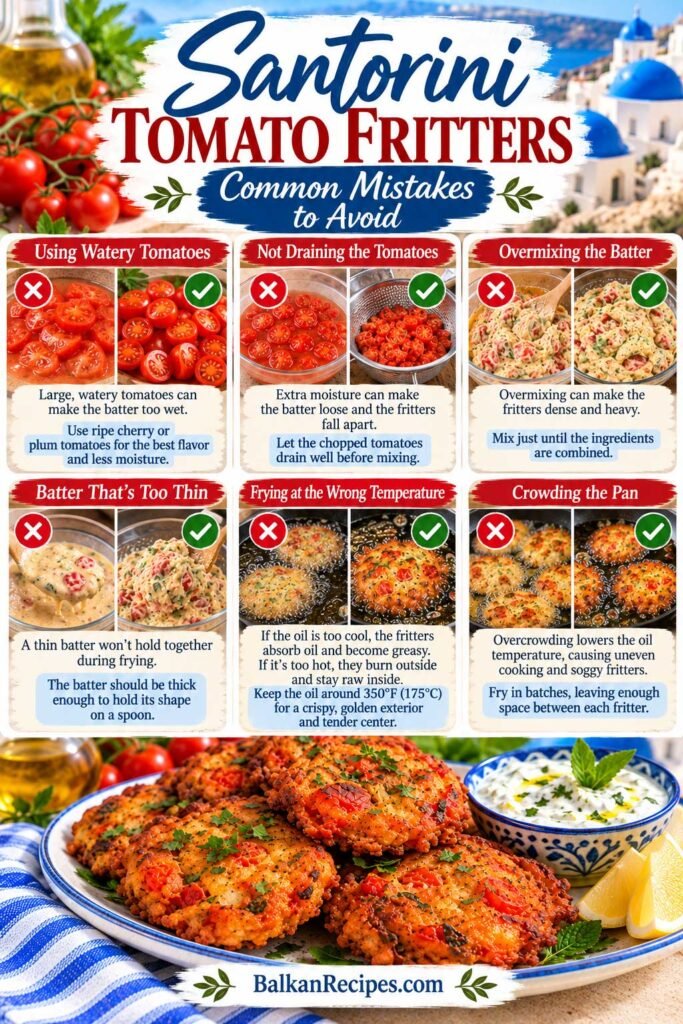
Even a simple tomato fritter recipe can go wrong if the batter is too wet or the oil isn’t hot enough. Here are a few common problems to watch for.
Using Tomatoes That Are Too Watery
Large, juicy tomatoes can make the batter runny and cause the fritters to fall apart. Choose firm cherry or Roma tomatoes, and drain off any excess liquid before adding the flour.
Making the Batter Too Thin
If the mixture spreads across the pan instead of forming small patties, it needs a little more flour. Add one tablespoon at a time until the batter holds its shape on a spoon.
Frying in Oil That’s Too Hot
Very hot oil can brown the outside before the center has time to cook. Aim for approximately 350°F (175°C) and adjust the heat between batches.
Overcrowding the Pan
Adding too many fritters at once lowers the oil temperature and makes them harder to flip. Leave enough room between each one so the edges can crisp up properly.
Flipping the Fritters Too Early
Give the first side time to develop a golden crust before turning. If a fritter sticks or starts breaking apart, it may need another 30 seconds in the pan.
Santorinian Tomato Fritters Recipe Variations
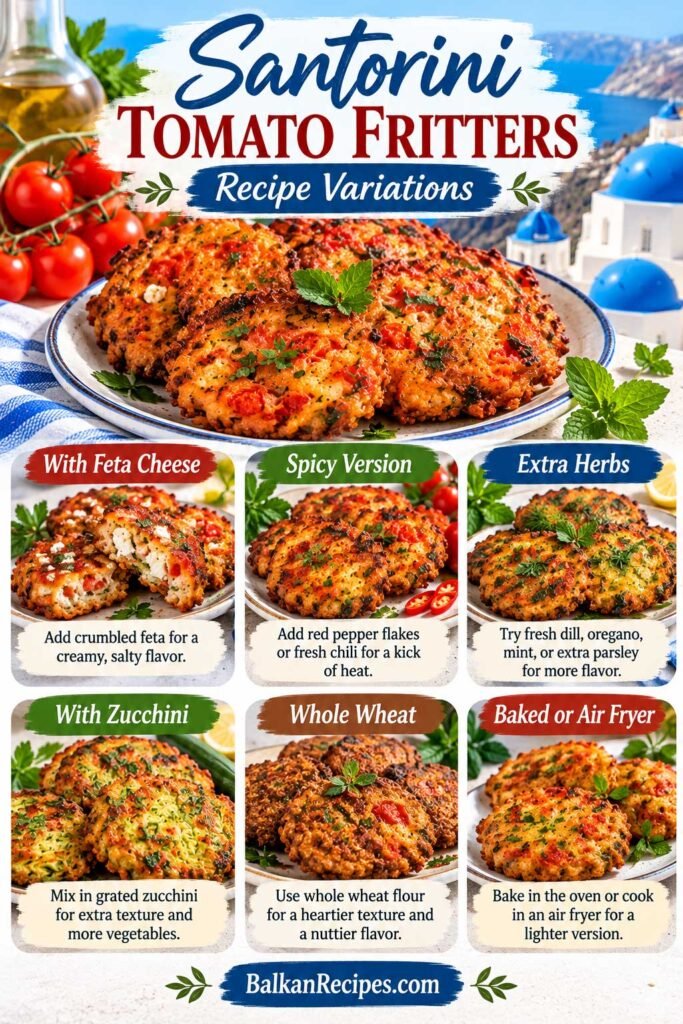
Although the classic Santorini Tomato Fritters recipe is wonderfully simple, there are several delicious variations you can try.
Add Feta Cheese
Fold 50–75 g of crumbled feta into the batter for a salty, creamy contrast to the sweet tomatoes. Reduce the added salt slightly, since feta is already quite salty. If you love combining vegetables with feta, our Greek Turnip and Feta Fritters are another tasty option.
Make Them Spicier
Add a pinch of crushed red pepper flakes or a finely chopped fresh chili for a gentle kick of heat.
Include More Fresh Herbs
Along with mint and parsley, try adding a little fresh dill or oregano for extra Mediterranean flavor.
Add Grated Zucchini
Mix in a small amount of grated and well-drained zucchini for additional texture and a boost of vegetables. This variation is especially popular during the summer months.
Use Whole Wheat Flour
Replace part of the self-rising flour with whole wheat flour for a heartier texture and slightly nuttier flavor. You may need to adjust the consistency with a little extra flour if necessary.
Bake or Air Fry
For a lighter version, bake the fritters in a hot oven or cook them in an air fryer until golden. While they won’t be quite as crispy as the traditional fried version, they’ll still be delicious and full of flavor.
Useful Tools for Different Cooking Methods
Want to try a baked or air-fried version of these Greek tomato fritters? These optional kitchen tools can make preparation and cleanup easier.
| Kitchen Tool | Best For | Shop |
|---|---|---|
| Basket Air Fryer | Cooking smaller batches with less added oil | Shop Air Fryers |
| Rimmed Baking Sheet | Making oven-baked fritters in larger batches | Shop Baking Sheets |
| Cookie Scoop | Portioning evenly sized fritters | Shop Cookie Scoops |
What to Serve with Santorini Tomato Fritters
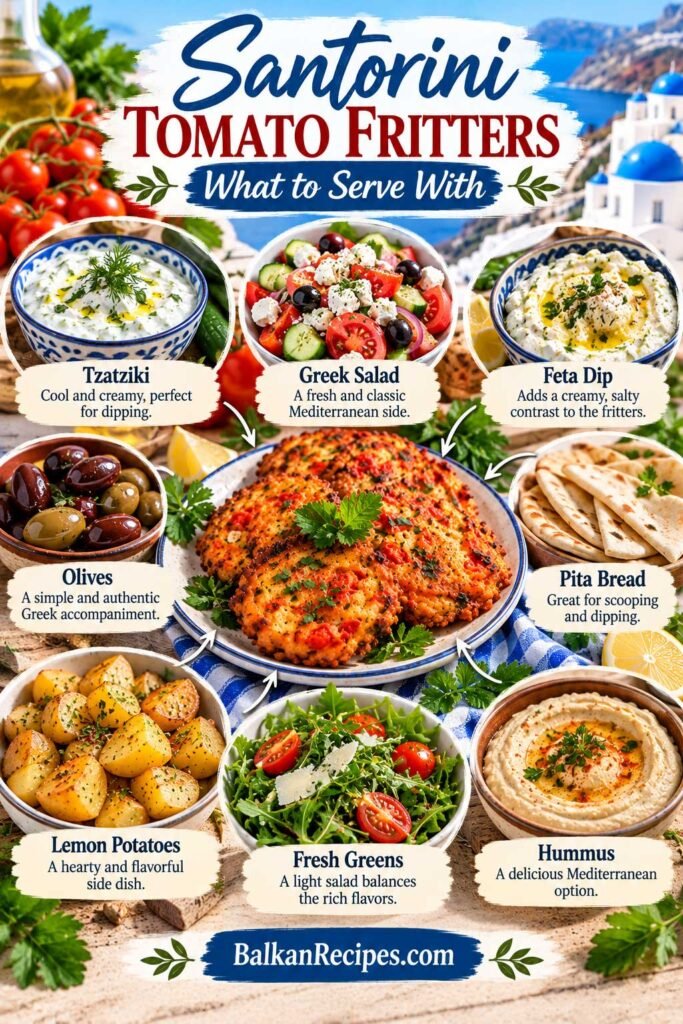
Santorini Tomato Fritters are easy to pair with other Greek dishes and can be enjoyed as an appetizer, light lunch, or part of a traditional Greek meze spread. Their crispy texture and fresh tomato flavor pair beautifully with a variety of Mediterranean dishes.
Greek Yogurt or Tzatziki
A bowl of creamy Greek yogurt or refreshing tzatziki provides a cool, tangy contrast to the warm, crispy fritters.
Greek Village Salad
A classic Greek village salad with cucumbers, tomatoes, olives, and feta is a refreshing side for these crispy fritters. For something a little different, try our Tofu Greek Salad with Char-Grilled Vegetables, which combines smoky vegetables, fresh greens, and a lemon-dill dressing.
Warm Pita Bread
Soft, warm pita is perfect for scooping up the fritters and any yogurt or dipping sauce.
Hummus or Whipped Feta
Creamy hummus or whipped feta adds another layer of rich Mediterranean flavor and makes an excellent dipping option.
Grilled Meat or Seafood
These fritters make a wonderful side dish for grilled chicken, lamb, pork souvlaki, shrimp, or fresh fish.
Lemon Wedges
A squeeze of fresh lemon juice just before serving brightens the flavors and enhances the sweetness of the tomatoes.
Greek Meze Platter
Arrange the fritters alongside olives, dolmades, roasted peppers, warm pita, and spanakopita for a delicious Greek meze spread. You can also add our Baked Ricotta with Green Olives, Lemon and Oregano for a creamy, savory dish that pairs beautifully with the crispy tomato fritters.
Health Benefits of Santorini Tomato Fritters
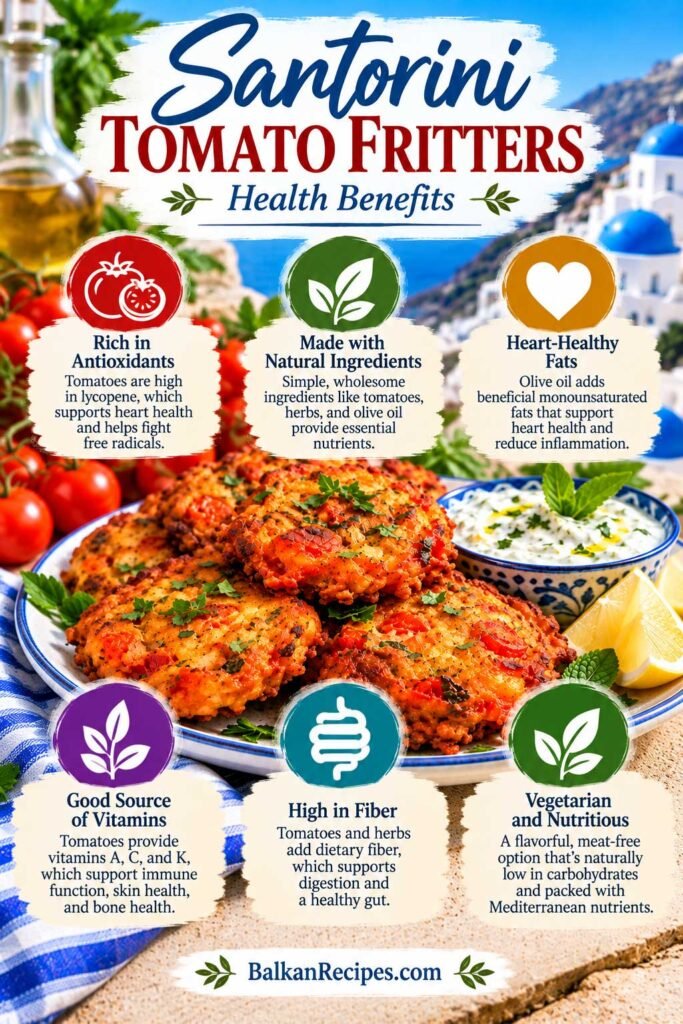
Although traditionally fried, Santorini Tomato Fritters contain several nutritious ingredients commonly used in Mediterranean cooking.
Tomatoes Provide Antioxidants
Tomatoes are a source of lycopene, a natural antioxidant responsible for their red color. They also provide vitamin C, potassium, and other beneficial plant compounds.
Fresh Herbs Add Nutrients and Flavor
Mint and parsley contribute small amounts of vitamins and antioxidants while giving the fritters their fresh, aromatic taste. They’re also a great way to add flavor without relying on extra salt.
Olive Oil Contains Unsaturated Fats
Olive oil is rich in monounsaturated fats, particularly oleic acid. Using it for frying adds flavor, although the amount absorbed by the fritters will affect their total calories.
A Vegetarian Mediterranean Appetizer
Made with tomatoes, onion, herbs, flour, and egg, these fritters are a satisfying meat-free option. Pair them with Greek yogurt and a fresh salad for a more balanced meal.
A lighter option: Baking or air frying with less oil can reduce the added fat, although the texture will be different from traditional pan-fried Domatokeftedes.
Storage and Reheating
How to Store
Let the fritters cool briefly, then transfer them to an airtight container and refrigerate within two hours of cooking. They’ll keep for up to 3 days. Place a paper towel between layers to help absorb moisture and prevent sticking.
How to Reheat
For the crispiest results, reheat the fritters in a 375°F (190°C) oven for 8 to 10 minutes or in an air fryer at 350°F (175°C) for 4 to 5 minutes. This helps restore their crispy exterior while keeping the inside tender.
Although a microwave can be used for convenience, the fritters will lose much of their crisp texture.
Can You Freeze Santorini Tomato Fritters?
Yes. Arrange the cooled fritters in a single layer on a baking sheet and freeze until firm. Transfer them to a freezer-safe container or freezer bag and store for up to 2 months.
Reheat directly from frozen in a preheated oven or air fryer until hot and crispy. There’s no need to thaw them first, making them an easy make-ahead appetizer or quick snack.
Frequently Asked Questions About Santorinian Tomato Fritters
Can I use regular tomatoes instead of cherry tomatoes?
Yes. Roma or plum tomatoes are the best substitute because they contain less water than larger slicing tomatoes. If using regular tomatoes, remove some of the seeds and excess juice before chopping.
Why are my tomato fritters falling apart?
The batter is likely too wet. Tomatoes naturally contain a lot of moisture, so if the mixture seems loose, simply add a little more self-rising flour until it reaches a thick, spoonable consistency.
Can I make Santorini Tomato Fritters ahead of time?
Yes. You can prepare the tomato mixture ahead of time and refrigerate it in an airtight container. Drain any accumulated liquid, then add the egg and flour shortly before frying. Cooked fritters can also be reheated in the oven or air fryer until hot and crispy.
Can I bake the fritters instead of frying them?
Absolutely. Place spoonfuls of the batter on a parchment-lined baking sheet, lightly brush or spray with olive oil, and bake at 400°F (200°C) for about 20 to 25 minutes, turning halfway through for even browning.
Can I make this recipe gluten-free?
Yes. Substitute the self-rising flour with a gluten-free self-rising flour blend or use gluten-free all-purpose flour with a suitable leavening agent according to the package directions.
What makes Santorini tomatoes so special?
Santorini tomatoes are known for their concentrated sweetness, balanced acidity, and distinctive flavor. The island’s dry climate and volcanic soil contribute to their character, while traditional cultivation methods have helped preserve this local variety for generations.
Bring the Flavors of Santorini to Your Table
Santorini Tomato Fritters prove that a handful of fresh ingredients can make something truly delicious. With their crispy golden edges, tender tomato-filled centers, and fragrant mint and parsley, these traditional Greek fritters bring the wonderful flavors of the Aegean islands straight to your kitchen.
Whether you’re preparing a Greek meze platter, looking for a tasty way to use summer tomatoes, or serving a simple vegetarian lunch, Domatokeftedes are a wonderful choice. Serve them warm with creamy tzatziki, a squeeze of fresh lemon, and a side of Greek salad for a meal inspired by the tavernas of Santorini.
The best part? You don’t need to travel to Greece or find rare Santorini tomatoes to enjoy them. With ripe cherry tomatoes and a few everyday ingredients, you can recreate this beloved Greek appetizer at home.
More Traditional Greek Recipes to Try
If you enjoyed these Santorini Tomato Fritters, here are a few more Greek-inspired dishes worth trying:
- Greek Turnip and Feta Fritters – Crispy vegetable fritters with creamy feta.
- Tofu Greek Salad with Char-Grilled Vegetables – A fresh salad with grilled vegetables and lemon-dill dressing.
- Baked Ricotta with Green Olives, Lemon and Oregano – A creamy baked cheese dish with bright Mediterranean flavors.
- Greek Couscous Pasta Salad – A colorful salad with vegetables and a creamy yogurt dressing.
Discover more delicious dishes in our Greek Recipes Collection.
Did You Make These Santorini Tomato Fritters?
I’d love to hear how your Santorini Tomato Fritters turned out! Leave a comment below, rate the recipe, and let us know whether you served them with Greek yogurt, tzatziki, or your favorite Mediterranean dip. Don’t forget to share this recipe with family and friends and follow Balkan Recipes for more authentic Greek recipes and traditional Balkan dishes.
Explore more delicious recipes from traditional Greek cuisine on BalkanRecipes.com.
Inspiration and adaptation: Greek Vegetarian and Santorini Experts.