Plum Slatko Recipe
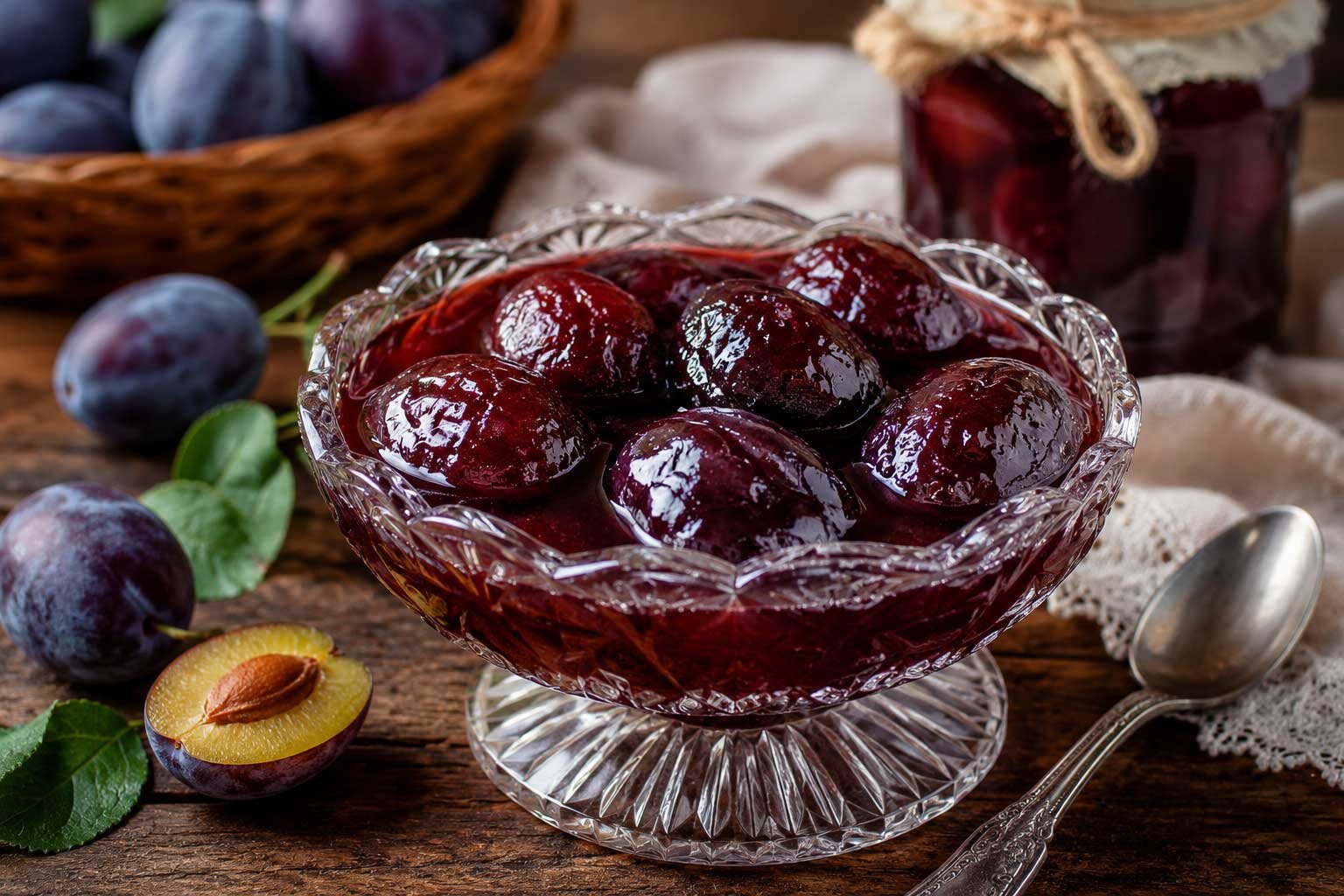
Plum Slatko Recipe is one of Serbia’s most beloved traditional fruit preserves, celebrated for its beautiful presentation, rich sweetness, and deep connection to Balkan hospitality. Made by slowly cooking whole plums in a fragrant sugar syrup, this classic Serbian dessert transforms simple seasonal fruit into an elegant treat that has been enjoyed in family homes for generations.
This Plum Slatko Recipe is one of the most traditional ways to preserve fresh plums in Serbian cuisine.
Unlike ordinary jams or preserves, slatko is prepared with whole fruits that remain intact during cooking, creating a glossy, jewel-like appearance and a delicate texture. Traditionally offered to guests as a gesture of welcome and respect, a spoonful of slatko served with a glass of cold water remains one of the most enduring customs in Serbian culture.
This authentic Plum Slatko Recipe combines tender plums, aromatic vanilla, fresh lemon, and a rich syrup that perfectly preserves the fruit’s natural flavor. Whether served alongside kaymak, paired with sheep’s milk feta, spooned over yogurt, or enjoyed on its own, this traditional Serbian sweet offers a delicious taste of the Balkans and a wonderful way to preserve the flavors of plum season.
If you enjoy exploring traditional Serbian desserts, you’ll also love our Vanilice recipe, one of Serbia’s most beloved sandwich cookies.
What Is Plum Slatko Recipe?
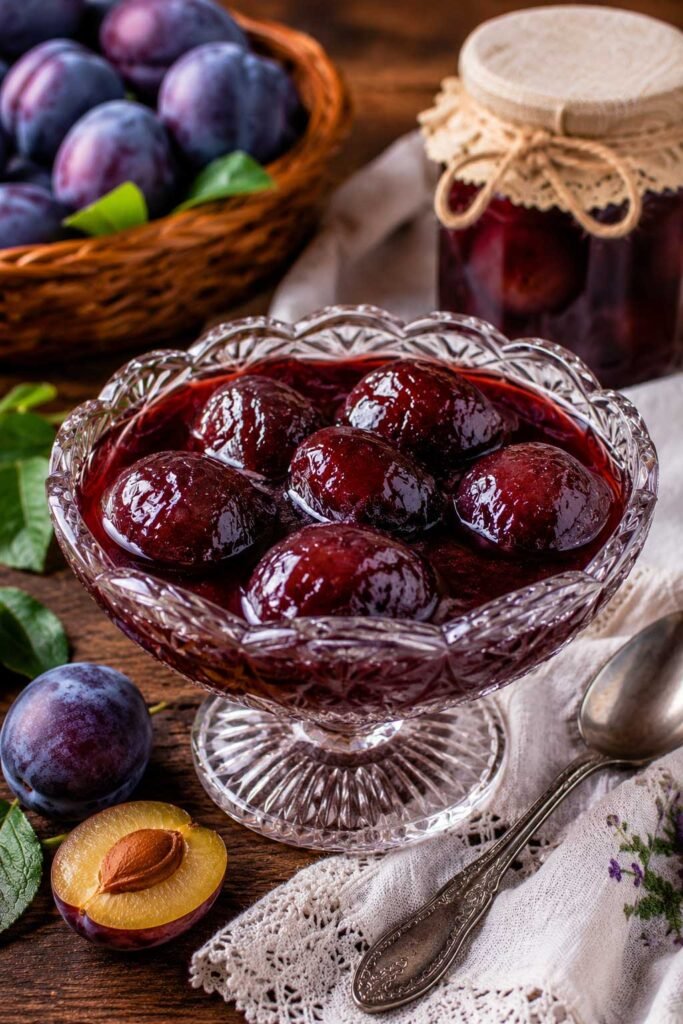
Plum Slatko is a traditional Serbian fruit preserve made by slowly cooking whole plums in a thick sugar syrup until they become glossy, tender, and beautifully translucent. Unlike ordinary jams or preserves, the fruit remains whole during cooking, creating an elegant dessert that showcases both the plums and the rich syrup.
Unlike ordinary jam, a Plum Slatko Recipe focuses on preserving whole fruit in a rich, glossy syrup.
The word slatko literally means “sweet” in Serbian and refers to a centuries-old Balkan tradition of preserving seasonal fruits. While plums are one of the most popular varieties, slatko is also commonly made with cherries, strawberries, figs, quinces, grapes, rose petals, apricots, and other fruits harvested at their peak ripeness.
In Serbian households, serving slatko is much more than offering a dessert. For generations, guests have been welcomed with a small spoonful of slatko and a glass of cold water—a tradition that symbolizes hospitality, generosity, and respect.
This authentic Plum Slatko recipe uses slightly underripe plums, which hold their shape beautifully while absorbing the fragrant syrup during cooking. Lemon juice and vanilla add brightness and aroma, while rose leaves contribute a delicate floral note that has long been associated with traditional Balkan preserves.
The finished preserve can be enjoyed on its own, served with kaymak, paired with sheep’s milk feta cheese, spooned over yogurt, or used as a topping for cakes, pastries, pancakes, and other desserts. Its beautiful appearance and rich flavor make Plum Slatko one of Serbia’s most cherished homemade sweets.
Why You’ll Love This Plum Slatko Recipe
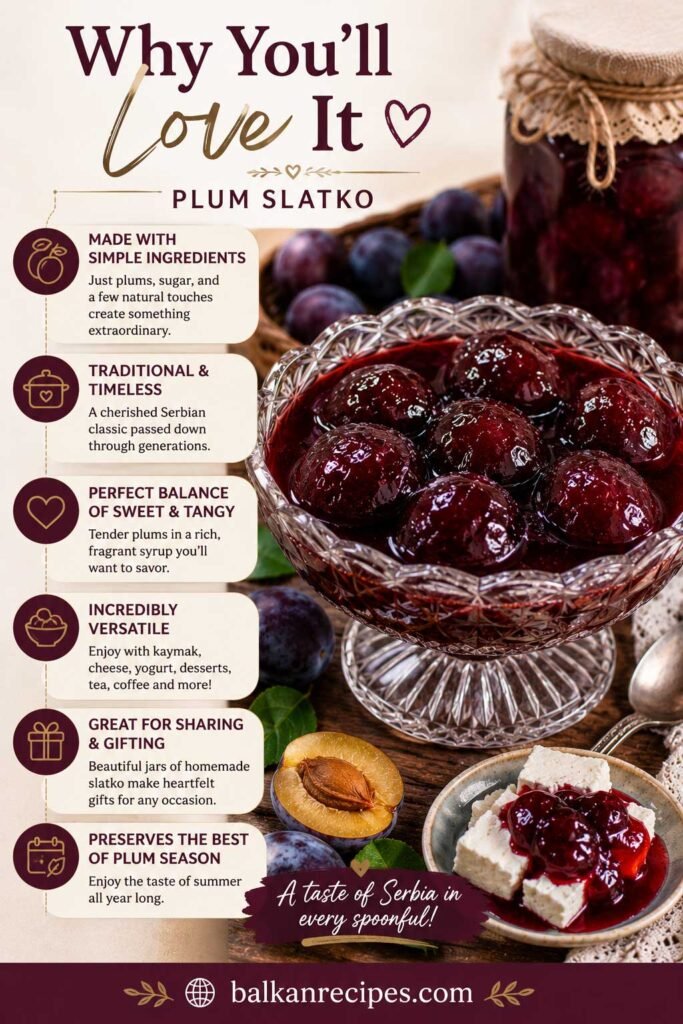
One of the reasons Plum Slatko has remained popular for generations is its beautiful combination of simplicity, flavor, and tradition. Made with just a few basic ingredients, this classic Serbian preserve transforms seasonal plums into an elegant sweet treat that can be enjoyed in countless ways. Whether you’re preserving a summer harvest, exploring Balkan cuisine, or searching for a unique homemade gift, there are plenty of reasons to love this traditional Plum Slatko recipe.
Authentic Serbian Tradition
Plum Slatko has been a beloved part of Serbian cuisine for generations. This traditional recipe allows you to recreate one of the Balkans’ most treasured homemade sweets while experiencing an important piece of Serbian culinary heritage.
Beautiful Whole Fruit Presentation
Unlike standard jams and preserves, Plum Slatko is made with whole plums that remain intact during cooking. The result is a stunning preserve featuring glossy fruit suspended in a rich syrup that looks as impressive as it tastes.
Rich Yet Delicate Flavor
Sweet plums, fragrant vanilla, and fresh lemon combine to create a beautifully balanced flavor. Every spoonful delivers natural fruit sweetness complemented by subtle citrus notes and aromatic warmth.
Perfect for Preserving Seasonal Plums
When plum season arrives, this Plum Slatko recipe offers a wonderful way to preserve the harvest. Properly stored jars can be enjoyed for months, allowing you to savor the flavors of summer long after the season ends.
Versatile Serving Options
Enjoy Plum Slatko with kaymak, sheep’s milk feta cheese, yogurt, pancakes, pastries, ice cream, or simply by the spoonful. Its versatility makes it suitable for breakfast, dessert, and special occasions alike.
A Unique Balkan Dessert
If you’re exploring Serbian and Balkan recipes, Plum Slatko offers something truly distinctive. Its whole-fruit texture, concentrated syrup, and centuries-old tradition set it apart from ordinary fruit preserves.
Ideal for Homemade Gifts
A beautifully prepared jar of Plum Slatko makes a thoughtful homemade gift. Its attractive appearance, long shelf life, and traditional roots make it perfect for holidays, celebrations, and family gatherings.
Easy to Make with Simple Ingredients
Despite its elegant appearance, Plum Slatko requires only a handful of ingredients. With a little patience, you can create a traditional Serbian preserve that tastes far more impressive than the effort required.
The History of Plum Slatko (Traditional Serbian Plum Preserve)
Plum Slatko is much more than a sweet fruit preserve. It is a cherished part of Serbian culinary heritage, reflecting centuries of tradition, hospitality, and seasonal food preservation. Understanding the history of slatko provides a deeper appreciation for why this simple dessert continues to hold such an important place in Serbian culture today.
Many families still use the same Plum Slatko Recipe passed down through generations.
Slatko has been an important part of Serbian culinary tradition for centuries and represents far more than a simple fruit preserve. Before modern refrigeration, families throughout Serbia and the Balkans developed various methods for preserving seasonal fruits so they could be enjoyed throughout the year. One of the most beloved methods involved slowly cooking whole fruits in concentrated sugar syrup, creating what became known as slatko.
The tradition gained popularity during the Ottoman period, when sugar became more widely available across the Balkans. Serbian households gradually perfected the technique, carefully selecting seasonal fruits and preserving them in a way that maintained their shape, color, and flavor. Serbian households gradually perfected the technique, carefully selecting the best seasonal fruits and preserving them in a way that maintained their shape, color, and flavor. Over time, slatko evolved from a practical preservation method into a symbol of hospitality and family tradition.
Plums naturally became one of the most common fruits used for slatko because they have long played an important role in Serbian agriculture. Serbia is famous for its extensive plum orchards and remains one of Europe’s leading plum-producing countries. Even today, Serbia remains one of Europe’s most important plum-producing countries, with plum orchards found throughout the country. The fruit is deeply woven into Serbian food culture, appearing in desserts, preserves, dried fruit preparations, and the famous plum brandy known as rakija.
One of the most distinctive customs associated with slatko is the traditional Serbian greeting of guests. For generations, visitors entering a home were welcomed with a small spoonful of slatko served on a decorative dish alongside a glass of cold water. This simple gesture symbolized warmth, generosity, and respect, making slatko an enduring part of Serbian hospitality.
Throughout rural communities, families often prepared multiple varieties of slatko each year using whatever fruits were abundant during the harvest season. Cherries, strawberries, quinces, figs, grapes, rose petals, apricots, and plums were among the most popular choices. Recipes were carefully passed down from one generation to the next, with each family developing its own techniques and traditions.
Today, Plum Slatko remains one of Serbia’s most treasured homemade sweets. While modern kitchens have simplified some of the preparation methods, the preserve continues to be made for holidays, celebrations, family gatherings, and everyday enjoyment. Every jar reflects a culinary tradition that connects contemporary Serbian cooking with centuries of heritage and family memories.
Ingredients You’ll Need
One of the reasons Plum Slatko has remained a favorite Serbian preserve for generations is its simple ingredient list. A handful of pantry staples and fresh seasonal plums come together to create a rich, glossy dessert that highlights the natural flavor of the fruit while preserving it for months of enjoyment.
The beauty of this Plum Slatko Recipe lies in its simple ingredients and traditional preparation methods.
Plums
Slightly underripe plums are traditionally preferred because they hold their shape better during cooking. Their firm texture allows the fruit to remain whole while absorbing the sweet syrup, creating the signature appearance that distinguishes Plum Slatko from ordinary jam.
Sugar
Sugar forms the foundation of the syrup and acts as both a sweetener and a natural preservative. As the syrup thickens during cooking, it develops the glossy consistency that gives slatko its characteristic texture and shine.
Lemon Juice
Fresh lemon juice balances the sweetness of the syrup while adding brightness and freshness. It also helps preserve the color of the fruit and enhances the overall flavor of the finished preserve.
Vanilla
A small amount of vanilla adds warmth and aroma to the syrup. Its subtle flavor complements the plums beautifully without overpowering their natural sweetness.
Rose Leaves
Rose leaves are a traditional addition in some Serbian households, providing a delicate floral fragrance. Although optional, they add an authentic touch and enhance the aroma of the preserve.
Water
Water is used to prepare both the lime water solution and the sugar syrup. It helps dissolve the sugar properly and ensures the fruit cooks evenly.
Lime Water
The lime water treatment is a traditional technique used to help the plums remain firm during cooking. This important step helps preserve the fruit’s structure and prevents it from becoming overly soft as it simmers in the syrup.
Affiliate Disclosure: This article may contain affiliate links. If you purchase through these links, I may earn a small commission at no additional cost to you.
Essential Tools for Making Plum Slatko
Making traditional Plum Slatko is much easier when you have the right tools on hand. These kitchen essentials help you prepare the fruit, cook the syrup evenly, and store your homemade preserve safely for months.
| Product | Why It’s Useful | Buy |
|---|---|---|
| Large Preserving Pot | Allows even cooking and prevents overcrowding of the fruit. | Check Price |
| Glass Mason Jars | Perfect for storing homemade slatko safely. | Check Price |
| Fine Mesh Skimmer | Helps remove foam for a clearer syrup. | Check Price |
| Wooden Spoon Set | Gentle stirring helps keep the plums intact. | Check Price |
| Wide Mouth Funnel | Makes filling jars easier and less messy. | Check Price |
| Measuring Cups and Spoons | Ensures accurate ingredient measurements. | Check Price |
How to Make Plum Slatko Recipe
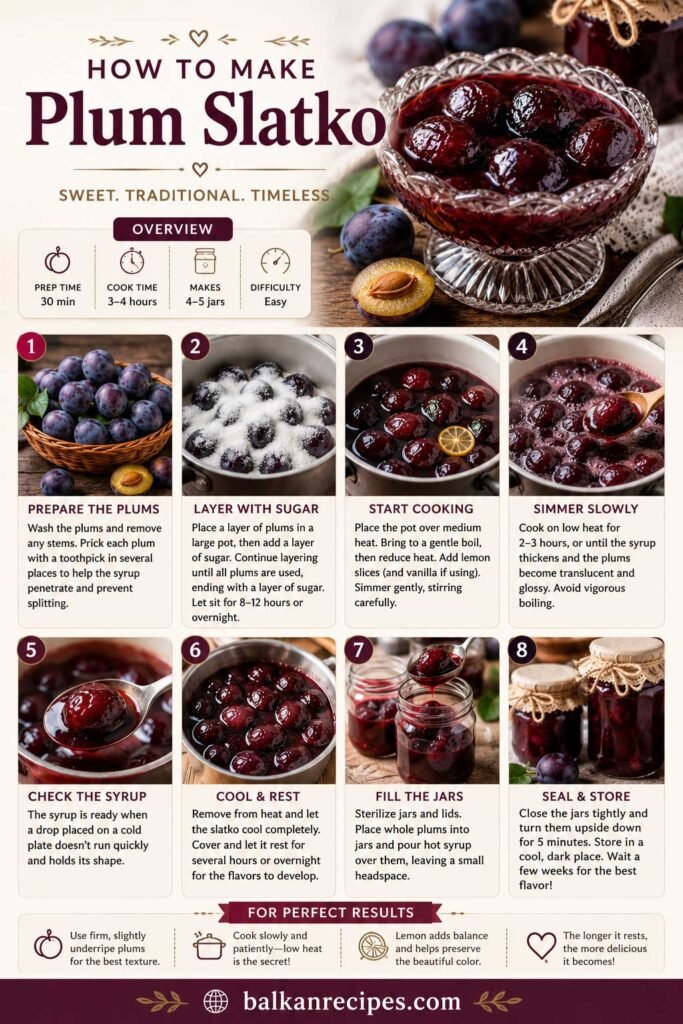
Making Plum Slatko requires patience and gentle cooking, but the process itself is surprisingly simple. By carefully preparing the fruit, creating a rich sugar syrup, and allowing the plums to slowly absorb the flavors, you’ll create a traditional Serbian preserve with beautiful whole fruit and a glossy, fragrant syrup.
Follow these steps carefully to create an authentic Plum Slatko Recipe with beautifully preserved fruit.
Step 1: Prepare the Lime Water Solution
Combine the lime and water according to the recipe instructions and allow the mixture to settle. Once settled, carefully use only the clear liquid portion, leaving any sediment behind.
Step 2: Wash and Peel the Plums
Select firm, slightly underripe plums and wash them thoroughly. Carefully peel and pit the fruit while keeping each plum as intact as possible.
Step 3: Soak the Plums
Place the prepared plums into the clear lime water solution. Allow them to soak for about one hour. This simple step helps the fruit maintain its shape during cooking.
Step 4: Rinse Thoroughly
Remove the plums from the lime water and rinse them several times under fresh water. Proper rinsing is important to eliminate any remaining lime residue.
Step 5: Prepare the Sugar Syrup
In a large pot, combine the sugar and water over low heat. Stir gently until the sugar dissolves completely and the syrup develops a thick, honey-like consistency.
Step 6: Add the Flavorings
Stir the lemon juice, lemon slices, vanilla, and diluted citric acid into the syrup. These ingredients add brightness and depth while enhancing the natural flavor of the plums.
Step 7: Cook the Plums
Carefully add the plums to the hot syrup. Simmer gently for approximately 25 minutes, allowing the fruit to absorb the syrup while remaining whole and tender.
Step 8: Add the Rose Leaves
Near the end of cooking, add the rose leaves if using. Their delicate floral aroma infuses the slatko with a traditional fragrance.
Step 9: Cool the Slatko
Remove the pot from the heat and allow the slatko to cool gradually. As it cools, the syrup will continue to thicken slightly.
Step 10: Transfer to Jars
Carefully spoon the plums and syrup into clean, sterilized jars. Seal tightly and store in a cool, dark place until ready to enjoy.
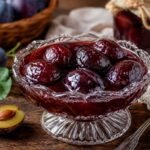
Plum Slatko Recipe (Traditional Serbian Plum Preserve)
Ingredients
- 1 kg plums slightly underripe
- 1 kg granulated sugar
- 1-2 cups water
- 2 tbsp lemon juice
- 2-3 lemon slices
- 1 tsp vanilla extract or vanilla sugar
- 1 tsp diluted citric acid
- 2-3 rose leaves optional
For the Lime Water Solution
- 250 g lime
- 2 liters water
- Additional ½ gallon about 2 liters water
Instructions
- Prepare the lime water solution by mixing the lime and water. Allow the mixture to settle, then carefully use only the clear liquid portion.
- Wash, peel, and pit the plums, keeping them as intact as possible.
- Place the plums in the clear lime water solution and soak for 1 hour.
- Remove the plums and rinse thoroughly several times under fresh water.
- In a large pot, combine the sugar and 1-2 cups of water. Cook over low heat until the sugar dissolves and forms a thick syrup.
- Add the lemon juice, lemon slices, vanilla, and diluted citric acid to the syrup.
- Carefully add the plums and simmer gently for about 25 minutes until the fruit is tender and glossy.
- Add the rose leaves during the final few minutes of cooking, if using.
- Remove from the heat and allow the slatko to cool completely.
- Transfer the plums and syrup to sterilized jars and seal tightly.
Notes
- Slightly underripe plums work best because they hold their shape during cooking.
- Avoid vigorous stirring to prevent the fruit from breaking apart.
- Skim off any foam that forms during cooking for a clearer syrup.
- Rose leaves are traditional but optional.
- Allow the slatko to rest for a day before serving for the best flavor.
Tips for the Perfect Plum Slatko Recipe
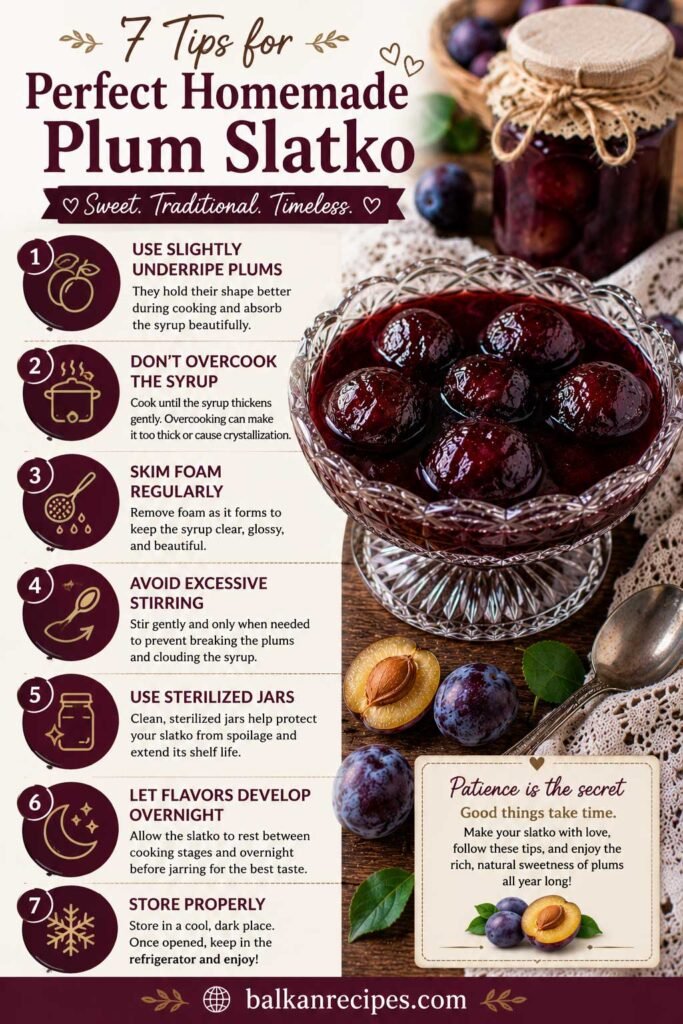
Making Plum Slatko is a rewarding process, but a few traditional techniques can make the difference between a good preserve and an exceptional one. Follow these simple tips to achieve beautifully whole plums, crystal-clear syrup, and authentic Serbian flavor every time.
These tips will help ensure your Plum Slatko Recipe turns out perfectly every time.
Choose Firm, Slightly Underripe Plums
The best Plum Slatko starts with firm fruit. Slightly underripe plums are less likely to break apart during cooking and will better maintain their beautiful shape in the finished preserve.
Handle the Fruit Gently
Because whole fruit is the hallmark of traditional slatko, handle the plums carefully throughout the preparation process. Avoid rough stirring or excessive movement while cooking.
Use a Wide Cooking Pot
A wider pot allows the syrup to reduce more evenly and helps prevent overcrowding. This gives the plums enough space to cook without becoming damaged.
Avoid Rapid Boiling
Gentle simmering is key to successful slatko. Vigorous boiling can cause the fruit to split or become overly soft, affecting both appearance and texture.
Skim Off Any Foam
As the syrup cooks, foam may develop on the surface. Skimming it away helps create a clearer, more attractive syrup and improves the final presentation.
Do Not Overcook
Cooking the plums for too long can cause them to lose their shape and become mushy. Remove the slatko from the heat once the fruit is tender and the syrup has thickened.
Allow the Slatko to Rest
Many traditional cooks believe slatko tastes even better after resting for a day or two. This allows the fruit and syrup flavors to fully develop and blend together.
Sterilize Your Jars
Always use properly sterilized jars for storage. This helps preserve freshness, extends shelf life, and protects the quality of your homemade Plum Slatko.
Store in a Cool, Dark Place
Keep sealed jars away from direct sunlight and heat. Proper storage helps maintain the color, flavor, and texture of the preserve for many months.
Serve at Room Temperature
For the best flavor and texture, allow refrigerated slatko to come to room temperature before serving. This helps the syrup return to its ideal consistency.
Common Mistakes to Avoid
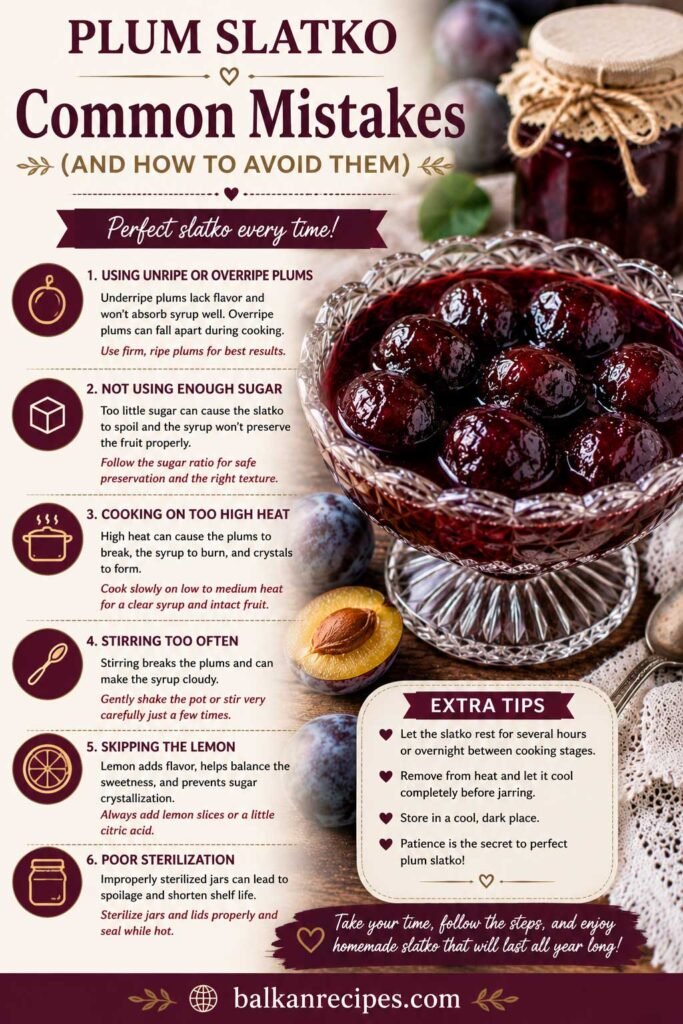
Although Plum Slatko is fairly simple to make, a few common mistakes can affect the texture, appearance, and flavor of the finished preserve. Avoid these pitfalls to achieve beautiful whole plums and a clear, glossy syrup every time.
Avoiding these common mistakes will help your Plum Slatko Recipe achieve the best texture and appearance.
Using Overripe Plums
Very ripe plums soften quickly during cooking and may fall apart in the syrup. Slightly underripe fruit works best because it remains firm and holds its shape.
Skipping the Lime Water Soak
This traditional step helps strengthen the fruit and prevent it from breaking apart during cooking.
Not Rinsing the Plums Thoroughly
After soaking, rinse the plums several times with fresh water to remove any remaining lime residue.
Cooking at Too High a Temperature
A gentle simmer is essential. Rapid boiling can damage the fruit and cause the syrup to become cloudy.
Stirring Too Frequently
Excessive stirring can break the plums and reduce the attractive whole-fruit presentation that makes slatko unique.
Overcooking the Syrup
If the syrup becomes too thick, it may crystallize during storage. Cook only until it reaches a rich, glossy consistency.
Overcrowding the Pot
Using a pot that is too small can lead to uneven cooking and damaged fruit. A wide pot allows the plums to cook more evenly.
Ignoring Surface Foam
Skim away any foam that forms during cooking to keep the syrup clear and attractive.
Using Unsterilized Jars
Always store Plum Slatko in clean, sterilized jars to maximize freshness and shelf life.
Serving Too Soon
Allow the slatko to cool completely and rest before serving. Many cooks find the flavor improves after a day or two.
What to Serve with Plum Slatko
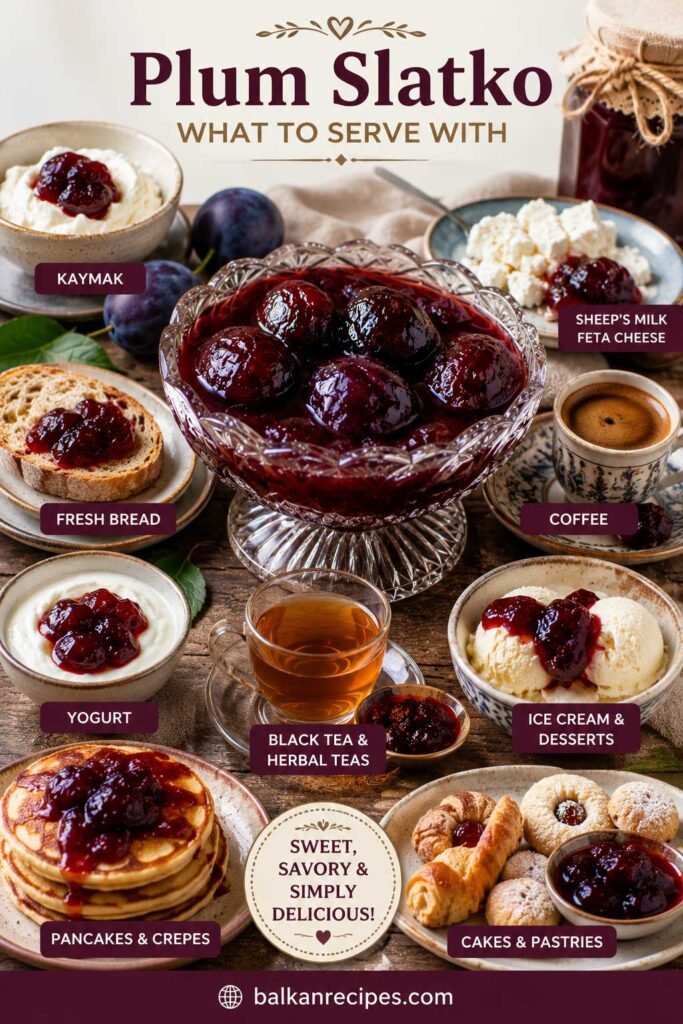
One of the reasons Plum Slatko has remained popular for generations is its incredible versatility. While traditionally served as a sweet preserve for guests, it can also be enjoyed in a variety of creative ways. From breakfast and desserts to cheese boards and holiday gatherings, Plum Slatko adds a touch of Serbian tradition to almost any occasion.
One of the best things about this Plum Slatko Recipe is how versatile it can be when serving guests.
Serve It the Traditional Serbian Way
The most authentic way to enjoy Plum Slatko is as part of the Serbian hospitality tradition. Offer guests a small spoonful alongside a glass of cold water. This timeless custom remains one of the most recognizable symbols of Serbian warmth and generosity.
Another Serbian favorite worth trying is authentic Gibanica recipe, a delicious cheese-filled pastry enjoyed across the Balkans.
Pair It with Kaymak
The rich, creamy texture of kaymak pairs beautifully with the sweetness of the plums. The contrast between the savory dairy spread and the sweet fruit syrup creates a uniquely Balkan flavor combination.
If you’ve never tried Homemade kaymak, this pairing is a great introduction to one of Serbia’s most beloved dairy specialties.
Enjoy It with Sheep’s Milk Feta
A spoonful of Plum Slatko served alongside sheep’s milk feta creates a delicious balance of sweet and salty flavors. This traditional pairing is especially popular throughout Serbia and neighboring Balkan countries.
Spoon Over Yogurt
Add a few whole plums and some syrup to a bowl of plain yogurt for a simple yet satisfying breakfast, snack, or dessert. The tanginess of the yogurt complements the sweetness of the preserve perfectly.
For a refreshing Balkan-inspired breakfast, serve Plum Slatko alongside homemade Bulgarian yogurt.
Top Ice Cream and Desserts
Use Plum Slatko as a topping for vanilla ice cream, rice pudding, cheesecake, panna cotta, or custard-based desserts. The syrup adds both flavor and elegance to even the simplest treats.
Serve with Pancakes and Crepes
Drizzle the syrup over pancakes, crepes, waffles, or French toast. Add a few whole plums for an extra-special presentation and a burst of fruity flavor.
It is especially delicious spooned over warm traditional Serbian Palacinke for a simple yet memorable dessert.
Include on a Cheese Board
Plum Slatko makes a wonderful addition to cheese platters. Serve it alongside feta, goat cheese, aged cheeses, nuts, and fresh fruit for an impressive appetizer or entertaining spread.
Enjoy with Coffee or Tea
A small dish of Plum Slatko served alongside coffee or tea makes a delightful afternoon treat and reflects a traditional Balkan style of welcoming guests.
Use as a Pastry Filling
The preserved plums can be used as a filling for cookies, pastries, sweet breads, and cakes, adding rich fruit flavor and beautiful texture to homemade baked goods.
Add to Holiday Dessert Tables
Because of its attractive appearance and long shelf life, Plum Slatko is often featured during holidays, family celebrations, and festive gatherings throughout Serbia and the Balkans.
Storage and Preservation Tips
One of the biggest advantages of Plum Slatko is its excellent shelf life. When properly stored, this traditional Serbian preserve can remain fresh and flavorful for months, allowing you to enjoy the taste of plum season long after the harvest has ended.
Proper storage allows this Plum Slatko Recipe to maintain its quality for months.
Use Sterilized Jars
Always store Plum Slatko in thoroughly sterilized glass jars to help prevent contamination and extend shelf life.
Seal While Warm
Filling jars while the slatko is still warm helps create a better seal and preserves freshness.
Store in a Cool, Dark Place
Keep unopened jars in a pantry, cupboard, or cellar away from direct sunlight and heat.
Refrigerate After Opening
Once opened, store the jar in the refrigerator and always use a clean spoon when serving.
Avoid Moisture Contamination
Never introduce water or wet utensils into the jar, as moisture can shorten shelf life and affect quality.
Label Your Jars
Mark each jar with the preparation date so you can easily track freshness.
Flavor Improves Over Time
Many home cooks find that Plum Slatko develops an even richer flavor after a few weeks as the fruit and syrup continue to meld together.
Freeze if Necessary
For long-term storage, Plum Slatko can be frozen in airtight containers.
How Long Does Plum Slatko Last?
When properly prepared and stored, homemade Plum Slatko can last for several months, making it an excellent way to preserve seasonal plums throughout the year.
Recommended Storage Supplies for Homemade Preserves
Proper storage helps preserve the flavor, texture, and appearance of Plum Slatko. These supplies can help keep your homemade preserves fresh and organized for months.
| Product | Why It’s Useful | Buy |
|---|---|---|
| Airtight Glass Storage Jars | Ideal for long-term preserve storage. | Check Price |
| Replacement Canning Lids | Helps maintain secure seals. | Check Price |
| Waterproof Jar Labels | Makes it easy to date and organize preserves. | Check Price |
| Pantry Storage Bins | Keeps jars neatly organized. | Check Price |
| Vacuum Sealer System | Provides additional long-term storage protection. | Check Price |
| Preserve Recipe Journal | Great for tracking batches and family recipes. | Check Price |
The Role of Slatko in Serbian Culture
Few traditional Serbian foods carry as much cultural significance as slatko. While it is enjoyed as a sweet preserve, its importance extends far beyond the kitchen. For generations, slatko has symbolized hospitality, generosity, and respect for guests.
In traditional Serbian households, visitors were often welcomed with a small spoonful of slatko and a glass of cold water. This simple gesture became one of the most recognizable symbols of Serbian hospitality and remains an important cultural tradition today.
Homemade slatko was also a source of family pride. During the harvest season, households carefully selected the finest fruits to preserve, passing recipes and techniques down from one generation to the next.
Plum Slatko became especially popular because plums have long been one of Serbia’s most important fruits. Abundant plum orchards allowed families to preserve large harvests and enjoy them throughout the year.
Beyond everyday hospitality, slatko was commonly served during holidays, celebrations, weddings, and family gatherings. Beautiful jars of homemade preserves were often exchanged as gifts, reflecting both culinary skill and generosity.
Today, slatko remains a beloved part of Serbian culture. Whether served to guests, enjoyed as a dessert, or shared with family and friends, every spoonful represents a tradition that has connected generations for centuries.
Variations of Slatko Across Serbia and the Balkans
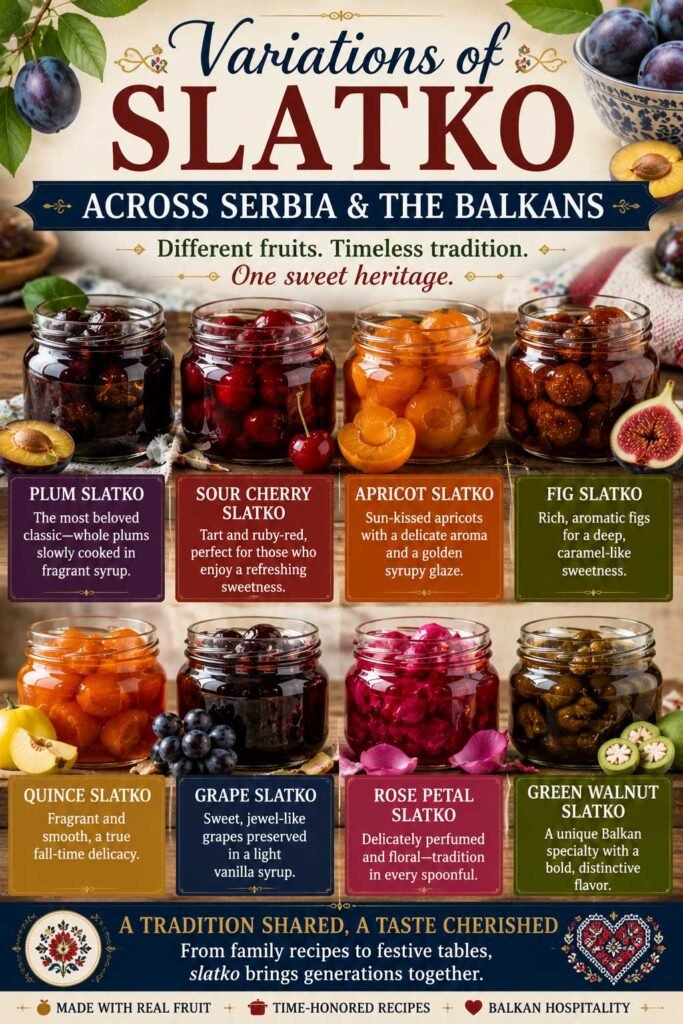
While Plum Slatko is one of the most popular varieties, this traditional Balkan preserve can be made with many different fruits and ingredients. Families throughout Serbia and neighboring countries have developed unique recipes based on local harvests and generations of tradition.
Sour Cherry Slatko
A classic variety known for its perfect balance of sweet and tart flavors.
If you enjoy tart fruit preserves, you’ll love our traditional Sour Cherry Slatko recipe.
Strawberry Slatko
Made with whole strawberries, offering a bright, fresh taste of early summer.
Fig Slatko
Rich, naturally sweet, and especially popular in warmer Balkan regions.
Quince Slatko
A fragrant autumn preserve with a beautiful golden color.
Grape Slatko
Whole grapes preserved in syrup create bursts of sweetness in every bite.
Rose Petal Slatko
An elegant and aromatic specialty often reserved for special occasions.
Green Walnut Slatko
Made from young walnuts, this unique preserve is highly prized throughout the Balkans.
Apricot Slatko
A delicate preserve with a naturally sweet flavor and beautiful amber color.
Family and Regional Variations
Many households add ingredients such as vanilla, lemon peel, cloves, cinnamon, or aromatic leaves to create their own signature recipes.
Although closely associated with Serbia, slatko is enjoyed throughout the Balkans, including North Macedonia, Bosnia and Herzegovina, Montenegro, Bulgaria, and Greece. Each region brings its own local ingredients and traditions to this beloved preserve.
These variations showcase the rich tradition of fruit preservation and the creativity that has kept slatko popular for generations.
Health Benefits of Plums
While Plum Slatko is enjoyed primarily as a sweet treat, the plums used to make it are naturally rich in nutrients and have been valued for their health benefits for centuries. Fresh plums are an important part of traditional Balkan diets and provide a variety of beneficial vitamins, minerals, and plant compounds.
Although this Plum Slatko Recipe is a sweet preserve, it still showcases the natural qualities of plums.
You can explore detailed nutritional information about plums through the USDA FoodData Central database.
Rich in Antioxidants
Plums contain antioxidants such as polyphenols and anthocyanins, which help protect cells from oxidative stress and contribute to the fruit’s vibrant color.
Good Source of Vitamin C
Fresh plums provide vitamin C, an important nutrient that supports immune health and collagen production.
Contains Dietary Fiber
Plums are naturally rich in fiber, which helps support healthy digestion and promotes feelings of fullness.
Provides Important Minerals
Plums contain potassium, copper, and manganese, minerals that support muscle function, metabolism, and overall wellness.
Naturally Low in Fat
Fresh plums are naturally low in fat and cholesterol-free, making them a nutritious addition to a balanced diet.
Enjoy Plum Slatko in Moderation
Because Plum Slatko contains a significant amount of sugar, it is best enjoyed as an occasional dessert or sweet accompaniment. A small serving provides plenty of flavor while allowing you to appreciate this traditional Serbian specialty.
A Celebration of Seasonal Fruit
One of the greatest benefits of making Plum Slatko is preserving the flavor of fresh seasonal plums at their peak, allowing you to enjoy a taste of summer throughout the year.
By combining nutritious fruit with traditional preservation methods, Plum Slatko offers a delicious connection to Serbia’s rich culinary heritage.
Traditional Serbian Preserving Methods
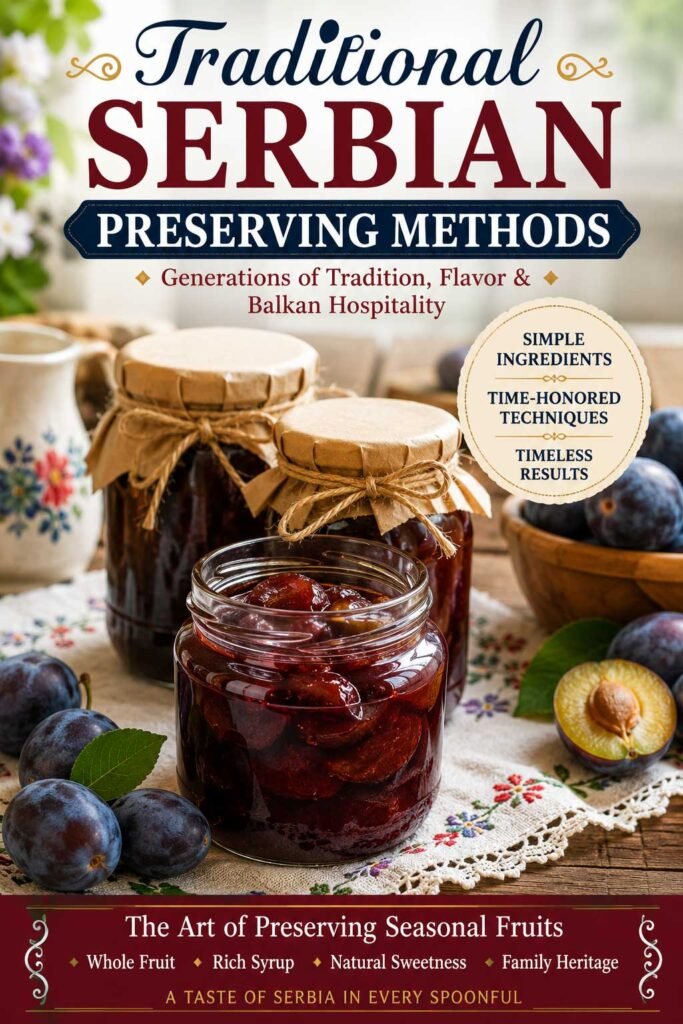
Long before refrigeration became common, Serbian families relied on traditional preserving techniques to enjoy seasonal fruits throughout the year. Plum Slatko is one of the best-known examples of this culinary heritage, combining simple ingredients with generations of knowledge and tradition.
Preserving the Harvest
During late summer and autumn, families preserved seasonal fruits and vegetables to enjoy throughout the winter months.
The Importance of Plums
Plums have long been one of Serbia’s most important fruits, used for fresh eating, drying, making rakija, and preparing preserves such as slatko.
Sugar as a Natural Preservative
Before modern refrigeration, sugar helped prevent spoilage while preserving the fruit’s flavor, texture, and appearance.
Carefully Selected Fruit
Traditional cooks often chose slightly underripe fruit because it remained firm during cooking and produced a more attractive preserve.
Family Traditions
Making slatko was often a family activity, with recipes and techniques passed down from one generation to the next.
Traditional Storage Methods
Proper jar sterilization and cool pantry storage allowed preserves to remain fresh for months without modern technology.
More Than Food Preservation
Over time, recipes like Plum Slatko became more than a practical way to preserve fruit. They evolved into cherished family traditions that reflected hospitality, heritage, and seasonal celebrations.
A Tradition That Continues Today
Many Serbian families still prepare homemade slatko each year, preserving not only fruit but also a culinary tradition that has been enjoyed for generations.
Fun Facts About Plum Slatko
Plum Slatko is more than a traditional Serbian preserve—it’s a dessert with a rich history and fascinating cultural traditions. Here are a few interesting facts about this beloved Balkan sweet.
These interesting facts add even more appreciation for the history behind this Plum Slatko Recipe.
The Word “Slatko” Means “Sweet”
In Serbian, slatko literally translates to “sweet,” though today it specifically refers to fruit preserved in sugar syrup.
Serbia Is Famous for Its Plums
Serbia is one of Europe’s leading plum-producing countries, making plums an important part of the nation’s culinary heritage.
Slatko Was Once a Symbol of Hospitality
Because sugar was once expensive, serving homemade slatko demonstrated generosity and respect toward guests.
Every Family Had Its Own Recipe
Recipes were traditionally passed down through generations, with each family adding its own unique touch.
Guests Received Only One Spoonful
According to Serbian custom, guests would take a single spoonful of slatko before drinking a glass of cold water.
Slatko Can Be Made with Many Fruits
Besides plums, popular varieties include cherry, strawberry, quince, fig, grape, apricot, rose petal, and green walnut slatko.
Copper Pots Were Traditionally Preferred
Many cooks believed copper pots produced the clearest syrup and best results when making preserves.
Some Recipes Are Over 100 Years Old
Many Serbian families still use handwritten recipes inherited from grandparents and great-grandparents.
A Tradition That Lives On
Despite modern food preservation methods, homemade slatko remains a cherished part of Serbian culture and family celebrations.
These fun facts show how Plum Slatko has evolved from a practical preserve into one of Serbia’s most treasured culinary traditions.
Traditional Serving and Entertaining Essentials
Serving Plum Slatko the traditional Serbian way becomes even more enjoyable with the right serveware. These items help create an authentic presentation for family gatherings and special occasions.
| Product | Why It’s Useful | Buy |
|---|---|---|
| Dessert Serving Bowls | Perfect for serving individual portions of slatko. | Check Price |
| Decorative Dessert Spoons | Traditional presentation for guests. | Check Price |
| Wooden Serving Tray | Ideal for serving slatko with coffee or tea. | Check Price |
| Cheese Board Set | Great for serving slatko alongside feta and cheeses. | Check Price |
| Turkish Coffee Cups | Complements traditional Balkan hospitality. | Check Price |
| Glass Tea Set | Perfect for serving guests with slatko. | Check Price |
Frequently Asked Questions About Traditional Serbian Plum Preserve
What is the difference between slatko and jam?
The main difference is that slatko is made with whole fruits preserved in a thick sugar syrup, while jam is typically made from crushed or chopped fruit cooked into a spreadable consistency. Slatko focuses on preserving the fruit’s shape and appearance.
Can I use fully ripe plums?
You can, but slightly underripe plums are recommended because they hold their shape better during cooking. Fully ripe plums may become too soft and break apart in the syrup.
Why are the plums soaked in lime water?
The lime water helps firm the fruit before cooking. This traditional technique allows the plums to remain intact and maintain their texture throughout the cooking process.
Do I have to peel the plums?
Traditional Plum Slatko is often made with peeled plums to create a smoother texture and more elegant appearance. However, some modern variations leave the skins on.
Can I skip the rose leaves?
Yes. Rose leaves are optional and primarily used to add a subtle floral aroma. The slatko will still be delicious without them.
How do I know when the slatko is ready?
The syrup should be thick and glossy, and the plums should be tender while still holding their shape. Avoid overcooking, as the fruit may become too soft.
How long does Plum Slatko last?
When stored in properly sterilized jars and kept in a cool, dark place, Plum Slatko can last for several months. Once opened, it should be refrigerated.
Can I reduce the amount of sugar?
Traditional slatko relies on a high sugar content for both flavor and preservation. Reducing the sugar may affect the texture, shelf life, and authenticity of the recipe.
What other fruits can be used to make slatko?
Many traditional Serbian slatko recipes use cherries, strawberries, figs, quinces, apricots, grapes, raspberries, rose petals, and even green walnuts.
Is Plum Slatko served as a dessert?
Yes, but it is also commonly served as a sweet accompaniment to cheese, yogurt, coffee, tea, and pastries. In Serbian tradition, it is often offered to guests as a welcoming treat rather than as a formal dessert.
More Traditional Serbian Desserts to Try
If you enjoyed this Plum Slatko recipe, here are a few more traditional Serbian desserts worth adding to your baking list:
Vasina Torta – A famous Serbian walnut and chocolate cake with refreshing citrus flavors.
- Šnenokle – Light meringue dumplings served in a creamy vanilla custard.
- Lenja Pita – A traditional Serbian apple pie made with tender pastry layers and sweet fruit filling.
- Krofne – Soft Serbian doughnuts filled with jam, chocolate, or vanilla cream.
- Koh – A moist semolina sponge cake soaked in sweet milk syrup.
- Orahnjača – A rolled pastry filled with a rich walnut filling and baked until golden.
- Štrudla sa Makom – Traditional poppy seed strudel popular throughout Serbia and the Balkans.
- Slatko od Višanja – A classic sour cherry slatko with the perfect balance of sweet and tart flavors.
- Tulumbe – Crispy fried pastries soaked in sweet syrup, inspired by Ottoman cuisine.
These traditional Serbian desserts offer a delicious introduction to the rich flavors and baking traditions of the Balkans.
Final Thoughts on Plum Slatko
Plum Slatko is a beautiful example of how simple ingredients can be transformed into something truly special through tradition, patience, and care. With its tender whole plums, glossy syrup, and delicate balance of sweetness, this beloved Serbian preserve has remained a cherished part of home kitchens for generations.
More than just a dessert, Plum Slatko reflects Serbia’s rich culinary heritage and long-standing tradition of hospitality. From welcoming guests with a spoonful of slatko and a glass of cold water to sharing homemade jars with family and friends, this classic preserve continues to bring people together.
Whether you’re exploring Balkan cuisine for the first time or looking to preserve a seasonal plum harvest, this authentic Plum Slatko recipe offers a delicious taste of Serbian tradition. Serve it with kaymak, cheese, yogurt, pastries, or simply enjoy it by the spoonful as generations have done before.
If you have access to fresh seasonal plums, this is one Serbian tradition well worth bringing into your own kitchen. One spoonful is often enough to understand why Plum Slatko has been cherished for generations.
Did You Make This Plum Slatko Recipe?
I’d love to hear how your Plum Slatko turned out! Leave a comment below and share your experience, favorite serving ideas, or any family traditions you used while making this classic Serbian preserve.
If you enjoyed this recipe, please share it with friends and family and follow along for more authentic Balkan recipes. Happy cooking!