


Vegan Spiced Turkish Flatbread Pizza (Homemade Pide Recipe)
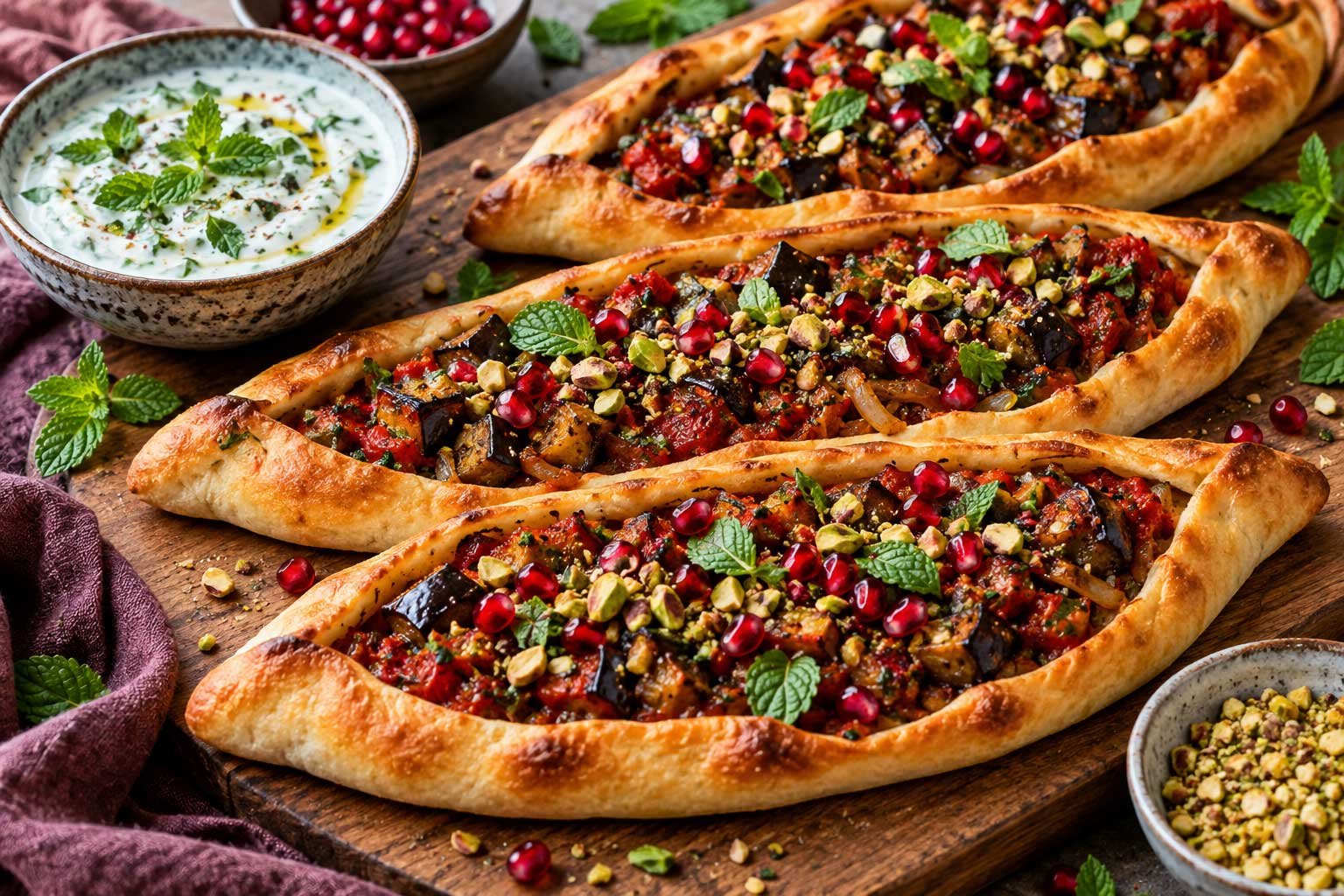
If you love homemade flatbread, this Vegan Spiced Turkish Flatbread Pizza is worth trying. Inspired by traditional Turkish pide, it starts with soft homemade dough shaped into little boats and filled with aubergine, tomatoes, garlic, and warm spices.
The filling cooks until the aubergine is tender and the tomatoes form a thick, savory sauce. Once baked, each flatbread gets a handful of fresh mint, crunchy pistachios, and juicy pomegranate seeds. A simple coconut mint dip on the side adds a cool, tangy contrast.
You can serve these flatbreads for lunch, dinner, or as part of a larger Turkish-inspired meal. They’re especially good straight from the oven, when the edges are golden and the bread is still warm.
Why You’ll Love This Recipe
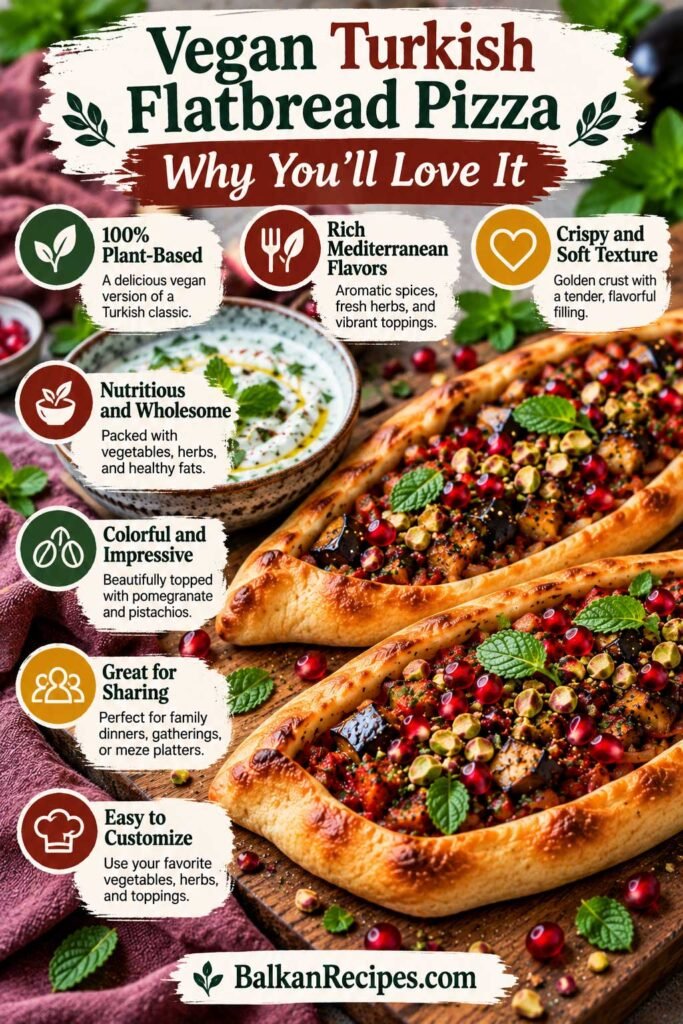
Packed with Authentic Turkish-Inspired Flavors
Traditional Turkish ingredients such as sumac, mint, cumin, and pomegranate create a rich and distinctive flavor profile that feels both authentic and exciting.
Completely Vegan and Dairy-Free
This recipe delivers incredible flavor and texture without any animal products, making it perfect for vegans and those seeking more plant-based meals.
Beautiful Balance of Textures
The soft dough, tender aubergine filling, crunchy pistachios, juicy pomegranate seeds, and creamy coconut dip create an irresistible contrast in every bite.
Perfect for Entertaining
The colorful presentation makes these individual flatbreads ideal for dinner parties, gatherings, and special occasions.
Nutritious and Filling
Loaded with vegetables, herbs, healthy fats, and fiber-rich ingredients, this dish is both satisfying and wholesome.
Customizable for Every Taste
You can easily adjust the spice level or add additional vegetables and toppings to make it your own.
What Is Turkish Pide?

Turkish Pide is a traditional flatbread often referred to as “Turkish pizza” due to its similar appearance and versatility. Unlike Italian pizza, pide features an elongated oval shape with folded edges that create a boat-like appearance. It is typically baked at high temperatures and filled with a variety of savory toppings.
Turkish pide also shares similarities with Macedonian Pastrmajlija Pizza, another traditional Balkan dish made with oval-shaped dough and savory toppings.
Pide has been a staple of Turkish cuisine for centuries and can be found everywhere from street vendors and bakeries to family homes and restaurants. Traditional fillings often include minced lamb or beef, Turkish cheeses, eggs, spinach, onions, and peppers.
The dough itself is soft and chewy, providing the perfect base for flavorful toppings. Regional variations exist throughout Turkey, with each area offering its own unique combinations of ingredients and seasonings.
This vegan version embraces the spirit of traditional pide while replacing meat and dairy with a delicious vegetable-based filling and coconut yogurt sauce.
The History of Pide in Turkish Cuisine
Pide has a long history in Turkish cooking, shaped by the bread-making traditions of Anatolia. Flatbreads have been prepared throughout the region for centuries, and over time, Turkish bakers developed different styles using locally available ingredients.
To learn more about the different types of traditional breads found throughout the region, explore our Balkan Bread Guide, which also covers the influence of Turkish pide on Balkan baking traditions.
Today, pide comes in many forms. Some versions are topped with minced meat, while others feature cheese, eggs, spinach, or vegetables. The Black Sea region is particularly well known for its regional pide varieties, including versions with folded edges and generous fillings.
Although pide is often compared to pizza, it has its own place in Turkish food culture. You’ll find it in neighborhood bakeries, restaurants, and home kitchens, where it’s enjoyed as a filling meal or shared with family and friends.
For more information about the dish and its place in Turkish food culture, explore this guide to Turkish pide traditions.
This vegan version takes inspiration from those traditions while adding a colorful combination of aubergine, fresh mint, pistachios, and pomegranate seeds.
Why This Vegan Version Works So Well
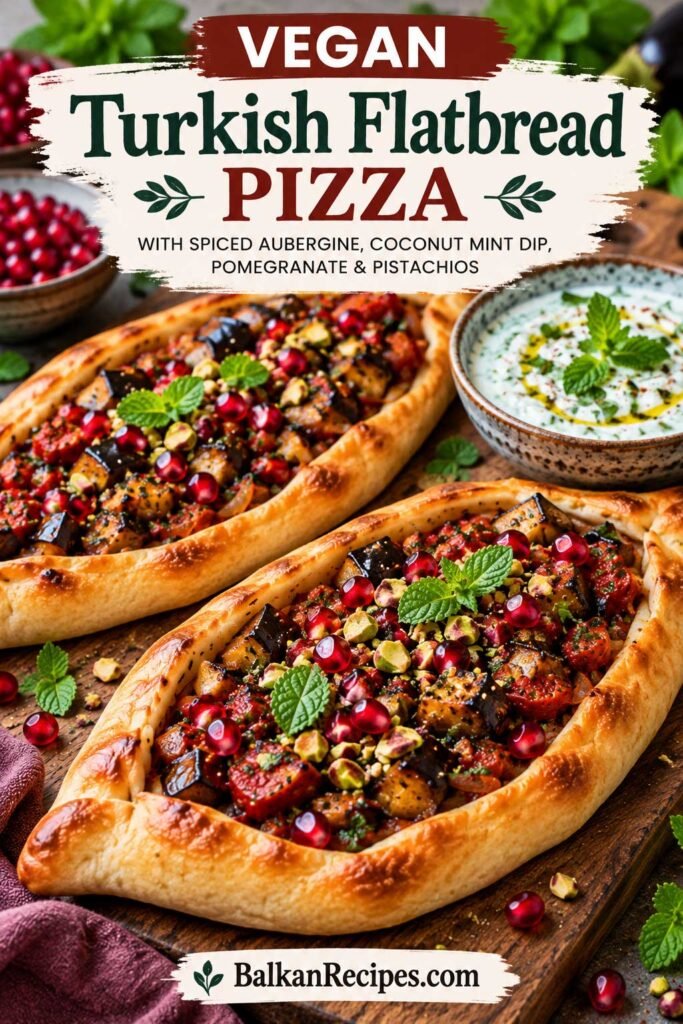
You don’t need meat or cheese to make a satisfying Turkish-style pide. The combination of tender aubergine, warm spices, homemade dough, and fresh toppings gives this vegan version plenty of flavor and texture. Here’s what makes it work so well.
Aubergine Creates a Hearty Filling
Aubergine is the star ingredient in this vegan pide, providing a rich and satisfying texture that absorbs the flavors of the spices and tomatoes beautifully. As it cooks, it becomes tender and develops a depth of flavor that makes the filling feel substantial without the need for meat.
Traditional Spices Add Authentic Flavor
The combination of cumin, smoked paprika, cinnamon, chili flakes, and sumac gives this flatbread its distinctive Turkish-inspired character. These spices create layers of warmth, smokiness, and subtle tanginess that make every bite interesting and flavorful.
Coconut Mint Dip Brings Freshness
The creamy coconut yogurt dip offers a cooling contrast to the spiced filling. Fresh mint, lemon juice, and garlic create a bright and refreshing sauce that balances the richness of the aubergine mixture while keeping the recipe completely dairy-free.
Pomegranate and Pistachios Provide Texture
A scattering of pomegranate seeds and pistachios transforms the finished pide into something truly special. The juicy sweetness of the pomegranate and the crunch of the pistachios add texture, color, and flavor that complement the savory filling perfectly.
The Dough Bakes Up Soft and Golden
Homemade pide dough develops a lightly crisp exterior while remaining soft and chewy inside. The characteristic folded edges help hold the filling in place and create the traditional boat-shaped appearance that makes Turkish pide so recognizable.
A Naturally Plant-Based Mediterranean Meal
This recipe showcases how vibrant and satisfying plant-based Mediterranean cooking can be. Fresh vegetables, herbs, spices, and wholesome ingredients come together to create a meal that is nourishing, flavorful, and suitable for a wide variety of diets.
Ingredients

This Vegan Spiced Turkish Flatbread Pizza combines homemade dough, a richly spiced aubergine filling, and a refreshing coconut mint dip. Most ingredients are easy to find, and a few simple substitutions can help you adapt the recipe to what you already have in your kitchen.
For the Dough
The dough starts with all-purpose flour, instant yeast, lukewarm water, olive oil, sugar, and a little sea salt. These basic ingredients create a soft, slightly chewy crust with golden edges. Bread flour also works if you prefer a chewier texture, while replacing some of the white flour with whole wheat flour adds a slightly nutty flavor.
For the Aubergine Filling
Aubergine (eggplant) is the star of the filling, becoming tender and flavorful as it cooks with onions, garlic, and ripe tomatoes. Cumin, smoked paprika, cinnamon, chili flakes, and sumac add warmth, smokiness, and a pleasant tang, while fresh mint brings everything together.
Choose a firm, glossy aubergine and ripe tomatoes for the best results. If aubergine isn’t available, mushrooms or zucchini make good substitutes. You can also use canned diced tomatoes, but allow any excess liquid to evaporate before adding the filling to the dough.
For the Coconut Mint Dip
The coconut mint dip is made with plain, unsweetened coconut yogurt, fresh lemon juice, olive oil, garlic, mint, and a pinch of sea salt. It’s creamy, refreshing, and provides a lovely contrast to the warm spices in the filling.
Unsweetened soy yogurt is a good alternative if you prefer a more neutral flavor. Avoid sweetened coconut yogurt, as it can make the dip taste too sweet.
For the Topping
Fresh pomegranate seeds, pistachio dukkah, and mint leaves give the finished pide its colorful appearance and satisfying contrast of textures. The pomegranate adds juicy sweetness, while the pistachios provide crunch and a slightly nutty flavor.
If you don’t have pistachio dukkah, chopped toasted pistachios work just as well. For a nut-free version, omit the pistachio dukkah entirely and use toasted pumpkin or sunflower seeds instead. Check that any other toppings are free from nuts and cross-contact if preparing the dish for someone with a nut allergy.
Ingredient Notes and Substitutions
A few small ingredient choices can make a noticeable difference in the finished flatbread. Here are some useful tips for getting the best flavor and texture.
Choosing the Right Flour
All-purpose flour is ideal for this recipe because it produces a soft crust that’s easy to shape. Bread flour creates a slightly chewier result, while a mixture of white and whole wheat flour adds extra fiber. If using whole wheat flour, you may need a little additional water to keep the dough soft.
Getting the Best Flavor from the Spices
The combination of cumin, smoked paprika, cinnamon, and sumac gives this pide its distinctive Turkish-inspired flavor. Sumac is especially useful for adding a gentle lemony tang. If you can’t find it, a small squeeze of lemon juice added to the cooked filling is a reasonable substitute.
Keeping the Filling from Becoming Watery
Aubergine and tomatoes release moisture as they cook, so it’s important to let the filling simmer until thickened. Roma tomatoes are a good choice because they tend to contain less water. The finished mixture should be moist and tender without leaving excess liquid in the pan.
Choosing the Best Dairy-Free Yogurt
Plain, unsweetened coconut yogurt gives the dip a creamy texture, but different brands vary in thickness and flavor. If yours is particularly thick, stir in a teaspoon of water or lemon juice at a time until it reaches your preferred consistency. Unsweetened soy yogurt also works well.
Using Fresh Herbs and Toppings
Fresh mint adds a bright finish that balances the spiced aubergine. Flat-leaf parsley can replace some of the mint, although the flavor will be different. For the best presentation, scatter the herbs, pomegranate seeds, and pistachios over the pide just before serving.
Step-by-Step Instructions

Step 1: Prepare the Dough
In a large bowl, combine the flour, instant yeast, sugar, and salt. Add the lukewarm water and olive oil, stirring until a rough dough forms.
Step 2: Knead the Dough
Transfer the dough onto a lightly floured work surface and knead for 8 to 10 minutes until smooth and elastic. The dough should feel soft and slightly springy when pressed.
Place the dough back into a lightly oiled bowl, cover with a clean kitchen towel, and leave it in a warm place for 45 to 55 minutes, or until doubled in size.
Step 3: Cook the Aromatic Base
While the dough rises, heat the olive oil in a large skillet over low heat. Add the finely chopped onion and cook gently for about 10 minutes until softened and translucent.
Stir in the garlic, cumin seeds, chili flakes, smoked paprika, and cinnamon. Cook for another 1 to 2 minutes until the spices become fragrant.
Step 4: Prepare the Aubergine Filling
Add the diced aubergine to the pan and stir well to coat it with the aromatic spice mixture. Cook for a minute before adding the chopped tomatoes and sea salt.
Cover the pan and cook gently for about 15 minutes, stirring occasionally, until the aubergine becomes tender and the tomatoes break down into a rich sauce.
Step 5: Finish the Filling
Remove the lid and stir in the chopped fresh mint and sumac. Cook for another minute to combine all the flavors. Remove from the heat and allow the filling to cool slightly while shaping the dough.
Step 6: Shape the Pide
Preheat the oven to 200°C (400°F).
Punch down the risen dough and divide it into four equal portions. Roll each piece into a long oval shape approximately 25 to 30 cm (10 to 12 inches) long.
Roll each portion into an elongated oval, approximately 25–30 cm (10–12 inches) long, leaving the edges slightly thicker than the center.
Step 7: Fill the Flatbreads
Spoon the aubergine filling down the center of each oval, leaving a border around the edges. Fold the long sides inward slightly, then pinch both ends together to create the traditional boat shape.
Brush the exposed dough edges lightly with olive oil to encourage a golden finish during baking.
Step 8: Bake Until Golden
Transfer the prepared pides to a lightly oiled baking tray or baking sheet.
Bake for 12 to 15 minutes, or until the crust is golden brown and the flatbreads are fully cooked through.
Step 9: Prepare the Coconut Mint Dip
While the pide is baking, combine the coconut yogurt, lemon juice, olive oil, grated garlic, chopped mint, and sea salt in a small bowl.
Mix well until smooth. If needed, add a small amount of water to achieve your desired consistency.
Step 10: Garnish and Serve
Remove the baked pides from the oven and allow them to cool for a few minutes.
Top with fresh mint leaves, pomegranate seeds, and pistachio dukkah. Serve warm alongside the coconut mint dip for a fresh and flavorful finish.
Enjoy immediately while the crust is crisp and the toppings are vibrant and fresh.

Spiced Vegan Turkish Flatbread Pizza Recipe
Ingredients
For the Dough
- 400 g white organic flour
- 2 tbsp olive oil
- 1 tsp quick yeast
- ¼ tsp sea salt
- 1 tsp sugar
- 1 cup lukewarm water
For the Aubergine Filling
- 1 onion finely chopped plus extra for brushing for the topping
- 1 tbsp olive oil
- 1 tsp cumin seeds
- ½ chilli flakes
- ½ smoked paprika
- ½ tsp ground cinnamon
- 1 medium aubergine (eggplant) cut into 1 cm cubes
- 2 cloves garlic finely chopped
- 3 tomatoes choppped
- ½ sea salt
- pinch sumac
- 1 tbsp olive oil to brush the pide
- 1 large handful fresh mint roughly chopped
For the Coconut Mint Dip
- ½ lemon juice of ½ lemon
- 1 tbsp olive oil
- 3 tbsp unsweetened coconut yogurt
- 1 clove garlic grated
- 2 tbsp fresh mint chopped
- 1 pinch sea salt
For the Topping
- ¼ cup pomegranate seeds
- 2 tbsp pistachio dukkah or chopped pistachios
- Fresh mint leaves for garnish
Instructions
Prepare the Dough
- In a large bowl, combine the flour and salt. In a separate bowl, mix the lukewarm water, yeast, sugar, and olive oil.
- Gradually add the liquid mixture to the flour, stirring until a soft dough forms.
- Transfer to a lightly floured surface and knead for 8–10 minutes until smooth and elastic.
- Place the dough in a lightly oiled bowl, cover, and let rise in a warm place for 45–55 minutes, or until doubled in size.
Prepare the Aubergine Filling
- Heat 1 tablespoon of olive oil in a large skillet over medium-low heat. Add the chopped onion and cook for 8–10 minutes until softened.
- Stir in the garlic, cumin seeds, chili flakes, smoked paprika, and cinnamon. Cook for 1–2 minutes until fragrant.
- Add the diced aubergine, chopped tomatoes, and salt. Stir well, cover, and cook for approximately 15 minutes, stirring occasionally, until the aubergine is tender.
- Remove the lid and cook for a few more minutes if the mixture is too watery. Stir in the sumac and fresh mint, then remove from the heat.
Shape and Bake the Pide
- Preheat the oven to 200°C (400°F). Line a large baking tray with parchment paper.
- Divide the risen dough into four equal portions. Roll each portion into an elongated oval approximately 25–30 cm (10–12 inches) long.
- Spoon the aubergine filling evenly onto each piece, leaving a border around the edges. Fold the sides inward and pinch both ends to create the traditional boat shape.
- Brush the exposed dough with olive oil and bake for 12–15 minutes, or until the edges are golden and the underside is fully cooked. If the dough is thicker, continue baking for a few additional minutes, checking regularly.
Make the Coconut Mint Dip
- Combine the coconut yogurt, lemon juice, olive oil, grated garlic, chopped mint, and sea salt in a small bowl. Stir until smooth, adding a little water if needed.
Garnish and Serve
- Remove the pide from the oven and let cool slightly. Sprinkle with pomegranate seeds, pistachio dukkah, and fresh mint. Serve warm with the coconut mint dip.
Notes
- Dough: Allow the dough to double in size for a soft, airy crust.
- Aubergine: Cook until completely tender, and reduce excess liquid to prevent a soggy base.
- Spices: Adjust the chili flakes to your preferred heat level.
- Coconut yogurt: Use plain, unsweetened yogurt for the best savory flavor.
- Toppings: Add pomegranate, pistachios, and fresh mint after baking.
- Storage: Refrigerate leftovers for up to 3 days, keeping the dip separate.
- Reheating: Warm in the oven at 180°C (350°F) for 8–10 minutes.
- Make ahead: Prepare the filling and dip a day in advance and refrigerate until needed.
Tips for Making the Best Vegan Turkish Flatbread Pizza
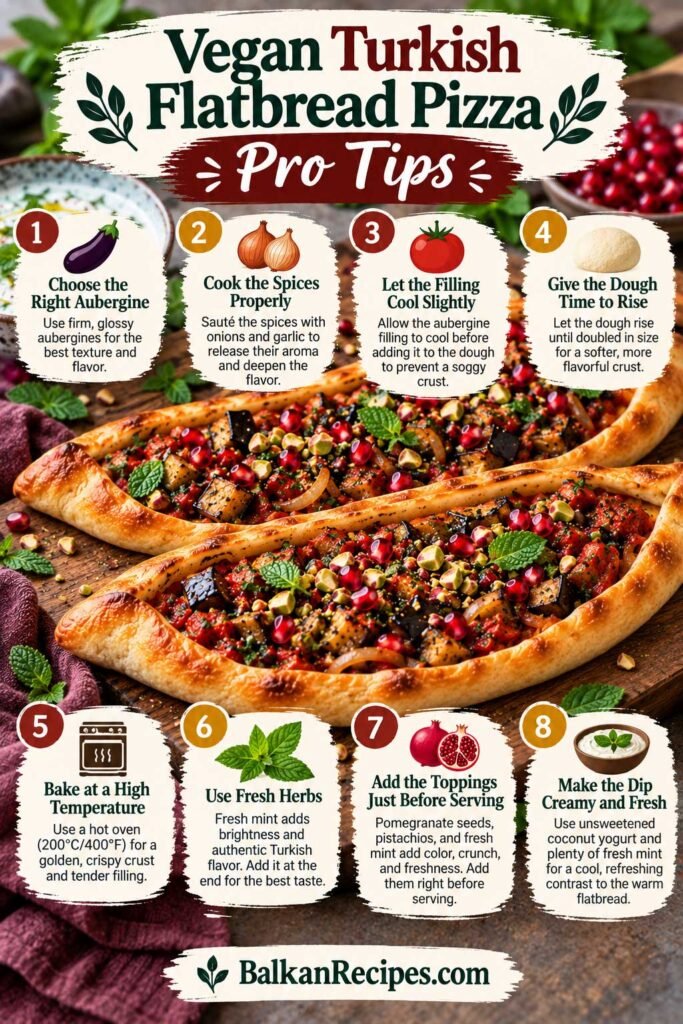
Use Fresh Yeast for a Better Rise
The foundation of any great pide is the dough. Make sure your yeast is fresh and active before mixing it into the flour. The dough should rise until doubled in size, creating a light and airy texture that bakes into a soft interior with a slightly crisp crust. Allowing enough time for the dough to rest and develop will greatly improve both flavor and texture.
Cook the Aubergine Filling Slowly
Aubergine benefits from gentle cooking, which allows it to soften completely and absorb the flavors of the spices, garlic, onions, and tomatoes. Rushing this step can leave the vegetables undercooked and prevent the filling from developing its rich, savory character. Slow cooking helps create a filling that is both flavorful and perfectly textured.
Balance the Spices Carefully
The spice blend is one of the highlights of this recipe. Cumin adds earthiness, smoked paprika contributes depth, cinnamon provides warmth, and sumac introduces a subtle citrus-like tang. Taste the filling as it cooks and adjust the seasonings according to your preference. A well-balanced filling should be aromatic without any single spice overpowering the others.
Shape the Dough Like Traditional Pide
When rolling out the dough, aim for elongated oval shapes and pinch the ends slightly to create the traditional boat-like appearance associated with Turkish pide. Folding the edges inward not only helps hold the filling in place during baking but also creates the distinctive crust that makes pide unique.
Add Fresh Toppings After Baking
Fresh mint, pomegranate seeds, and pistachios should be added after the pide comes out of the oven. This preserves their texture, color, and flavor while providing a refreshing contrast to the warm, spiced filling. The vibrant toppings also create an attractive presentation that makes the dish even more appealing.
Adjust the Coconut Mint Dip to Your Taste
The coconut mint dip can easily be customized depending on your preferred consistency and flavor. Add a little water for a thinner sauce or extra coconut yogurt for a thicker dip. Additional lemon juice can increase the brightness, while extra mint provides a more refreshing finish.
Common Mistakes to Avoid When Making Vegan Turkish Flatbread Pizza
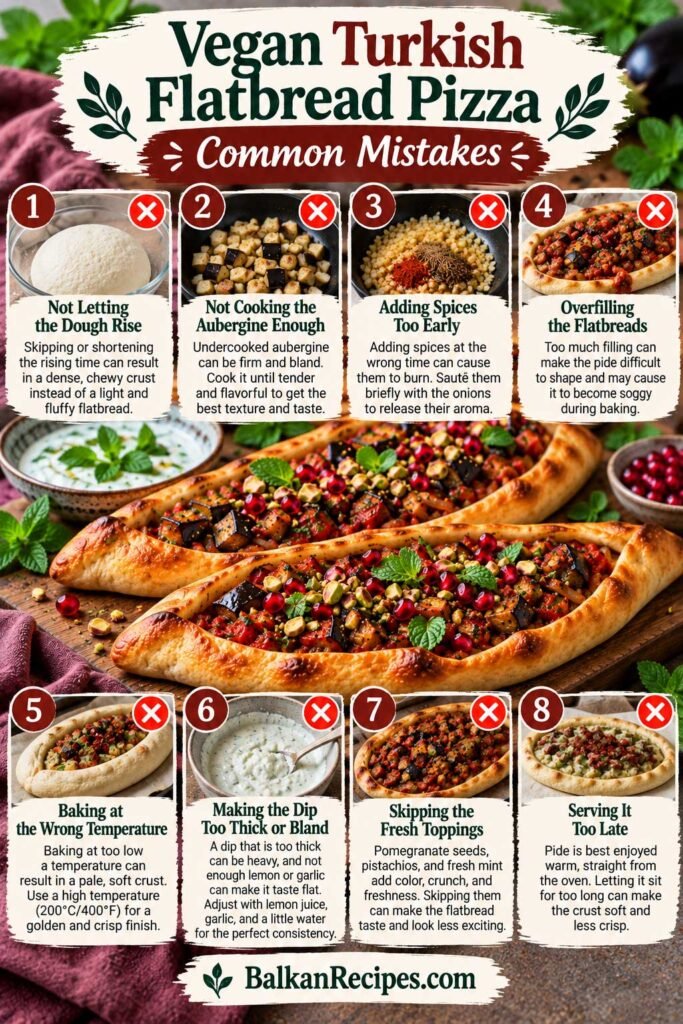
Making homemade Turkish pide isn’t difficult, but a few small mistakes can affect the texture of the crust and the flavor of the filling. Here are the most common problems and how to avoid them.
1. Not Letting the Dough Rise Properly
If you rush the rising process, the crust may turn out dense instead of soft and chewy. Let the dough rest in a warm place until it has roughly doubled in size, usually about 45–55 minutes. In a cooler kitchen, it may take longer.
2. Adding Too Much Water to the Dough
Too much water can make the dough difficult to shape, while adding excessive flour during kneading can leave it dry and tough. Start with the recommended amount of water and adjust gradually if needed. The dough should feel soft and slightly tacky without sticking heavily to your hands.
3. Not Cooking the Aubergine Long Enough
Undercooked aubergine can taste spongy and lack the rich flavor this recipe needs. Cook it with the tomatoes and spices until completely tender. If the mixture looks watery, remove the lid and let the excess moisture evaporate before filling the pide.
4. Overloading the Flatbread with Filling
Adding too much aubergine mixture can make the center soggy and prevent the dough from baking evenly. Divide the filling between the four flatbreads, spreading it in an even layer while leaving enough space around the edges to fold and seal the dough.
5. Baking at the Wrong Temperature
A properly preheated oven helps the pide develop a golden crust without drying out the filling. Preheat to 200°C (400°F) before baking, and check the flatbreads after 12–15 minutes. The edges should be golden, and the underside should be fully cooked.
6. Using Sweetened Coconut Yogurt
Flavored or sweetened coconut yogurt can make the mint dip taste overly sweet and clash with the savory filling. Choose plain, unsweetened coconut yogurt and adjust the lemon juice, garlic, and salt to taste.
Serving Suggestions
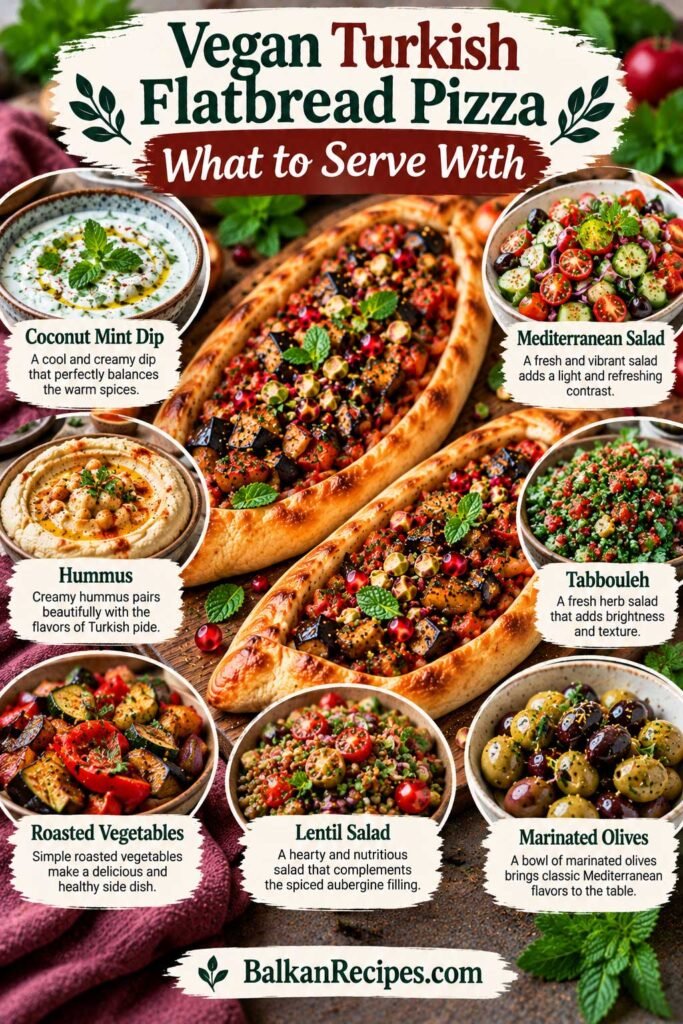
Serve for Lunch or as an Appetizer
Pair these vegan Turkish flatbreads with a simple cucumber and tomato salad for a light lunch. For gatherings, slice each pide into smaller pieces and serve with the coconut mint dip on the side.
Include on a Meze Platter
Pide fits perfectly into a traditional Turkish-style meze spread. Serve it alongside hummus, baba ganoush, stuffed grape leaves, olives, roasted peppers, and fresh vegetables. The variety of flavors and textures creates an impressive meal that is ideal for sharing.
Pair with Soups
A warm bowl of Turkish Spicy Red Lentil Soup makes a wonderful companion to this flatbread. Its comforting texture and aromatic spices complement the aubergine filling, especially during cooler months.
Enjoy as an Appetizer
Cut each pide into smaller slices and serve as an appetizer for gatherings or dinner parties. The colorful toppings and unique presentation make them a beautiful addition to any table while allowing guests to enjoy a taste of Turkish-inspired cuisine.
Add Extra Dips and Sauces
While the coconut mint dip is delicious on its own, you can also offer additional sauces such as hummus, muhammara, tahini sauce, or a spicy chili paste. These extra accompaniments allow guests to customize each bite according to their preferences.
Make It Part of a Mediterranean Feast
For a larger meal, serve the pide alongside grilled vegetables, rice pilaf, lentil salads, bean dishes, and fresh herb platters. This creates a colorful Mediterranean-inspired feast that is suitable for family dinners, celebrations, and special occasions.
For a heartier plant-based meal, serve the pide with our Turkish Green Lentil Salad. The combination of lentils, fresh herbs, and lemon dressing pairs beautifully with the spiced aubergine.
Variations and Customizations
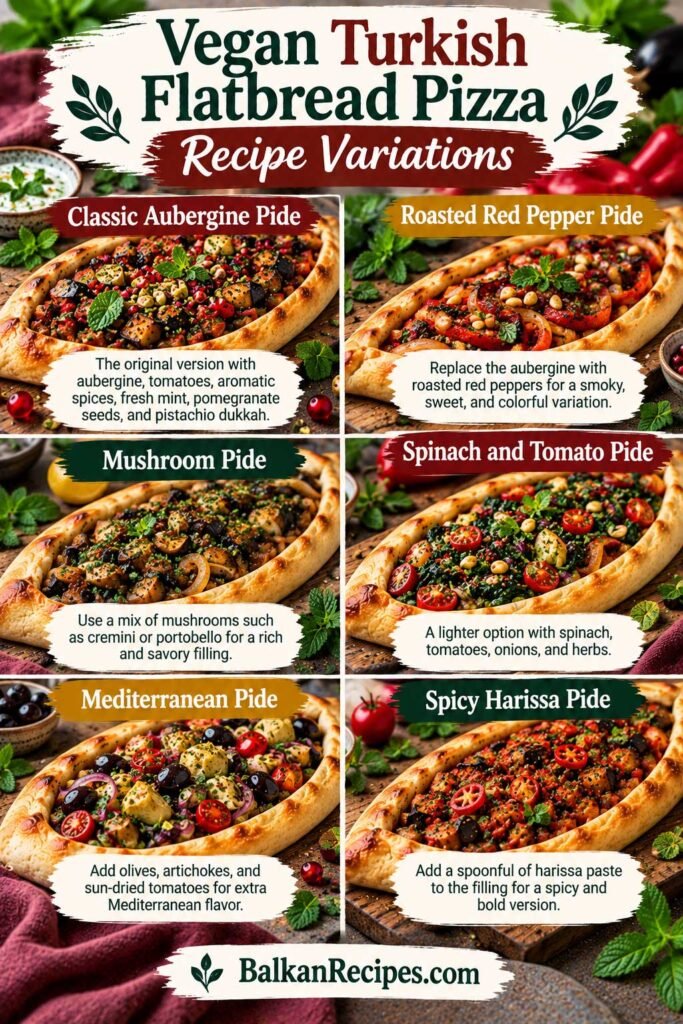
Add More Mediterranean Vegetables
This recipe can easily be adapted by incorporating additional vegetables into the filling. Roasted red peppers, zucchini, mushrooms, spinach, or artichoke hearts all pair beautifully with the existing spice blend and add even more texture and flavor to the flatbread.
Include Plant-Based Protein
For a heartier meal, consider adding cooked chickpeas, lentils, or crumbled plant-based meat alternatives to the aubergine mixture. These ingredients increase the protein content while maintaining the rich, savory character of the dish.
Create a Spicier Version
If you enjoy extra heat, increase the amount of chili flakes or add finely chopped fresh chili peppers to the filling. A drizzle of spicy chili oil after baking can also provide an additional kick without overpowering the other flavors.
Experiment with Different Herbs
Fresh mint is a classic pairing, but parsley, dill, coriander, or oregano can also work beautifully in this recipe. Combining several herbs creates additional layers of flavor and gives the flatbread a fresh Mediterranean character.
Try Different Vegan Sauces
While the coconut mint dip is delicious, you can experiment with other dairy-free sauces such as tahini dressing, cashew cream, garlic hummus, or a lemon-herb yogurt alternative. Each option creates a slightly different flavor experience.
Make Mini Pide for Parties
Instead of four larger flatbreads, divide the dough into smaller portions and create mini pides. These bite-sized versions are perfect for parties, buffets, appetizers, and holiday gatherings where guests can easily sample multiple dishes.
Health Benefits of Vegan Turkish Flatbread Pizza
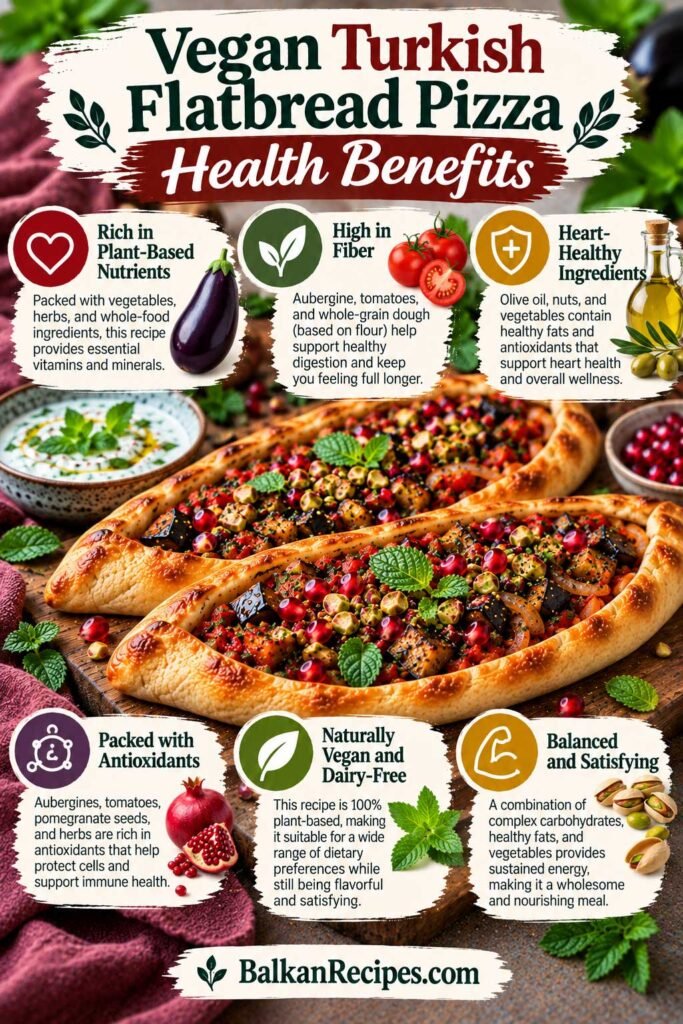
Vegan Spiced Turkish Flatbread Pizza is more than just a delicious alternative to traditional pizza. Made with fresh vegetables, aromatic spices, herbs, and plant-based ingredients, it offers a satisfying combination of flavor and nutrients. When enjoyed as part of a balanced diet, this homemade pide can be a wholesome choice for lunch or dinner.
Supports Digestive Health
The combination of vegetables and plant-based ingredients provides dietary fiber, which supports regular digestion and helps you feel satisfied after eating. For an additional fiber boost, you can replace some of the white flour with whole wheat flour.
Provides Heart-Healthy Fats
This recipe contains unsaturated fats that can contribute to a heart-healthy eating pattern, particularly when they replace foods high in saturated fat. Choosing a coconut yogurt lower in saturated fat can make the overall meal more heart-friendly.
For more information about dietary fats and cardiovascular health, see the American Heart Association’s guide to healthy fats.
Contains Beneficial Antioxidants
The colorful vegetables, herbs, and spices in this dish provide naturally occurring antioxidants. These compounds help protect cells from oxidative damage and contribute to the nutritional benefits of eating a varied, plant-rich diet.
Encourages a Balanced Plant-Based Diet
This vegan pide is a flavorful way to enjoy more plant-based meals without sacrificing satisfaction. It provides carbohydrates for energy, some healthy fats, and a variety of vitamins and minerals. Pairing it with a protein-rich side dish can make it an even more balanced meal.
Offers a Dairy-Free Alternative
Unlike many traditional pizza recipes, this version contains no cheese, milk, or butter. It can be a suitable option for people avoiding dairy while still offering a creamy dip and a satisfying homemade crust.
Can Be Adapted to Your Nutritional Needs
One of the advantages of homemade flatbread is having control over the ingredients and portions. You can increase the vegetable filling, use a mixture of whole wheat and white flour, adjust the amount of oil, or add a plant-based protein source to suit your preferences.
Overall, Vegan Turkish Flatbread Pizza can be a nutritious and enjoyable addition to your weekly meal rotation. Its combination of fresh flavors, vegetables, and homemade dough makes it a satisfying choice for anyone looking to include more plant-based dishes in their diet.
How to Store and Reheat Vegan Turkish Flatbread Pizza
Storing Leftovers in the Refrigerator
Allow the pide to cool, then transfer it to an airtight container and refrigerate for up to three days. Keep the coconut mint dip in a separate sealed container and use it within two to three days. Store fresh toppings separately so they don’t make the crust soggy.
Freezing for Longer Storage
This vegan flatbread freezes surprisingly well. Allow the baked pide to cool completely, then wrap each piece individually in plastic wrap or foil before placing them in a freezer-safe container or bag. They can be frozen for up to three months without significant loss of quality.
Thawing Frozen Pide
For the best texture, transfer frozen pide to the refrigerator and allow it to thaw overnight. This gradual thawing process helps preserve the crust and prevents excess moisture from developing.
Reheating in the Oven
The oven is the preferred method for reheating Turkish flatbread pizza. Place the pide on a baking tray and warm it in a preheated oven at 180°C (350°F) for about 8 to 10 minutes. This helps restore the crispness of the crust while evenly warming the filling.
Avoid Microwaving When Possible
Although the microwave is convenient, it can make the crust soft and chewy rather than crisp. If using a microwave, heat only until warmed through and consider finishing the flatbread briefly in a hot oven or skillet to improve the texture.
Refresh Before Serving
After reheating, add a fresh sprinkle of chopped mint, pomegranate seeds, and pistachios. These toppings restore the vibrant appearance and provide the same freshness and crunch found in the original dish.
Frequently Asked Questions About Vegan Turkish Flatbread Pizza
What is the difference between pide and pizza?
Although pide is often called Turkish pizza, there are several differences between the two. Pide is traditionally shaped into a long oval or boat shape with folded edges, while pizza is usually round. Turkish pide also features unique spice blends and toppings commonly found in Turkish cuisine, such as sumac, herbs, lamb, vegetables, and regional cheeses.
Can I make the dough ahead of time?
Yes. The dough can be prepared up to 24 hours in advance and stored in the refrigerator after the first rise. Chilling the dough can even improve its flavor. Allow it to come to room temperature before shaping and baking.
Can I use store-bought pizza dough?
Absolutely. While homemade dough provides the most authentic result, quality store-bought pizza dough can save time and still produce delicious flatbreads. Simply shape it into the traditional pide form before adding the filling.
What can I substitute for aubergine?
If you are not a fan of aubergine, you can use zucchini, mushrooms, roasted peppers, spinach, lentils, chickpeas, or a combination of vegetables. The spices and herbs will still provide plenty of flavor.
Is this recipe gluten-free?
The original recipe is not gluten-free because it uses wheat flour. However, you can experiment with a gluten-free bread or pizza dough recipe to create a gluten-free version.
What is sumac and can I skip it?
Sumac is a popular Middle Eastern spice made from dried berries. It has a tangy, lemon-like flavor that adds brightness to many Turkish dishes. If unavailable, a small squeeze of lemon juice can provide some similar acidity, although the flavor will not be identical.
Can I make this recipe nut-free?
Yes. Simply omit the pistachios or replace them with toasted pumpkin seeds or sunflower seeds for a similar crunchy texture without using tree nuts.
What type of coconut yogurt works best?
Unsweetened plain coconut yogurt is the best option. Sweetened varieties may alter the flavor balance of the mint dip and make it less savory.
Can I serve this cold?
While pide is best enjoyed warm from the oven, leftovers can also be eaten at room temperature. The flavors remain delicious, making it suitable for packed lunches and picnics.
How do I know when the pide is fully baked?
The crust should be lightly golden around the edges and firm to the touch. The bottom should be cooked through and slightly crisp, while the filling should be hot and bubbling in places.
Give This Vegan Turkish Pide a Try
There’s something satisfying about pulling homemade pide from the oven, especially when the edges are golden and the filling is still warm. The combination of spiced aubergine, fresh mint, pistachios, and pomegranate makes this version a little different from traditional Turkish flatbreads.
Serve it with the coconut mint dip and a fresh salad, or make a few extra to share with family and friends.
Have you tried this Vegan Spiced Turkish Flatbread Pizza? I’d love to hear how it turned out! Leave a comment below, and let us know if you added your own favorite toppings.
More Turkish Recipes to Try
If you enjoyed this Vegan Spiced Turkish Flatbread Pizza, here are a few more delicious Turkish recipes to explore:
- Turkish Pide with Feta and Tomato – A traditional boat-shaped flatbread filled with creamy cheese and fresh tomatoes.
- Turkish Green Lentil Salad – A refreshing salad with tender lentils, fresh herbs, and a tangy dressing.
- Turkish Spicy Red Lentil Soup – A comforting soup with warming spices and a smooth, creamy texture.
- Turkish Shepherd’s Salad (Çoban Salatası) – A fresh combination of tomatoes, cucumbers, peppers, and onions.
- Turkish Chicken Kebabs with Tomato Chili Sauce – Juicy, flavorful kebabs served with a spicy tomato sauce.
Looking for more inspiration? Explore our collection of traditional and modern Turkish recipes.
Recipe Inspiration: This recipe was inspired by ideas and flavors shared on Rebel Recipes, Big Flavors from a Tiny Kitchen, and Love Is in My Tummy.
Have You Tried This Vegan Turkish Flatbread Pizza?
I’d love to hear how your pide turned out! Did you follow the recipe or try your own toppings? Leave a comment and rating below to share your experience.
If you enjoyed this recipe, don’t forget to share it with friends or save it on Pinterest for later!

