


Popara Recipe
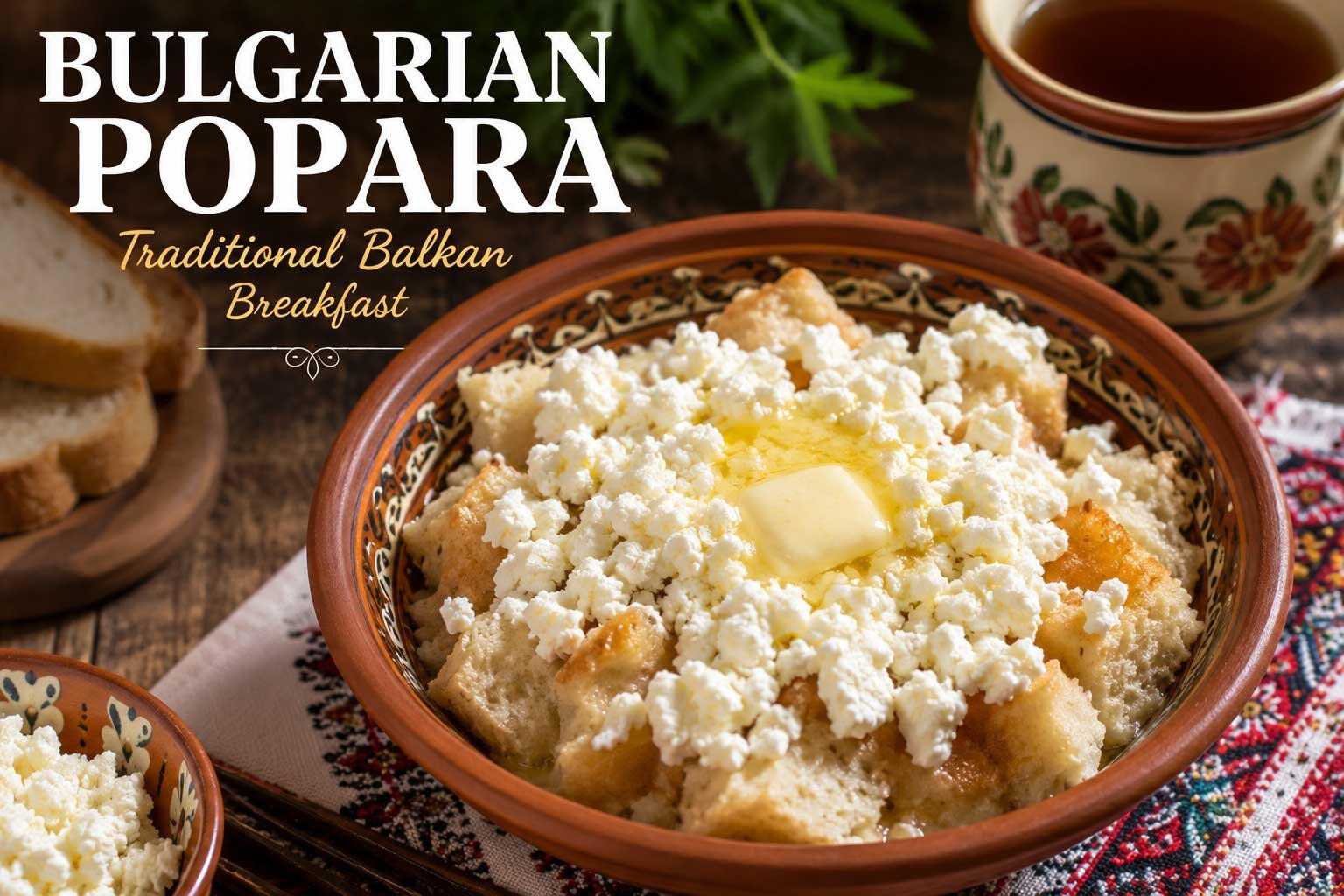
Few dishes capture the feeling of a warm Bulgarian childhood quite like popara. Simple, soft, buttery, and incredibly comforting, this humble breakfast transforms stale bread into one of the most nostalgic meals in Bulgarian cuisine.
For generations, Bulgarian families have prepared popara early in the morning using hot tea, bread, butter, and salty white cheese known as sirene. It is affordable, filling, quick to make, and deeply tied to Balkan home cooking traditions.
Its rustic appearance, creamy texture, and cozy village-style presentation have also made popara increasingly popular on Pinterest and traditional food blogs.
Although the ingredients are simple, the experience is unforgettable. The steam rising from the bowl, the melting butter, the aroma of warm herbal tea, and the creamy salty cheese create a combination that feels both rustic and soothing.
Many Bulgarians grew up eating popara before school, during cold winters, or while visiting grandparents in the countryside. Even today, the dish remains popular because it delivers comfort in a way modern breakfasts rarely do.
Unlike heavily processed breakfast foods, Bulgarian popara relies on basic pantry ingredients and old-fashioned cooking methods that have been passed down for decades.
Whether you are discovering this dish for the first time or reconnecting with a taste of childhood, this Bulgarian Popara Recipe offers one of the coziest breakfasts in Balkan cuisine.
Alongside dishes like Bulgarian Mekitsa, popara remains one of the most nostalgic traditional breakfasts in Bulgaria.
What Is Popara?
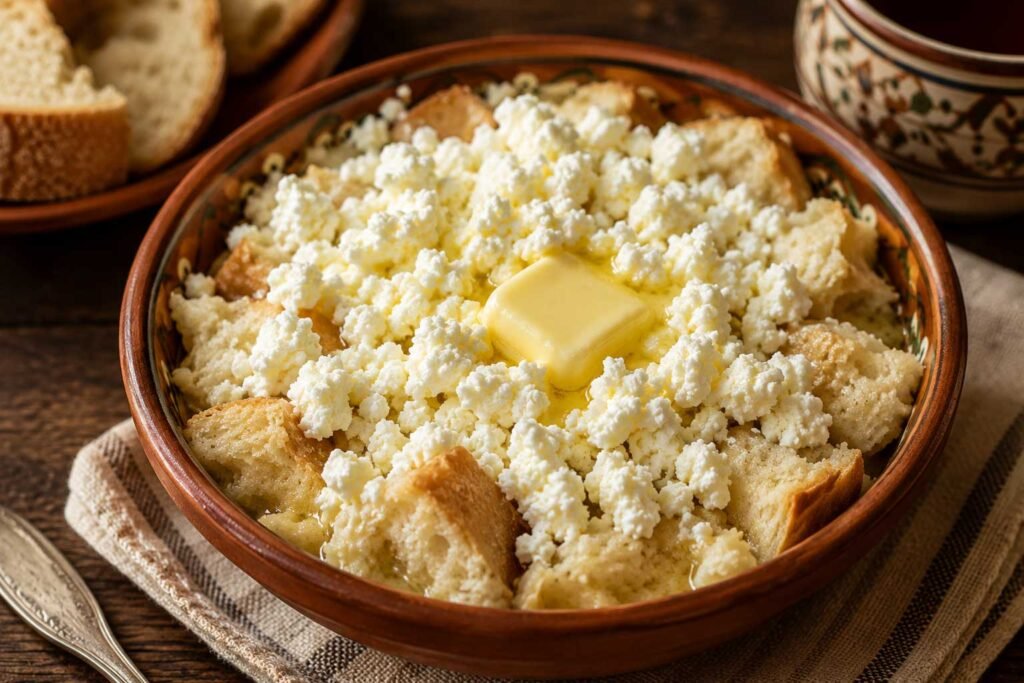
Popara is a traditional Balkan comfort breakfast made by soaking stale bread in hot liquid such as tea, milk, or broth, then finishing it with butter and crumbled white cheese.
In Bulgaria, the most traditional version is prepared with rustic bread, strong herbal or black tea, creamy butter, and salty Bulgarian sirene cheese. As the hot liquid is poured over the bread, the pieces soften and absorb the flavor while still keeping a bit of texture. The butter slowly melts into the warm bread, while the sirene adds a rich, salty contrast that makes the dish incredibly comforting and satisfying.
The final result feels somewhere between a warm savory bread pudding and a cozy breakfast bowl. Simple ingredients come together to create a dish that is far more flavorful and nostalgic than its humble appearance suggests.
Versions of popara can be found across many Balkan countries including Serbia, North Macedonia, Bosnia, and Montenegro, with each region preparing it slightly differently depending on local traditions and available ingredients. Some families use milk for a creamier texture, while others prepare sweeter versions with sugar or honey.
What makes Bulgarian popara especially recognizable is the combination of fragrant herbal tea and authentic Bulgarian sirene cheese, which gives the dish its signature Balkan flavor.
For many Bulgarians, popara is much more than a simple breakfast. It represents childhood memories, village traditions, family kitchens, and the old Balkan philosophy of turning simple ingredients into deeply comforting food without wasting anything.
Much like Bulgarian Banitsa, popara shows how simple ingredients became deeply important in traditional Bulgarian home cooking.
Why You’ll Love This Bulgarian Popara Recipe
This recipe remains beloved across Bulgaria for many reasons.
First, it is incredibly easy to prepare. The entire dish takes less than 15 minutes from start to finish.
Second, it is budget-friendly. Traditionally, popara was created as a way to avoid wasting stale bread, making it one of the most practical Balkan recipes.
Third, it is deeply comforting. Warm bread soaked in tea with melted butter creates a rich and cozy texture perfect for colder mornings.
Like Bulgarian Bean Soup, popara delivers the kind of warmth and simplicity that defines traditional Balkan comfort food.
Another reason people love popara is its flexibility. Every family has their own variation. Some use milk instead of tea, others add sugar, honey, walnuts, or paprika.
And finally, this dish carries strong emotional nostalgia for many Bulgarians. One bowl can instantly remind someone of grandparents, village homes, winter mornings, and family kitchens.
The History of Popara in Bulgaria

Popara has roots in old rural Balkan cooking traditions where wasting food was unacceptable.
Bread was considered sacred in Bulgarian culture, and stale bread was never thrown away. Families instead transformed leftover bread into filling meals using whatever ingredients were available.
Because tea, butter, and cheese were common household staples, popara became one of the easiest and cheapest breakfasts to prepare.
In villages throughout Bulgaria, children often ate popara before school because it provided warmth and energy during cold mornings. In many homes, the dish was prepared quietly before sunrise while wood stoves warmed the kitchen during cold Bulgarian winters.
Over time, popara became associated with comfort, childhood, and home cooking. Even Bulgarians living abroad often describe popara as one of the strongest food memories from their early years.
Today, while modern breakfasts have become more common, popara still survives in many Bulgarian households because of its emotional and cultural importance.
Ingredient Overview
Bread
Traditional Bulgarian popara works best with rustic white bread that is at least one day old.
Slightly stale bread absorbs the liquid without becoming completely mushy.
Good choices include:
- Country bread
- Bulgarian white bread
- Sourdough
- Homemade loaf bread
Avoid very soft sandwich bread because it can dissolve too quickly.
Tea
Tea gives Bulgarian popara its signature flavor.
Many Bulgarian families use:
- Black tea
- Linden tea
- Chamomile tea
- Mint tea
The tea should be hot but not boiling aggressively when poured over the bread.
Some households prefer milk instead of tea, creating a creamier version.
Bulgarian Sirene Cheese
Sirene is one of the most important ingredients in authentic Bulgarian popara.
The same salty white cheese is also essential in Shopska Salad, one of the most iconic dishes in Bulgarian cuisine.
This salty white brined cheese adds creaminess and rich Balkan flavor.
The best result comes from authentic Bulgarian sheep or cow milk sirene, although feta can work as a substitute if necessary.
Authentic Balkan Cheese Essentials
Authentic sirene cheese is one of the biggest flavor upgrades you can make when preparing traditional Bulgarian popara at home.
Affiliate Disclosure: This article may contain affiliate links. If you purchase through these links, I may earn a small commission at no additional cost to you.
Good sirene cheese is one of the most important parts of authentic Bulgarian popara. Proper storage and quality serving tools help preserve the creamy texture and salty flavor traditional Balkan breakfasts are known for.
| Product | Why It Works | Check Price |
|---|---|---|
| Brined Cheese Storage Container | Helps preserve sirene cheese freshness and texture | Check Price on Amazon |
| Cheese Crumbler Tool | Makes crumbling sirene fast and consistent | Check Price on Amazon |
| Glass Food Storage Containers | Excellent for storing homemade cheese and leftovers | Check Price on Amazon |
| Cheese Serving Board | Beautiful for serving traditional Balkan cheeses | Check Price on Amazon |
| Mini Ceramic Cheese Dishes | Perfect for rustic Bulgarian table presentation | Check Price on Amazon |
Using authentic Balkan cheese and storing it properly can dramatically improve both the flavor and texture of traditional popara.
Butter
Butter melts into the warm bread and creates the rich comforting texture popara is known for.
Traditional homemade butter gives the best flavor, but any high-quality butter works well.
Traditional Bulgarian Popara Variations
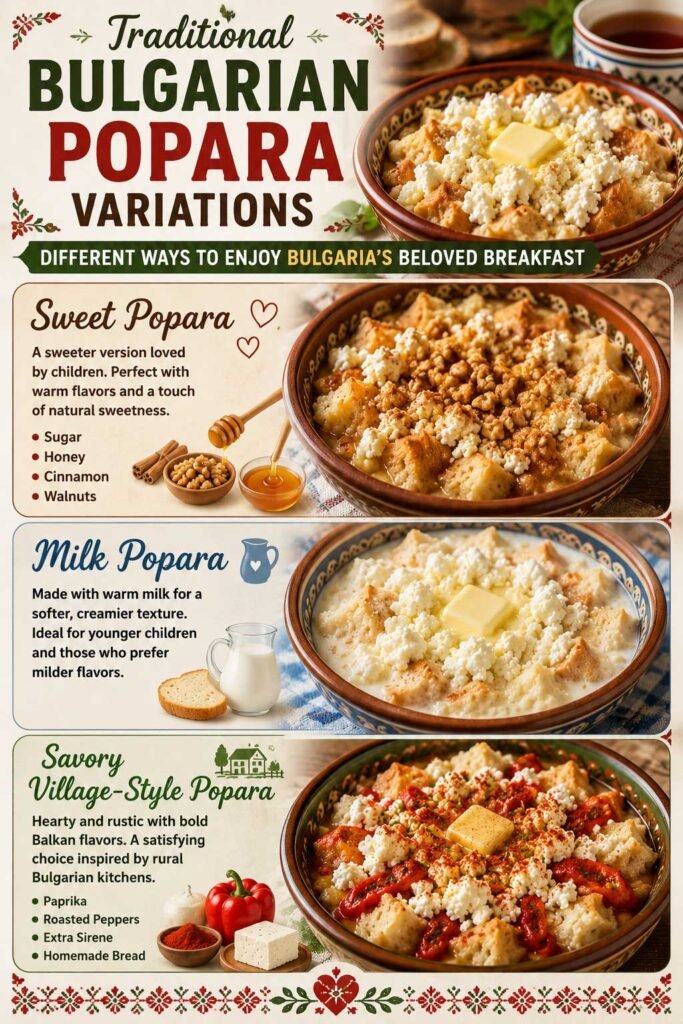
Different regions, villages, and families across Bulgaria prepare popara in their own unique way. While the classic version with tea, bread, butter, and sirene remains the most traditional, many households adapt the dish depending on local ingredients, family habits, and personal taste.
Sweet Popara
Some Bulgarian families prepare a sweeter version of popara, especially for children or lighter breakfasts. Instead of focusing on salty cheese flavors, this variation includes ingredients like honey, sugar, cinnamon, or crushed walnuts.
The warm bread absorbs the sweetened liquid while the butter creates a soft, comforting texture that feels almost like a rustic dessert breakfast. In many homes, sweet popara became a favorite winter morning meal because it was filling, inexpensive, and easy to prepare quickly before school.
Even today, many Bulgarians remember sweet popara as one of the strongest flavors of childhood.
Milk Popara
Milk popara is another classic variation found throughout Bulgaria. Instead of tea, warm milk is poured over the bread, creating a softer, creamier, and milder flavor.
This version is especially common for younger children because the milk gives the dish a gentler taste and richer texture. Some families also combine milk with a small amount of butter and white cheese for a balance between savory and creamy flavors.
The result is incredibly cozy and comforting, especially during cold mornings.
Savory Village-Style Popara
In rural parts of Bulgaria, popara is often prepared in a heartier and more rustic style. Homemade village bread, extra sirene cheese, roasted peppers, and even a sprinkle of paprika may be added to create a richer and more filling meal.
These countryside versions reflect the old Bulgarian tradition of using whatever ingredients were available in the home kitchen. The flavors tend to be stronger, smokier, and more robust compared to simpler urban versions.
Rustic regional dishes like Bulgarian Patatnik share the same homemade village cooking traditions found throughout the Rhodope Mountains.
For many people, village-style popara represents authentic Bulgarian comfort food at its most traditional — humble ingredients transformed into something deeply satisfying and full of warmth.
Now that you know the history, variations, and traditional techniques behind Bulgarian popara, it’s time to make this cozy Balkan breakfast at home.

Popara
Equipment
- 1 Teapot or saucepan
- 1 Large mixing bowl
- 1 Knife
- Serving bowls
Ingredients
- 4 cups One- or two-day-old or fresh bread (torn into pieces)
- 2 cups hot milk, water or hot black tea or herbal tea
- 3 tbsp butter
- 1 tsp sugar or honey
- 1 cup Bulgarian feta cheese (sirene) (crumbled)
- Pinch of salt if needed
Instructions
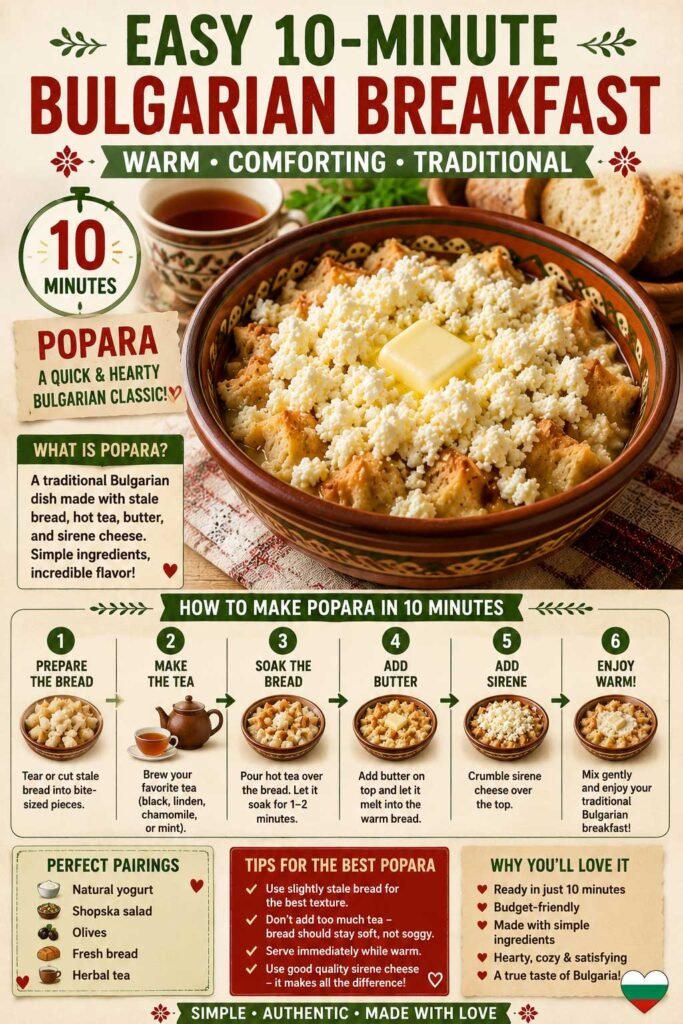
- Heat the milk or tea until very warm. If using herbal tea, allow it to steep fully before assembling the dish.
- Tear stale bread into small bite-sized pieces and place them in a large bowl. The uneven texture actually helps the bread absorb the tea more naturally.
- Place butter pieces over the bread while everything is still warm.
- This allows the butter to melt evenly throughout the dish.
- Slowly pour the hot tea over the bread. The bread should soften but not completely dissolve. Allow it to sit for about 1–2 minutes.
- Generously crumble sirene cheese over the top. The salty cheese balances the soft buttery bread beautifully.
- Serve immediately while warm.
Notes
- Slightly stale bread creates the best texture.
- Bulgarian sirene gives the most authentic flavor.
- Herbal teas like mint, chamomile, or linden are traditional choices.
- Popara is best enjoyed fresh immediately after preparation.
Traditional Tea & Popara Preparation Tools
Traditional Bulgarian popara is incredibly simple, but the right tea tools and serving dishes can make the breakfast feel far more authentic and cozy.
| Product | Why It Works | Check Price |
|---|---|---|
| Stainless Steel Tea Kettle | Perfect for brewing traditional herbal or black tea for popara | Check Price on Amazon |
| Ceramic Bulgarian-Style Bowls | Creates an authentic rustic Balkan presentation | Check Price on Amazon |
| Loose Leaf Herbal Tea Sampler | Great for traditional mint, chamomile, and linden teas | Check Price on Amazon |
| Rustic Wooden Serving Tray | Beautiful for serving traditional Balkan breakfasts | Check Price on Amazon |
| Traditional Tea Cups Set | Enhances the cozy village-style breakfast atmosphere | Check Price on Amazon |
Small traditional details can completely change the experience of homemade popara and make the meal feel far more authentic and memorable.
Common Mistakes to Avoid When Making Popara
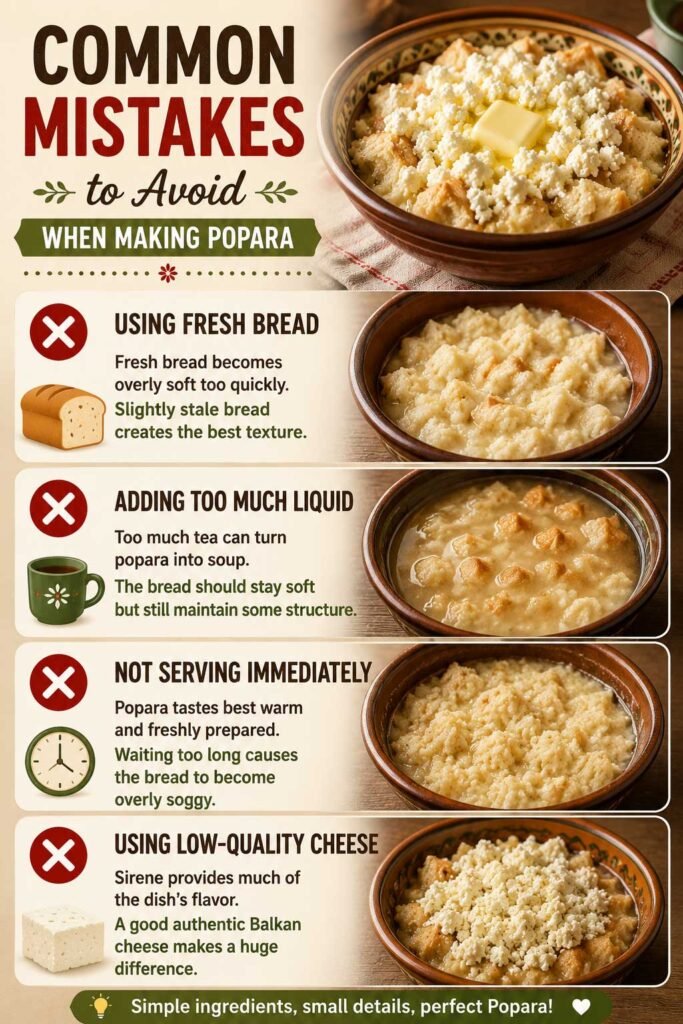
Even though Bulgarian popara is one of the simplest traditional Balkan breakfasts, a few small mistakes can completely change the texture and flavor of the dish. Because the recipe relies on only a handful of ingredients, each step matters more than people often expect.
Using Fresh Bread
One of the most common mistakes is using fresh bread straight from the bakery. Fresh bread absorbs liquid too quickly and often turns mushy within seconds.
Slightly stale bread works much better because it softens gradually while still keeping some texture and structure. This creates the classic comforting consistency authentic popara is known for.
Adding Too Much Liquid
Too much tea or milk can easily turn popara into a soup-like mixture instead of a soft breakfast bowl.
The goal is for the bread to become tender and moist while still maintaining visible pieces and some bite. Pouring the liquid slowly and gradually helps control the final consistency much better.
Traditional Bulgarian popara should feel cozy and soft, not watery.
Not Serving Immediately
Popara tastes best when served fresh and warm right after preparation.
If it sits too long, the bread continues absorbing liquid and can become overly soggy and heavy. The melted butter and cheese also lose some of their creamy texture as the dish cools.
For the best experience, popara should go from the bowl to the table almost immediately.
Using Low-Quality Cheese
Sirene cheese provides much of the dish’s signature Balkan flavor, so the quality of the cheese makes a huge difference.
Authentic Bulgarian sirene adds the perfect salty and creamy contrast to the warm bread and butter. Low-quality substitutes often taste bland or overly salty without the rich texture traditional popara needs.
In many Bulgarian homes, the cheese is considered just as important as the bread itself.
Homemade Bread & Breakfast Essentials
Since bread is the foundation of great popara, many Bulgarian families prefer using homemade or rustic bakery-style loaves for the best texture and flavor.
| Product | Why It Works | Check Price |
|---|---|---|
| Dutch Oven Bread Baking Pot | Helps create rustic homemade bread with crispy crust | Check Price on Amazon |
| Bread Knife for Artisan Loaves | Perfect for cutting rustic village-style bread | Check Price on Amazon |
| Bread Storage Box | Keeps bread fresh longer before making popara | Check Price on Amazon |
| Sourdough Starter Kit | Excellent for homemade Balkan-style bread | Check Price on Amazon |
| Large Wooden Cutting Board | Ideal for bread preparation and serving | Check Price on Amazon |
Many traditional Bulgarian families originally made popara using homemade bread baked earlier in the week, giving the dish even more depth and character.
Like many traditional Balkan breakfasts, popara is often served as part of a larger cozy morning spread shared with family.
What to Serve With Bulgarian Popara
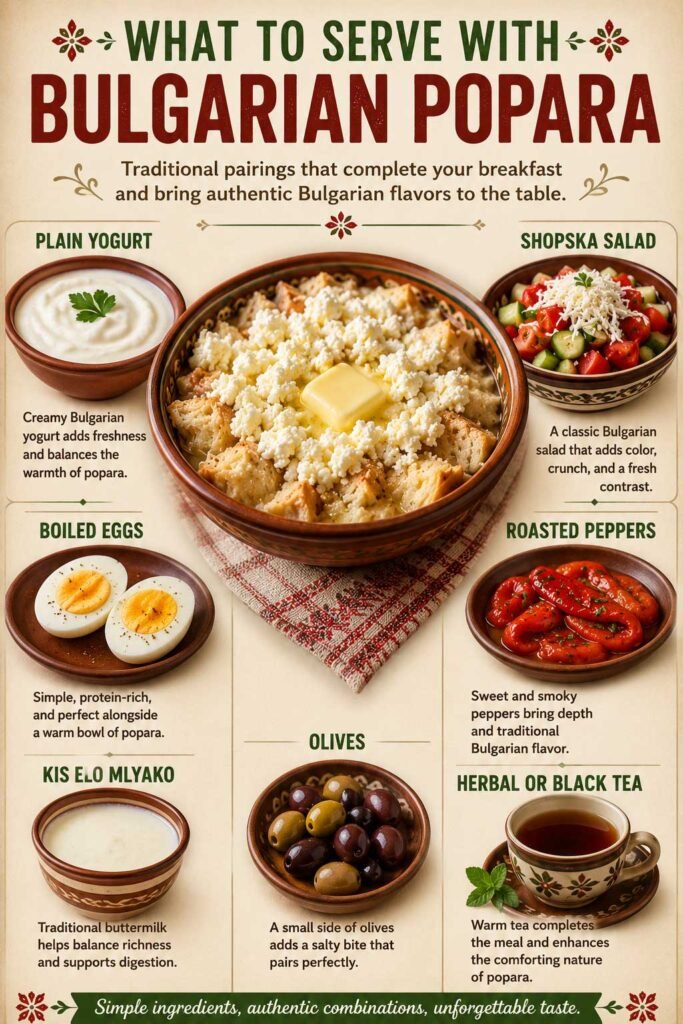
Bulgarian popara is usually enjoyed as a complete breakfast on its own, but it also pairs beautifully with traditional Balkan drinks and side dishes.
Many Bulgarians enjoy popara with yogurt, especially thick Bulgarian yogurt that adds coolness against the warm bread and tea. Fresh tomatoes, cucumbers, olives, and roasted peppers also pair naturally with the salty sirene cheese.
Thick homemade yogurt plays a major role in Bulgarian cuisine, and you can learn more about it in this detailed Bulgarian Yogurt Guide.
For drinks, traditional herbal teas work wonderfully alongside the dish. Mint tea and chamomile are especially popular during colder months.
In village homes, popara is often served during relaxed family breakfasts where multiple small dishes are shared around the table.
Rustic Balkan Kitchen Favorites
Part of the charm of Bulgarian popara comes from the cozy countryside atmosphere traditionally surrounding the meal.
| Product | Why It Works | Check Price |
|---|---|---|
| Rustic Linen Table Runner | Adds traditional Balkan countryside atmosphere | Check Price on Amazon |
| Handmade Wooden Spoons | Perfect for serving warm comfort breakfasts | Check Price on Amazon |
| Traditional Clay Serving Bowls | Ideal for authentic Balkan food presentation | Check Price on Amazon |
| Farmhouse Bread Basket | Great for serving rustic stale bread the traditional way | Check Price on Amazon |
| Vintage-Style Kitchen Towels | Completes the cozy Bulgarian breakfast aesthetic | Check Price on Amazon |
A warm rustic setup makes popara feel less like a simple recipe and more like a true Balkan family breakfast experience.
Is Bulgarian Popara Healthy?
Popara can be a surprisingly balanced traditional breakfast when made with quality ingredients.
Despite its simplicity, traditional popara contains a surprisingly balanced combination of carbohydrates, protein, healthy fats, and calcium that helped generations of Bulgarians start the day feeling full and energized.
| Nutrient | Source |
|---|---|
| Carbohydrates | Bread |
| Protein | Sirene cheese |
| Healthy fats | Butter |
| Calcium | Cheese |
| Hydration | Tea |
Because it uses simple ingredients without heavy processing, many people consider popara a more wholesome alternative to sugary breakfast cereals.
Using homemade bread and authentic Bulgarian dairy products makes the dish even more nutritious.
Storage and Reheating Tips
Popara is best eaten fresh immediately after preparation.
Because the bread continues absorbing liquid over time, storing leftovers is generally not recommended.
If necessary:
| Storage Method | Time |
|---|---|
| Refrigerated | Up to 1 day |
To reheat, warm gently on the stove with a small amount of additional tea or milk.
However, freshly made popara always delivers the best flavor and texture.
Bulgarian Popara vs Other Balkan Versions
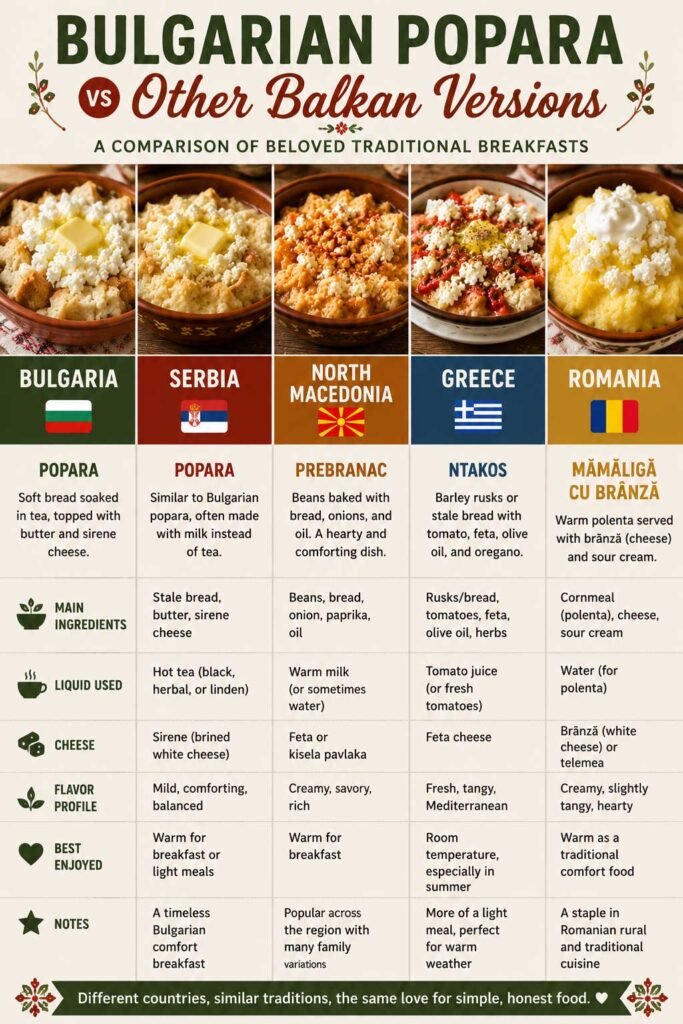
| Country | Common Liquid | Cheese Type |
|---|---|---|
| Bulgaria | Tea | Sirene |
| Serbia | Milk or tea | White cheese |
| Bosnia | Milk | Kajmak or cheese |
| North Macedonia | Tea | White brined cheese |
Bulgarian popara is especially recognizable because of its strong connection to herbal tea and authentic Bulgarian sirene.
Pro Tips for the Best Popara
| Tip | Why It Helps |
|---|---|
| Use day-old bread | Better texture |
| Add butter before liquid | Even melting |
| Use authentic sirene | Traditional flavor |
| Pour liquid gradually | Prevents sogginess |
| Serve immediately | Best consistency |
Frequently Asked Questions
What does popara taste like?
Popara tastes warm, buttery, soft, slightly salty, and comforting. The tea adds subtle aroma while the sirene cheese provides richness.
Can I use feta instead of sirene?
Yes, feta is the closest substitute if authentic Bulgarian sirene is unavailable.
Is popara sweet or savory?
Traditional Bulgarian popara is usually savory, although sweet versions also exist.
Can I make popara with milk?
Absolutely. Milk popara is common throughout the Balkans and creates a creamier texture.
Why is stale bread used?
Stale bread absorbs liquid better and prevents the dish from becoming overly mushy.
If you enjoy exploring authentic regional breakfasts, don’t miss these classic Balkan Breakfast Ideas for more traditional morning dishes from across the Balkans.
Final Thoughts
Bulgarian popara proves that some of the most memorable foods come from the simplest ingredients.
With just bread, tea, butter, and cheese, this traditional Balkan breakfast creates warmth, comfort, and nostalgia that generations of Bulgarians still treasure today.
What makes popara special is not complexity or expensive ingredients. It is the feeling the dish creates — cozy mornings, family kitchens, winter comfort, and old Bulgarian traditions passed from one generation to the next.
Even in modern times, popara remains one of the purest examples of Balkan comfort food.
For many Bulgarians, even the smell of warm tea and melted butter over bread can instantly bring back memories of childhood mornings at their grandparents’ table.
If you enjoy traditional Bulgarian recipes filled with history and authentic flavor, this Bulgarian Popara Recipe deserves a place in your kitchen.
Explore More Traditional Bulgarian Recipes
If you enjoyed this Bulgarian Popara Recipe, be sure to explore more dishes from traditional Bulgarian cuisine, where simple ingredients, rich history, and comforting homemade flavors come together in unforgettable ways.
Did You Try This Bulgarian Popara Recipe?
Tried this Bulgarian Popara Recipe? Leave a comment below and share your favorite way to enjoy this cozy Balkan breakfast. Whether your family prefers the classic tea version, creamy milk popara, or a sweeter childhood-style variation, we’d love to hear how you serve it at home.
And don’t forget to follow us for more traditional Balkan recipes, authentic Bulgarian comfort food, and old-fashioned dishes passed down through generations.
Inspiration: foodfuntravel.com
