


Greek Potato and Almond Dip (Skordalia)
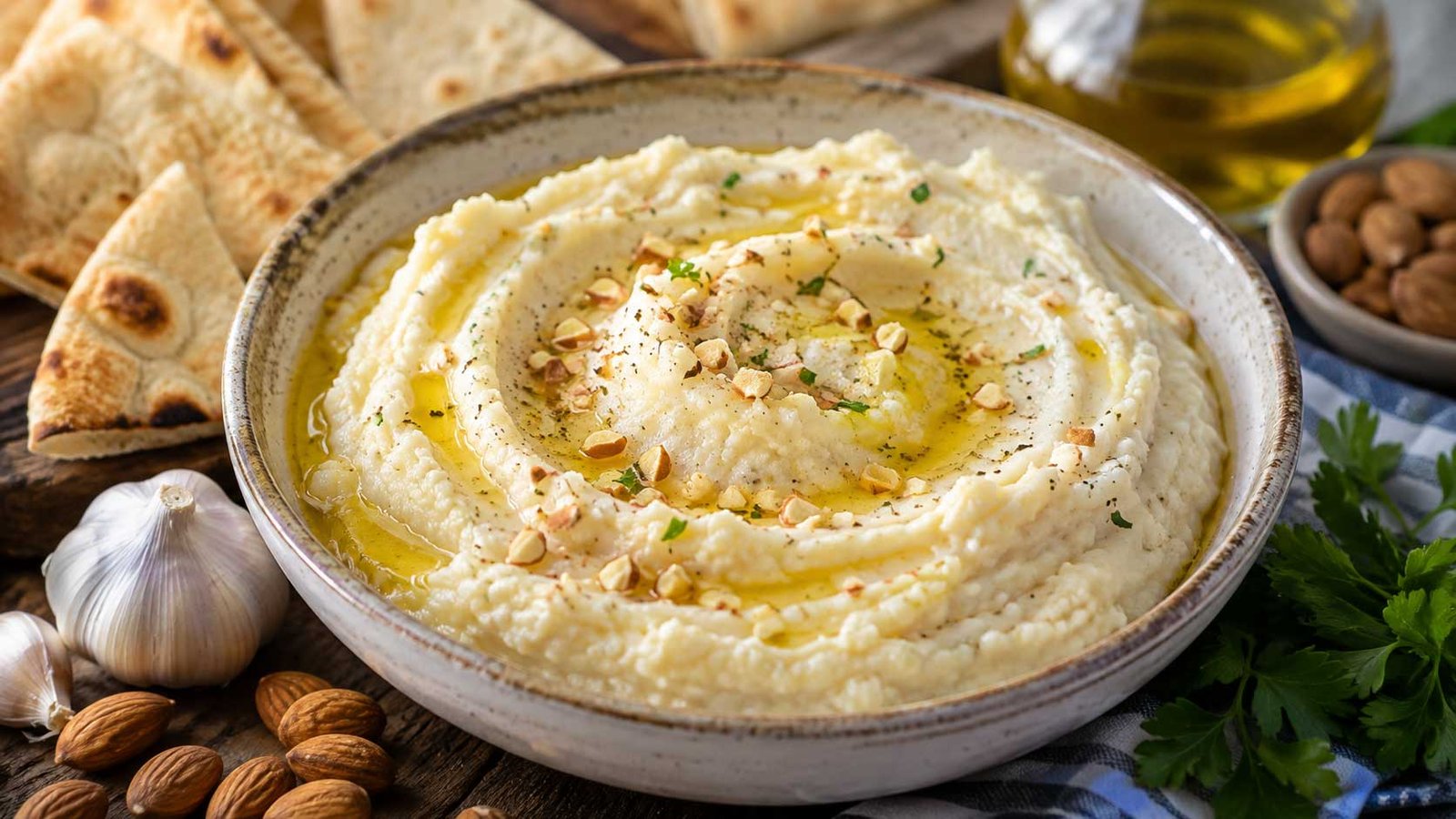
Greek Skordalia, also known as Greek Potato and Almond Dip, is a creamy garlic dip made with tender potatoes, finely ground almonds, extra virgin olive oil, and a splash of red wine vinegar. This traditional Greek favorite has a rich, smooth texture and a bold garlic flavor that pairs beautifully with fried fish, fresh vegetables, or warm pita bread.
The ingredients often depend on family traditions and regional preferences. Some cooks prefer a thick, rustic dip with plenty of garlic, while others make a smoother version with a little more olive oil or lemon juice. There isn’t just one way to prepare Skordalia, and that variety is part of its appeal.
Why You’ll Love This Greek Skordalia Recipe
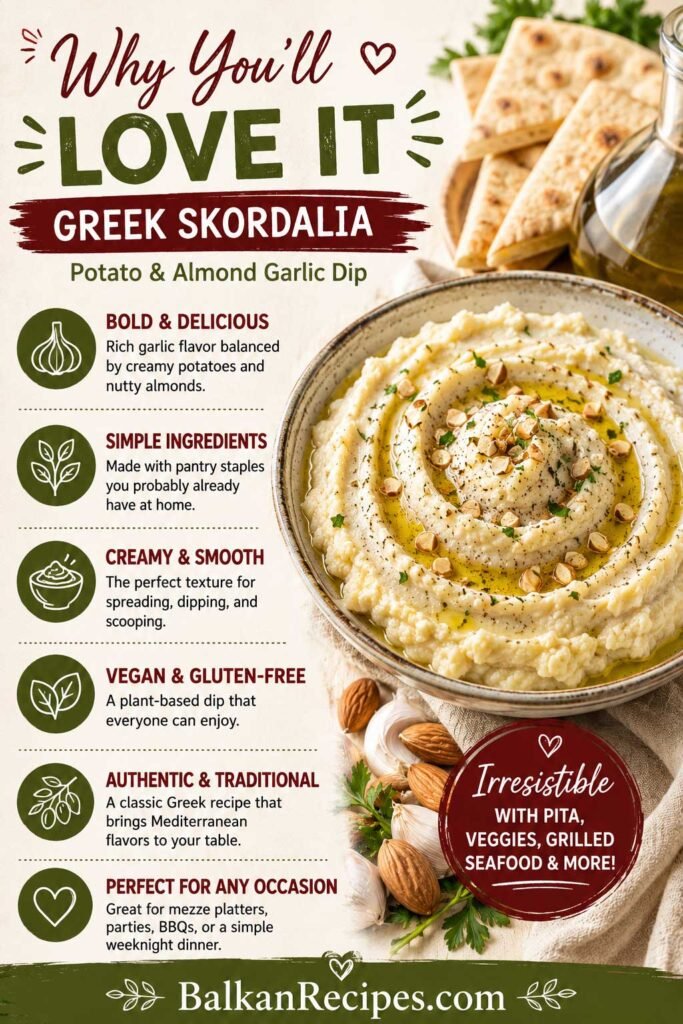
This Greek Skordalia recipe combines simple Mediterranean ingredients into a rich, creamy dip with bold garlic flavor. Tender potatoes, almonds, extra virgin olive oil, and red wine vinegar create a smooth texture and a delicious balance of savory and tangy notes. Whether you’re serving it as an appetizer, side dish, or part of a Greek mezze platter, this traditional favorite has plenty of reasons to be loved.
Authentic Greek Flavor
Potatoes, almonds, garlic, and olive oil might seem like an unusual combination, but they work beautifully together. The result is a rich, savory dip with just enough tang from the vinegar to balance the garlic.
Wonderfully Creamy Texture
Mashed potatoes blended with high-quality extra virgin olive oil produce a silky, smooth consistency that’s perfect for dipping, spreading, or serving alongside your favorite dishes.
Surprisingly Easy to Make
There’s nothing complicated about making Skordalia. Once the potatoes are cooked and the almonds are finely ground, you simply combine everything and gradually whisk in the olive oil.
Naturally Dairy-Free
Traditional Skordalia contains no butter, cream, or cheese. The creamy texture comes entirely from potatoes and olive oil, making it a great option for those avoiding dairy.
Perfect for Many Meals
Serve it with warm pita bread, fresh vegetables, grilled meats, fried fish, roasted vegetables, or as part of a Mediterranean mezze platter. It pairs beautifully with a wide variety of dishes.
For a complete Mediterranean meal, serve this creamy garlic dip alongside Greek Chicken Skewers and a fresh salad.
Great for Entertaining
You can prepare Skordalia a few hours before guests arrive and keep it refrigerated until needed. Let it sit out briefly before serving so the texture softens and the flavors come through.
Rich in Mediterranean Ingredients
Extra virgin olive oil, garlic, and almonds are staple ingredients of the Mediterranean diet, adding both incredible flavor and wholesome nutrition to every bite.
Easy to Customize
You can adjust the amount of garlic, swap almonds for walnuts, add fresh herbs, or brighten the dip with extra lemon juice to suit your personal taste while keeping its traditional character.
Affiliate Disclosure: This article may contain affiliate links. If you purchase through these links, I may earn a small commission at no additional cost to you.
The History of Greek Skordalia
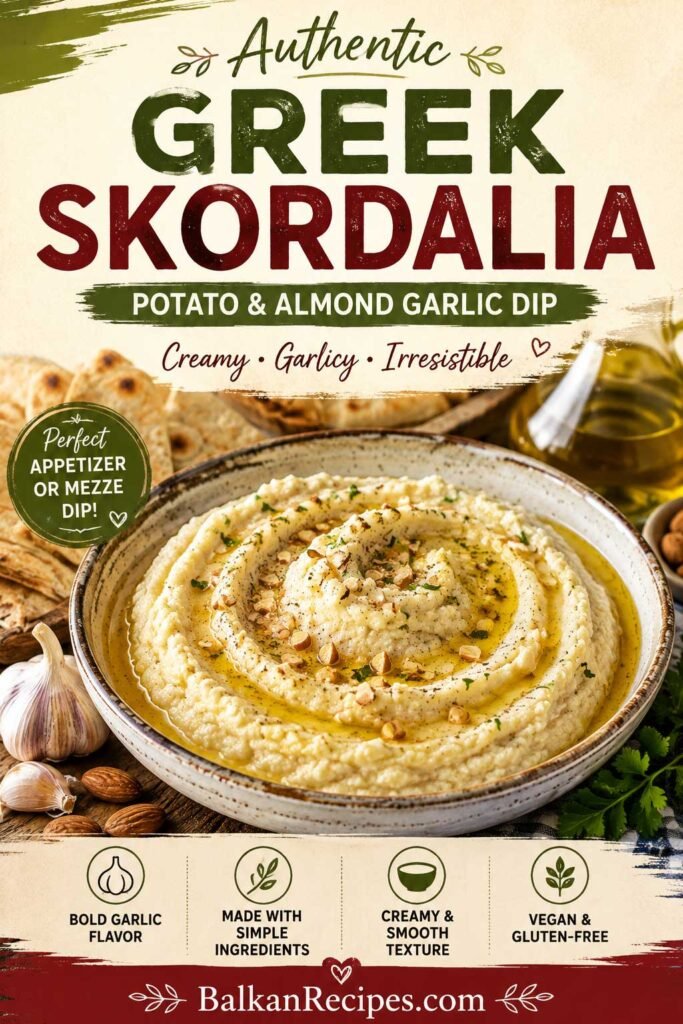
Skordalia has been part of Greek cooking for generations, with different versions prepared throughout the country. Although potatoes are commonly used today, the dip can also be made with soaked bread, walnuts, or almonds. Garlic and olive oil give each variation its distinctive flavor.
The ingredients often depend on family traditions and regional preferences. Some cooks prefer a thick, rustic dip with plenty of garlic, while others make a smoother version with a little more olive oil or lemon juice. There isn’t just one way to prepare Skordalia, and that variety is part of its appeal.
One of the most famous traditions surrounding Skordalia is its association with Greek Independence Day on March 25, when it is traditionally served with fried salt cod (Bakaliaros Skordalia). This classic pairing has become a symbol of Greek home cooking and remains a favorite holiday meal across the country.
Today, Skordalia is enjoyed year-round as part of a mezze platter, served with grilled seafood, roasted vegetables, or warm pita bread. Its bold garlic flavor, creamy texture, and simple ingredients continue to make it one of the most recognizable and cherished recipes in Greek cuisine.
Ingredients You’ll Need
Making authentic Greek Skordalia requires just a few simple ingredients, but each one plays an important role in creating its rich texture and bold Mediterranean flavor.
Russet Potato
Russet potatoes are ideal because their high starch content creates a light, fluffy texture that blends beautifully with the olive oil. Be sure to cook them until fork-tender for the smoothest dip.
Raw Almonds
Almonds give this Skordalia a mild, nutty flavor and help thicken the dip. Blanching makes the skins easier to remove, while grinding them finely prevents large pieces from affecting the creamy texture.
Fresh Garlic
Garlic is the defining ingredient in Skordalia. Freshly pressed cloves deliver the bold, pungent flavor that makes this traditional Greek dip so distinctive. You can adjust the amount depending on how strong you prefer the garlic flavor.
Extra Virgin Olive Oil
A good-quality extra virgin olive oil gives the dip its silky texture and authentic Mediterranean taste. Slowly incorporating the oil helps create a smooth, emulsified mixture.
Because olive oil is such an important part of this recipe, choose one with a flavor you enjoy. A good-quality extra virgin olive oil adds richness and helps bring the potatoes, almonds, and garlic together.
Red Wine Vinegar
A splash of red wine vinegar adds brightness and balances the richness of the potatoes and olive oil. Some regional versions substitute fresh lemon juice or a combination of both.
Salt
Salt enhances all the flavors and brings the potatoes, almonds, and garlic together into a perfectly seasoned dip. Taste and adjust before serving.
Helpful Tools for Making Greek Skordalia
You don’t need much equipment to make this traditional Greek dip, but a few simple kitchen tools can make preparation easier.
- Potato Ricer – Helps create smooth, fluffy mashed potatoes without overmixing.
- Mini Food Processor – Quickly grinds almonds into a fine texture.
- Garlic Press – Makes it easy to prepare fresh garlic for the dip.
These tools are also useful for preparing other Mediterranean recipes.
How to Make Greek Skordalia
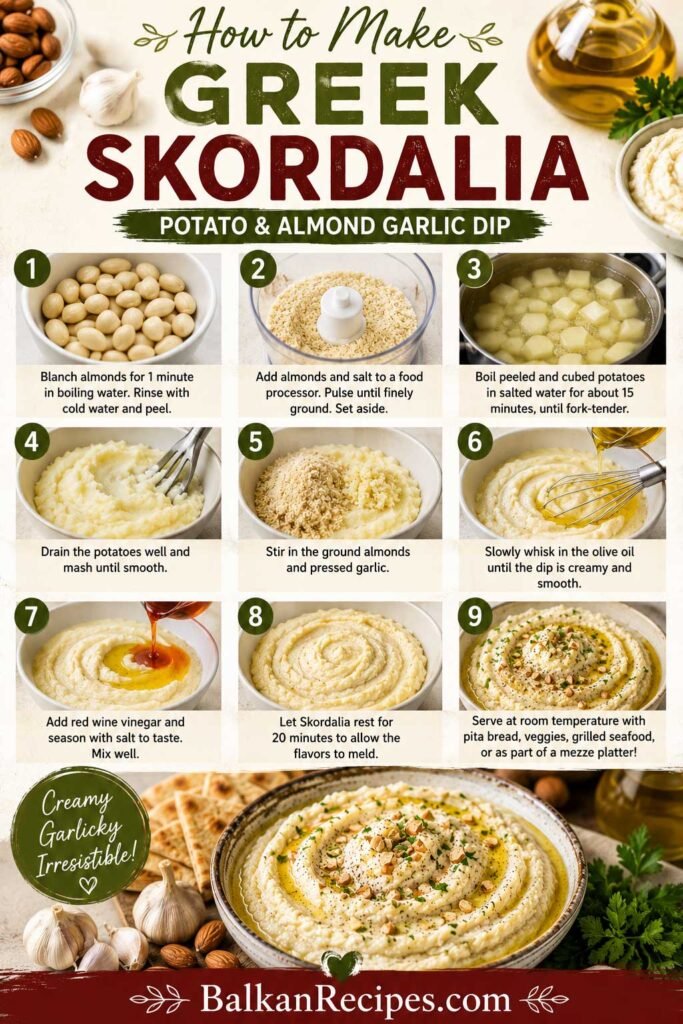
1. Blanch the Almonds
Bring a small pot of water to a boil and add the raw almonds for about one minute. Drain, rinse under cold water, remove the skins if needed, and pat the almonds dry with a clean kitchen towel.
2. Grind the Almonds
Place the almonds in a food processor with the salt and pulse until they become finely ground. Avoid over-processing into almond butter.
A small food processor makes grinding the almonds much easier. Pulse them in short bursts until finely ground, stopping before they turn into almond butter.
3. Cook the Potatoes
Place the peeled, cubed potatoes in a pot of lightly salted water. Bring to a boil and cook until they are fork-tender, about 15 minutes. Drain thoroughly to remove excess moisture.
4. Mash and Combine
Transfer the hot potatoes to a large bowl and mash until smooth. Stir in the ground almonds and pressed garlic until everything is evenly combined.
5. Add the Olive Oil
Gradually whisk in the extra virgin olive oil a little at a time. This helps create the smooth, creamy texture that Skordalia is known for.
6. Finish with Vinegar
Stir in the red wine vinegar, taste, and season with additional salt if needed. Mix until the dip is smooth and well blended.
7. Serve
Transfer the Skordalia to a serving bowl and drizzle with a little extra virgin olive oil if desired. Serve at room temperature with warm pita bread, fresh vegetables, grilled seafood, or roasted meats.
Greek Skordalia Recipe (Potato and Almond Garlic Dip)
Ingredients
- ½ cup raw almonds
- 1 medium russet potato peeled and cubed
- 5 garlic cloves peeled and pressed
- 1 cup extra virgin olive oil added gradually (use as needed)
- 1 tablespoon red wine vinegar
- ½ teaspoon salt or to taste
Instructions
- Blanch the almonds. Bring a small saucepan of water to a boil. Add the almonds and blanch for 1 minute. Drain, rinse under cool water, and slip off the skins.
- Grind the almonds. Place the peeled almonds in a food processor with a pinch of salt. Pulse until finely ground, scraping down the sides as needed.
- Cook the potato. Place the cubed potato in a saucepan of lightly salted water. Bring to a boil and cook for approximately 15–20 minutes, or until fork-tender.
- Mash the potato. Drain thoroughly and let excess moisture evaporate. Mash the warm potato until smooth using a potato masher or ricer.
- Combine the ingredients. Add the ground almonds and pressed garlic to the mashed potato. Stir until evenly combined.
- Add the olive oil. Slowly whisk in the extra virgin olive oil, a little at a time, until the Skordalia becomes creamy and reaches your preferred consistency. You may not need the entire cup.
- Finish with vinegar. Stir in the red wine vinegar. Taste and adjust the salt, garlic, or vinegar if necessary.
- Rest and serve. Let the Skordalia rest for 20–30 minutes to allow the flavors to develop. Serve at room temperature with pita bread, vegetables, or seafood.
Notes
- Potatoes: Russet potatoes work well because their starchy texture creates a light, creamy dip.
- Garlic: Five cloves produce a strong garlic flavor. Start with three if you prefer a milder dip.
- Texture: Avoid processing the cooked potatoes in a food processor, as this can make them gummy.
- Olive oil: Add gradually and stop when the dip reaches the desired consistency.
- Storage: Refrigerate in an airtight container for up to 3–4 days. Stir before serving.
Tips for the Best Greek Skordalia
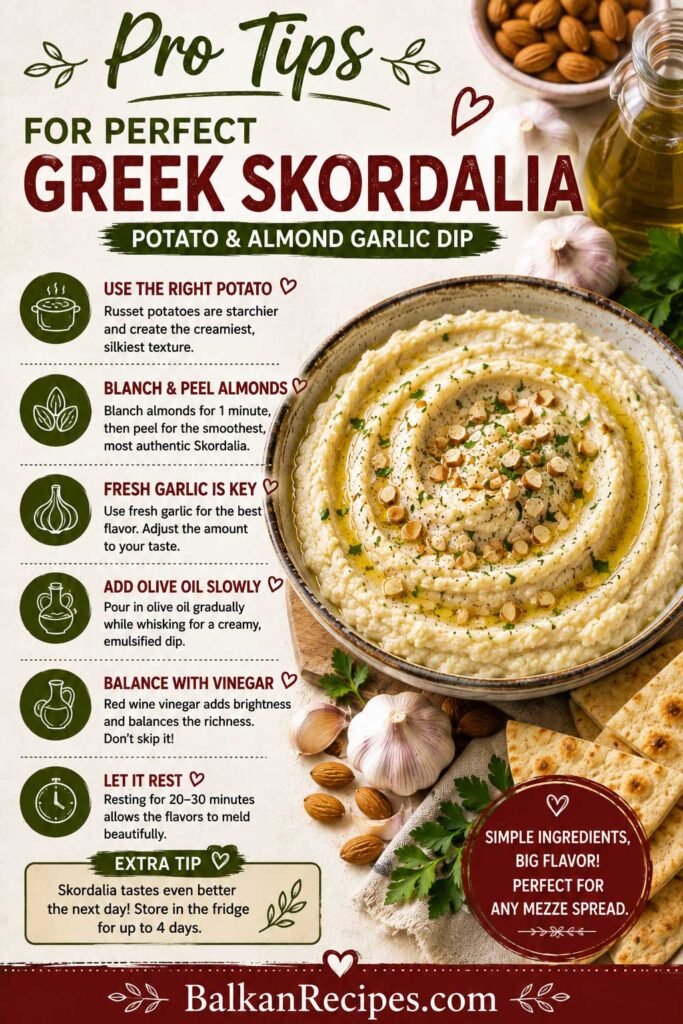
Use Starchy Potatoes
Russet potatoes produce the lightest and creamiest texture. Waxy potatoes tend to make the dip heavier and less fluffy.
Drain the Potatoes Well
After boiling, allow the potatoes to drain completely. Excess water can make the dip loose and dilute its rich flavor.
Mash While Warm
Mash the potatoes immediately after draining while they are still hot. Warm potatoes absorb the olive oil more easily, resulting in a smoother consistency.
For an especially smooth Skordalia, a potato ricer is a handy kitchen tool. It breaks the cooked potatoes into fine, fluffy pieces without overworking them, helping you avoid the sticky texture that can develop with excessive mixing.
Add the Olive Oil Gradually
Whisk the olive oil in slowly rather than pouring it all at once. This helps create a silky, emulsified dip.
Use Fresh Garlic
Freshly pressed garlic provides the strongest and most authentic flavor. Avoid garlic powder, which lacks the same depth and aroma.
Taste Before Serving
Garlic becomes slightly milder as the dip rests. Taste the Skordalia before serving and adjust the seasoning with a little extra salt, vinegar, or olive oil if needed.
Let It Rest
Allow the dip to sit for 20 to 30 minutes before serving. This gives the flavors time to blend together for an even better taste.
Serve at Room Temperature
Skordalia has its best flavor and texture when served at room temperature rather than straight from the refrigerator.
Common Mistakes to Avoid
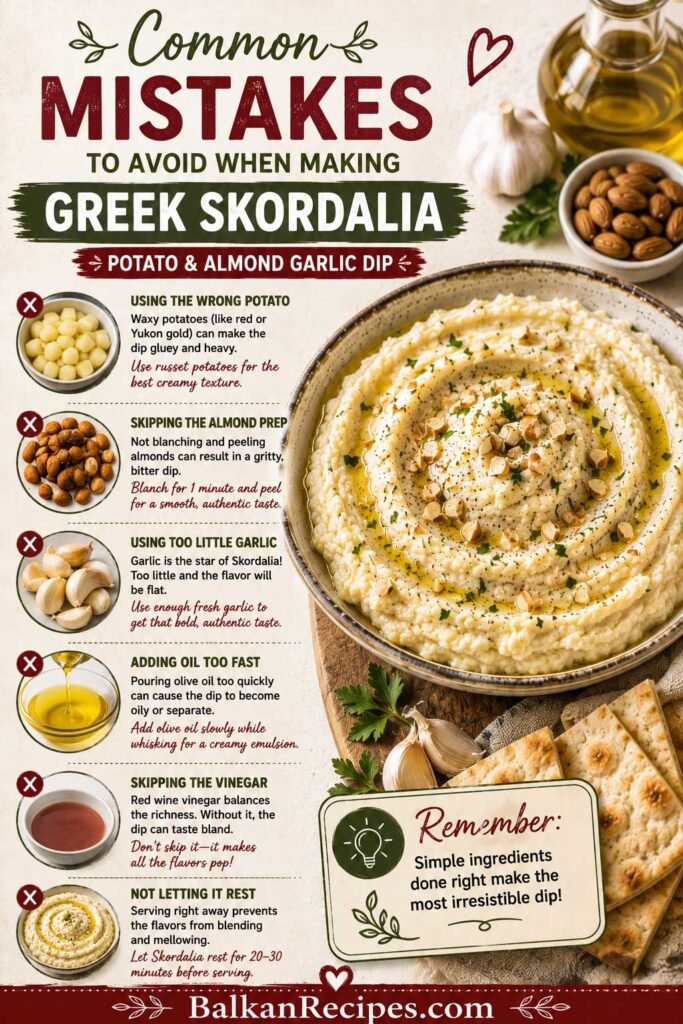
Using the Wrong Type of Potato
Waxy potatoes can make the dip dense and slightly gummy. Starchy varieties like russet potatoes create the smooth, fluffy texture that traditional Skordalia is known for.
Overprocessing the Almonds
Pulse the almonds only until they are finely ground. Processing them for too long can release their natural oils and turn them into almond butter.
Leaving Excess Water in the Potatoes
Poorly drained potatoes can make the dip watery and reduce its rich flavor. Always drain them thoroughly before mashing.
Adding the Olive Oil Too Quickly
Pouring all of the olive oil in at once can prevent the mixture from becoming smooth and creamy. Add it gradually while whisking continuously.
Using Too Much Garlic
Garlic is the signature flavor of Skordalia, but adding too much can overpower the potatoes and almonds. Start with the recipe amount and adjust to your taste if desired.
Underseasoning the Dip
Potatoes absorb a surprising amount of salt. Taste the finished Skordalia before serving and adjust the seasoning if needed.
Serving It Cold
Cold temperatures dull the flavors and make the dip firmer. Let it sit at room temperature for a short time before serving for the best flavor and consistency.
Not Allowing the Dip to Rest
Skordalia can taste quite sharp immediately after mixing, especially when made with raw garlic. Giving it 20–30 minutes to rest allows the flavors to settle and blend. Taste it again before serving, as you may want to adjust the vinegar or salt.
Recipe Variations
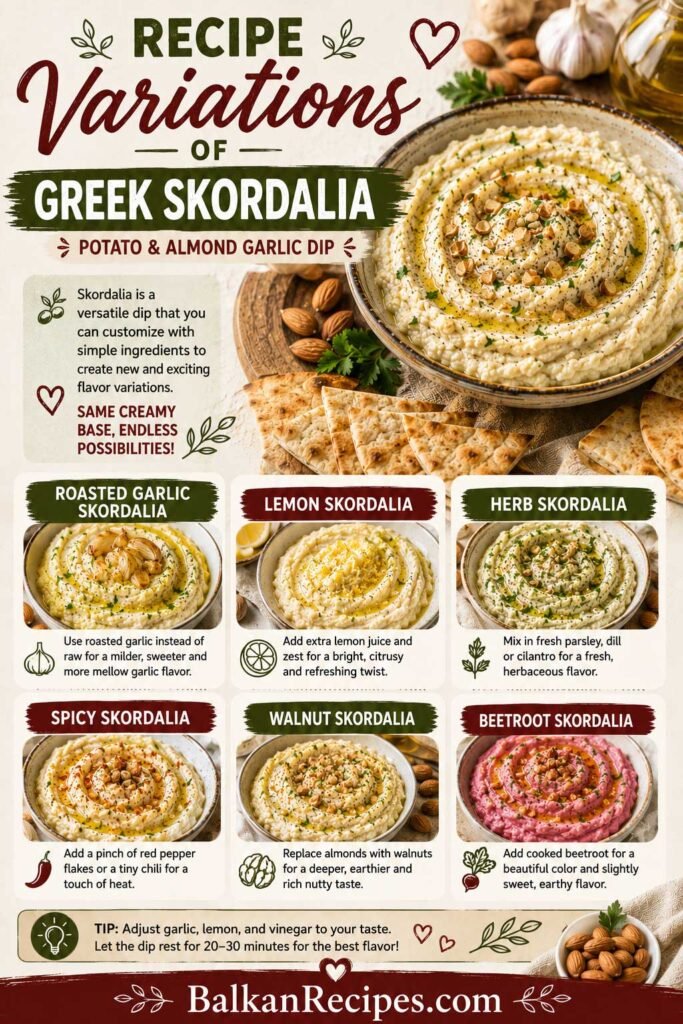
Traditional Greek Skordalia
For the most authentic version, follow the classic recipe using potatoes, garlic, almonds, extra virgin olive oil, red wine vinegar, and salt. It’s simple, creamy, and full of traditional Greek flavor.
Walnut Skordalia
Replace the almonds with walnuts for a richer, earthier flavor. This variation is popular in some parts of Greece and pairs especially well with grilled meats and roasted vegetables.
Lemon Skordalia
Substitute part or all of the red wine vinegar with freshly squeezed lemon juice for a brighter, fresher flavor that complements grilled fish and seafood beautifully.
Bread-Based Skordalia
Some traditional recipes use day-old bread instead of potatoes. The soaked bread creates a lighter texture while still delivering the classic garlic flavor.
Roasted Garlic Version
Roast the garlic before adding it to the potatoes for a milder, sweeter flavor that’s perfect for those who prefer less pungency.
Herb Skordalia
Blend in fresh parsley or dill for extra color and a fresh herbal note that works well with spring and summer meals.
Extra Creamy Skordalia
For an especially smooth texture, pass the cooked potatoes through a potato ricer before adding the other ingredients. Whisk in the olive oil gradually until the dip becomes creamy. Avoid blending cooked potatoes in a food processor, as overmixing can make them sticky or gummy.
Spicy Skordalia
Add a pinch of crushed red pepper flakes or a small amount of cayenne pepper to give the dip a gentle kick without overpowering its traditional flavor.
What to Serve with Greek Skordalia
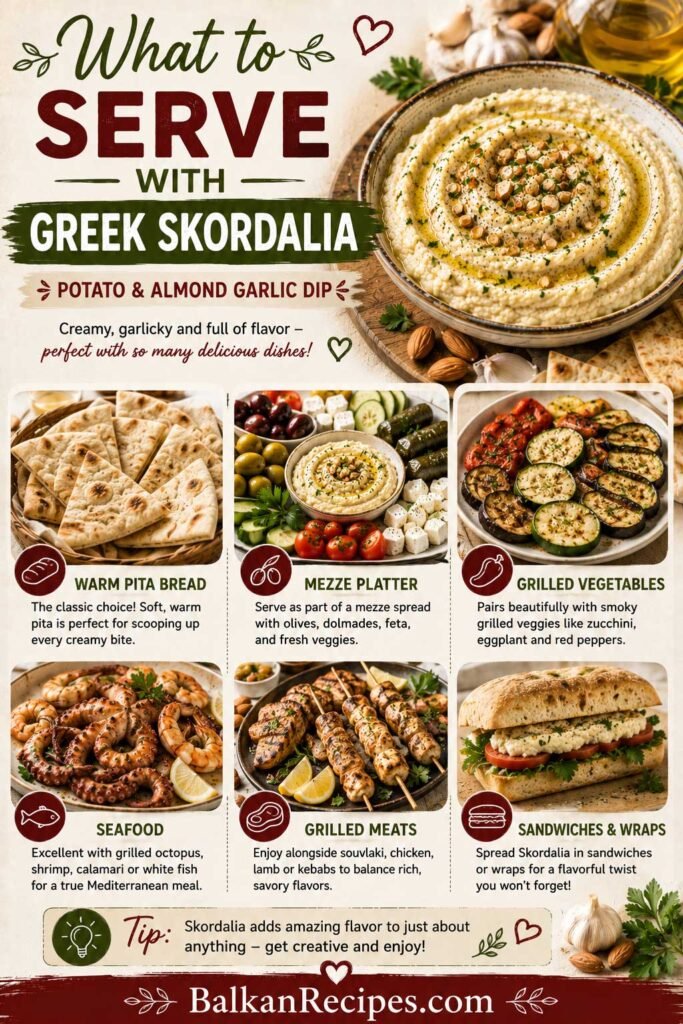
One of the best things about Skordalia is how many dishes it goes with. Its strong garlic flavor is especially good with fish, but it’s just as delicious with grilled vegetables, warm bread, or roasted meat. You can even spread a little inside a sandwich for something different.
Warm Pita Bread
Soft, warm pita is one of the most popular ways to enjoy Skordalia. Tear the bread into pieces and use it to scoop up the creamy dip.
You can also serve Skordalia with homemade flatbread or alongside Greek Tzatziki for a delicious Mediterranean dip pairing.
Fresh Vegetable Platter
Serve Skordalia alongside crisp cucumber slices, carrots, celery, bell peppers, cherry tomatoes, and radishes for a light and refreshing appetizer.
For another refreshing side dish, try serving it with Greek Panzanella, a colorful salad that adds freshness and texture to the meal.
Grilled Fish and Seafood
This traditional garlic dip is an excellent accompaniment to grilled white fish, salmon, shrimp, calamari, or octopus. The bright garlic flavor complements seafood especially well.
Fried Cod
In Greece, Skordalia is famously served with fried salt cod during the celebration of Greek Independence Day, making it one of the country’s most iconic pairings.
Grilled Meats
Enjoy it as a flavorful sauce for grilled chicken, lamb, pork, or beef kebabs. It also pairs wonderfully with roasted meats.
If you’re planning a heartier dinner, Greek Braised Chicken Thighs are another flavorful option to serve with this garlic dip.
Roasted or Grilled Vegetables
Roasted zucchini, eggplant, asparagus, cauliflower, broccoli, and potatoes become even more delicious when served with a generous spoonful of Skordalia.
Part of a Greek Mezze Platter
Include Skordalia on a mezze board with olives, feta cheese, dolmades, hummus, tzatziki, roasted peppers, and fresh bread for an impressive Mediterranean spread.
Sandwiches and Wraps
Use Skordalia as a creamy spread in sandwiches, pita pockets, or wraps instead of mayonnaise for an extra burst of authentic Greek flavor.
Health Benefits of Greek Skordalia
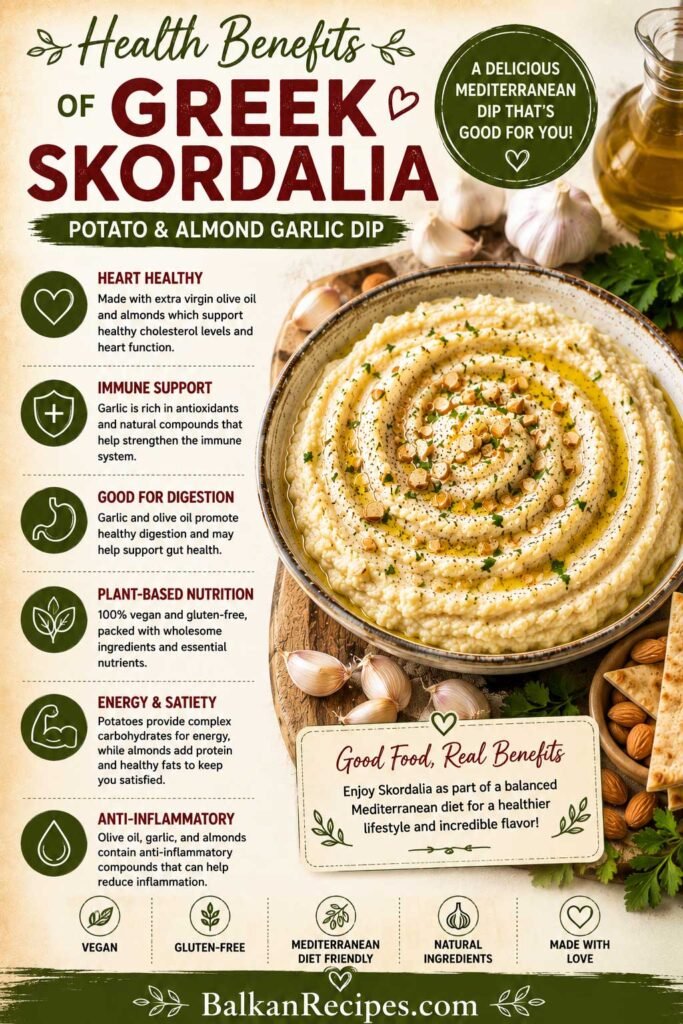
Skordalia isn’t usually the first dish that comes to mind when thinking about healthy eating, especially with its generous amount of olive oil. Still, several of its main ingredients provide useful nutrients. Almonds contain vitamin E and magnesium, potatoes provide potassium, and olive oil is rich in unsaturated fats.
The key is portion size. Skordalia is traditionally enjoyed as a dip or side dish, so a few spoonfuls alongside vegetables, fish, or another main course can fit comfortably into a balanced Mediterranean-style meal.
A Source of Heart-Healthy Unsaturated Fats
Extra virgin olive oil and almonds provide mostly unsaturated fats, including monounsaturated fats. According to the American Heart Association, replacing saturated fats with unsaturated fats can support healthier cholesterol levels and cardiovascular health.
Olive oil also contains naturally occurring plant compounds, including polyphenols, although the amounts vary depending on the oil’s quality and processing.
Provides Vitamin E and Antioxidants
Almonds are an excellent source of vitamin E, an antioxidant that helps protect cells from oxidative damage. The National Institutes of Health also identifies vitamin E as an important nutrient for normal immune function.
Extra virgin olive oil contributes additional antioxidant compounds, making these two ingredients a nutritious combination.
Contains Nutrients That Support Normal Immune Function
Fresh garlic contains sulfur compounds, including allicin, which forms when garlic is crushed or chopped. These compounds have attracted scientific interest for their potential biological effects.
However, eating garlic or Skordalia should not be considered a way to prevent or treat infections. Garlic is best appreciated as a flavorful ingredient within a balanced diet.
Provides Energy and Essential Minerals
Potatoes supply carbohydrates that the body uses for energy, along with potassium and vitamin B6. Almonds contribute magnesium, vitamin E, and a modest amount of plant-based protein.
Together, these ingredients make Skordalia a satisfying accompaniment to a meal, particularly when paired with vegetables or a protein-rich main dish.
Naturally Dairy-Free and Plant-Based
Traditional potato and almond Skordalia contains no dairy, eggs, or meat, making it suitable for vegan and dairy-free diets.
It is also naturally gluten-free when prepared with the ingredients in this recipe, although anyone with celiac disease should check for cross-contact during preparation.
Is Greek Skordalia Healthy?
Greek Skordalia can be a nutritious addition to a Mediterranean-style meal, especially when enjoyed in reasonable portions. Its olive oil and almonds provide beneficial unsaturated fats, while potatoes and garlic contribute additional nutrients and flavor.
The combination of olive oil, nuts, and vegetables reflects several principles of the Mediterranean diet, which emphasizes plant-based foods, healthy fats, and balanced meals.
However, portion size matters. A recipe containing a full cup of olive oil is relatively high in calories, even though much of its fat is unsaturated.
For a balanced serving, enjoy a small portion of Skordalia with fresh vegetables, grilled fish, or roasted vegetables rather than treating it as a main dish on its own.
How to Store Greek Skordalia
Refrigerate Properly
Transfer the Skordalia to an airtight container and refrigerate it promptly after serving. It will stay fresh for up to 3 to 4 days.
Let It Come to Room Temperature
For the best flavor and creamy texture, remove the dip from the refrigerator about 20 to 30 minutes before serving. Stir well, as the olive oil may naturally firm up when chilled.
Refresh Before Serving
If the dip seems too thick after refrigeration, stir in a small drizzle of extra virgin olive oil or a teaspoon of warm water until it reaches your desired consistency.
Can You Freeze It?
Freezing is generally not recommended. The potatoes can become grainy and the olive oil may separate after thawing, affecting both the texture and flavor.
Frequently Asked Questions About Greek Skordalia Recipe
What is Greek Skordalia?
Skordalia is a traditional Greek garlic dip made from mashed potatoes or bread blended with garlic, olive oil, vinegar or lemon juice, and often nuts such as almonds or walnuts. It is commonly served as a mezze, side dish, or accompaniment to seafood and grilled meats.
Why is my Skordalia gummy?
A gummy texture usually happens when waxy potatoes are used or when the potatoes are overmixed. Russet potatoes and gentle mixing produce the lightest, creamiest results.
Can I make Skordalia ahead of time?
Yes. In fact, Skordalia often tastes even better after resting for a few hours, allowing the garlic and olive oil to fully blend with the potatoes. Simply refrigerate it and bring it back to room temperature before serving.
Can I use walnuts instead of almonds?
Absolutely. Walnuts are a traditional alternative in many Greek regions and provide a slightly richer, earthier flavor while maintaining the creamy consistency.
Is Skordalia vegan?
Yes. Traditional potato-based Skordalia is naturally vegan and dairy-free, as it contains potatoes, garlic, olive oil, vinegar, almonds, and seasonings without any animal products.
What dishes pair best with Skordalia?
Skordalia is delicious with fried cod, grilled fish, roasted vegetables, grilled meats, pita bread, fresh vegetables, and as part of a traditional Greek mezze platter.
More Traditional Greek Recipes to Try
If you enjoyed this Greek Skordalia, here are a few more delicious Greek and Mediterranean recipes to add to your table. From creamy dips to savory pastries, these dishes are perfect for building a homemade mezze spread.
- Greek Tzatziki – A refreshing yogurt, cucumber, and garlic dip that pairs perfectly with grilled meats and warm pita bread.
- Greek Eggplant Dip (Melitzanosalata) – Smoky roasted eggplant blended with garlic, olive oil, and lemon juice.
- Greek Feta and Red Pepper Dip – A creamy, slightly spicy spread made with roasted red peppers and tangy feta cheese.
- Greek Green Beans (Fasolakia) – Tender green beans simmered in tomato sauce, olive oil, garlic, and fresh herbs.
- Greek Braised Chicken Thighs – Juicy chicken slowly cooked with Mediterranean herbs, garlic, lemon, and olives.
These Greek favorites make it easy to put together a simple mezze platter or a more substantial Mediterranean meal. Choose a couple of dips, add some warm bread and vegetables, and you’ve got plenty to share.
Did You Make This Greek Skordalia Recipe?
I’d love to hear how your Greek Skordalia (Potato and Almond Dip) turned out! Did you keep the garlic nice and strong, or use a little less for a milder flavor?
Leave a comment below and tell me what you served it with. And if you enjoyed the recipe, a star rating helps other readers decide whether to give it a try.
Happy cooking!
Recipe Inspiration: thewanderlustkitchen.com, recipeswise.com, fandom.com

