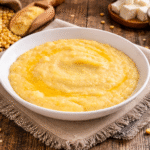
Kajmak Recipe

Kajmak is one of the most prized and distinctive dairy products in Balkan cuisine. Rich, creamy, slightly tangy, and deeply traditional, kajmak is not just a spread—it is a cultural symbol of hospitality, rural life, and centuries-old food traditions across Serbia, Bosnia, Montenegro, and surrounding regions.
Kajmak is most famously served with dishes like ćevapi and warm lepinja bread, where its creamy texture melts into the meat and enhances every bite. If you want to recreate this experience at home, explore our authentic ćevapi recipes and traditional lepinja bread recipe to build a complete Balkan meal.
Often compared to clotted cream, butter, or soft cheese, kajmak is actually something unique. It occupies a space between these categories, combining the richness of cream with the complexity of fermented dairy. Traditionally made from the upper layer of slowly heated milk, kajmak develops a luxurious texture and a flavor that can range from mild and milky to bold and slightly aged.
Whether served with ćevapi, spread on warm lepinja bread, or paired with rustic dishes like sarma or pasulj, kajmak plays a central role in Balkan cooking.
What is kajmak?
Kajmak is a traditional Balkan dairy product made by slowly heating milk and collecting the rich cream that forms on top. This cream is then layered and allowed to develop flavor over time.
Unlike butter or cream cheese, kajmak is not heavily processed. Its texture and taste depend on:
- the type of milk used
- the preparation method
- how long it is aged
Fresh kajmak is soft, smooth, and mildly sweet, while aged kajmak becomes firmer, saltier, and more complex.
Because of its unique texture and flavor, kajmak is often used in place of butter or cheese in Balkan cooking, especially when paired with grilled meats or spread inside fresh bread like lepinja.
It is most commonly found in:
- Serbia
- Bosnia and Herzegovina
- Montenegro
but variations exist throughout the region.
History of kajmak
The history of kajmak in the Balkans
Kajmak is one of the oldest and most treasured dairy foods in Balkan cuisine. Long before refrigeration, industrial dairies, or commercial spreads, rural families across the Balkans developed ways to preserve the richness of fresh milk and make it last longer. Kajmak emerged from that practical tradition.
In its earliest form, kajmak was created by slowly heating fresh milk and allowing a rich cream layer to rise to the top. That upper layer was carefully lifted, collected, and stored, often in wooden or ceramic containers. Over time, this method produced a creamy, highly valued dairy product that could be eaten fresh or lightly aged. What began as a practical preservation technique eventually became a defining feature of traditional food culture in Serbia, Bosnia, Montenegro, and neighboring regions.
Kajmak became especially important in mountain and pastoral communities, where livestock played a central role in everyday life. Families with cows, sheep, or goats had regular access to fresh milk, and kajmak was one of the most delicious ways to transform that milk into something richer and more durable. In those settings, kajmak was not treated as a luxury in the modern sense, but it was absolutely considered a prized household food. It was often served to guests, placed on the table during celebrations, and paired with breads, grilled meats, and rustic village dishes.
Because Balkan food culture is deeply regional, kajmak developed slightly different identities depending on the country and even the village. In some places it remained soft, mild, and almost buttery when fresh. In others, it was salted and allowed to mature into a stronger, firmer product with deeper flavor. These differences created the fresh and aged styles that are still recognized today.
This traditional way of preparing and preserving dairy is closely connected to other classic Balkan foods, where simple ingredients are transformed into deeply flavorful dishes, much like sarma or slow-cooked bean dishes such as pasulj.
Kajmak also reflects the broader history of Balkan cuisine itself. The region’s food traditions were shaped by agriculture, animal husbandry, Ottoman influence, mountain life, and the need to make the most of simple ingredients. Kajmak fits that pattern perfectly. It is deeply traditional, intensely local, and built from patience rather than complexity.
Today, kajmak remains one of the most recognizable and beloved dairy foods in the Balkans. It still appears on breakfast tables, beside grilled meats like ćevapi, with warm lepinja bread, and as part of larger traditional meals. Even as modern food culture changes, kajmak continues to represent the old rural heart of Balkan cooking.
Why kajmak is so important in Balkan cuisine
Kajmak is more than just a dairy product—it is deeply tied to Balkan identity.
In traditional households, especially in rural areas, kajmak was made regularly using fresh milk from cows or sheep. It was a way to preserve and utilize dairy while creating something rich and versatile.
Kajmak is associated with:
- hospitality (served to guests)
- celebrations and gatherings
- traditional breakfasts
- grilled meat dishes
In many ways, kajmak represents the essence of Balkan food: simple ingredients transformed through time and technique into something exceptional.
What kajmak tastes like
The flavor of kajmak varies depending on its age and preparation.
Fresh kajmak is:
- creamy
- mildly sweet
- slightly buttery
Aged kajmak becomes:
- more tangy
- slightly salty
- more intense in flavor
The texture can range from soft and spreadable to thick and slightly crumbly.
This versatility is what makes kajmak so valuable—it can be used in multiple ways across different dishes.
Types of kajmak
Kajmak is not a single uniform product. Understanding the types is essential.
Fresh kajmak
Fresh kajmak is soft, light, and mild. It is usually consumed shortly after preparation and is often served with bread or breakfast dishes.
Aged kajmak
Aged kajmak is firmer and more flavorful. It develops a slightly tangy and salty profile over time and is often used in more robust dishes.
Regional variations
Fresh kajmak is often served at breakfast or alongside bread, while aged kajmak is more commonly paired with grilled meats like ćevapi, where its stronger flavor balances the richness of the dish.
Different regions produce kajmak with subtle differences:
- Serbian kajmak is often richer and more widespread
- Bosnian kajmak may vary in texture depending on local methods
- Montenegrin kajmak is often associated with mountain dairy traditions
Ingredients for traditional kajmak
Ingredients
- 2 liters whole milk (preferably unpasteurized if available)
- salt (optional, for aging)
Understanding the process (why kajmak is unique)
Kajmak is not made like typical spreads. The process relies on natural separation of cream.
When milk is slowly heated, a thick layer forms on the surface. This layer is carefully collected and stored. Over time, layers are added and may be lightly salted.
The result is a layered dairy product with complex texture and flavor.
This method has been used for generations and remains largely unchanged.
Essential tools for making kajmak
| Product | Why it helps | Best for | Price range |
|---|---|---|---|
| Heavy-bottom pot | Even milk heating | Prevent burning | $$ |
| Wooden spoon | Gentle stirring | Traditional method | $ |
| Shallow trays | Cream collection | Authentic process | $ |
| Glass jars | Storage and aging | Clean preservation | $ |
How to make kajmak step by step
Start by pouring whole milk into a large pot and heating it slowly. The milk should not boil aggressively—gentle heating is key.
As the milk heats, a thick cream layer forms on the surface. This layer must be carefully removed and placed into a separate container.
Repeat this process over several batches of milk, layering the cream.
Once collected, the kajmak can be consumed fresh or lightly salted and left to age.
This process requires patience, but the result is a truly authentic product.

Kajmak
Ingredients
- 100 g butter
- 100 g feta cheese
- 100 g sour cream
Instructions
- Use a fork or hand mixer to whisk the butter until it gets fluffy texture.
- Add the rest of the ingredients and mix well.
- This is a quick homemade version you can enjoy at home.
Notes
Tips for perfect kajmak
Use high-quality milk. The better the milk, the better the kajmak.
Do not rush the heating process. Slow heating produces better cream layers.
Handle the cream gently. Rough handling can affect texture.
If aging, store in a cool place and monitor flavor development.
Common mistakes to avoid
One of the biggest mistakes is overheating the milk, which can destroy the cream layer.
Using low-fat milk will not produce proper kajmak.
Improper storage can affect flavor and safety.
Rushing the process results in poor texture.
Kajmak in Balkan cuisine (how it is used)
Kajmak is incredibly versatile.
It is commonly served with ćevapi, where it melts slightly and enhances the meat’s richness. It is also spread on warm lepinja bread, creating one of the most traditional Balkan breakfast experiences.
In addition, kajmak pairs beautifully with dishes like sarma, pasulj, and grilled meats, adding a creamy contrast to savory flavors.
This makes kajmak one of the most important linking elements across your entire site.
Kajmak plays a central role in many traditional meals and is most commonly served with grilled dishes like ćevapi, where it adds a rich, creamy contrast to the smoky meat. It is also spread generously on warm lepinja bread, creating one of the most authentic Balkan food experiences. In larger meals, kajmak is often served alongside dishes like sarma, pasulj, or even fresh sides like Shopska salad, helping balance the flavors across the table.
What to serve with kajmak$$54
Kajmak is best enjoyed as part of a larger meal.
Tips for perfect kajmak
Use high-quality milk. The better the milk, the better the kajmak.
Do not rush the heating process. Slow heating produces better cream layers.
Handle the cream gently. Rough handling can affect texture.
If aging, store in a cool place and monitor flavor development.
Common mistakes to avoid
One of the biggest mistakes is overheating the milk, which can destroy the cream layer.
Using low-fat milk will not produce proper kajmak.
Improper storage can affect flavor and safety.
Rushing the process results in poor texture.
Kajmak in Balkan cuisine (how it is used)
Kajmak is incredibly versatile.
It is commonly served with ćevapi, where it melts slightly and enhances the meat’s richness. It is also spread on warm lepinja bread, creating one of the most traditional Balkan breakfast experiences.
In addition, kajmak pairs beautifully with dishes like sarma, pasulj, and grilled meats, adding a creamy contrast to savory flavors.
This makes kajmak one of the most important linking elements across your entire site.
What to serve with kajmak
Kajmak is best enjoyed as part of a larger meal.
It pairs perfectly with:
- lepinja bread
- ćevapi
- grilled meats
- roasted vegetables
- pickled foods
It can also be served simply with bread for a traditional breakfast.
Storage and shelf life
Fresh kajmak should be refrigerated and consumed within a few days.
Aged kajmak lasts longer but should be stored properly in sealed containers.
Always use clean utensils to prevent contamination.
Balkan kitchen essentials
| Product | Use | Why it fits | Price |
|---|---|---|---|
| Ceramic serving bowls | Traditional presentation | Authentic feel | $$ |
| Butter knives | Spreading kajmak | Practical | $ |
| Storage jars | Preservation | Essential | $ |
| Cooling rack | Milk handling | Useful | $ |
Dairy and fermentation tools
| Product | Use | Why useful | Price |
|---|---|---|---|
| Fermentation jars | Aging kajmak | Better control | $$ |
| Thermometer | Milk temp control | Accuracy | $ |
| Cheesecloth | Straining | Optional use | $ |
| Milk storage bottles | Fresh milk handling | Useful | $ |
FAQ About kajmak
What is kajmak?
A traditional Balkan dairy product made from milk cream.
Is it like butter?
No, it is softer and more complex.
Can I buy it?
Yes, in Balkan markets.
Is it healthy?
It is rich and should be consumed in moderation.
Final thoughts
Kajmak is one of the most authentic and culturally rich foods in the Balkans. Its simplicity, combined with its depth of flavor, makes it a cornerstone of traditional cuisine.
Inspiration and adaptation: serbia.com, wikipedia.org, polonist.com
Explore other recipes from the traditional Serbian cuisine.
Did you make this Kajmak recipe?
Please let me know how it turned out for you! Leave a comment below and don’t forget to follow us. Sharing is caring!