Gibanica Recipe
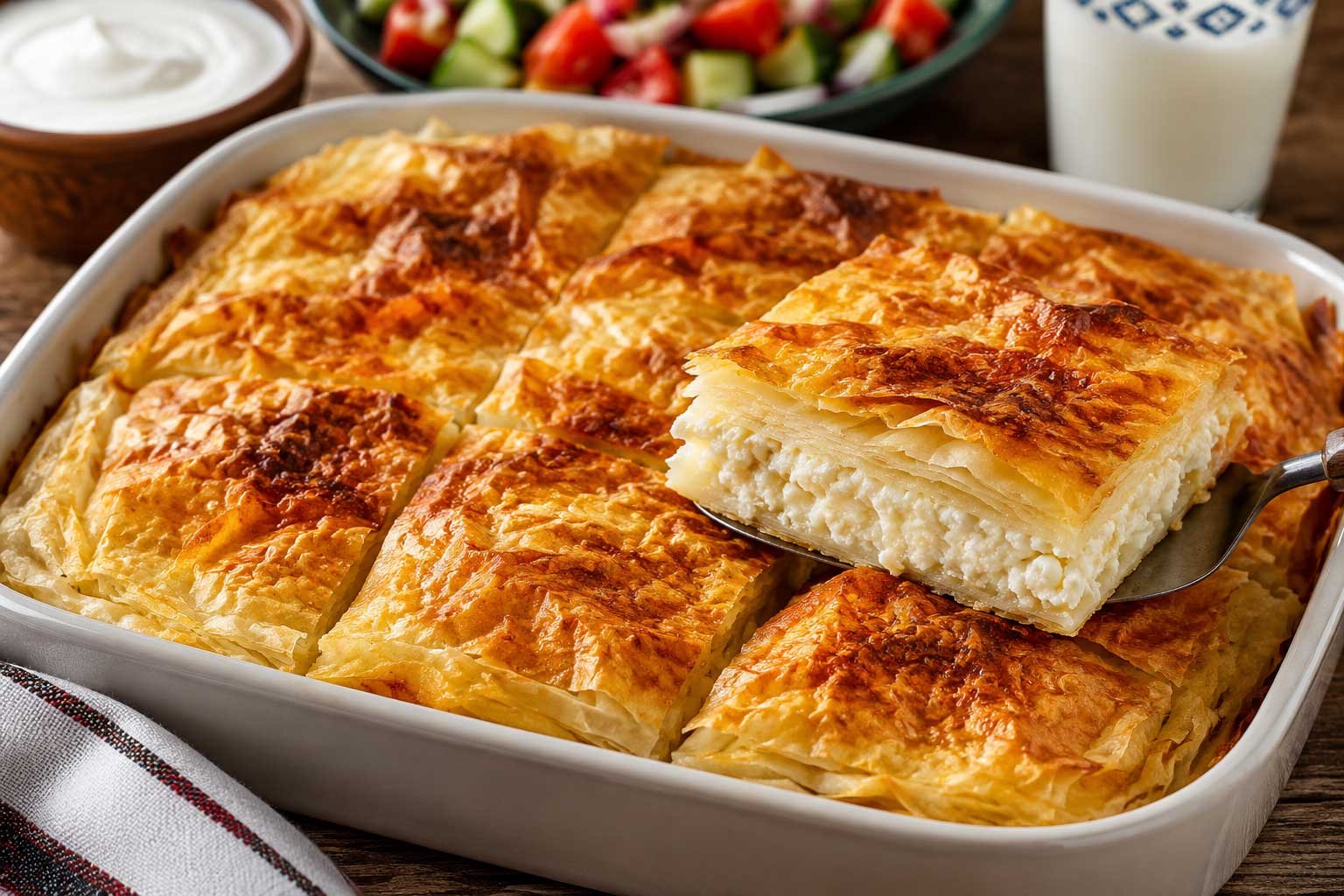
This traditional Gibanica recipe is one of Serbia’s most beloved comfort foods, featuring delicate layers of flaky filo pastry filled with a rich mixture of white cheese, eggs, and sour cream. Golden and crispy on the outside yet soft, creamy, and savory on the inside, Gibanica has been a staple of Serbian family tables for generations.
Found at everything from everyday breakfasts to festive holiday gatherings, this classic Serbian cheese pie is cherished for its simple ingredients and satisfying flavor. While Serbia is most closely associated with Gibanica, similar cheese-filled pastries can be found throughout the Balkans, each region adding its own unique twist to this traditional dish.
Whether served warm for breakfast, enjoyed as a hearty appetizer, or paired with yogurt and fresh salads for a complete meal, Gibanica offers the authentic flavors and comforting traditions that have made it one of the most iconic recipes in Serbian cuisine. With its flaky layers and creamy filling, it’s easy to see why this beloved Balkan pastry continues to be enjoyed by generations of home cooks and food lovers alike.
Fans of traditional Serbian baking should also try our Serbian Burek Recipe and Proja Recipe, two classic Balkan favorites often served alongside cheese pies like Gibanica.
What Is Gibanica?
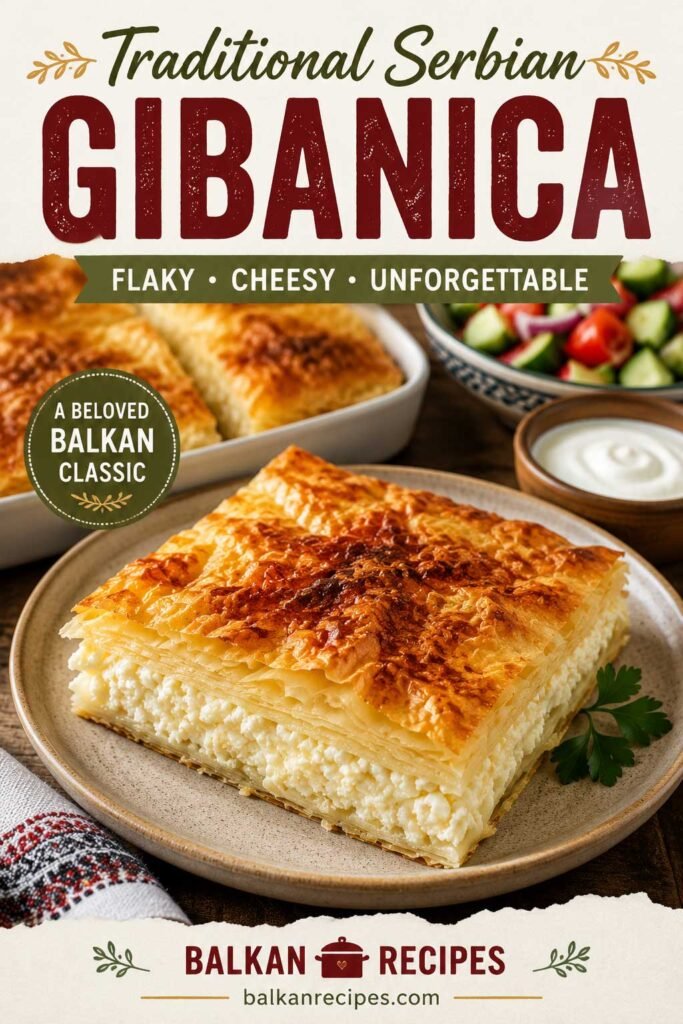
Gibanica is a traditional Serbian cheese pie made with delicate layers of filo pastry and a rich filling of white cheese, eggs, and dairy products such as sour cream or yogurt. Baked until golden brown and beautifully crisp on top, this beloved Balkan pastry is known for its flaky texture, creamy interior, and comforting homemade flavor.
The name Gibanica is believed to come from the Serbian verb gibati, meaning “to fold,” “to shake,” or “to move.” The name reflects the traditional method of layering and arranging thin sheets of dough to create the pastry’s signature texture.
At its core, Gibanica is made from simple ingredients that come together to create a remarkably satisfying dish. The filling typically combines crumbled white cheese, eggs, sour cream or yogurt, and a small amount of oil or butter. Many traditional recipes also include sparkling water, which helps create a lighter filling and contributes to the pie’s soft, airy texture.
For generations, Gibanica has been a staple of Serbian home cooking. It is commonly served for breakfast, brunch, lunch, dinner, holidays, religious celebrations, and family gatherings. Its versatility and rich flavor have made it one of the most popular dishes in Serbian cuisine.
Although Serbia is most closely associated with Gibanica, similar cheese-filled pastries can be found throughout the Balkans. Regional variations differ in ingredients, preparation methods, and names, but the combination of flaky pastry and creamy cheese filling remains a cherished tradition across the region.
Today, Gibanica continues to symbolize Serbian hospitality, family traditions, and the enduring appeal of homemade comfort food. Whether enjoyed fresh from the oven or served at room temperature, this classic Serbian cheese pie remains one of the most iconic and beloved dishes in Balkan cuisine.
If you enjoy traditional Balkan pastries, be sure to explore our Banitsa Recipe and Sirnica Recipe for more delicious cheese-filled specialties.
Why You’ll Love This Gibanica Recipe
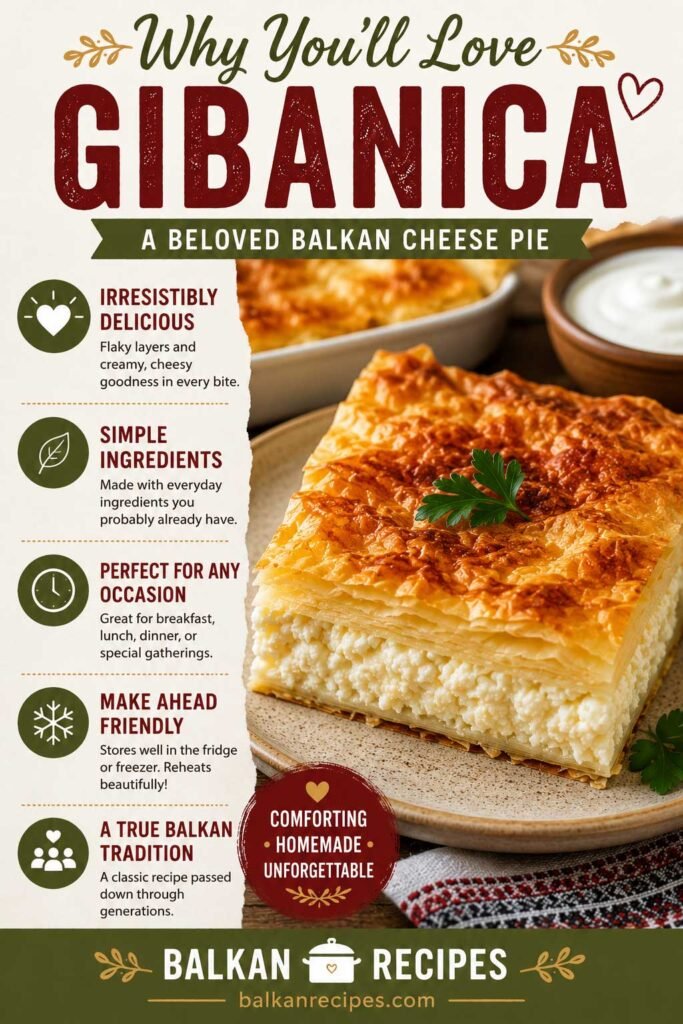
Gibanica has been a favorite in Serbian households for generations, and it’s easy to understand why. With its flaky layers of pastry, creamy cheese filling, and simple preparation, this traditional Balkan pie delivers comfort, flavor, and versatility in every bite. Whether you’re discovering Serbian cuisine for the first time or recreating a cherished family recipe, there are plenty of reasons to fall in love with this classic dish.
Authentic Serbian Comfort Food
This recipe brings the traditional flavors of Serbian Gibanica to your kitchen, allowing you to enjoy one of the country’s most beloved homemade pastries. Every bite reflects generations of family traditions and Balkan culinary heritage.
Crispy and Creamy Texture
The combination of flaky, golden filo pastry and a rich cheese filling creates an irresistible contrast of textures. Crisp pastry layers give way to a soft, creamy, and savory interior.
Easy to Prepare
Using store-bought filo pastry makes this traditional Serbian recipe surprisingly simple to prepare. You can enjoy authentic homemade Gibanica without the extra work of making dough from scratch.
Perfect for Any Occasion
Whether served for breakfast, brunch, lunch, dinner, or as an appetizer, Gibanica fits almost any occasion. It’s equally at home on a holiday table or as part of a casual family meal.
Rich and Satisfying Flavor
The combination of feta cheese, eggs, sour cream, and delicate pastry creates a savory pie that is comforting, flavorful, and incredibly satisfying.
Great for Sharing
Traditionally baked in large pans and cut into generous portions, Gibanica is perfect for family gatherings, celebrations, potlucks, and special occasions.
Made with Simple Ingredients
One of the reasons Gibanica has remained popular for generations is its use of affordable, everyday ingredients that are easy to find in most grocery stores.
A Taste of Balkan Tradition
Making Gibanica is more than preparing a cheese pie—it’s an opportunity to experience a cherished part of Serbian culture and the rich culinary traditions of the Balkans.
Perfect for Make-Ahead Meals
Gibanica can be assembled ahead of time and baked when needed, making it a convenient option for entertaining guests or preparing meals in advance.
The History of Gibanica
Gibanica has a long and fascinating history that reflects the rich culinary traditions of Serbia and the broader Balkan region. As one of Serbia’s most iconic dishes, this beloved cheese pie has been enjoyed for centuries and continues to hold a special place in Serbian home cooking.
The origins of Gibanica are closely tied to the Balkan tradition of preparing layered pastries using thin sheets of dough. During the centuries of Ottoman influence in Southeastern Europe, techniques for stretching and layering dough became deeply rooted in regional cuisine. Serbian households adapted these methods using locally available ingredients such as white cheese, eggs, sour cream, and homemade pastry, creating the dish now known as Gibanica.
Historically, Gibanica was both an everyday meal and a festive specialty. In rural communities, families often raised sheep, goats, or cows, making fresh cheese an important household staple. Combined with eggs and pastry dough, these ingredients provided an affordable and nourishing meal capable of feeding large families.
Over time, Gibanica became closely associated with Serbian hospitality and family gatherings. It was commonly prepared for religious holidays, weddings, celebrations, and special occasions. Large trays of freshly baked Gibanica were often placed at the center of the table, encouraging family members and guests to gather and share a meal together.
Different regions of Serbia gradually developed their own versions of the recipe. Some variations use richer dairy products, while others incorporate ingredients such as spinach, herbs, or potatoes. In certain parts of the country, cooks still prepare Gibanica using handmade dough stretched into thin sheets using traditional techniques passed down through generations.
As modern lifestyles evolved, store-bought filo pastry made the dish easier and faster to prepare. Despite these conveniences, the essential character of Gibanica has remained unchanged. The combination of flaky pastry and creamy cheese filling continues to deliver the comforting flavors that generations of Serbians have loved.
Today, Gibanica can be found in homes, bakeries, restaurants, and traditional kafanas throughout Serbia. More than just a recipe, it represents family traditions, hospitality, and the enduring importance of homemade food in Serbian culture. Its continued popularity is a testament to how simple ingredients, prepared with care, can create a truly timeless dish.
Many Serbian pastries have developed unique regional identities over time. If you enjoy Gibanica, be sure to try Burek Recipe, Tikvenik Recipe, and Proja Recipe as well.
Ingredients You’ll Need
One of the reasons this traditional Gibanica recipe has remained popular for generations is its use of simple, everyday ingredients. A handful of pantry staples and dairy products come together to create a flaky, golden pastry filled with rich, creamy cheese. Here’s what you’ll need to make authentic Serbian Gibanica at home.
Filo Pastry
Filo pastry creates the delicate layers that give Gibanica its signature flaky texture. As it bakes, the thin sheets become beautifully crisp and golden while remaining light and airy. Store-bought filo dough works perfectly and makes preparation much easier.
Feta Cheese
Feta cheese provides the salty, tangy flavor that forms the heart of the filling. Traditional Serbian recipes often use white brined cheese, but feta is a convenient and widely available substitute that delivers excellent results.
Eggs
Eggs help bind the filling together while adding richness and structure. They create a creamy texture that holds the cheese mixture between the pastry layers.
Sour Cream
Sour cream adds moisture, creaminess, and a subtle tangy flavor that balances the saltiness of the cheese. It also helps create the soft interior that contrasts so nicely with the crispy pastry.
Oil
Oil is mixed into the filling and used to grease the baking dish. It helps keep the pastry tender and contributes to a beautifully golden crust during baking.
Sparkling Water
A traditional ingredient in many Serbian Gibanica recipes, sparkling water helps create a lighter filling and contributes to the pastry’s airy texture. The bubbles help separate the layers slightly as the pie bakes.
Salt
A small amount of salt enhances the flavor of the filling. Since feta cheese is naturally salty, add extra salt sparingly and adjust to taste.
Optional Additions
Many Serbian families have their own favorite variations of Gibanica. Some popular additions include:
- Cottage cheese
- Yogurt
- Spinach
- Fresh parsley or dill
- Melted butter instead of oil
- Additional white Balkan cheeses
These optional ingredients allow you to customize the recipe while preserving the traditional character and comforting flavor that make Gibanica such a beloved Serbian pastry.
Kitchen Equipment Needed
Making Gibanica doesn’t require any special equipment. A few basic kitchen tools are all you need to prepare this traditional Serbian cheese pie successfully. Having everything ready before you begin will make the layering process quick and enjoyable.
Large Mixing Bowl
A large mixing bowl gives you plenty of room to combine the eggs, cheese, sour cream, oil, and sparkling water into a smooth, evenly mixed filling.
Whisk or Fork
Use a whisk or fork to beat the eggs and thoroughly combine the filling ingredients. This helps create a creamy mixture with evenly distributed flavors.
Baking Dish
A medium to large rectangular baking dish works best for layering the filo pastry and cheese filling. Traditional Gibanica is often baked in family-sized pans, making it perfect for sharing.
Measuring Cups
Accurate measurements help ensure the proper balance of ingredients and consistent results every time you prepare the recipe.
Pastry Brush
A pastry brush is useful for greasing the baking dish and can also be used to brush filo layers with oil or melted butter for extra flavor and a beautifully golden finish.
Sharp Knife
A sharp knife allows you to cut clean, neat portions after the pie has cooled slightly and the filling has had time to set.
Cooling Rack
Allowing the baked Gibanica to rest on a cooling rack helps maintain the crispness of the pastry while preventing excess moisture from collecting underneath the baking dish.
Oven
A properly preheated oven is essential for creating the flaky layers and golden-brown crust that make Gibanica so delicious.
With these simple kitchen tools on hand, you’ll be ready to create a beautifully layered Serbian cheese pie that is crispy on the outside, creamy on the inside, and perfect for sharing with family and friends.
Affiliate Disclosure: This article may contain affiliate links. If you purchase through these links, I may earn a small commission at no additional cost to you.
Essential Tools for Making Gibanica
Making Gibanica is much easier when you have the right baking tools on hand. These kitchen essentials help create perfectly layered pastry, evenly baked filling, and beautiful presentation every time.
| Product | Why It’s Useful | Buy |
|---|---|---|
| Large Mixing Bowl | Provides plenty of room for mixing the cheese filling. | Check Price |
| Rectangular Baking Dish | Ideal for creating traditional layered Gibanica. | Check Price |
| Pastry Brush | Perfect for brushing filo pastry with oil or butter. | Check Price |
| Whisk | Helps create a smooth, evenly mixed filling. | Check Price |
| Measuring Cups & Spoons | Ensures accurate ingredient measurements. | Check Price |
| Sharp Chef’s Knife | Useful for cutting clean portions after baking. | Check Price |
How to Make Gibanica
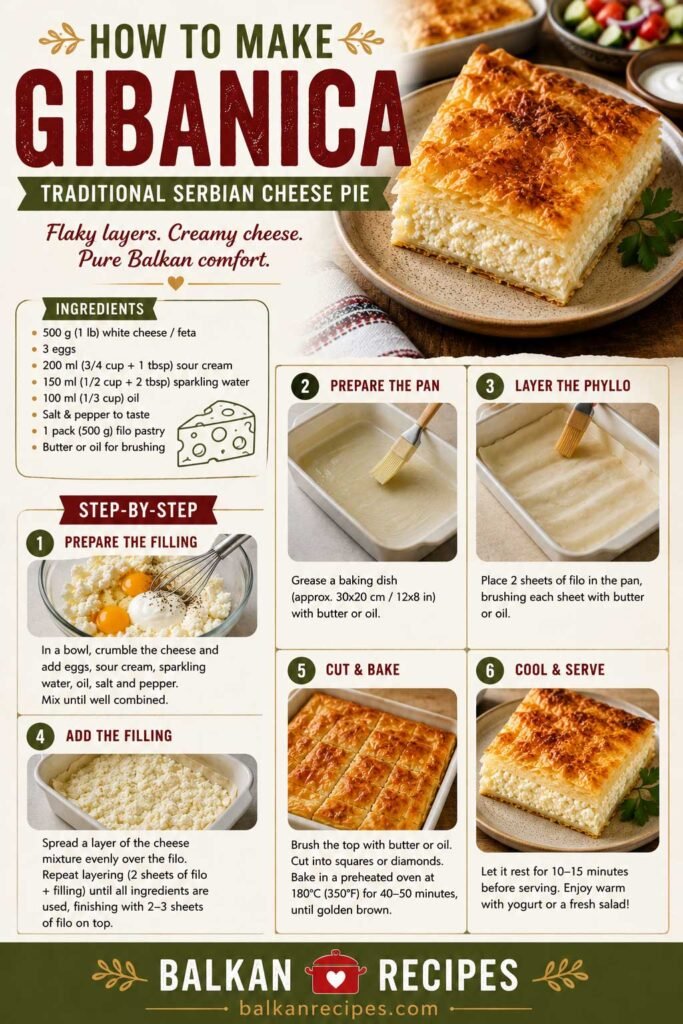
Making Gibanica is easier than it looks. The process involves preparing a simple cheese filling, layering it between sheets of filo pastry, and baking until golden brown. As it bakes, the pastry becomes crisp and flaky while the filling turns rich, creamy, and full of flavor.
Step 1: Prepare the Cheese Filling
Crack the eggs into a large mixing bowl and whisk until smooth.
Add the sparkling water and stir well. Crumble the feta cheese into the bowl, then add the oil and sour cream. Mix until everything is well combined and a creamy filling forms.
Taste the mixture and add a small amount of salt if needed, keeping in mind that feta cheese is naturally salty.
Step 2: Preheat the Oven
Preheat your oven to 350°F (175°C).
Lightly grease a baking dish with oil to prevent sticking and ensure easy serving after baking.
Step 3: Create the Base Layer
Place two sheets of filo pastry in the bottom of the prepared baking dish, allowing the edges to overlap slightly if necessary.
Spread a portion of the cheese filling evenly over the pastry.
Step 4: Continue Layering
Add another layer of filo pastry sheets on top of the filling.
Spread another portion of the cheese mixture evenly across the pastry.
Continue alternating layers of filo pastry and filling until all of the filling has been used.
Step 5: Finish the Pie
Top the Gibanica with a final layer of filo pastry.
Gently tuck in any overhanging edges to create a neat appearance.
Step 6: Prepare for Baking
Lightly sprinkle the top of the pastry with a little water. This traditional technique helps keep the pastry from drying out and promotes even browning.
Step 7: Bake
Bake for 40 to 50 minutes, or until the top is beautifully golden brown and crisp.
The filling should be fully set, and the pastry should feel light and flaky.
Step 8: Let It Rest
Remove the Gibanica from the oven and allow it to rest for 10 to 15 minutes before slicing.
This helps the filling settle and makes the pie easier to cut into clean portions.
Step 9: Serve
Slice into squares or rectangles and serve warm.
Gibanica pairs wonderfully with yogurt, ayran, fresh salads, roasted peppers, or simply on its own as a comforting Serbian meal or appetizer.

Gibanica Recipe
Ingredients
- 500 g filo pastry
- 500 g white cheese/feta, crumbled
- ⅓ cup sunflower oil small cups
- 3 eggs
- ¾ cup sour cream
- Salt & pepper to taste
- ⅔ cup sparkling water
- Butter or oil for brushing
Instructions
- Preheat the oven to 350°F (175°C).
- In a large mixing bowl, whisk the eggs until smooth.
- Add the sparkling water, crumbled feta cheese, oil, and sour cream. Mix well until fully combined. Taste and add a small amount of salt if needed.
- Lightly grease a baking dish with oil.
- Place 2 sheets of filo pastry in the bottom of the prepared baking dish.
- Spread a portion of the cheese mixture evenly over the pastry.
- Add another layer of filo pastry sheets and spread more filling on top.
- Continue alternating layers of filo pastry and cheese filling until all of the filling has been used.
- Finish with a final layer of filo pastry on top.
- Lightly sprinkle the top with a little water.
- Bake for 40–50 minutes, or until the pastry is golden brown and crispy.
- Allow the Gibanica to rest for 10–15 minutes before slicing and serving.
Notes
- Keep filo pastry covered with a damp towel while assembling to prevent it from drying out.
- Traditional Serbian recipes often use white brined cheese, but feta works very well. For a richer flavor, brush some of the pastry layers with melted butter.
- Gibanica can be served warm or at room temperature.
- Leftovers can be refrigerated for up to 4 days and reheated in the oven.
Tips for the Best Gibanica
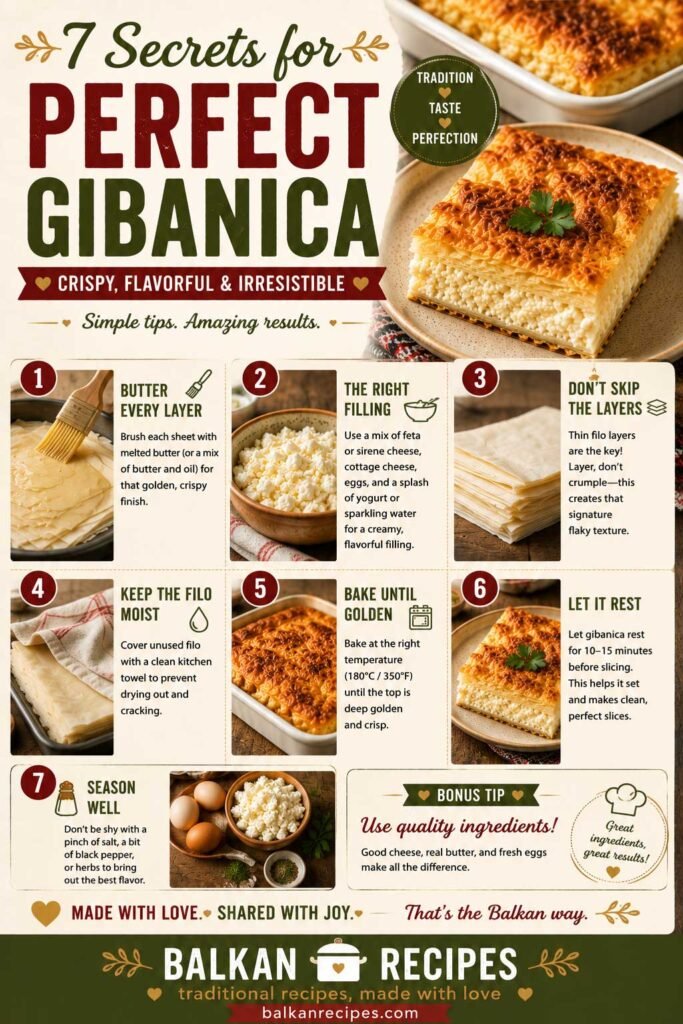
Making a great Gibanica isn’t difficult, but a few simple techniques can help you achieve flaky pastry, a creamy filling, and authentic Serbian flavor every time. Keep these helpful tips in mind for the best results.
Keep the Filo Pastry Covered
Filo dough dries out quickly when exposed to air. Keep unused sheets covered with a slightly damp kitchen towel while assembling the pie to prevent them from becoming brittle and difficult to handle.
Use High-Quality Cheese
Since cheese is the star ingredient, choosing a flavorful feta or traditional white Balkan cheese will significantly improve the taste of your Gibanica. Fresh, high-quality cheese creates a richer and more authentic filling.
Don’t Overmix the Filling
Mix the ingredients just until combined. Overmixing can break down the cheese too much and affect the texture of the finished pie.
Spread the Filling Evenly
Distribute the cheese mixture evenly between the pastry layers. This helps ensure consistent flavor, texture, and moisture throughout the entire pie.
Be Careful with Salt
Feta and other white cheeses are naturally salty, so always taste the filling before adding extra salt. A little goes a long way.
Bake Until Golden Brown
For the best texture and flavor, bake Gibanica until the top is deeply golden brown and crisp. Proper browning helps develop the rich flavor and flaky crust that make this dish so delicious.
Let It Rest Before Slicing
Allow the pie to rest for 10 to 15 minutes after baking. This gives the filling time to set and makes it easier to cut clean slices.
Serve Warm
While Gibanica can be enjoyed at room temperature, it is at its best when served warm. The pastry stays crisp and the cheese filling remains soft and creamy.
Use Sparkling Water
Sparkling water is a traditional ingredient that helps create a lighter filling and contributes to the airy texture that many Serbian home cooks look for in a good Gibanica.
Try Traditional Variations
Once you’ve mastered the classic recipe, experiment with regional variations by adding ingredients such as spinach, cottage cheese, fresh herbs, or yogurt. These additions can bring new flavors while preserving the traditional character of the dish.
Common Mistakes to Avoid When Making Gibanica
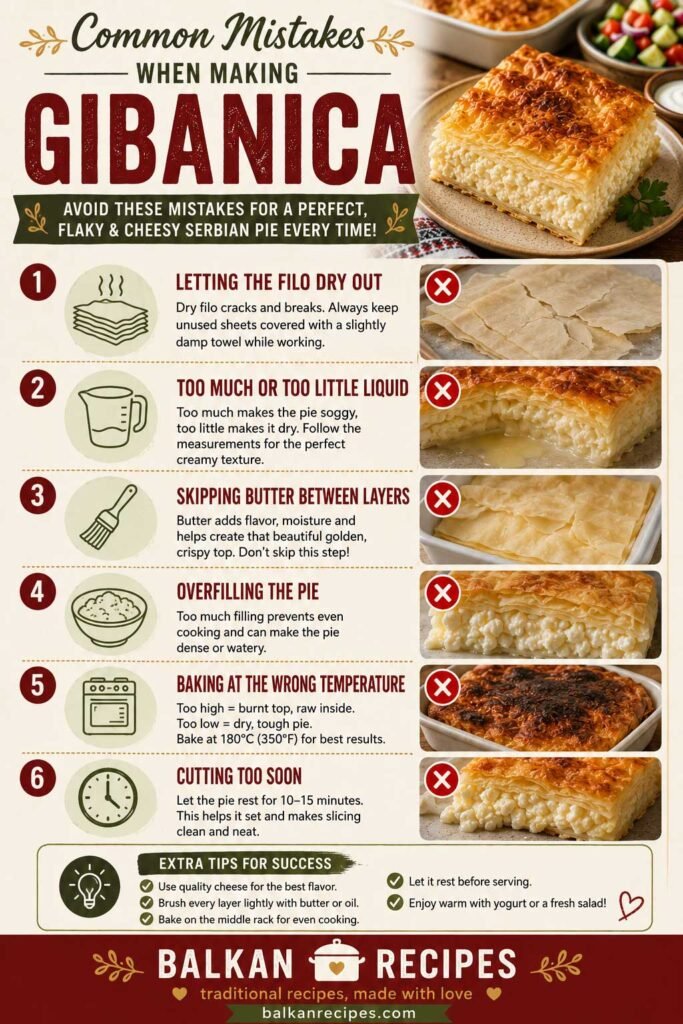
Gibanica is a simple recipe, but a few common mistakes can affect the texture and flavor of the finished pie. Avoid these issues to achieve flaky pastry, a creamy filling, and authentic Serbian results every time.
Letting the Filo Pastry Dry Out
Filo pastry dries very quickly once exposed to air. Dry sheets become brittle and difficult to work with, often cracking during assembly.
Solution: Keep unused filo sheets covered with a slightly damp kitchen towel while you work.
Using Too Little Filling
One of the defining characteristics of Gibanica is its rich, creamy interior. Using too little filling can leave the pie dry and lacking flavor.
Solution: Spread the cheese mixture evenly between the layers and use all of the prepared filling.
Adding Too Much Salt
Feta cheese and other white Balkan cheeses are naturally salty. Adding extra salt without tasting the mixture first can make the pie overly salty.
Solution: Taste the filling before adding salt and season sparingly.
Skipping the Sparkling Water
Some cooks omit the sparkling water, but it plays an important role in traditional Gibanica recipes.
Solution: Include the sparkling water to help create a lighter filling and softer texture.
Overfilling the Baking Dish
Adding too much filling between layers can make the pie difficult to bake evenly and may result in a soggy center.
Solution: Distribute the filling evenly throughout the pie without creating overly thick layers.
Underbaking the Gibanica
Removing the pie too early can leave the center undercooked and the pastry pale and soft.
Solution: Bake until the top is a deep golden brown and the filling is fully set.
Cutting It Too Soon
Freshly baked Gibanica needs a few minutes to settle before slicing.
Solution: Let the pie rest for 10 to 15 minutes after baking. This allows the filling to firm up and makes cleaner slices.
Forgetting to Grease the Baking Dish
A poorly greased baking dish can cause the pastry to stick and tear when serving.
Solution: Lightly grease the baking dish with oil or butter before assembling the pie.
Using Low-Quality Cheese
Since cheese is the main flavor component, lower-quality cheese can significantly affect the final result.
Solution: Use a good-quality feta or traditional white Balkan cheese for the most authentic flavor.
Not Covering the Top Layer
The top layer of filo can dry out during baking if not properly prepared.
Solution: Lightly brush the top with oil or melted butter and sprinkle a little water before baking to encourage even browning and a crisp finish.
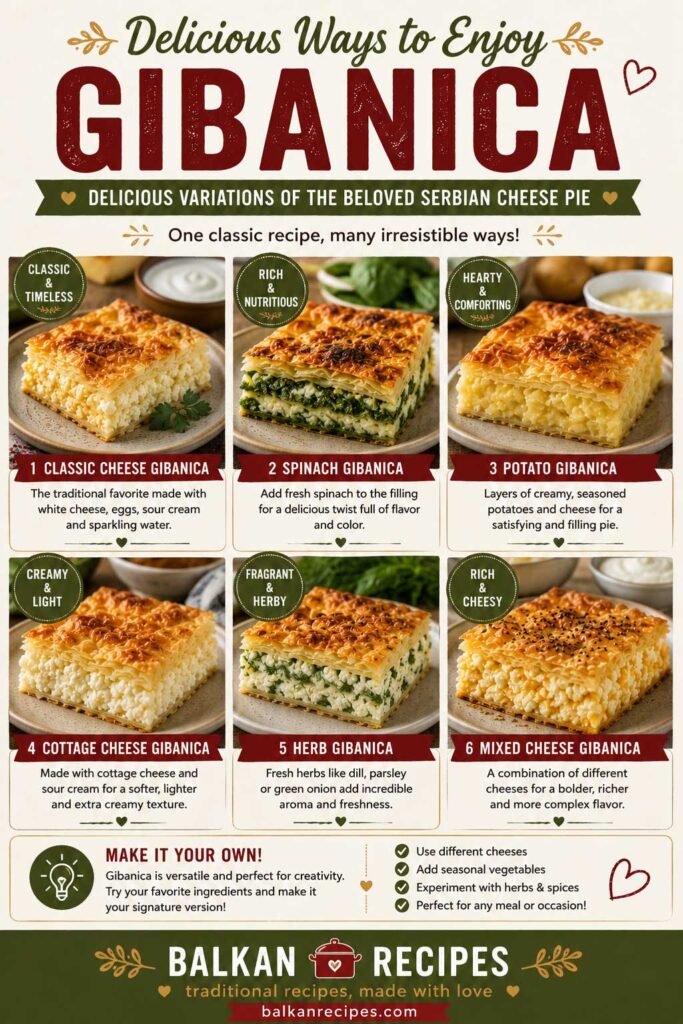
Popular Variations of Gibanica
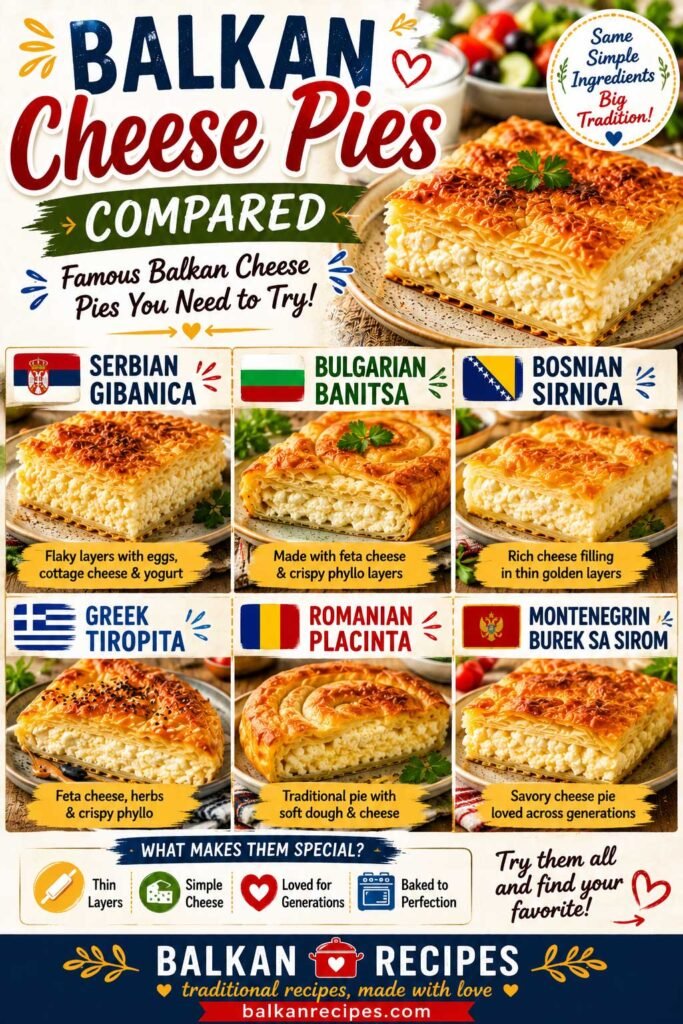
One of the reasons Gibanica has remained a beloved Serbian dish for generations is its versatility. While the classic cheese-filled version is the most well-known, families throughout Serbia and the Balkans have developed countless variations using local ingredients and traditional techniques. Each version offers its own unique flavor while preserving the flaky pastry and comforting character that make Gibanica so popular.
Traditional Serbian Cheese Gibanica
The most common version features layers of filo pastry filled with white cheese or feta, eggs, sour cream, and sparkling water. This classic recipe is a staple in Serbian homes, bakeries, and family celebrations.
Homemade Dough Gibanica
Before store-bought filo pastry became widely available, many households prepared Gibanica using handmade, hand-stretched dough. Although more time-consuming, this traditional method produces an exceptionally authentic texture and flavor.
Spinach Gibanica
Fresh spinach is added to the cheese filling to create a flavorful and nutritious variation. The spinach complements the creamy cheese while adding color and freshness.
Potato Gibanica
Thinly sliced or mashed potatoes are incorporated into the filling, creating a heartier version that is especially popular during the colder months.
Cottage Cheese Gibanica
Some recipes combine feta with cottage cheese or farmer’s cheese to create a milder, creamier filling with a softer texture.
Yogurt Gibanica
Yogurt can be used alongside sour cream or as a substitute for part of the dairy mixture. It adds a pleasant tang and creates a lighter filling.
Herb-Filled Gibanica
Fresh herbs such as parsley, dill, chives, or green onions add brightness and aroma while complementing the rich cheese filling.
Sweet Gibanica
Although savory versions are more common, some regional recipes feature sweet fillings made with sweetened cheese, raisins, vanilla, apples, or other fruits. These are often enjoyed as desserts or special holiday treats.
Festive Gibanica
Prepared for weddings, religious holidays, and family celebrations, festive versions often contain richer fillings, additional layers, premium cheeses, and extra dairy ingredients.
Regional Balkan Variations
Throughout the Balkans, similar layered pastries appear under different names and with a variety of fillings. Depending on the region, they may include cheese, spinach, potatoes, pumpkin, apples, walnuts, or poppy seeds, showcasing the rich diversity of Balkan baking traditions.
No matter which variation you choose, the essence of Gibanica remains unchanged—a delicious combination of flaky pastry, flavorful filling, and homemade comfort that has brought families together for generations.
If you enjoy savory Balkan pastries, you’ll also love our Tikvenik Recipe, Banitsa Recipe, and Burek Recipe.
What to Serve with Gibanica
Gibanica is a versatile Serbian cheese pie that can be served for breakfast, brunch, lunch, dinner, or as an appetizer. Its rich cheese filling and flaky pastry pair wonderfully with fresh salads, yogurt-based drinks, vegetable dishes, and traditional Balkan sides that help balance its savory flavor.
Yogurt
A glass of plain yogurt is one of the most traditional accompaniments to Gibanica. Its cool, tangy flavor perfectly complements the rich cheese filling and crispy pastry.
Ayran
This refreshing yogurt-based drink is popular throughout the Balkans and makes an excellent pairing with warm slices of Gibanica. Its light, salty flavor balances the richness of the pie.
Shopska Salad
A fresh Shopska Salad made with tomatoes, cucumbers, peppers, onions, and white cheese adds brightness and freshness to the meal while complementing the savory pastry.
Serbian Salad
A simple Serbian Salad made with fresh seasonal vegetables provides a light and refreshing contrast to the rich layers of Gibanica.
Ajvar
A spoonful of homemade Ajvar Recipe adds smoky flavor that pairs beautifully with warm Gibanica.
Roasted Peppers
Roasted red peppers are a classic Balkan side dish that adds color, sweetness, and authentic regional flavor to the table.
Pickled Vegetables
Pickled peppers, cucumbers, cabbage, and mixed vegetables provide acidity and crunch that help balance the richness of the pastry.
Fresh Herbs
Fresh parsley, dill, chives, or green onions add brightness and a burst of fresh flavor when served alongside warm Gibanica.
Coffee
Many Serbian families enjoy Gibanica for breakfast with a strong cup of coffee, creating a simple yet satisfying morning meal.
Tea
Black tea or herbal tea pairs wonderfully with Gibanica, especially when served as part of a leisurely breakfast or afternoon snack.
Cured Meats
For a heartier meal, serve Gibanica alongside traditional Balkan cured meats, smoked sausages, or smoked pork products.
Seasonal Fruit
Fresh grapes, apples, pears, or stone fruits provide a pleasant sweet contrast to the savory flavors of the pie.
Whether served as part of a holiday feast or enjoyed as a simple family meal, Gibanica pairs beautifully with a wide variety of traditional Balkan foods and beverages, making it one of the most versatile dishes in Serbian cuisine.
Recommended Serveware for Serving Gibanica
Serve your homemade Gibanica like a traditional Balkan host with practical serveware that’s perfect for family meals, holiday gatherings, and brunch spreads.
| Product | Why It’s Useful | Buy |
|---|---|---|
| Ceramic Baking-to-Table Dish | Beautiful for baking and serving directly from the oven. | Check Price |
| Large Serving Platter | Perfect for presenting sliced Gibanica. | Check Price |
| Salad Serving Bowl | Ideal for serving Shopska Salad or Serbian Salad alongside the pie. | Check Price |
| Yogurt Cups or Bowls | Great for serving traditional yogurt or ayran. | Check Price |
| Dessert & Appetizer Plates | Perfect size for individual portions. | Check Price |
| Food Storage Containers | Convenient for storing leftovers and meal prep. | Check Price |
How to Store and Reheat Gibanica

One of the great things about Gibanica is that it stores and reheats beautifully. Whether you’re preparing it ahead for a gathering or saving leftovers for later, proper storage will help maintain its flavor and texture.
Storing in the Refrigerator
Allow the Gibanica to cool completely before storing.
Transfer the pie to an airtight container or cover the baking dish tightly with plastic wrap or aluminum foil. Store in the refrigerator for up to 4 days.
Keeping it properly covered helps prevent the pastry from drying out and absorbing odors from other foods.
Freezing Gibanica
Gibanica freezes exceptionally well, making it a convenient make-ahead meal.
Once cooled, cut the pie into individual portions and wrap each piece tightly in plastic wrap followed by aluminum foil. Place the wrapped portions in a freezer-safe container or freezer bag.
Frozen Gibanica can be stored for up to 2 months.
Thawing
For best results, transfer frozen Gibanica to the refrigerator and allow it to thaw overnight before reheating.
If needed, individual portions can also be reheated directly from frozen, although they may require a few extra minutes of heating time.
Reheating in the Oven
The oven is the best way to restore the pastry’s crispy texture.
Preheat the oven to 325°F (165°C) and place the Gibanica on a baking sheet. Heat for 10 to 15 minutes, or until warmed through and crisp on top.
Reheating in an Air Fryer
An air fryer works wonderfully for smaller portions.
Heat at 320°F (160°C) for 5 to 7 minutes, or until the pastry is warm and lightly crisp.
Reheating in the Microwave
While convenient, the microwave will soften the pastry.
Heat individual slices in 20 to 30-second intervals until warmed through. This method is quick but won’t preserve the flaky texture as effectively as oven reheating.
Can You Make Gibanica Ahead of Time?
Yes. Gibanica is an excellent make-ahead dish.
You can assemble the pie several hours before baking and keep it refrigerated until ready to cook. Many home cooks find that allowing the ingredients to rest together enhances the overall flavor.
Best Served Warm
Although Gibanica can be enjoyed cold or at room temperature, it is at its most delicious when served warm. The pastry remains crisp and flaky while the cheese filling stays soft, creamy, and full of flavor.
Frequently Asked Questions About Gibanica Recipe
What is Gibanica?
Gibanica is a traditional Serbian cheese pie made with layers of filo pastry filled with a savory mixture of white cheese, eggs, sour cream, and other dairy ingredients. It is baked until golden brown and enjoyed throughout Serbia and the Balkans.
What cheese is traditionally used in Gibanica?
Traditional Gibanica is often made with white brined cheeses commonly found throughout the Balkans. Feta cheese is one of the most popular and accessible substitutes, offering a similar salty and tangy flavor.
Can I use store-bought filo pastry?
Yes. While traditional recipes sometimes use homemade dough, most modern Gibanica recipes use store-bought filo pastry for convenience and excellent results.
Why is sparkling water added to the filling?
Sparkling water helps create a lighter texture and allows the pastry layers to remain soft and airy while baking. It is a common ingredient in many traditional Serbian Gibanica recipes.
Can I make Gibanica ahead of time?
Absolutely. You can assemble the pie several hours ahead and keep it refrigerated until ready to bake. This makes it an excellent dish for entertaining and holiday meals.
Can I freeze Gibanica?
Yes. Both baked and unbaked Gibanica freeze well. Properly wrapped, it can be stored in the freezer for up to two months.
Is Gibanica served hot or cold?
Gibanica is most commonly served warm, but it can also be enjoyed at room temperature. Some people even enjoy cold leftovers straight from the refrigerator.
Can I add other ingredients to the filling?
Yes. Popular additions include spinach, cottage cheese, yogurt, herbs, potatoes, and various regional ingredients depending on family traditions and local recipes.
How do I keep filo pastry from drying out?
Keep the unused filo sheets covered with a slightly damp kitchen towel while assembling the pie. This prevents the delicate pastry from becoming brittle and difficult to handle.
Is Gibanica a main dish or an appetizer?
Gibanica can be served as either. It is often enjoyed as a breakfast dish, appetizer, side dish, snack, or light main course depending on the occasion.
What’s the difference between Gibanica and Burek?
Although both are popular Balkan pastries made with thin dough, Gibanica is typically a layered cheese pie, while Burek traditionally consists of rolled pastry filled with meat, cheese, spinach, or other fillings.
Can I make a vegetarian version of Gibanica?
Yes. The traditional cheese version is already vegetarian, making it a great meat-free option for family meals and gatherings.
A Timeless Serbian Classic Worth Sharing
Gibanica is much more than a simple cheese pie—it’s a cherished part of Serbian culinary heritage that has brought families together for generations. With its flaky layers of filo pastry and rich, creamy cheese filling, this beloved dish perfectly captures the warmth and comfort of traditional Balkan home cooking.
One of the reasons Gibanica has remained so popular is its simplicity. A handful of everyday ingredients come together to create a pastry that is both satisfying and full of flavor. Whether served for breakfast, brunch, lunch, dinner, or a festive gathering, it delivers the kind of homemade comfort food that never goes out of style.
Its versatility is another reason home cooks continue to love it. You can enjoy the classic cheese-filled version or experiment with regional variations that include spinach, herbs, potatoes, or additional cheeses. No matter how you prepare it, Gibanica remains a delicious and crowd-pleasing dish that’s perfect for sharing.
If you’re looking to explore authentic Serbian cuisine, this traditional Gibanica recipe is a wonderful place to start. Simple, comforting, and deeply rooted in Balkan tradition, it’s a recipe you’ll want to make again and again.
Bake a tray, pour yourself a glass of yogurt, and share a few slices with family and friends. After the first bite, it’s easy to understand why Gibanica has remained one of Serbia’s most beloved comfort foods for generations.
To continue exploring Serbian cuisine, try other traditional dishes such as Ćevapi Recipe, Sarma Recipe, Prebranac Recipe, and Pasulj Recipe.
Did You Make This Gibanica Recipe?
I’d love to hear how your Gibanica turned out! Leave a comment below and share your experience, tips, or any variations you tried. Your feedback helps other readers and inspires fellow home cooks to explore traditional Serbian cuisine.
If you enjoyed this recipe, please consider sharing it with family and friends and following us for more authentic Balkan recipes. Happy baking!