


Serbian Ajvar Recipe
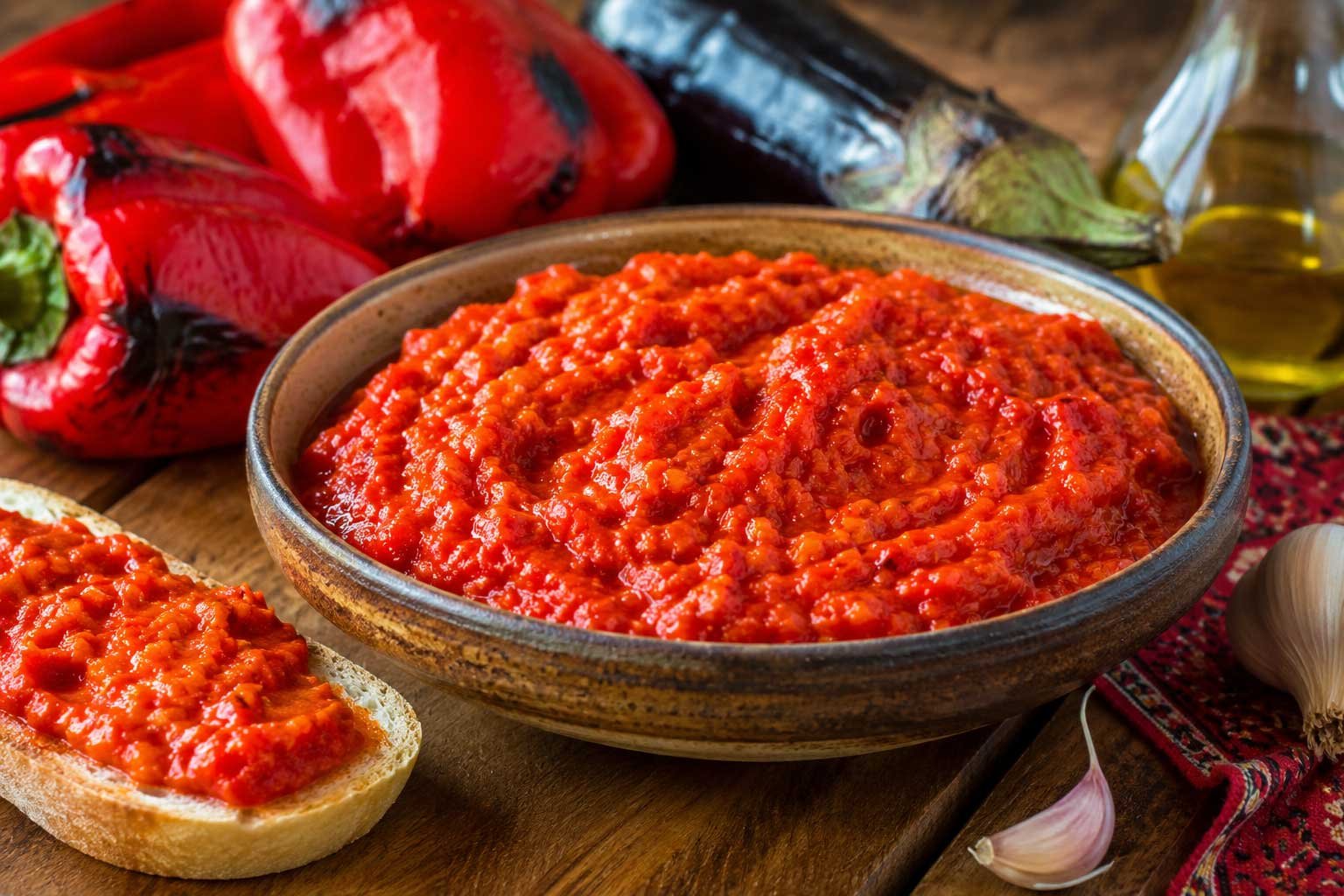
This Serbian Ajvar Recipe is one of the most beloved traditional condiments in Serbian cuisine. Made primarily from roasted red peppers and eggplant, this flavorful spread is famous for its bold smoky flavor, vibrant red color, and velvety texture. For generations, Serbian families have prepared homemade Ajvar during the autumn pepper harvest, turning seasonal vegetables into a delicious preserve that can be enjoyed throughout the winter months.
The tradition of making Ajvar is deeply rooted in Serbian culture. Across the country, families gather each fall to roast peppers, peel vegetables, and slowly cook large batches of this cherished spread. The finished Ajvar is carefully packed into jars for the winter and enjoyed alongside many of Serbia’s favorite homemade dishes.
If you enjoy authentic Serbian flavors, be sure to try our Ćevapi Recipe and Pljeskavica Recipe, two classic dishes traditionally served with homemade Ajvar.
Whether spread on warm lepinja bread, served with grilled meats such as ćevapi and pljeskavica, or enjoyed as part of a traditional Serbian meal, Ajvar remains a staple of home cooking throughout Serbia. This authentic Serbian Ajvar Recipe captures the classic flavors and techniques that have made homemade Serbian Ajvar a favorite for generations.
What Is Serbian Ajvar?
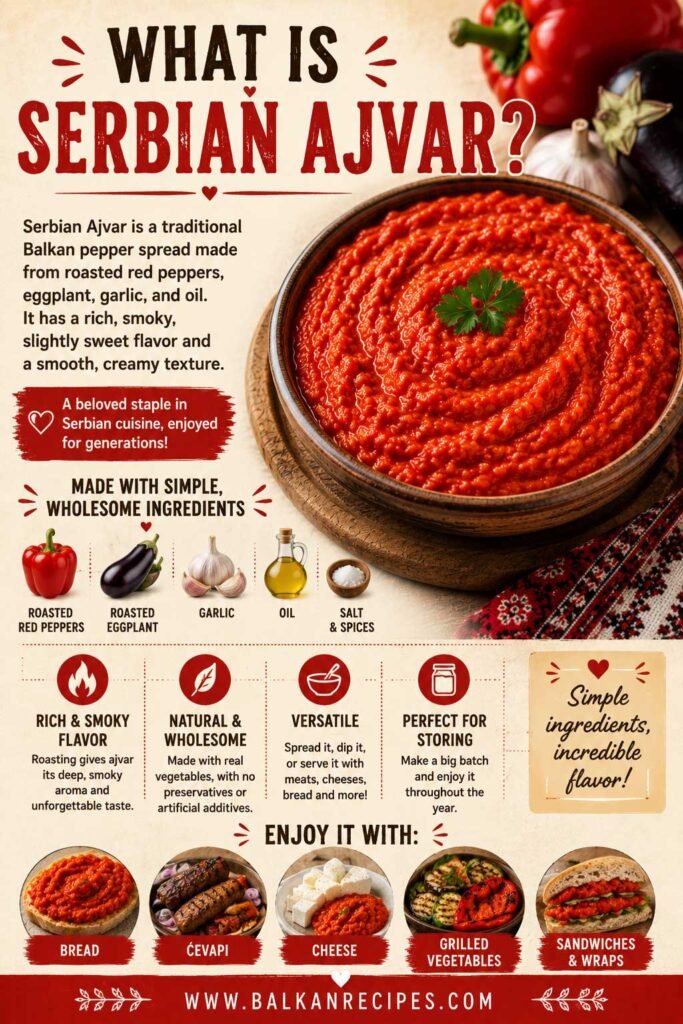
Serbian Ajvar is a traditional roasted red pepper spread that has been a staple of Serbian households for generations. Made from roasted red peppers, eggplant, garlic, oil, and seasonings, it is slowly cooked until thick, savory, and deeply flavorful. Known for its smoky flavor and velvety texture, Ajvar has become one of the most recognizable and beloved specialties in Serbian cuisine.
The preparation of Ajvar is closely connected to autumn in Serbia, when red peppers are harvested at their peak ripeness. Many families prepare large batches during this season, preserving the spread in jars to enjoy throughout the winter. The process of roasting, peeling, and cooking the vegetables is often a family tradition passed down from one generation to the next.
Serbia is one of the region’s leading pepper producers, and the country’s abundant autumn harvest has helped make homemade Ajvar a cherished seasonal tradition for generations. You can explore official Serbian pepper production statistics through FAOSTAT.
While similar pepper-based spreads can be found throughout the Balkans, Serbian Ajvar is particularly known for its balance of sweet roasted peppers, subtle smokiness, and rich texture. Some regional recipes include eggplant, while others focus primarily on peppers, but both versions remain popular throughout Serbia.
Today, Serbian Ajvar is commonly served with grilled meats, lepinja bread, roasted vegetables, cheese, and traditional Serbian dishes. Its versatility and bold flavor have helped make this roasted pepper spread one of the most recognizable foods in Serbian cuisine.
Ajvar is also a wonderful addition to a traditional Serbian mezze spread alongside our Kajmak Recipe and freshly baked Lepinja Recipe.
Why You’ll Love This Serbian Ajvar Recipe
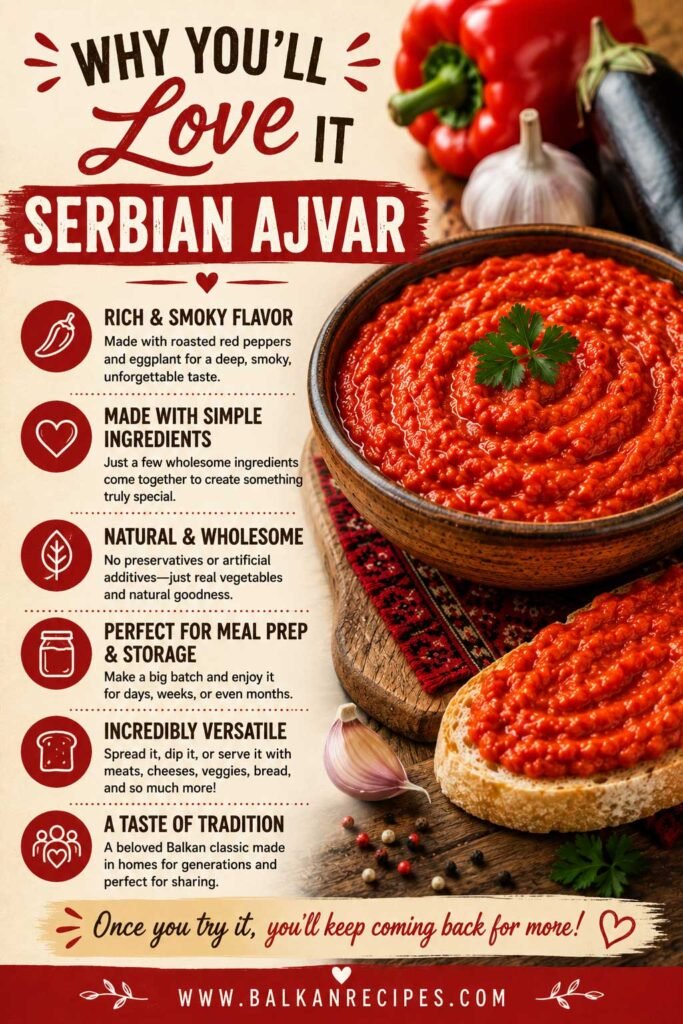
If you’ve never made homemade Serbian Ajvar before, you’re in for a treat. While the preparation requires a little patience, the result is a deeply flavorful Serbian roasted pepper spread that is far superior to most store-bought versions.The combination of roasted peppers, eggplant, garlic, and seasonings creates a depth of flavor that perfectly represents traditional Serbian home cooking.
Authentic Serbian Flavor
This recipe follows the traditional method of roasting vegetables before slowly cooking them into a thick, flavorful spread. The result is the smoky, robust flavor that Serbian Ajvar is known for.
Perfect for Entertaining
Ajvar makes an excellent addition to appetizer platters, charcuterie boards, and family gatherings. Serve it with bread, cheese, or grilled meats for an easy crowd-pleasing dish.
Versatile and Easy to Use
One of the reasons Ajvar remains so popular is its versatility. It can be used as a spread, dip, side dish, sandwich topping, or accompaniment to countless meals.
Naturally Vegan and Gluten-Free
Made entirely from vegetables and simple pantry ingredients, Serbian Ajvar fits easily into vegan, vegetarian, and gluten-free diets.
Great for Preserving Seasonal Peppers
If you have an abundance of fresh peppers during late summer and early autumn, Ajvar is one of the best ways to preserve their flavor for months to come.
Better Than Store-Bought
Homemade Ajvar allows you to control the ingredients, texture, and seasoning while enjoying the fresh, authentic taste that has made this Serbian favorite popular for generations.
Ingredients You’ll Need
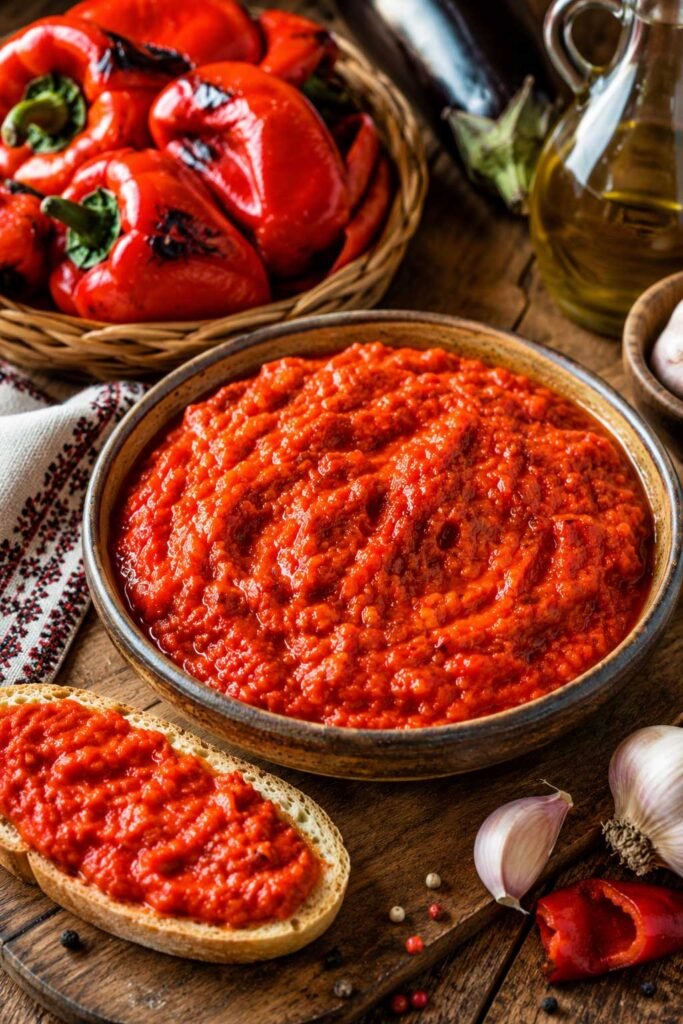
One of the reasons Serbian Ajvar has remained a household favorite for generations is its simplicity. The recipe relies on a handful of humble ingredients that transform into a bold and flavorful spread through roasting and slow cooking. Choosing high-quality vegetables is essential since their flavor forms the foundation of the finished Ajvar.
Red Bell Peppers
Red bell peppers are the star ingredient in traditional Serbian Ajvar. When roasted, they develop a natural sweetness and smoky flavor that gives the spread its characteristic taste and vibrant color. Fully ripe red peppers produce the best results.
Eggplant
Eggplant adds body, richness, and a silky texture to the Ajvar. It helps create the smooth consistency that many Serbian families prefer while contributing a subtle earthy flavor.
Garlic
Fresh garlic enhances the savory depth of the spread. It complements the sweetness of the roasted peppers without overpowering their flavor.
Sunflower Oil or Olive Oil
Oil helps create a smooth texture and carries the flavors throughout the spread. Sunflower oil is commonly used in Serbia, although olive oil can also be used.
White Vinegar
A small amount of vinegar adds brightness and helps balance the sweetness of the roasted vegetables.
Salt
Salt enhances the natural flavors of the peppers and eggplant while bringing the entire spread together.
Freshly Ground Black Pepper
Black pepper adds a gentle layer of warmth and complexity to the finished Ajvar.
Affiliate Disclosure: This article may contain affiliate links. If you purchase through these links, I may earn a small commission at no additional cost to you.
Recommended Ingredients
Using quality ingredients makes a noticeable difference in homemade Serbian Ajvar. These pantry staples help create the rich, authentic flavor found in traditional Serbian recipes.
| Ingredient | Why It’s Worth Buying | Check Price |
|---|---|---|
| Extra Virgin Olive Oil | Adds rich flavor and creates a smooth, silky texture. | View on Amazon |
| Sunflower Oil | The traditional oil used in many authentic Serbian Ajvar recipes. | View on Amazon |
| Smoked Sea Salt | Enhances the natural sweetness and smoky flavor of the roasted vegetables. | View on Amazon |
| Whole Black Peppercorns | Freshly ground pepper delivers superior flavor and aroma. | View on Amazon |
| Organic Garlic | Adds bold, fresh flavor that complements the roasted peppers perfectly. | View on Amazon |
| White Wine Vinegar | Provides balanced acidity while preserving the bright pepper flavor. | View on Amazon |
| Roasted Red Pepper Seasoning | A great pantry staple for adding smoky pepper flavor to countless dishes. | View on Amazon |
| Premium Mason Jar Set | Ideal for safely storing and preserving homemade Ajvar throughout the winter. | View on Amazon |
Equipment Needed
While Serbian Ajvar is made with simple ingredients, having the right kitchen tools makes roasting, blending, and slow cooking much easier.
- Grill, barbecue, or oven – For roasting the peppers and eggplant until lightly charred.
- Large bowl with a lid or plastic wrap – To steam the roasted peppers, making them easier to peel.
- Food processor – Helps chop the roasted vegetables to your preferred consistency.
- Sharp knife – For trimming peppers and preparing the eggplant.
- Cutting board – Provides a safe surface for prepping the vegetables.
- Large saucepan or heavy-bottomed pot – Ideal for slowly simmering the Ajvar until thick and flavorful.
- Wooden spoon – Perfect for stirring the mixture frequently without scratching your cookware.
- Measuring cups and measuring spoons – For accurately measuring the oil, vinegar, and seasonings.
- Serving bowl or sterilized glass jars – Use a serving bowl if enjoying immediately, or sterilized jars if preserving your homemade Serbian Ajvar for later.
How To Make Serbian Ajvar
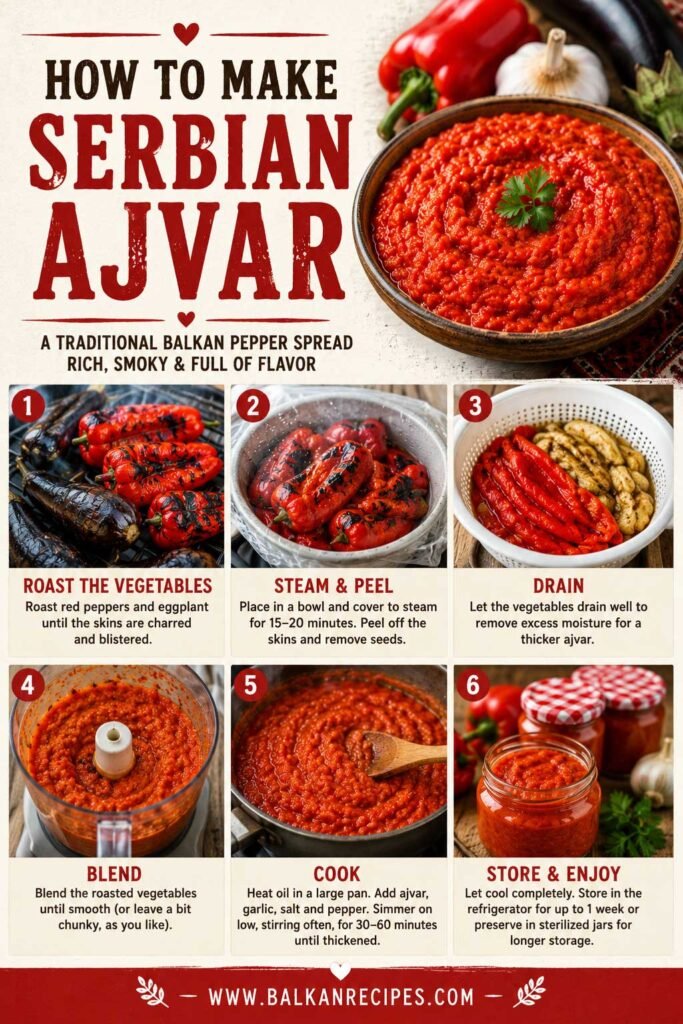
Making traditional Serbian Ajvar takes time, but the process is straightforward and well worth the effort. Roasting the vegetables develops the signature smoky flavor, while slow cooking transforms them into the rich, thick spread that has been enjoyed in Serbian homes for generations.
Step 1: Roast the Red Peppers
Preheat your grill, barbecue, or oven. Place the red bell peppers over direct heat and roast them until the skins are blackened and blistered on all sides. Turn them frequently to ensure even roasting.
Transfer the roasted peppers to a large bowl and cover immediately. Allow them to steam for about 20 minutes. This helps loosen the skins and makes peeling much easier.
Step 2: Peel and Clean the Peppers
Once the peppers have cooled enough to handle, remove the skins, stems, cores, and seeds. The flesh should be soft and fragrant with a slightly smoky aroma.
Set the cleaned peppers aside while preparing the eggplant.
Step 3: Roast the Eggplant
Using a fork, pierce the eggplant in several places to prevent it from bursting during cooking.
Roast the eggplant until the skin becomes charred and the flesh is completely soft. Rotate it occasionally to ensure even cooking.
Allow the eggplant to cool before removing the skin. Slice it open and use a spoon to remove any large pockets of seeds if desired.
Step 4: Process the Vegetables
Place the roasted peppers, eggplant, and garlic into a food processor.
Add the oil, vinegar, and salt. Pulse until the mixture reaches your desired consistency. Traditional Serbian Ajvar is usually smooth but still retains a little texture.
Step 5: Cook the Ajvar
Transfer the mixture to a large saucepan and place it over medium heat.
Once it begins to simmer, reduce the heat to medium-low and cook for approximately 30 minutes, stirring frequently. As the moisture evaporates, the Ajvar will gradually thicken and develop a deeper, more concentrated flavor.
Step 6: Adjust the Seasoning
Taste the Ajvar and add additional salt or freshly ground black pepper if needed.
Continue cooking for a few more minutes if a thicker consistency is desired.
Step 7: Cool and Serve
Remove the saucepan from the heat and allow the Ajvar to cool slightly.
Serve immediately with fresh bread, grilled meats, cheese, or your favorite Serbian dishes. If storing, transfer the cooled Ajvar to clean jars or airtight containers and refrigerate until ready to use.
Recommended Equipment for Making Serbian Ajvar
Making homemade Serbian Ajvar is much easier with the right kitchen tools. These are the products I recommend to simplify roasting, blending, and cooking while helping you achieve the best flavor and texture.
| Product | Why You’ll Love It | Check Price |
|---|---|---|
| Charcoal Grill | Creates the authentic smoky flavor that traditional Serbian Ajvar is famous for. | View on Amazon |
| Food Processor | Chops the roasted peppers and eggplant quickly while giving you full control over the texture. | View on Amazon |
| Dutch Oven | Heavy-duty construction distributes heat evenly and prevents the Ajvar from scorching during slow cooking. | View on Amazon |
| Chef’s Knife | Makes peeling, trimming, and chopping vegetables faster and safer. | View on Amazon |
| Large Cutting Board | Provides plenty of workspace for preparing large batches of peppers and eggplant. | View on Amazon |
| Wooden Spoon | Ideal for stirring thick Ajvar without scratching your cookware. | View on Amazon |
| Glass Mixing Bowl with Lid | Perfect for steaming roasted peppers, making the skins easy to remove. | View on Amazon |
| Wide-Mouth Mason Jars | Excellent for storing or preserving homemade Serbian Ajvar for months. | View on Amazon |

Serbian Ajvar Recipe
Ingredients
- 2 pounds red bell peppers
- ¾ pound eggplant
- 5 tsp freshly minced garlic
- ¼ cup sunflower oil or olive oil
- 1 tbsp white vinegar
- 1 tsp salt
- Freshly ground black pepper to taste
Instructions
- Preheat a grill, barbecue, or oven to roast the vegetables.
- Roast the red bell peppers until the skins are charred and blistered on all sides.
- Transfer the peppers to a covered bowl and let them steam for about 20 minutes.
- Peel the peppers and remove the stems, cores, and seeds.
- Pierce the eggplant several times with a fork and roast until completely soft and the skin is charred.
- Allow the eggplant to cool, then peel off the skin and remove any large pockets of seeds.
- Place the roasted peppers, eggplant, garlic, oil, vinegar, and salt into a food processor.
- Pulse until the mixture is mostly smooth while still retaining a little texture.
- Transfer the mixture to a large saucepan.
- Simmer over medium-low heat for about 30 minutes, stirring frequently until thickened.
- Taste and season with freshly ground black pepper and additional salt if needed.
- Allow to cool slightly before serving with bread, grilled meats, cheese, or your favorite Serbian dishes.
Notes
- Use fully ripe red peppers for the sweetest flavor.
- Roasting the vegetables until well charred creates authentic smoky flavor.
- Stir frequently while simmering to prevent sticking.
- Homemade Ajvar tastes even better after resting overnight in the refrigerator.
- Store refrigerated in an airtight container for up to 1 week or freeze for up to 3 months.
Ajvar Season in Serbia
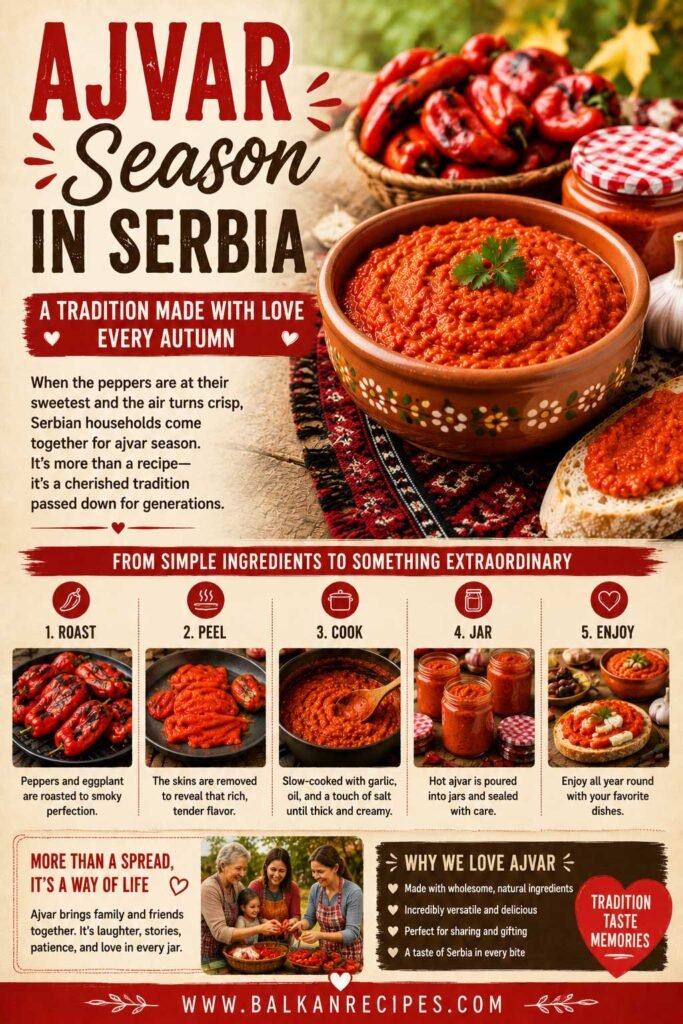
For many Serbian families, making Ajvar is much more than preparing a simple spread. It is a cherished autumn tradition that brings family members together to preserve the harvest and prepare for the colder months ahead.
Throughout Serbia, late summer and early autumn mark the beginning of what many affectionately call “Ajvar season.” Markets fill with vibrant red peppers, and households begin purchasing large quantities specifically for Ajvar production. Entire weekends are often dedicated to roasting peppers, peeling vegetables, and slowly cooking massive batches of the spread. Many families simply call this time of year “ajvar sezona” (Ajvar season), when preparing homemade Ajvar becomes a tradition shared across generations.
Traditionally, the preparation is a family affair. One person may be responsible for roasting the peppers, another for peeling them, while others stir the cooking mixture and prepare jars for storage. These gatherings often become social events where recipes, techniques, and family traditions are passed from one generation to the next.
Once finished, the Ajvar is carefully stored in sterilized jars and enjoyed throughout the winter. Many Serbian households take pride in their own family recipe, with slight variations in ingredients, texture, and seasoning that make each batch unique.
This strong connection to tradition is one of the reasons Ajvar remains one of the most beloved and recognizable foods in Serbian cuisine today.
To learn more about traditional Serbian food culture, regional customs, and culinary traditions, visit Serbia.com.
Many Serbian families also prepare other traditional preserves during the autumn harvest, including our Plum Slatko Recipe.
Tips For The Best Serbian Ajvar
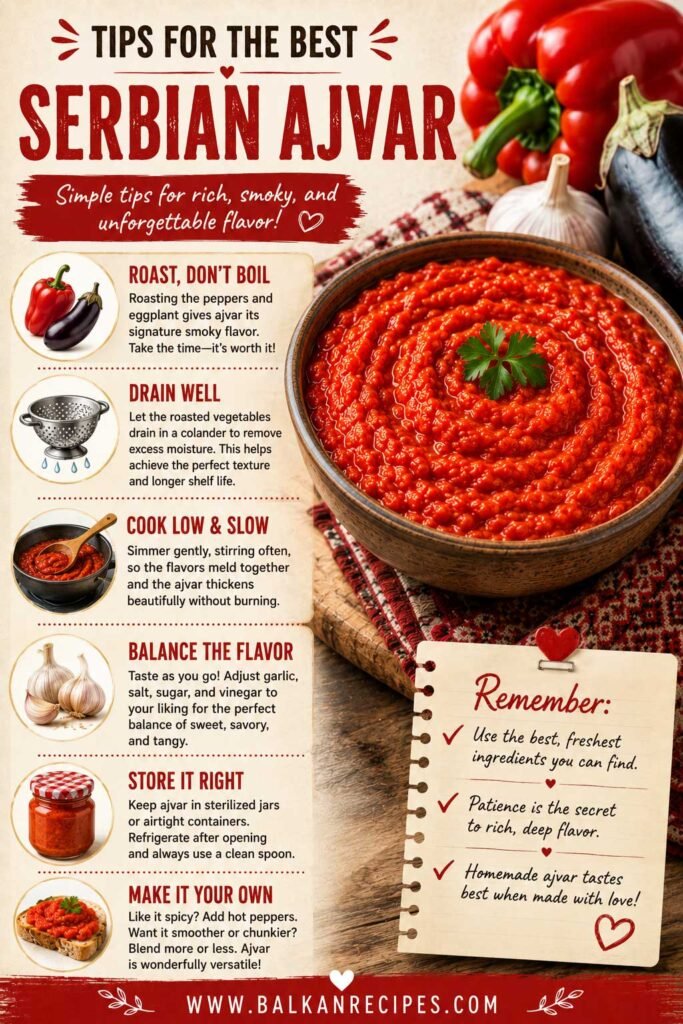
Although the ingredient list is simple, a few traditional techniques can make a significant difference in the final flavor and texture of your Ajvar. These tips will help you achieve the rich, smoky taste that makes homemade Serbian Ajvar so special.
Choose Fully Ripe Red Peppers
The quality of the peppers directly affects the quality of the finished Ajvar. Look for large, fully ripe red peppers that feel heavy for their size and have smooth, firm skins. The sweeter the peppers, the better the flavor.
Roast Until Properly Charred
Do not be afraid to let the skins blacken during roasting. The charred skin creates the signature smoky flavor that authentic Serbian Ajvar is known for. Proper roasting also makes peeling much easier.
Allow the Peppers to Steam
After roasting, immediately place the peppers in a covered bowl. The trapped steam loosens the skins and saves considerable effort during peeling.
Drain Excess Moisture
Both peppers and eggplant release a significant amount of liquid. Allowing some of this moisture to drain before cooking helps create a thicker, richer Ajvar.
Cook Slowly and Patiently
Slow cooking is one of the secrets to excellent Ajvar. Simmering the mixture gently allows excess moisture to evaporate while concentrating the flavors.
Stir Frequently
As the mixture thickens, it can stick to the bottom of the pan. Regular stirring prevents scorching and ensures an even texture throughout.
Let the Flavor Develop Overnight
Many Serbian cooks believe Ajvar tastes even better the next day. Giving the spread time to rest allows the flavors to fully meld together and deepen.
Common Mistakes To Avoid
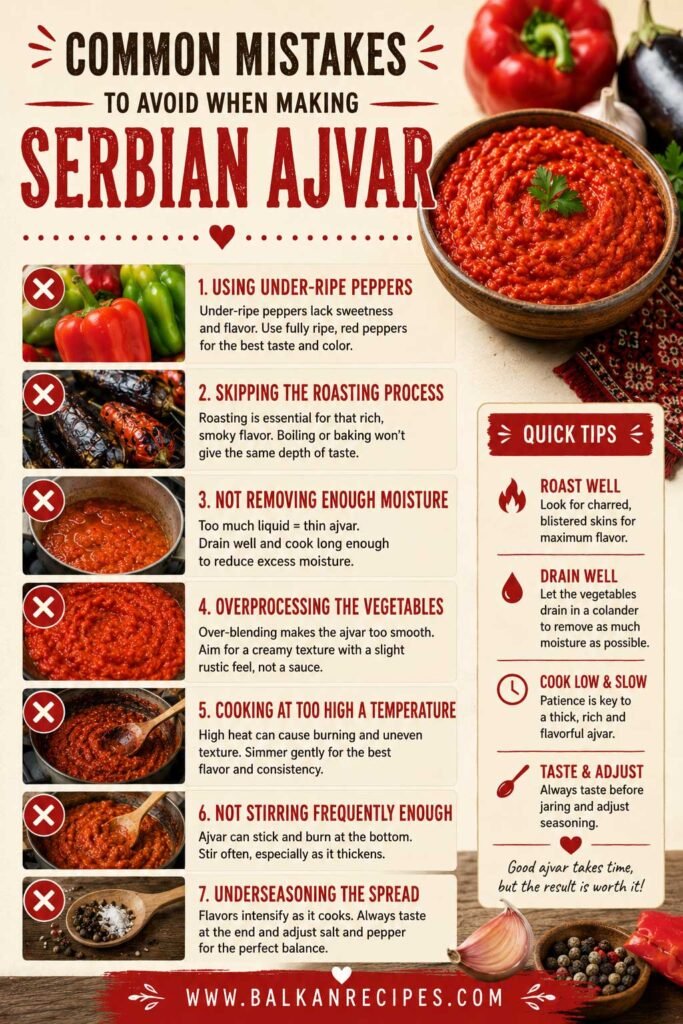
Even though Serbian Ajvar uses simple ingredients, a few common mistakes can affect its flavor, texture, and overall quality. Avoiding these issues will help you achieve the rich, authentic results that make homemade Ajvar so rewarding.
Using Under-Ripe Peppers
Peppers are the foundation of Ajvar, so their quality matters. Under-ripe peppers lack the natural sweetness needed to create a balanced flavor and may produce a less vibrant color.
Skipping the Roasting Process
Roasting is essential to authentic Serbian Ajvar. Without properly roasting the peppers and eggplant, the spread will lack the smoky depth that distinguishes homemade Ajvar from ordinary vegetable spreads.
Not Removing Enough Moisture
Excess moisture can leave the finished Ajvar thin and watery. Allowing the roasted vegetables to drain and cooking the mixture long enough to reduce excess liquid helps create the desired thick consistency.
Overprocessing the Vegetables
While Ajvar should be smooth, completely pureeing the vegetables can create a texture that feels more like a sauce. Traditional Serbian Ajvar usually retains a slight amount of texture.
Cooking at Too High a Temperature
High heat can cause the mixture to stick, burn, or develop an uneven texture. Gentle simmering produces a smoother and more flavorful result.
Not Stirring Frequently Enough
As Ajvar cooks and thickens, it can easily stick to the bottom of the saucepan. Regular stirring helps prevent scorching and ensures even cooking.
Underseasoning the Spread
The flavors become more concentrated during cooking, so it is important to taste the Ajvar before serving. Adjusting the salt and pepper at the end helps achieve the perfect balance of flavors.
Serbian Ajvar Variations
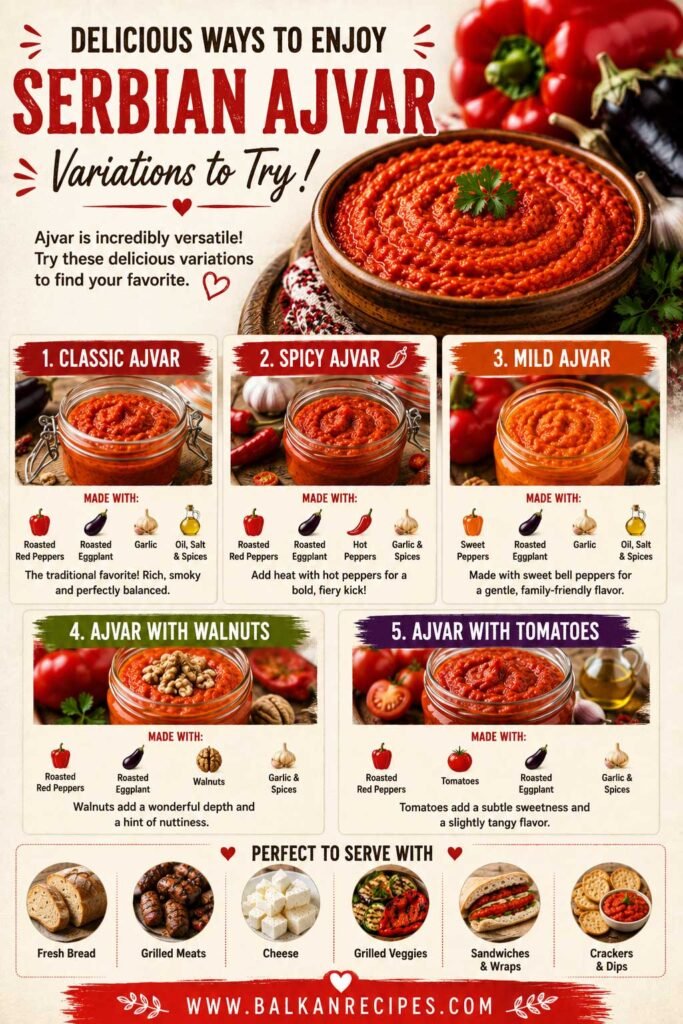
While the classic Serbian Ajvar Recipe relies on roasted red peppers and eggplant, different regions and families throughout Serbia often prepare their own unique versions. These variations reflect local preferences, family traditions, and available ingredients while maintaining the unmistakable character of authentic Ajvar.
Mild Serbian Ajvar
This is the most common version found in Serbian homes. It focuses on the natural sweetness of roasted red peppers and the richness of eggplant without adding any spicy ingredients. The result is smooth, flavorful, and suitable for the whole family.
Spicy Serbian Ajvar
For those who enjoy a little heat, hot peppers can be roasted alongside the sweet peppers. This variation remains popular in many parts of Serbia and adds a pleasant kick without overwhelming the smoky pepper flavor.
Pepper-Only Ajvar
Some Serbian households prepare Ajvar using only roasted red peppers. Omitting the eggplant creates a slightly lighter spread with a more concentrated pepper flavor and smoother consistency.
Extra Garlic Ajvar
Garlic lovers often increase the amount of fresh garlic to create a bolder, more savory spread. This variation pairs especially well with grilled meats and rustic bread.
Rustic Chunky Ajvar
Instead of processing the vegetables until smooth, some cooks prefer a chunkier texture. This rustic version highlights the individual flavors of the roasted peppers and eggplant while providing a heartier mouthfeel.
Traditional Wood-Fired Ajvar
In rural areas, Ajvar is sometimes prepared over wood-fired grills or outdoor cooking areas. The natural smoke from the wood imparts additional depth and complexity, creating a flavor that many consider the most authentic expression of Serbian Ajvar.
No matter which version you choose, every variation celebrates the incredible flavor and tradition behind this beloved Balkan pepper spread.
What To Serve With Serbian Ajvar
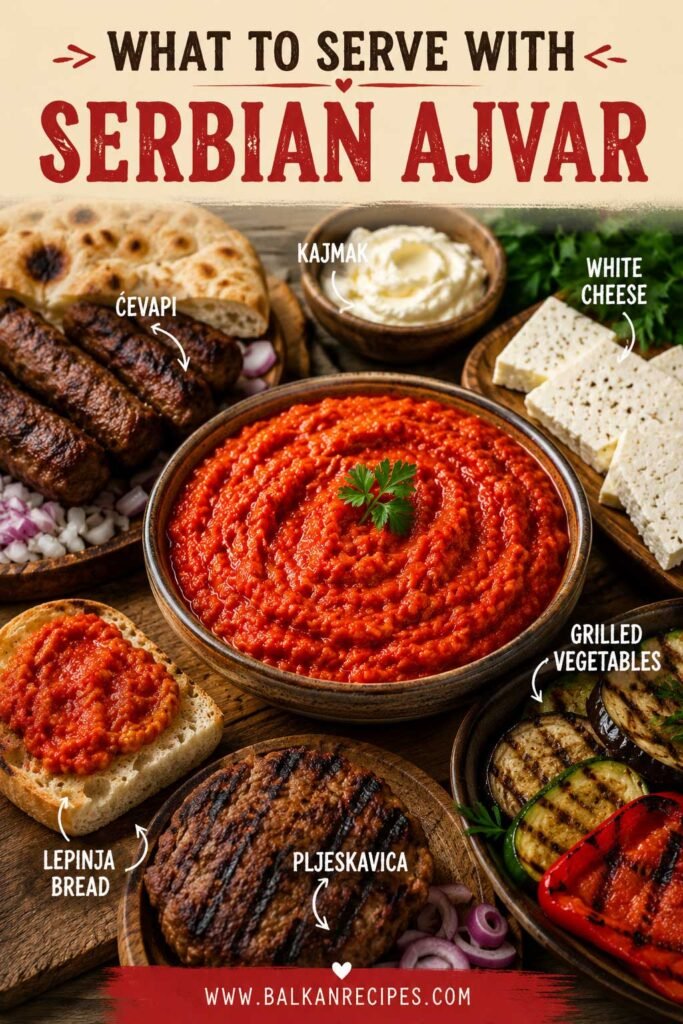
One of the reasons Serbian Ajvar has remained a staple of Balkan cuisine for generations is its incredible versatility. Its rich smoky flavor complements everything from grilled meats and fresh bread to cheese and roasted vegetables. Whether served as part of a simple meal or a festive gathering, Ajvar adds authentic Serbian flavor to the table.
Lepinja Bread
Warm lepinja is one of the most traditional ways to enjoy Ajvar. The soft interior and lightly crisp crust provide the perfect base for spreading a generous layer of this roasted pepper spread.
Ćevapi
Ajvar and ćevapi are one of the most beloved combinations in Serbian cuisine. The smoky pepper flavor pairs beautifully with grilled minced meat sausages, creating a classic Balkan meal.
Pljeskavica
This Serbian-style grilled burger is often served with Ajvar. The rich spread adds moisture and flavor while complementing the savory grilled meat.
Kajmak
The creamy richness of kajmak balances the smoky sweetness of Ajvar. Together they create one of Serbia’s most popular flavor combinations.
White Cheese or Feta
Ajvar pairs wonderfully with salty white cheeses. The contrast between the creamy cheese and roasted pepper spread creates a simple yet satisfying appetizer.
Grilled Meats
Beyond ćevapi and pljeskavica, Ajvar works beautifully alongside grilled chicken, pork, lamb, and sausages. It adds both flavor and moisture to barbecue meals.
Ajvar also pairs beautifully with our traditional Karađorđeva Šnicla Recipe for a hearty Serbian dinner.
Roasted Vegetables
Serve Ajvar as a dipping sauce or topping for roasted potatoes, zucchini, eggplant, and other seasonal vegetables.
For a lighter meal, serve it alongside our refreshing Serbian Salad Recipe.
Sandwiches and Wraps
Ajvar can be used as a flavorful spread for sandwiches, wraps, burgers, and panini, adding a smoky Balkan twist to everyday lunches.
How To Store Serbian Ajvar
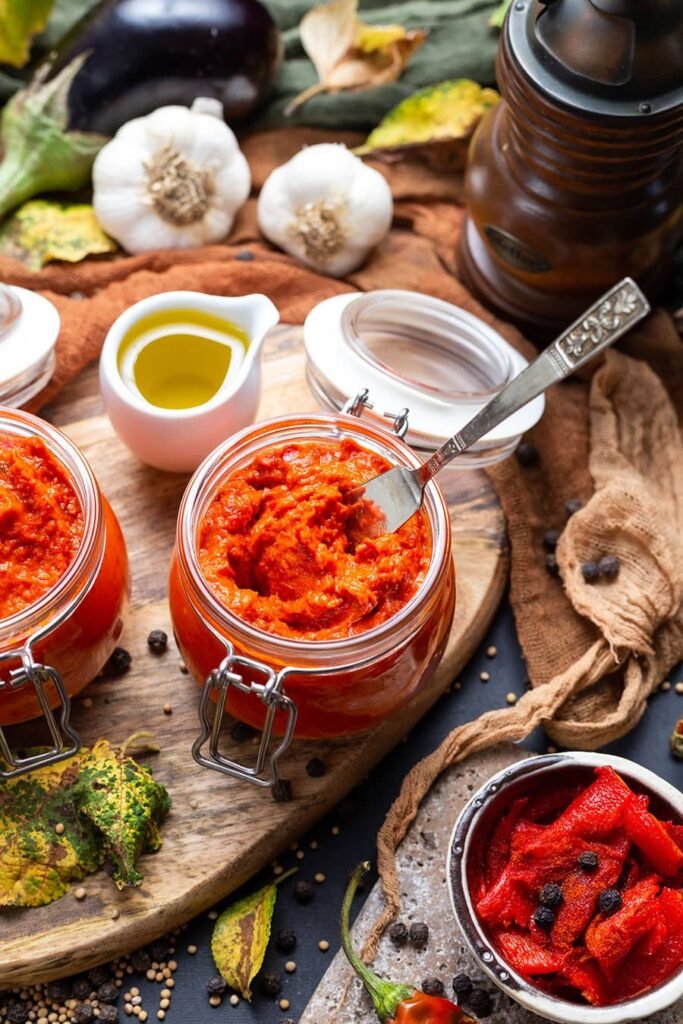
Proper storage helps preserve the rich flavor and texture of homemade Serbian Ajvar. Whether you plan to enjoy it within a few days or save it for the winter months, storing it correctly will keep it fresh and delicious.
Refrigerating Ajvar
Allow the Ajvar to cool completely before transferring it to an airtight container or clean glass jar. Stored in the refrigerator, homemade Ajvar will typically remain fresh for up to one week.
For the best flavor, keep the container tightly sealed and always use a clean spoon when serving.
Freezing Ajvar
Ajvar freezes very well and is an excellent option if you have prepared a large batch. Transfer the cooled spread into freezer-safe containers, leaving a little space at the top for expansion.
Frozen Ajvar can generally be stored for up to three months. Thaw it overnight in the refrigerator before serving.
Traditional Jar Storage
Many Serbian families preserve Ajvar in sterilized jars for long-term storage. After cooking, the hot Ajvar is carefully packed into sterilized jars and sealed according to traditional preservation methods.
If you’re planning to preserve homemade Ajvar using shelf-stable canning methods, follow the USDA Complete Guide to Home Canning for safe preparation, processing, and storage recommendations.
When properly processed and stored, preserved Ajvar can last for several months, making it possible to enjoy the flavors of the autumn harvest throughout the winter. Many Serbian households prepare enough Ajvar each autumn to last until the following spring, making proper storage an important part of the tradition.
Signs Ajvar Should Be Discarded
If the Ajvar develops an unusual odor, visible mold, discoloration, or signs of spoilage, it should be discarded immediately. Always inspect stored Ajvar before consuming it.
Frequently Asked Questions About Serbian Ajvar Recipe
Is Ajvar Serbian?
Ajvar is considered a traditional Balkan food and is enjoyed throughout several countries in Southeastern Europe. However, it holds a particularly important place in Serbian cuisine, where it has been prepared in homes for generations and is widely regarded as one of the country’s most beloved traditional spreads.
Learn more about Serbia’s culinary heritage from the National Tourism Organization of Serbia.
What Does Serbian Ajvar Taste Like?
Serbian Ajvar has a rich, smoky, slightly sweet flavor with a smooth and creamy texture. The roasted red peppers provide natural sweetness, while the eggplant adds depth and richness. Garlic, oil, and seasonings help create a balanced and savory spread.
Is Serbian Ajvar Spicy?
Traditional Serbian Ajvar is usually mild and focuses on the flavor of roasted red peppers. However, many families prepare spicy versions by adding hot peppers during the roasting process.
Can I Make Ajvar Without Eggplant?
Yes. Some Serbian recipes use only roasted red peppers, resulting in a smoother spread with a more concentrated pepper flavor. Both versions are commonly found throughout Serbia.
Why Is Ajvar Made in Autumn?
Ajvar is traditionally prepared during autumn because this is when red peppers are harvested and at their peak flavor. Making Ajvar during harvest season allows families to preserve fresh vegetables for use throughout the winter.
Can Ajvar Be Used as a Dip?
Absolutely. Ajvar is commonly served as a dip with bread, crackers, fresh vegetables, and pita. It can also be used as a spread for sandwiches and wraps.
It also makes an excellent spread for sandwiches prepared with our homemade Lepinja Recipe.
How Long Does Homemade Ajvar Last?
When stored in an airtight container in the refrigerator, homemade Ajvar generally lasts up to one week. Properly preserved and canned Ajvar can last much longer when stored correctly.
What Is the Difference Between Ajvar and Ljutenica?
Ajvar is primarily made from roasted peppers and often eggplant, while Ljutenica usually includes tomatoes, carrots, and additional vegetables. Ljutenica also tends to have a chunkier texture and a different flavor profile.
Bring the Flavors of Serbia to Your Table
This Serbian Ajvar Recipe is a wonderful example of how simple ingredients can be transformed into something truly special. Roasted red peppers, eggplant, garlic, and seasonings come together to create a rich and flavorful spread that has been a beloved part of Serbian cuisine for generations.
Whether you enjoy it spread on warm lepinja bread, served alongside grilled meats, paired with creamy kajmak, or added to sandwiches and appetizers, this traditional Serbian recipe brings authentic homemade flavor to every meal. Once you make your first batch from scratch, you’ll quickly understand why generations of Serbian families continue to gather every autumn to prepare this beloved roasted pepper spread.
If you’re exploring traditional Serbian cuisine, don’t miss our collections of Serbian Recipes, Traditional Balkan Recipes, and classic dishes like Gibanica, Prebranac, and Sarma.
Did you make this Ajvar recipe?
I’d love to hear how it turned out! Leave a comment below, share your favorite way to enjoy homemade Ajvar, and don’t forget to follow BalkanRecipes for more authentic Serbian and Balkan recipes. If you enjoyed this recipe, please share it with your family and friends—it truly helps support our website!

