


Purple Carrot Tzatziki and Eggplant Walnut Dip
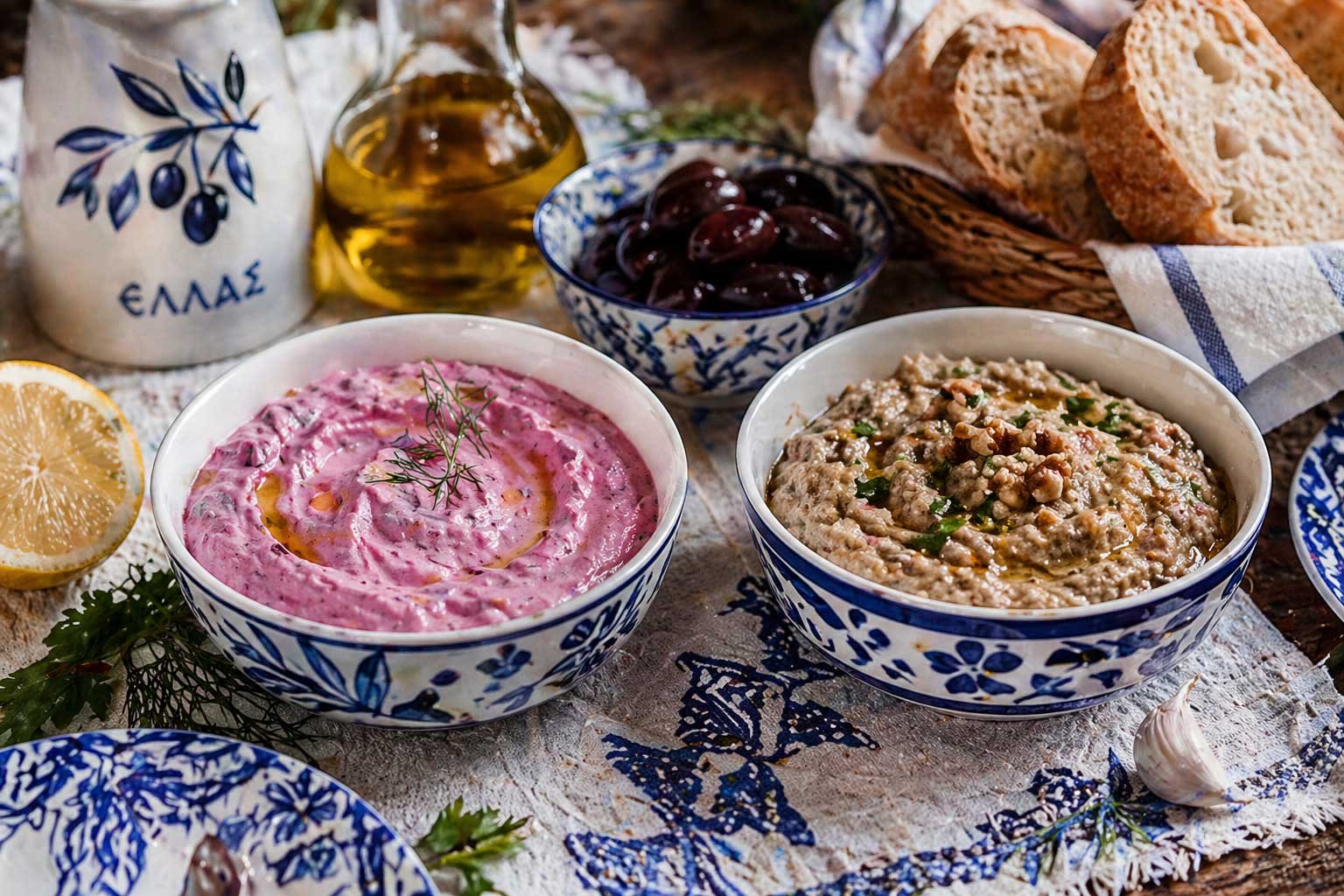
Purple carrot tzatziki is a vibrant twist on a classic Mediterranean dip, and when paired with a rich eggplant walnut spread, it creates a perfect Balkan mezze experience.
This recipe combines two classic mezze dip recipes into one balanced and visually stunning appetizer.
A vibrant purple carrot tzatziki paired with a smoky eggplant walnut dip—perfect for mezze platters, healthy snacks, or entertaining guests.
In the kitchens of Greece and across the Balkans, food is rarely served as a single dish. Instead, meals unfold through a variety of small plates known as mezze—each offering its own texture, flavor, and story.
This Purple Carrot Tzatziki & Eggplant Walnut Dip recipe brings together a cool, creamy yogurt-based dip with a smoky, nutty spread made from roasted eggplant and walnuts. The result is a balanced, visually striking appetizer that works beautifully for entertaining, light meals, or healthy snacking.
This purple carrot tzatziki recipe is a perfect example of how simple ingredients can be transformed into something unique and visually striking.
If you enjoy traditional dips like this, be sure to explore our full guide to Balkan appetizers and mezze-style dishes.
What Makes This Recipe Unique
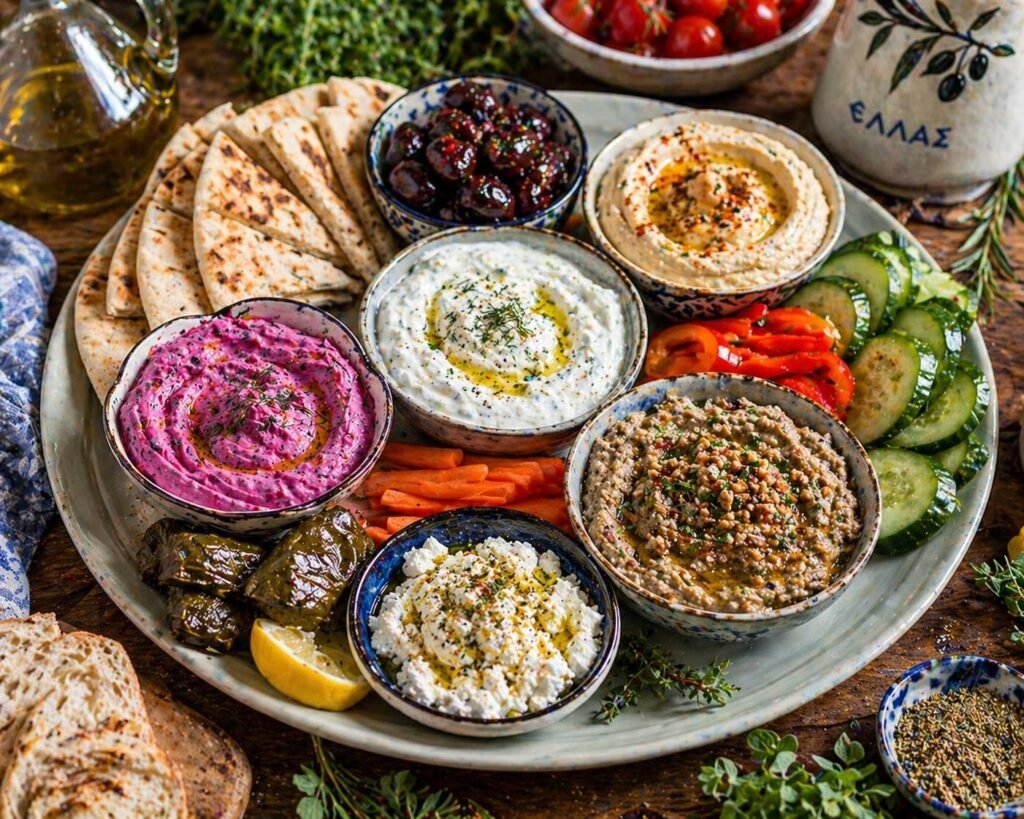
Purple carrot tzatziki and eggplant walnut dip may sound familiar at first—but this recipe stands out in several important ways.
In traditional Balkan and Greece cuisine, recipes are often built on simple foundations and adapted over time. This dish follows that same philosophy, combining classic elements with a modern twist that enhances both flavor and presentation.
A Rare Ingredient That Elevates the Dish
Unlike classic tzatziki, which uses cucumber, this version features purple carrot—an ancient variety of Daucus carota that predates the modern orange carrot.
This small change makes a big difference:
- Adds natural sweetness
- Creates a bold, vibrant color
- Boosts antioxidant content
- Makes the dish visually unique
A Deeper, Richer Eggplant Spread
The eggplant walnut dip goes beyond a standard melitzanosalata by incorporating walnuts—a signature Balkan ingredient that adds:
- Creaminess without dairy
- Earthy, nutty depth
- More satisfying texture
👉 This transforms a simple vegetable dip into a richer, more complete spread.
Perfect Balance of Flavors
This recipe is designed around balance:
- Cool & creamy (tzatziki)
- Smoky & rich (eggplant dip)
- Fresh & bright (herbs + lemon)
- Slightly sweet (carrot + honey)
👉 Together, these elements create a layered flavor experience that keeps every bite interesting.
Built for Mezze-Style Dining
Unlike single-dish recipes, this one is meant to be shared.
Serving both dips together creates a mezze experience—a style of eating that encourages:
- Variety
- Slow dining
- Social interaction
👉 This makes the recipe more than just food—it becomes an experience.
What makes this recipe truly special is the combination of:
- Traditional Balkan roots
- Mediterranean flavor balance
- Modern visual appeal
👉 It’s familiar enough to feel authentic, but unique enough to stand out.
History & Cultural Significance
Understanding the history behind this dish adds depth to every bite. Both tzatziki and eggplant-based spreads are rooted in centuries of culinary tradition across Greece, the Balkans, and the broader Eastern Mediterranean.
These are not just recipes—they are the result of cultural exchange, local ingredients, and generations of refinement.
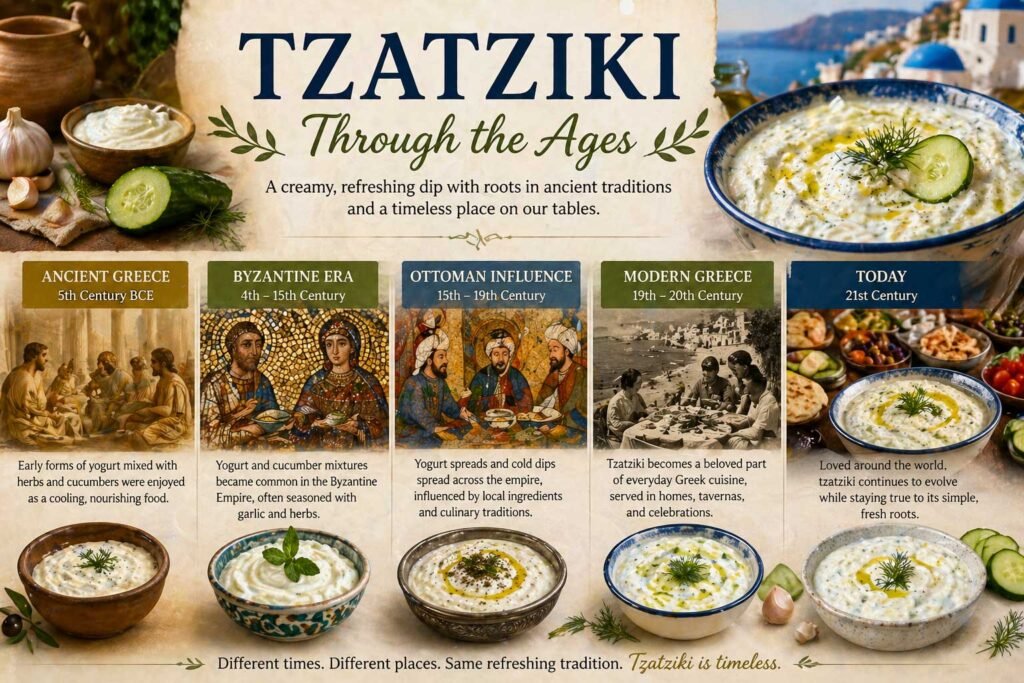
Tzatziki Through the Ages
Tzatziki is one of the most recognizable dishes from Greece, but its origins go far beyond modern Greek cuisine. Variations of yogurt-based sauces have existed for centuries across the Mediterranean, the Middle East, and regions influenced by the Ottoman Empire.
At its core, tzatziki is built on strained yogurt—a staple ingredient historically valued for:
- Its natural cooling properties in warm climates
- Its extended shelf life compared to fresh milk
- Its nutritional benefits, especially protein and probiotics
In earlier culinary traditions, yogurt sauces were often paired with grilled meats and vegetables. The acidity and creaminess helped balance rich, smoky flavors—creating the same harmony we still appreciate today.
👉 Over time, regional variations emerged, incorporating local herbs, garlic, and vegetables—eventually shaping what we now recognize as tzatziki.
For a deeper look into this classic sauce, check out our complete guide to authentic tzatziki and its variations.
The Ancient Story of the Purple Carrot
The carrot we know today wasn’t always orange. Early cultivated forms of Daucus carota were commonly purple, yellow, or white—long before orange carrots became dominant in Europe.
Purple carrots were especially valued for their:
- Natural sweetness
- Deep, vibrant color
- Nutritional properties, including antioxidants
Historically, these carrots were grown across Central Asia and the Middle East before spreading into Europe through trade routes.
By using purple carrots in this recipe, you are not just adding color—you are reconnecting with an older culinary tradition that predates modern agriculture.
👉 This small change bridges the gap between ancient ingredients and modern presentation.
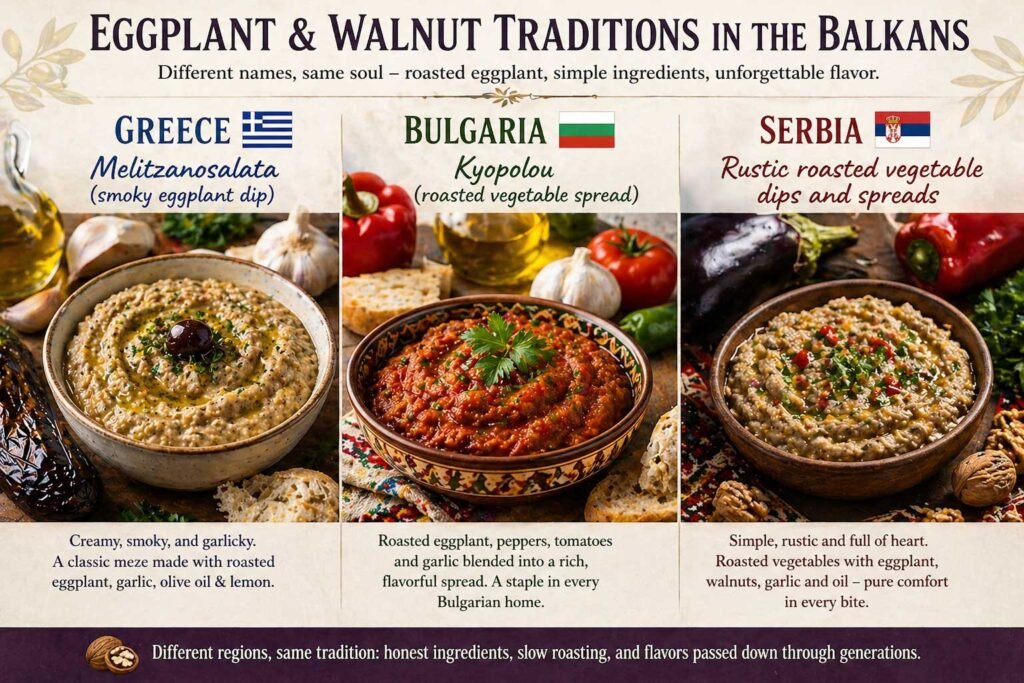
Eggplant & Walnut Traditions in the Balkans
Eggplant has been a cornerstone of Balkan and Mediterranean cooking for centuries. Its ability to absorb flavors and transform during cooking makes it one of the most versatile ingredients in the region.
Across different countries, eggplant is used in a variety of iconic dishes:
- Greece → Melitzanosalata (smoky eggplant dip – a traditional greek eggplant dip recipe like this highlights the simplicity and depth of Mediterranean cooking)
- Bulgaria → Kyopolou (roasted vegetable spread)
- Serbia → Rustic roasted vegetable dips and spreads
The addition of walnuts reflects a distinctly Balkan influence. In many rural communities, walnuts were widely available and used to:
- Add richness and calories to simple dishes
- Improve texture and body in spreads
- Enhance flavor with a mild, earthy nuttiness
👉 This combination of roasted eggplant and walnuts creates a dip that is both hearty and deeply satisfying—perfect for mezze-style dining.
You can also explore similar roasted vegetable spreads in our ajvar recipe guide, another Balkan favorite.
How Mezze Culture Shaped This Dish
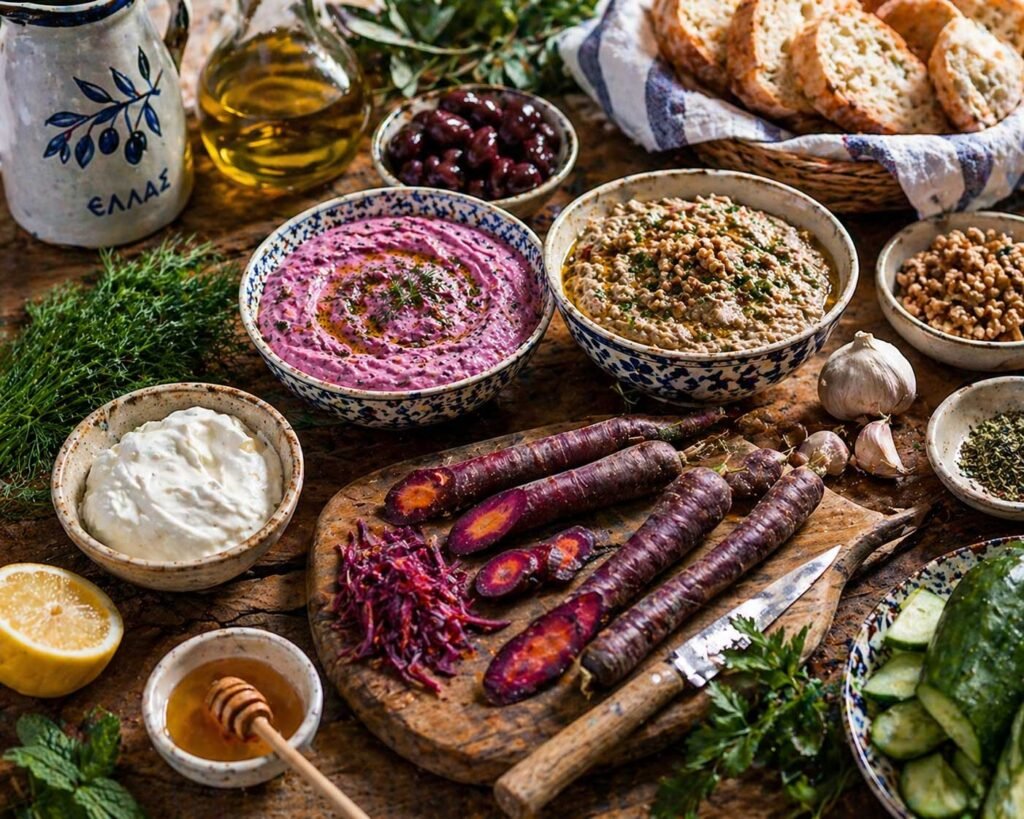
The concept of mezze—serving multiple small dishes at once—plays a central role in both Greek and Balkan dining traditions.
Rather than focusing on a single main course, mezze emphasizes:
- Variety of flavors and textures
- Shared dining experiences
- Slow, social meals
This recipe fits perfectly within that tradition. By pairing a fresh, creamy dip with a rich, smoky spread, it reflects the essence of mezze:
👉 Contrast, balance, and connection.
What makes this recipe truly special is how it brings together:
- Ancient ingredients like purple carrots
- Time-tested techniques like yogurt fermentation
- Regional traditions like walnut-based spreads
👉 It’s a dish that tells a story—one that spans centuries, cultures, and evolving tastes.
Ingredients Overview (Why Each Ingredient Matters)
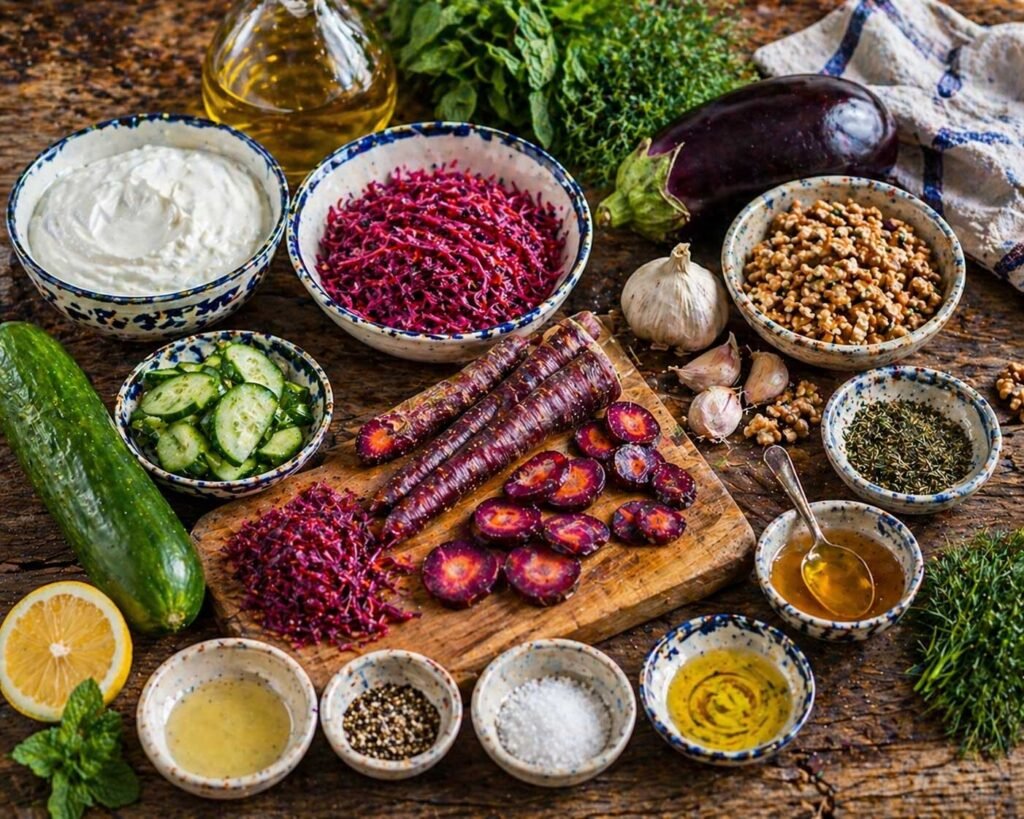
In Balkan and Mediterranean cooking, ingredients are rarely complicated—but they are always intentional. Each element in this recipe plays a specific role, contributing to the overall balance of flavor, texture, and aroma.
This dish works not because of complexity, but because every ingredient is carefully chosen and combined in a way that creates harmony.
Affiliate Disclosure: Some links below are Amazon affiliate links. This means we may earn a small commission at no extra cost to you.
Recommended Kitchen Tools for This Recipe
To get the best results and save time in the kitchen, having the right tools makes a big difference—especially when preparing smooth, well-balanced dips like these.
Editor’s Pick: If you only choose one tool, go with the food processor—it makes the biggest difference in texture and saves time.
| Product | Best For | Why It’s Useful | Rating | Price | Check Price |
|---|---|---|---|---|---|
| Cuisinart Food Processor 14-Cup | Blending dips | Creates smooth, consistent texture | ⭐⭐⭐⭐⭐ | $$ | 👉 Check on Amazon |
| Zulay Kitchen Garlic Press | Garlic prep | Faster prep, stronger flavor extraction | ⭐⭐⭐⭐⭐ | $ | 👉 Check on Amazon |
| Microplane Premium Zester Grater | Grating carrot | Fine texture for better tzatziki consistency | ⭐⭐⭐⭐⭐ | $ | 👉 Check on Amazon |
| Greenco Bamboo Serving Board Set | Serving | Perfect mezze presentation | ⭐⭐⭐⭐☆ | $$ | 👉 Check on Amazon |
Best Greek Yogurt for Tzatziki
The texture of your tzatziki depends heavily on the yogurt you use, so choosing a thick, high-quality Greek yogurt is essential for achieving that authentic creamy consistency. Using the right yogurt is critical for achieving authentic texture and taste.
| Product | Best For | Why It’s Useful | Rating | Price | Check Price |
|---|---|---|---|---|---|
| FAGE Total 5% Greek Yogurt | Authentic tzatziki | Thick, creamy, high protein | ⭐⭐⭐⭐⭐ | $$ | 👉 Check on Amazon |
| Chobani Plain Greek Yogurt | Easy option | Widely available | ⭐⭐⭐⭐⭐ | $ | 👉 Check on Amazon |
| Stonyfield Organic Greek Yogurt | Organic | Clean ingredients | ⭐⭐⭐⭐⭐ | $$ | 👉 Check on Amazon |
Understanding why each ingredient is used will take your cooking from simply following a recipe to truly mastering it. In traditional Balkan and Mediterranean cuisine, every ingredient has a purpose—whether it’s balancing flavor, enhancing texture, or adding nutritional value.
This recipe is built on that philosophy, combining simple ingredients that work together to create something far greater than the sum of their parts.
Purple Carrot Tzatziki: Ingredient Breakdown
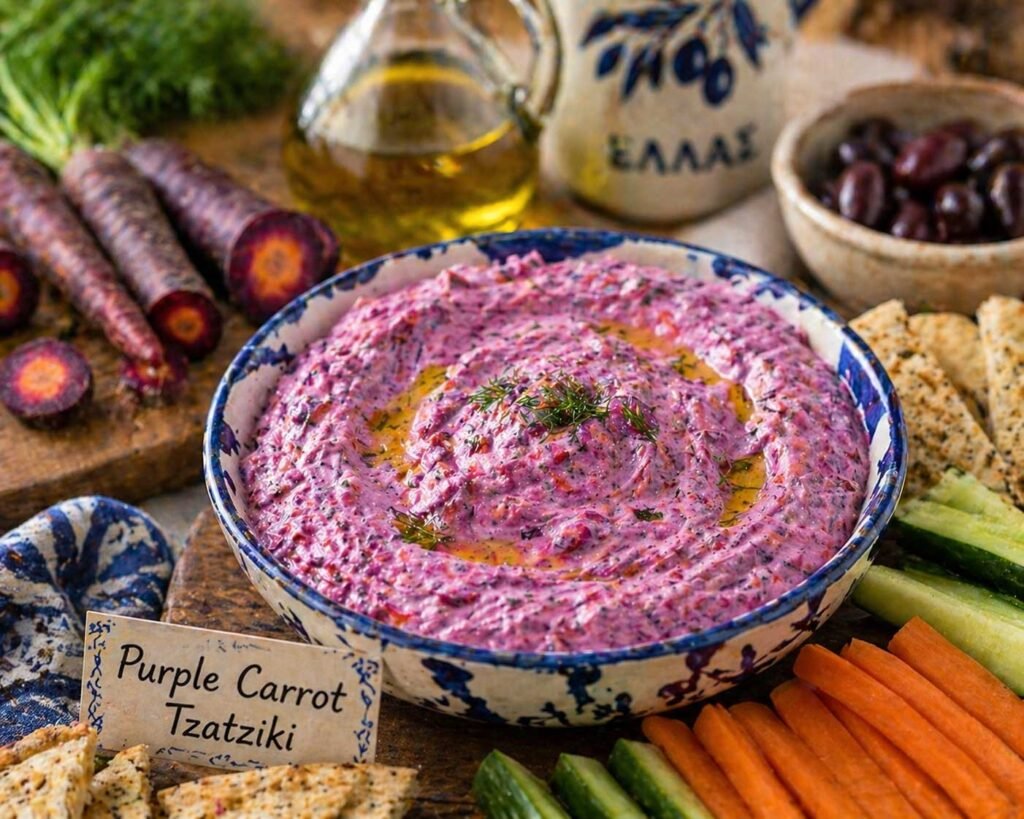
Purple Carrot
Purple carrots, derived from the ancient species Daucus carota, are one of the oldest forms of cultivated carrots. Unlike the modern orange variety, they contain anthocyanins—natural pigments with strong antioxidant properties.
In this recipe, purple carrots:
- Add a subtle natural sweetness
- Provide a bold, vibrant color
- Introduce a slightly earthy flavor
👉 This ingredient transforms traditional tzatziki into something visually unique and nutritionally richer.
Greek Yogurt
Greek yogurt forms the foundation of tzatziki. Its thick, strained consistency gives the dip its signature creamy texture.
It contributes:
- A rich and smooth mouthfeel
- A tangy flavor that balances garlic and oil
- Protein and probiotics that support gut health
👉 For the best results, use full-fat Greek yogurt—it creates a more authentic and luxurious texture.
Learn more about the unique qualities of yogurt in our guide to traditional Balkan dairy products.
Garlic
Garlic is essential in Balkan cuisine, adding intensity and depth.
Its role:
- Provides a sharp, aromatic kick
- Enhances the overall flavor complexity
- Balances sweetness from the carrot and richness from the yogurt
👉 Crushing garlic instead of chopping releases more oils, resulting in a stronger, fuller flavor.
Mint or Dill
Fresh herbs add brightness and freshness to the dip.
- Mint → more Mediterranean flavor
- Dill → more traditional Balkan profile
They:
- Lighten the richness of the yogurt
- Add a cooling herbal note
- Enhance aroma
👉 Choosing between mint and dill allows you to subtly shift the cultural identity of the dish.vor.
Extra Virgin Olive Oil
Olive oil is not just a cooking ingredient—it’s a key flavor component.
It:
- Adds richness and silkiness
- Enhances mouthfeel
- Carries and amplifies flavors
👉 A high-quality olive oil can significantly elevate the final result.
For more insight, see our breakdown of Mediterranean ingredients and how they shape regional cooking.
Lemon Juice
Acidity is essential for balance. Lemon juice prevents the dip from feeling too heavy.
It:
- Cuts through richness
- Brightens the overall flavor
- Brings all ingredients into harmony
Eggplant Walnut Dip: Ingredient Breakdown
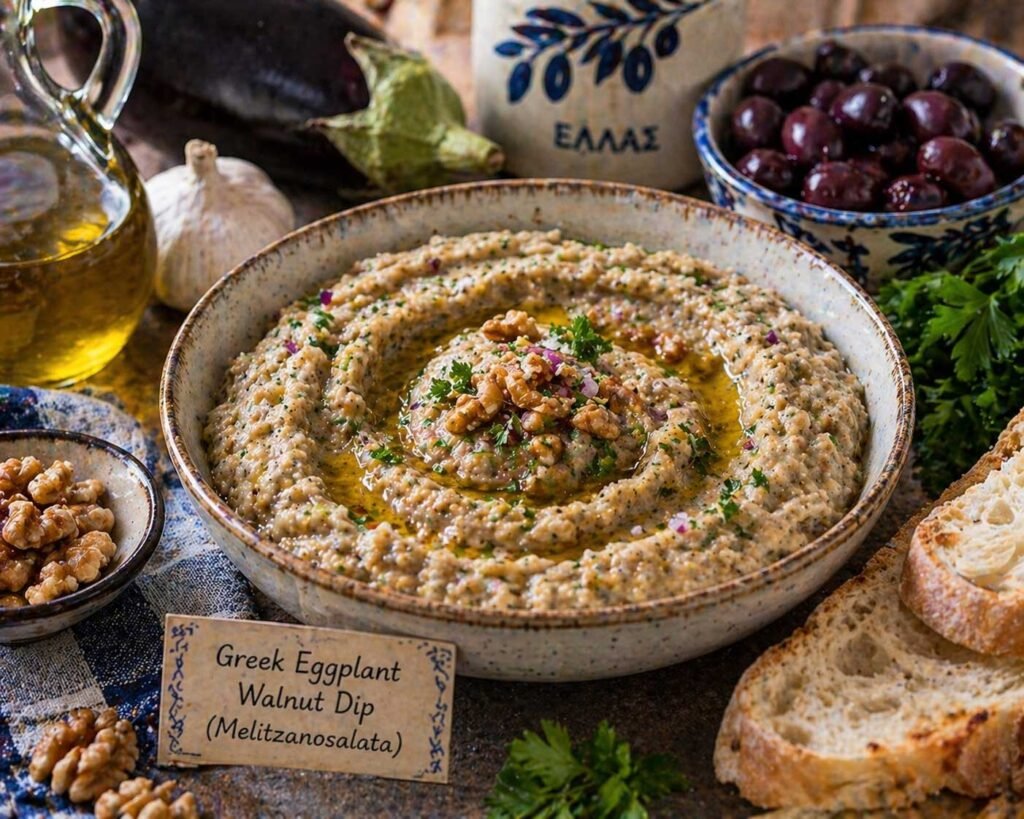
Eggplant
Eggplant is the base of the second dip. When roasted, it transforms into a soft, smoky, and deeply flavorful ingredient.
Its role:
- Provides the body of the dip
- Adds a rich, roasted flavor
- Absorbs surrounding ingredients
👉 Proper roasting is critical—this is where most of the flavor develops.
Walnuts
Walnuts are widely used in Balkan cuisine and add both texture and nutritional value.
They:
- Create a slightly coarse, creamy texture
- Provide healthy fats (omega-3s)
- Add an earthy, nutty flavor
👉 Lightly toasting walnuts before blending enhances their flavor even further.
Garlic
Garlic appears again here, but plays a slightly different role.
In this dip, it:
- Enhances the smokiness of the eggplant
- Adds boldness to the walnut mixture
- Deepens the overall flavor
Olive Oil
Olive oil helps bind the ingredients together and creates a smooth consistency.
It:
- Improves texture
- Adds richness
- Helps emulsify the dip
Lemon Juice
Eggplant can feel heavy without acidity—this is where lemon juice becomes essential.
It:
- Brightens the dip
- Balances richness
- Prevents the flavor from becoming flat
Honey
Honey may seem subtle, but it plays a critical role in balancing the dish.
It:
- Offsets the slight bitterness of eggplant
- Rounds out the flavors
- Adds a gentle sweetness
This eggplant walnut dip recipe relies on properly roasted eggplant and balanced seasoning to achieve its signature rich and smoky flavor.
👉 This is what makes the dip feel smooth and complete rather than sharp.
How These Ingredients Work Together
What makes this recipe special is how these ingredients interact:
- Creamy yogurt + fresh herbs → refreshing contrast
- Smoky eggplant + rich walnuts → deep, satisfying base
- Acidity + sweetness → perfect balance
This isn’t random—it’s a classic Balkan flavor structure that has worked for generations.
This recipe proves that you don’t need complex ingredients to create something exceptional. By understanding the role of each component, you can adjust flavors, experiment with variations, and even create your own signature version.
Making this Purple Carrot Tzatziki and Eggplant Walnut Dip at home is simple once you understand how each component comes together.
👉 Master the ingredients, and you master the dish.
Best Olive Oils for Authentic Flavor
Since olive oil is one of the main flavor components in both dips, using a high-quality extra virgin olive oil can dramatically elevate the final taste.
| Product | Best For | Why It’s Useful | Rating | Price | Check Price |
|---|---|---|---|---|---|
| California Olive Ranch Extra Virgin Olive Oil | Everyday use | Balanced flavor | ⭐⭐⭐⭐⭐ | $$ | 👉 Check on Amazon |
| Kirkland Signature Organic EVOO | Budget | High quality for price | ⭐⭐⭐⭐☆ | $ | 👉 Check on Amazon |
| Colavita Premium Italian EVOO | Authentic taste | Strong Mediterranean flavor | ⭐⭐⭐⭐⭐ | $$ | 👉 Check on Amazon |
Purple Carrot Tzatziki and Eggplant Walnut Dip is a delicious appetizer you can prepare at home and it goes perfectly with warm pita bread. Purple Carrot is unusual and it is a domesticated form of the wild carrot, Daucus carota.

Purple Carrot Tzatziki and Eggplant and Walnut Dip
Ingredients
For the Purple Carrot Tzatziki
- 1 purple carrot (peeled and finely grated)
- 2 cups Greek yogurt
- 2 garlic cloves (crushed)
- 2 tbsp fresh mint (finely shredded)
- 2 tbsp extra virgin olive oil
- 2 tbsp lemon juice
- salt to taste
For the Eggplant and Walnut Dip
- 2 eggplants
- 2 garlic cloves (roughly chopped)
- ¾ cup shelled walnuts
- ¼ cup extra virgin olive oil
- 2 tbsp lemon juice
- 2 tsp honey
- salt to taste
Instructions
- It is easy to prepare the purple carrot tzatziki just by combine all ingredients.
- Preheat oven to 200°C (400°F).
- Roast the eggplants for 30 minutes or until soft, but prick them several times with a toothpick or fork to let the air out.
- Let eggplants cool, peel the skin, and drain excess moisture.
- Use a food processor and blend walnuts, garlic, lemon juice, and olive oil until slightly coarse.
- When the eggplant is ready, cut off the unused parts, chop it, and add it to the food processor.
- Add eggplant and blend gently—do not over-process. Season with salt and honey.
- In a bowl, combine yogurt, grated purple carrot, garlic, herbs, olive oil, lemon juice, and salt.
- Mix well and refrigerate for at least 30 minutes.
- Serve both dips in separate bowls with olive oil drizzle and fresh herbs.
If you enjoy recipes like this, don’t miss our collection of easy Balkan recipes perfect for everyday cooking.
How to Serve Purple Carrot Tzatziki and Eggplant Walnut Dip
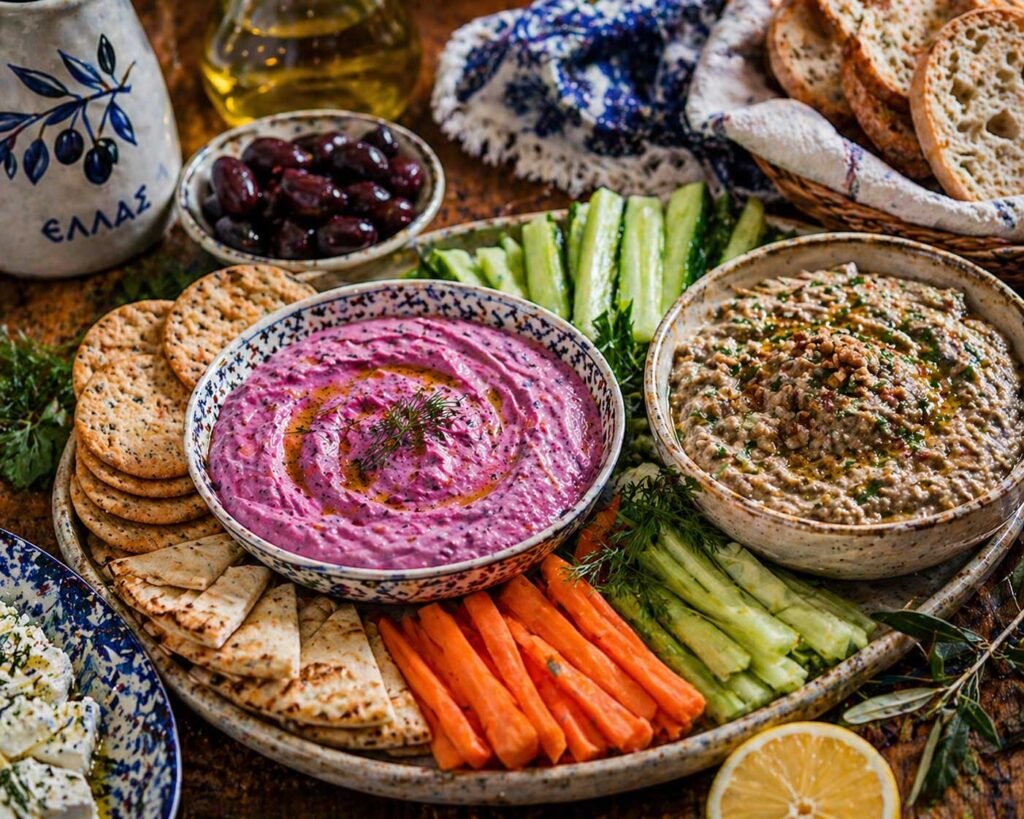
Serving this dish properly is just as important as making it. In Balkan and Greece cuisine, presentation turns simple food into an experience—especially when it comes to mezze.
Instead of serving these dips separately, the goal is to create a shared platter that invites people to gather, dip, and enjoy slowly.
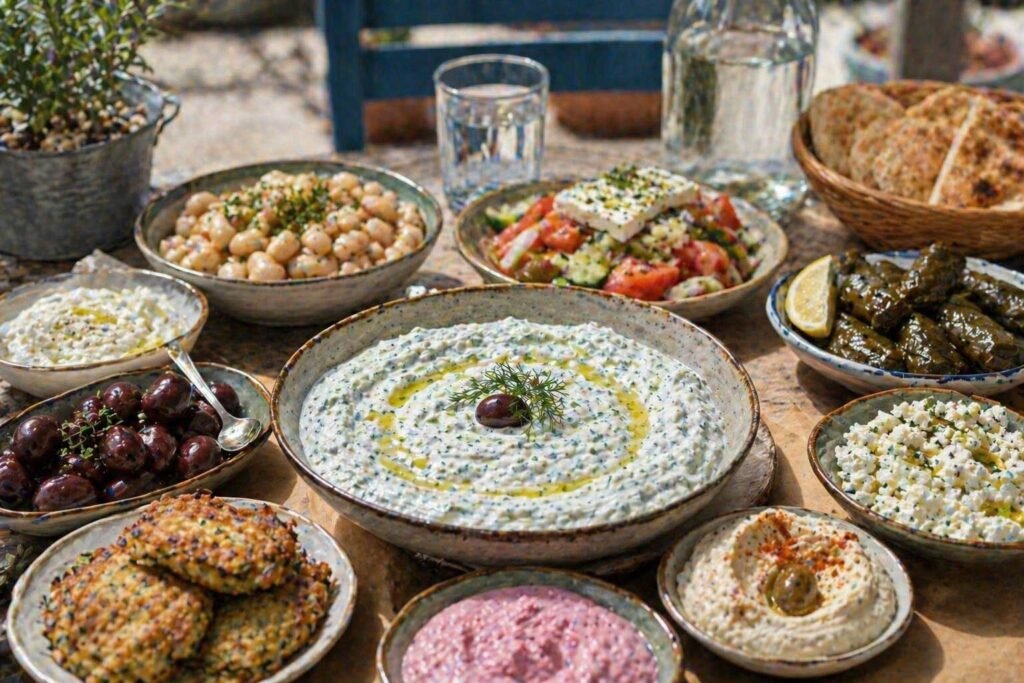
Build the Perfect Mezze Platter
Start by placing both dips in separate shallow bowls. Position them slightly off-center on a wooden board or large serving plate—this creates a natural, rustic look.
Surround them with:
- Warm pita bread (lightly toasted or grilled for texture)
- Fresh vegetables like cucumbers, carrots, and bell peppers
- Olives (Kalamata or mixed Mediterranean varieties)
- Feta cheese for a salty, creamy contrast
👉 This combination creates a balance of textures: soft, crunchy, creamy, and juicy.
For a full spread idea, check out our Balkan mezze guide and learn how to build the perfect table.
Finish Like a Restaurant
To elevate the presentation from homemade to professional:
- Drizzle extra virgin olive oil over both dips
- Sprinkle fresh herbs (mint, dill, or parsley)
- Add a light dusting of smoked paprika or black pepper
👉 These small touches dramatically improve both flavor and visual appeal, which is key for engagement and sharing.
Serving Occasions
This dish works perfectly for:
- Appetizers before a main meal
- Party platters and gatherings
- Light summer lunches
- Healthy snack boards
It also pairs exceptionally well with grilled meats, making it ideal alongside dishes featured in Balkan grilled recipes collection.
Pro Tip
Serve this platter slightly chilled (not cold). This keeps:
- The tzatziki creamy and refreshing
- The eggplant dip rich but not heavy
👉 Temperature control is a small detail that makes a big difference in taste perception.
What to Serve With Purple Carrot Tzatziki & Eggplant Walnut Dip

A great mezze dish is never served alone. In Balkan and Greece cuisine, the magic comes from pairing multiple food together—each adding texture, flavor, and contrast.
These types of combinations are common in mezze dip recipes, where variety and balance are key.
This section turns your recipe from a simple dip into a complete meal experience.
What to Serve With (Pairings)
If you’re serving this as part of a full mezze experience, the right wine tools can make entertaining smoother and more enjoyable.
Best Breads for Dipping (Essential Pairing)
Bread is the foundation of any mezze spread—it’s how you actually enjoy the dips.
Top Choices
- Pita Bread – soft, warm, and traditional
- Flatbread (Lepinja-style) – slightly thicker, Balkan-style
- Sourdough – adds tangy contrast
- Crispbread / Crackers – for crunch
👉 Warm the bread before serving to enhance aroma and texture.
Bread Pairing Picks
No mezze platter is complete without the perfect bread or dipping option, so choosing the right pairing enhances both texture and overall enjoyment.
These dips pair beautifully with fresh salads like our classic Shopska salad, a staple across the Balkans.
| Product | Best For | Why It’s Useful | Rating | Price | Check Price |
|---|---|---|---|---|---|
| Stonefire Authentic Pita Bread | Classic dipping | Soft, authentic texture | ⭐⭐⭐⭐⭐ | $ | 👉 Check on Amazon |
| 365 Whole Foods Flatbread | Mezze platters | Great flavor + flexibility | ⭐⭐⭐⭐☆ | $ | 👉 Check on Amazon |
| Wasa Crispbread Crackers | Crunch option | Adds texture contrast | ⭐⭐⭐⭐⭐ | $ | 👉 Check on Amazon |
Best Meats to Pair With These Dips
These dips truly shine when paired with grilled meats—the creamy and smoky elements balance rich proteins perfectly.
Balkan & Mediterranean Favorites
- Ćevapi (Grilled minced meat sausages)
- Souvlaki (Greek skewers)
- Grilled chicken thighs
- Lamb chops
- Kebabs
👉 The tzatziki cools the meat, while the eggplant dip adds depth.
Flavor Pairing Insight
- Fatty meats → balanced by acidity (tzatziki)
- Smoky meats → enhanced by eggplant dip
- Grilled textures → softened by creamy dips
👉 This is why these combinations have lasted for centuries.
You can also serve this alongside grilled favorites like ćevapi or souvlaki for a complete meal.
Mezze Serving Essentials
Presentation plays a big role in mezze dining, and the right serving pieces can instantly transform your dips into a restaurant-quality experience.
| Product | Best For | Why It’s Useful | Rating | Price | Check Price |
|---|---|---|---|---|---|
| Royal Craft Wood Charcuterie Board Set | Serving platters | Premium mezze presentation | ⭐⭐⭐⭐⭐ | $$$ | 👉 Check on Amazon |
| DOWAN Ceramic Dip Bowls Set | Dip serving | Clean, elegant look | ⭐⭐⭐⭐⭐ | $$ | 👉 Check on Amazon |
| Linen Table Napkins Set | Styling | Improves presentation quality | ⭐⭐⭐⭐☆ | $$ | 👉 Check on Amazon |
Pantry Ingredients
Small ingredient upgrades can make a big difference, and using high-quality pantry staples helps bring out the full depth of flavor in both dips.
| Product | Best For | Why It’s Useful | Rating | Price | Check Price |
|---|---|---|---|---|---|
| Fisher Chef’s Naturals Walnut Halves | Dip base | Fresh walnuts improve flavor | ⭐⭐⭐⭐⭐ | $$ | 👉 Check on Amazon |
| Nature Nate’s Raw Honey | Sweet balance | Natural sweetness | ⭐⭐⭐⭐⭐ | $ | 👉 Check on Amazon |
| McCormick Smoked Paprika | Flavor boost | Adds depth | ⭐⭐⭐⭐⭐ | $ | 👉 Check on Amazon |
Variations You Should Try
One of the best things about this recipe is how flexible it is. This balkan eggplant dip can easily be adapted depending on regional ingredients and personal taste preferences. Across the Balkans and Greece, no two households make dips exactly the same. Small ingredient changes can completely transform the flavor, texture, and even the cultural identity of the dish.
Below are some of the best variations to experiment with—whether you’re looking for dietary swaps or bold new flavors.
Vegan Version (Dairy-Free Alternative)
If you want to make this recipe fully plant-based, it’s surprisingly easy without sacrificing flavor.
How to Modify:
- Replace Greek yogurt with plant-based yogurt (coconut or almond works best)
- Swap honey for maple syrup or agave
What Changes:
- Texture becomes slightly lighter and less tangy
- Flavor leans more neutral depending on yogurt choice
👉 Pro Tip: Choose a thick, unsweetened plant yogurt—this keeps the consistency close to traditional tzatziki.
Spicy Version (Flavor Upgrade)
For those who like a little heat, adding spice transforms the dips into something more bold and modern.
How to Modify:
- Add chili flakes or Aleppo pepper
- Mix in roasted chili peppers with the eggplant
- Drizzle a bit of chili oil on top before serving
What Changes:
- Adds warmth and depth
- Enhances the smokiness of the eggplant
- Balances the coolness of the tzatziki
👉 This variation works especially well when pairing with grilled meats.
Balkan Rustic Version (Traditional Twist)
This version leans more into classic Balkan flavors and is very close to spreads like ajvar or kyopolou.
How to Modify:
- Add roasted red peppers to the eggplant dip
- Replace mint with dill in the tzatziki
- Optionally mix in a bit of feta cheese
What Changes:
- Flavor becomes deeper and slightly sweeter
- Texture becomes richer and more rustic
- Overall profile feels more traditional Balkan than Greek
👉 This is the best variation if you want authenticity and comfort-food vibes.
Garlic Lover’s Version (Bold & Intense)
If you really want to amplify the Balkan flavor profile:
How to Modify:
- Double the garlic in both dips
- Use roasted garlic for a sweeter, deeper taste
👉 This creates a stronger, more traditional flavor—especially popular in rural Balkan cooking.
Extra Fresh Version (Light & Summer-Ready)
Perfect for hot weather or lighter meals.
How to Modify:
- Add extra lemon juice
- Include grated cucumber along with the carrot
- Use more fresh herbs
👉 This makes the dish brighter, lighter, and more refreshing.
Nut-Free Version (Allergy-Friendly)
If you need to remove walnuts:
How to Modify:
- Replace walnuts with sunflower seeds or omit entirely
👉 The dip will still be delicious but slightly less creamy and rich.
Final Tip on Variations
The key to mastering this recipe is understanding balance:
- Add richness → increase acidity
- Add spice → balance with creaminess
- Add sweetness → enhance with salt
👉 Once you understand this, you can create your own signature version.
If you enjoy experimenting with flavors, explore more ideas in our collection of traditional Balkan dips and spreads.
Flavor Profile: What Makes This Dish So Addictive
The reason this recipe works so well isn’t just the ingredients—it’s the balance of opposing flavor elements that keeps every bite interesting.
In Balkan and Greece cuisine, great dishes are rarely about complexity. Instead, they rely on contrast and harmony.
The Core Flavor Balance
This recipe hits all five key taste elements:
| Taste Element | Where It Comes From | Why It Matters |
|---|---|---|
| Creamy | Greek yogurt, walnuts | Smooth, satisfying mouthfeel |
| Smoky | Roasted eggplant | Depth and richness |
| Fresh | Herbs, carrot | Lightness and brightness |
| Acidic | Lemon juice | Cuts heaviness |
| Sweet | Honey, carrot | Balances bitterness |
👉 This balance is what makes the dish feel complete rather than heavy or flat.
Texture Contrast (The Hidden Secret)
Texture plays just as big a role as flavor:
- Tzatziki → smooth, creamy, cooling
- Eggplant dip → slightly coarse, rich, velvety
When eaten together, they create a dynamic experience that keeps your palate engaged.
👉 This is why mezze-style dishes are so addictive—you’re constantly switching textures.
Aroma & Aftertaste
Aroma is often overlooked but critical:
- Garlic → sharp, savory aroma
- Olive oil → fruity, slightly peppery notes
- Herbs → fresh and cooling
The aftertaste is:
- Clean (thanks to lemon and herbs)
- Slightly nutty (from walnuts)
- Lightly sweet (from carrot and honey)
👉 This encourages another bite… and another
Why People Keep Coming Back to This Recipe
This dish triggers what chefs call “flavor layering”:
- First bite → creamy + fresh
- Second bite → smoky + rich
- Third bite → balanced + satisfying
👉 The brain doesn’t get bored—so people keep eating.
Common Mistakes to Avoid
| Mistake | What Happens | Quick Fix |
|---|---|---|
| Not draining eggplant | Watery dip, diluted flavor | Let eggplant sit and drain after roasting |
| Using low-fat yogurt | Runny texture, weak flavor | Use thick, full-fat Greek yogurt |
| Skipping resting time | Harsh garlic, unbalanced taste | Chill tzatziki for at least 30 minutes |
| Over-blending dip | Too smooth, loses texture | Pulse instead of fully blending |
| Under-seasoning | Flat, boring taste | Adjust salt, lemon, and olive oil |
| Undercooking eggplant | Bitter taste, firm texture | Roast until fully soft and collapsed |
| Low-quality olive oil | Dull, lacking flavor | Use good extra virgin olive oil |
Quick Fix Guide (Save This)
If something feels off, here’s how to fix it fast:
- Too thick → add olive oil
- Too bitter → add a little honey
- Too bland → add salt + lemon
- Too heavy → add fresh herbs
👉 Almost every issue can be corrected with small adjustments.
Final Tip
Great results don’t come from following steps perfectly—they come from understanding:
- Balance
- Texture
- Contrast
👉 Once you understand these, you can adapt the recipe and still get amazing results every time.
FAQs About Purple Carrot Tzatziki & Eggplant Walnut Dip
What is purple carrot tzatziki?
This purple carrot tzatziki recipe is a modern variation that builds on the traditional yogurt-based dip. Purple carrot tzatziki is a variation of traditional tzatziki where grated cucumber is replaced (or combined) with purple carrot. It maintains the same creamy yogurt base but adds a slightly sweeter flavor and a vibrant color thanks to the natural pigments in Daucus carota.
👉 This version is both visually unique and higher in antioxidants compared to the classic recipe.
What is eggplant walnut dip?
Eggplant walnut dip is a Balkan-inspired spread made from roasted eggplant blended with walnuts, garlic, olive oil, and lemon juice. It’s similar to Greek melitzanosalata but richer and slightly more textured due to the walnuts.
This eggplant walnut dip recipe is especially popular across Balkan regions, where walnuts are commonly used in savory spreads.
👉 It’s commonly served as part of a mezze platter in Greece and across the Balkans.
Can I make these dips ahead of time?
Yes—both dips taste better after resting.
- Tzatziki becomes smoother and more balanced
- Eggplant dip develops deeper flavor
👉 For best results, prepare a few hours ahead or the night before.
How long do these dips last in the fridge?
- Purple carrot tzatziki: 2–3 days
- Eggplant walnut dip: 3–4 days
Store in airtight containers and stir before serving.
Can I freeze eggplant walnut dip?
You can, but it’s not ideal.
Freezing may cause a watery texture and dull flavor.
👉 Best enjoyed fresh or refrigerated.
Can tzatziki be frozen?
No. Tzatziki separates when frozen, resulting in a grainy, watery texture.
What is the best yogurt for tzatziki?
Use full-fat Greek yogurt for the best results.
It provides a thick texture, creamy consistency, and rich flavor.
Can I make this recipe vegan?
Yes.
- Use plant-based yogurt (coconut or almond)
- Replace honey with maple syrup
👉 Choose unsweetened yogurt for best flavor.
How can I make this recipe spicy?
Add heat by using:
- Chili flakes
- Roasted chili peppers
- Chili oil
👉 This pairs especially well with the eggplant dip.
What bread is best for serving?
- Pita bread
- Flatbread
- Crusty sourdough
👉 Warm bread before serving for best texture.
Can I reduce the garlic?
Yes. Use less garlic or roast it first for a milder, slightly sweet flavor.
Why is my tzatziki too watery?
This usually happens due to excess moisture or thin yogurt.
👉 Fix:
- Drain the carrot (or cucumber)
- Use thick Greek yogurt
Why does my eggplant dip taste bitter?
Bitterness comes from undercooked eggplant or seeds.
👉 Fix:
- Roast longer until soft
- Add a little honey or lemon juice
How do I fix the flavor if something tastes off?
- Too thick → add olive oil
- Too bland → add salt + lemon
- Too bitter → add honey
- Too heavy → add herbs
Can I serve this as a main dish?
Yes—serve it as a mezze platter with bread, salads, and grilled meats for a complete meal.
Is this recipe healthy?
Yes—this is a nutrient-dense, balanced appetizer that provides:
- Healthy fats for sustained energy
- Protein for satiety
- Fiber for digestion
- Antioxidants for overall wellness
👉 It delivers strong nutritional value while still being rich and satisfying.
Learn more about healthy Mediterranean-style eating in our guide to Balkan food and nutrition.
What is served with tzatziki and eggplant dip?
Tzatziki and eggplant dip are typically served with pita bread, fresh vegetables, olives, feta cheese, and grilled meats such as kebabs or souvlaki as part of a Mediterranean mezze platter.
Storage, Reheating & Meal Prep Tips
Proper storage helps maintain the flavor and texture of both dips—especially since they rely on fresh ingredients and dairy.
Storage Guide (Quick Reference)
| Item | Storage Method | Shelf Life | Notes |
|---|---|---|---|
| Purple carrot tzatziki | Airtight container, refrigerated | 2–3 days | Stir before serving |
| Eggplant walnut dip | Airtight container, refrigerated | 3–4 days | Flavor improves over time |
Can You Freeze These Dips?
- Tzatziki → ❌ Not recommended (yogurt separates)
- Eggplant dip → ⚠️ Possible, but not ideal
If freezing eggplant dip:
- Use freezer-safe containers
- Thaw slowly in the fridge
- Stir well before serving
👉 For best quality, enjoy both dips fresh or refrigerated.
Meal Prep Tips
These dips are perfect for prepping ahead:
- Make both dips in advance
- Store separately to preserve texture
- Pair with pre-cut vegetables or bread
👉 Ideal for:
- Quick lunches
- Healthy snacks
- Entertaining prep
Pro Tip: Before serving, stir the dips and add a light drizzle of olive oil to refresh flavor and texture.
Nutrition Facts & Health Benefits
This recipe follows the principles of the Mediterranean diet—focused on whole foods, healthy fats, and balanced nutrition. It’s also considered one of the best healthy Mediterranean dips thanks to its combination of protein, fiber, and nutrient-rich ingredients.
The Mediterranean diet has consistently been ranked as one of the healthiest diets in the world, known for supporting heart health, longevity, and overall wellness.
Nutritional Overview (Quick Snapshot)
| Nutrient Type | Main Sources | Benefits |
|---|---|---|
| Protein | Greek yogurt | Supports muscle health and satiety |
| Healthy fats | Olive oil, walnuts | Heart health, anti-inflammatory |
| Fiber | Eggplant, carrots | Aids digestion and gut health |
| Antioxidants | Purple carrots, olive oil | Reduces inflammation |
Key Ingredient Benefits
Each ingredient in this recipe contributes unique nutritional benefits, making it both flavorful and highly nourishing.
| Ingredient | Key Nutrients | Health Benefits |
|---|---|---|
| Greek Yogurt | Protein, probiotics | Supports muscle health, improves digestion, promotes gut health |
| Purple Carrots | Anthocyanins, antioxidants | Anti-inflammatory, supports heart health, rich in nutrients from Daucus carota |
| Eggplant | Fiber, low calories | Aids digestion, supports satiety, helps maintain a balanced diet |
| Walnuts | Omega-3 fatty acids, healthy fats | Supports brain function, heart health, provides long-lasting energy |
| Olive Oil | Monounsaturated fats, antioxidants | Anti-inflammatory, supports cardiovascular health, core of Mediterranean diet |
Dietary Notes
- Vegetarian
- Gluten-free (with gluten-free bread/crackers)
- Vegan option available (see variations section)
Final Thoughts: Why You’ll Keep Making This Recipe
This Purple Carrot Tzatziki and Eggplant Walnut Dip is more than just an appetizer—it’s a complete mezze experience.
This Purple Carrot Tzatziki and Eggplant Walnut Dip isn’t just another appetizer—it’s a perfect example of how simple ingredients can create something truly memorable.
It brings together:
- The freshness of yogurt and herbs
- The depth of roasted eggplant
- The richness of walnuts
- The brightness of lemon
All balanced into a dish that feels both traditional and modern at the same time.
In Greece and across the Balkans, this kind of food represents more than just flavor—it represents hospitality, sharing, and slowing down to enjoy a meal together.
Why You’ll Keep Coming Back to This Recipe
This Purple Carrot Tzatziki and Eggplant Walnut Dip is the kind of recipe you’ll use again and again because it works in so many situations. It feels elegant enough for guests, simple enough for everyday snacking, and colorful enough to stand out on any mezze table.
Serve it as a beautiful starter before grilled meats, salads, or a full Balkan-style dinner.
Pair it with carrots, celery, crackers, or warm pita for a lighter snack board.
Add bread, olives, cheese, and vegetables to turn it into a simple Mediterranean meal.
The colorful purple carrot tzatziki makes the whole table look more impressive.
Recommended Products for Best Results
If you want this recipe to taste and look restaurant-quality, the right tools and ingredients make a real difference. For the best texture, flavor, and presentation, check the product tables above for:
These small upgrades help create smoother dips, better flavor balance, and a more beautiful mezze presentation at home.
Continue Exploring Balkan & Greek Recipes
If you enjoyed this recipe, build a full mezze-style meal by exploring more traditional dips, spreads, salads, and Balkan appetizers.
Did You Try This Recipe?
Save it for later, share it with friends, and leave a comment with your favorite variation.
⭐ Your feedback helps others discover amazing Balkan recipes!👉 Explore next:
- Tzatziki Variations
- Ajvar Recipe
- Shopska Salad
Inspiration: greekvegetarian.blogspot.com
Explore other recipes from the traditional Greek cuisine.
Please let me know how it turned out for you! Leave a comment below and don’t forget to follow us. Sharing is caring!

