Greek Turnip and Feta Fritters

Golden, crispy, and bursting with Mediterranean flavor, these Greek Turnip and Feta Fritters are a delicious way to turn simple root vegetables into an irresistible appetizer or light meal. Tender cooked turnips are combined with fragrant cumin, fresh mint, sautéed onions, and creamy feta cheese before being pan-fried until perfectly crisp on the outside and soft, creamy on the inside. Every bite delivers a wonderful balance of earthy sweetness, salty cheese, and fresh herbs.
Although traditional Greek Zucchini Fritters, known as Kolokithokeftedes, are among Greece’s best-loved vegetable appetizers, the same cooking method works beautifully with other vegetables. This Greek-inspired variation uses turnips instead of zucchini, combining their mild, slightly earthy flavor with salty feta and fresh herbs. It’s a creative way to use an often-overlooked root vegetable.
Whether served as part of a traditional Greek meze spread, paired with grilled lamb or chicken, or enjoyed with a generous spoonful of homemade tzatziki, these crispy turnip and feta fritters are a delicious option for lunch, dinner, or entertaining. They’re easy to make, naturally vegetarian, and a fantastic way to add more nutritious vegetables to your table while enjoying authentic Greek-inspired comfort food.
What Are Greek Turnip and Feta Fritters?

Greek Turnip and Feta Fritters are crispy, savory vegetable patties made with tender boiled turnips, crumbled feta cheese, sautéed onions, fresh mint, cumin, flour, and egg. The ingredients are mixed into a thick batter, shaped into small fritters, and pan-fried in olive oil until golden brown and crispy on the outside while remaining soft and creamy in the center.
These fritters take inspiration from Greek vegetable patties, particularly zucchini fritters known as Kolokithokeftedes. Rather than following a specific traditional turnip fritter recipe, this version uses familiar Greek ingredients such as feta, mint, and olive oil. The result is a simple, Greek-inspired appetizer that makes good use of seasonal root vegetables.
The natural sweetness of cooked turnips pairs beautifully with the tangy saltiness of authentic Greek feta, while fresh mint adds brightness and cumin contributes a subtle earthy warmth. The result is a wonderfully balanced appetizer or light meal that showcases the simplicity and freshness of traditional Mediterranean cooking. Served warm with creamy tzatziki, a squeeze of fresh lemon, or as part of a Greek meze platter, these fritters are a delicious way to enjoy this delicious Greek-inspired vegetable dish.
If you enjoy Greek vegetable fritters, you might also like Santorini Tomato Fritters (Domatokeftedes), another delicious appetizer made with fresh vegetables and aromatic herbs.
Affiliate Disclosure: This article may contain affiliate links. If you purchase through these links, I may earn a small commission at no additional cost to you.
Why You’ll Love This Greek Turnip and Feta Fritters Recipe

There are plenty of reasons these Greek Turnip and Feta Fritters deserve a spot in your recipe collection. They’re simple to prepare, packed with fresh Mediterranean flavors, and offer a delicious way to enjoy nutritious root vegetables in a completely new way.
Crispy Outside, Soft Inside
Each fritter develops a beautifully golden, crispy crust while staying incredibly tender and creamy in the center. The contrast in textures makes every bite satisfying.
A Delicious Way to Use Turnips
If you’re looking for something different to make with turnips, these fritters are worth trying. Boiling softens the turnips and mellows their naturally peppery flavor, allowing the feta, mint, and cumin to shine.
Authentic Mediterranean Flavors
Creamy feta cheese, fragrant cumin, fresh mint, sweet onions, and extra virgin olive oil come together to create the bright, balanced flavors that Greek cuisine is famous for.
Perfect for Any Occasion
These fritters are versatile enough to serve as an appetizer, vegetarian main course, side dish, or part of a traditional Greek meze platter. They also make an excellent addition to brunches, picnics, and family gatherings.
Budget-Friendly Ingredients
Made with everyday pantry staples and inexpensive fresh vegetables, this recipe delivers impressive flavor without requiring costly ingredients.
Naturally Vegetarian
Made with vegetables, herbs, egg, and cheese, these fritters are a satisfying meat-free option. For a strictly vegetarian version, choose feta made with non-animal rennet.
Easy to Customize
You can easily personalize the recipe by adding fresh dill, parsley, oregano, garlic, or a pinch of chili flakes. They’re equally delicious served with tzatziki, Greek yogurt, or your favorite Mediterranean dipping sauce.
Great for Meal Prep
The fritters can be prepared ahead of time, refrigerated, or frozen, making them a convenient option for quick lunches, appetizers, or easy weeknight dinners.
Ingredients You’ll Need

One of the best things about these Greek Turnip and Feta Fritters is that they rely on simple, wholesome ingredients commonly found in Mediterranean kitchens. Each ingredient contributes its own unique flavor and texture, creating fritters that are crisp on the outside and tender on the inside.
Turnips
Fresh turnips form the heart of this recipe. Once boiled until tender, they become naturally creamy with a mild, slightly sweet flavor that pairs beautifully with feta cheese. Choose small to medium-sized turnips that feel firm and heavy for their size.
Feta Cheese
Authentic Greek feta adds a rich, tangy, and salty flavor while creating creamy pockets throughout each fritter. Sheep’s milk feta offers the most traditional taste, although a sheep-and-goat milk blend also works wonderfully.
Brown Onion
Finely chopped onion is sautéed until lightly golden, adding sweetness and depth that balance the earthy flavor of the turnips.
Egg
A single egg helps bind the mixture together, ensuring the fritters hold their shape during frying while remaining light and tender.
All-Purpose Flour
Flour gives the batter structure and helps create the crispy golden exterior. It also absorbs excess moisture from the cooked turnips for the perfect consistency.
Fresh Mint
Fresh mint is a classic herb in Greek cooking. It adds a refreshing brightness that complements both the turnips and the feta, giving the fritters their distinctive Mediterranean character.
Ground Cumin
A teaspoon of cumin provides gentle warmth and an earthy aroma without overpowering the other ingredients. It enhances the natural sweetness of the turnips and complements the salty feta.
Extra Virgin Olive Oil
Olive oil is used for frying and contributes rich flavor while producing a beautifully crisp, golden crust. For the best results, use a good-quality extra virgin olive oil.
Salt
Feta already adds plenty of saltiness, so start with little or no additional salt. Fry a small test fritter, taste it, and adjust the seasoning of the remaining mixture if needed.
Kitchen Equipment
You don’t need a kitchen full of gadgets to make these Greek Turnip and Feta Fritters. A few everyday tools will help you prepare the mixture and fry the fritters until golden and crisp.
- Large saucepan: For boiling the turnips until tender.
- Colander: Helps drain excess water from the cooked turnips.
- Food processor: Quickly combines the turnips, onion, egg, flour, and seasonings. A potato masher also works for a more rustic texture.
- Mixing bowl: For folding the crumbled feta into the batter.
- Heavy-bottomed frying pan: Provides even heat and helps the fritters develop a golden crust.
- Spatula and tablespoon: For portioning, shaping, and flipping the fritters.
A good nonstick skillet or well-seasoned cast-iron pan makes frying easier, especially when working with a soft vegetable mixture.
How to Make Greek Turnip and Feta Fritters
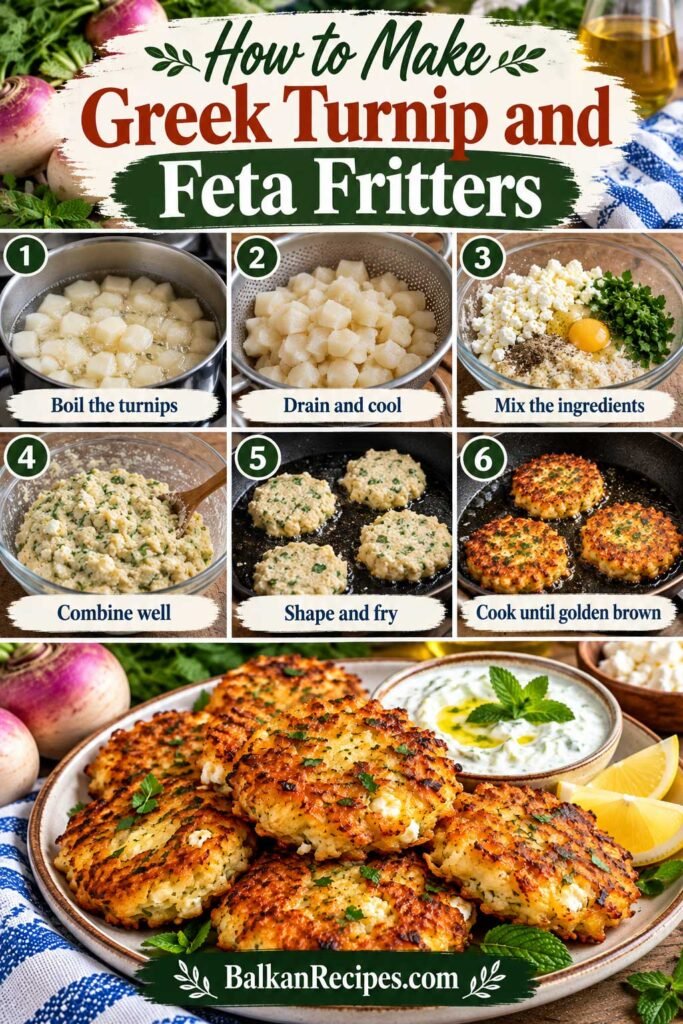
These Greek Turnip and Feta Fritters are easy to prepare and come together in just a few simple steps. Boiling the turnips first creates a creamy base, while pan-frying gives each fritter its irresistible golden crust.
Step 1: Cook the Turnips
Peel the turnips and cut them into evenly sized cubes. Bring a large pot of lightly salted water to a boil, then add the turnips. Cook for 15 to 20 minutes, or until they are completely tender when pierced with a fork.
Drain the turnips thoroughly in a colander and let them sit for several minutes to allow as much moisture as possible to evaporate. This helps prevent the fritters from becoming too soft.
Step 2: Sauté the Onion
While the turnips are cooling, heat a small drizzle of olive oil in a frying pan over medium heat. Add the finely chopped onion and cook for about 5 to 7 minutes, stirring occasionally, until softened and lightly golden.
Remove from the heat and allow the onion to cool slightly.
Step 3: Prepare the Fritter Mixture
Place the cooked turnips, sautéed onion, egg, flour, cumin, and chopped fresh mint into a food processor. Blend until a thick, mostly smooth mixture forms. A little texture is perfectly fine and gives the fritters a more rustic consistency.
Transfer the mixture to a large bowl and gently fold in the crumbled feta cheese until evenly distributed.
Step 4: Heat the Oil
Pour enough olive oil into a large frying pan to lightly coat the bottom. Heat over medium heat until the oil is hot but not smoking.
Proper oil temperature helps the fritters become crispy without absorbing excess oil.
Step 5: Fry the Fritters
Spoon portions of the mixture into the hot oil, leaving enough space between each fritter. Gently flatten each one with the back of the spoon.
Cook for about 3 to 4 minutes per side, or until both sides are deep golden brown and crispy.
Work in batches to avoid overcrowding the pan, which can lower the oil temperature and result in soggy fritters.
Step 6: Drain and Serve
Transfer the cooked fritters to a plate lined with paper towels to remove any excess oil.
Serve immediately while still warm and crispy with homemade tzatziki, Greek yogurt, fresh lemon wedges, or as part of a traditional Greek meze platter.

Greek Turnip and Feta Fritters Recipe
Ingredients
- 2 medium turnips (peeled and cubed)
- 1 brown onion (peeled and finely chopped)
- 1 egg
- 250 g flour
- 1 tsp cumin
- 1 tbsp fresh mint (finely chopped)
- 100 g feta cheese
- 3 tbsp olive oil for sautéing and frying
- salt and freshly ground black pepper, to taste
Instructions
- Boil the turnips. Bring a large pot of water to a boil. Add the cubed turnips and cook for 15–20 minutes until fork-tender. Drain thoroughly and let them steam-dry for several minutes.
- Sauté the onion. Heat a little olive oil in a skillet over medium heat. Add the chopped onion and sauté for 5–7 minutes until softened and lightly golden.
- Prepare the batter. Add the cooked turnips, sautéed onion, egg, flour, cumin, and mint to a food processor. Pulse until a thick mixture forms, leaving a little texture.
- Add the feta. Transfer the mixture to a bowl and gently fold in the crumbled feta cheese.
- Heat the oil. Add enough olive oil to lightly coat the bottom of a frying pan. Heat over medium heat.
- Fry the fritters. Drop heaped tablespoons of batter into the pan and flatten slightly. Fry for approximately 3–4 minutes per side until golden brown and cooked through. Work in batches.
- Drain and serve. Transfer to a paper towel-lined plate or wire rack. Serve warm with tzatziki, lemon wedges, or a fresh Greek salad.
Notes
- Drain the turnips thoroughly to prevent a watery batter.
- If the mixture is too loose, add flour one tablespoon at a time.
- Use authentic Greek feta for a tangy, creamy flavor.
- Fry a small test fritter before adjusting the salt.
- Refrigerate leftovers for up to 3–4 days or freeze for up to 3 months.
- Reheat in the oven or air fryer for the best texture.
Expert Tips for the Best Greek Turnip and Feta Fritters

A few simple techniques can make the difference between good fritters and truly outstanding ones. Follow these tips to achieve crispy, golden fritters with a soft, flavorful center every time.
Drain the Turnips Thoroughly
Cooked turnips hold a surprising amount of water. After boiling, allow them to drain well in a colander, then gently press out any remaining moisture with paper towels or a clean kitchen towel. A drier mixture creates crispier fritters that hold together much better.
Use High-Quality Greek Feta
Since feta is one of the main ingredients, its quality makes a noticeable difference. Authentic Greek feta made from sheep’s milk or a blend of sheep’s and goat’s milk provides the richest flavor and creamiest texture.
Don’t Overprocess the Mixture
Blend the ingredients just until combined. Leaving a little texture from the turnips creates a more rustic, tender fritter instead of a dense, paste-like consistency.
Cook Over Medium Heat
Avoid frying over high heat. Medium heat allows the fritters to cook evenly, forming a crisp golden crust while ensuring the inside is heated through without burning the outside.
Fry in Small Batches
Overcrowding the pan lowers the oil temperature and prevents proper browning. Leave enough space between the fritters so they cook evenly and become beautifully crispy.
Keep Them Warm Before Serving
If you’re making several batches, place the cooked fritters on a baking tray in a 200°F (95°C) oven. This keeps them warm and crispy until you’re ready to serve everyone.
Check the Batter Before Frying
The mixture should be thick enough to hold its shape when spooned into the pan. If it spreads immediately, stir in a little additional flour, one tablespoon at a time. Cook a small test fritter first to check the texture before frying the entire batch.
Helpful Tools for Perfectly Crispy Fritters
Getting a golden crust without burning the fritters is easier when you have the right tools. These simple kitchen accessories can help you control the heat, turn delicate fritters, and keep oil splatters under control.
| Product | Why it’s useful | Where to Buy |
|---|---|---|
| Digital Cooking Thermometer | Helps check oil temperature | Check Price |
| Stainless Steel Splatter Screen | Reduces oil splashes while frying | Check Price |
| Thin Fish Spatula | Makes flipping delicate fritters easier | Check Price |
Common Mistakes to Avoid When Making Turnip and Feta Fritters
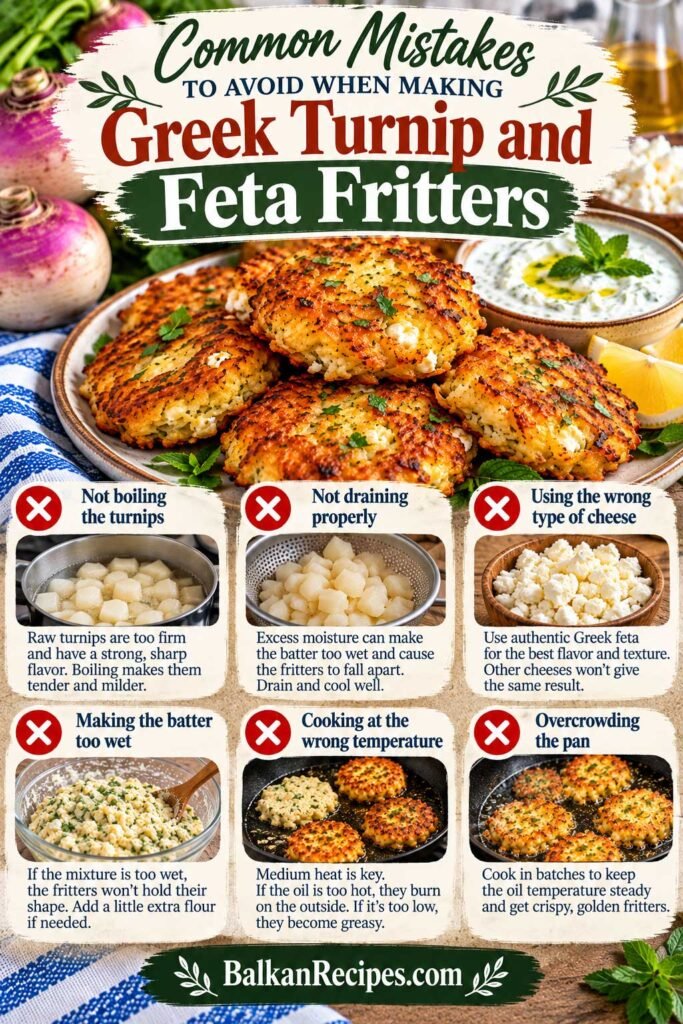
Even a simple fritter recipe can go wrong if the batter is too wet or the frying temperature isn’t right. Here are six common mistakes and how to avoid them.
Not Draining the Turnips Properly
Turnips absorb moisture while boiling. If you blend them immediately after draining, the mixture may become watery and difficult to fry. Let them steam-dry for several minutes before preparing the batter.
Making the Batter Too Thin
The mixture should be thick enough to hold its shape when dropped from a spoon. If it spreads too quickly, stir in a little additional flour, one tablespoon at a time. Avoid adding too much, or the fritters may become heavy.
Overprocessing the Ingredients
Blending everything into a completely smooth paste can make the fritters gummy. Pulse the ingredients just until combined, leaving a little texture from the turnips and onions.
Frying at the Wrong Temperature
If the oil is too cool, the fritters may absorb excess oil and turn greasy. If it’s too hot, the outside can brown before the center cooks through. Keep the pan over medium heat and adjust as needed.
Flipping the Fritters Too Early
Give each fritter enough time to develop a golden crust before turning it. Flipping too soon can cause the delicate mixture to break apart. A thin spatula makes the job easier.
Adding Too Much Salt
Feta already brings plenty of saltiness to the recipe. Start with little or no additional salt, then adjust the seasoning after cooking a small test fritter.
Recipe Variations and Substitutions

One of the best things about these Greek Turnip and Feta Fritters is how easy they are to adapt. Whether you’re working with different ingredients or want to try a new flavor combination, these variations are just as delicious while keeping the Mediterranean character of the dish.
Add Fresh Dill
Fresh dill pairs beautifully with turnips and feta, adding a bright, slightly tangy flavor that’s commonly found in Greek cooking. You can use dill on its own or combine it with the fresh mint.
Include Garlic
For even more flavor, stir one or two minced garlic cloves into the batter before frying. Garlic complements both the earthy turnips and the salty feta.
Make Them Spicier
Add a pinch of crushed red pepper flakes, cayenne pepper, or freshly cracked black pepper for a subtle kick without overpowering the other ingredients.
Try Another Cheese
Although authentic Greek feta provides the most traditional flavor, you can substitute it with goat cheese for a creamier texture or ricotta for a milder taste. Keep in mind that the overall flavor will be less tangy.
Make Them Gluten-Free
Replace the all-purpose flour with a 1:1 gluten-free flour blend suitable for savory cooking. Since gluten-free flours absorb moisture differently, check the batter consistency and cook a small test fritter before preparing the full batch.
Bake Instead of Frying
For a version that uses less oil, spoon the mixture into small patties on a parchment-lined baking sheet. Lightly brush with olive oil and bake at 400°F (200°C) for approximately 20–25 minutes, turning carefully halfway through. Because this is a soft batter, test one fritter first to make sure it holds its shape.
Air Fry the Fritters
Lightly oil an air fryer-safe liner and arrange small portions of the mixture in a single layer. Cook at 375°F (190°C) for approximately 10–14 minutes, turning carefully if the fritters are firm enough. Cooking times vary by air fryer, and this method works best with a thick batter that holds its shape.
Useful Tools for Baking and Air Frying Fritters
Prefer baking or air frying instead of traditional pan-frying? A few practical kitchen tools can make these alternative cooking methods easier. Since turnip fritters have a relatively soft batter, use small portions and test one fritter before cooking a full batch.
| Product | Why it’s useful | Where to Buy |
|---|---|---|
| Basket Air Fryer | Useful for cooking vegetable fritters with less added oil | Check Price |
| Heavy-Duty Baking Sheet | Provides a sturdy surface for oven-baked fritters | Check Price |
| Reusable Silicone Baking Mat | Helps reduce sticking during baking | Check Price |
What to Serve with Greek Turnip and Feta Fritters

These crispy Greek Turnip and Feta Fritters are incredibly versatile and can be served as an appetizer, light lunch, side dish, or part of a traditional Greek meze spread. Their savory flavor pairs beautifully with fresh salads, creamy dips, grilled meats, and warm breads.
Tzatziki Sauce
Creamy homemade tzatziki is the classic accompaniment. Made with Greek yogurt, cucumber, garlic, dill, and olive oil, its cool, refreshing flavor perfectly complements the warm, crispy fritters.
Greek Salad
A fresh Greek salad makes a lovely contrast to these warm, crispy fritters. For something a little different, try our Tofu Greek Salad with Char-Grilled Vegetables, featuring grilled zucchini, eggplant, pistachios, and a lemon-dill dressing.
Warm Pita Bread
Soft, warm pita bread is perfect for wrapping the fritters or scooping up any extra tzatziki and crumbled feta.
Roasted Vegetables
Serve the fritters alongside roasted eggplant, zucchini, peppers, potatoes, or carrots for a wholesome Mediterranean-inspired meal.
For another vegetable-based Greek side dish, try our Fasolakia (Greek Green Beans), simmered with tomatoes and olive oil.
Grilled Chicken or Lamb
These fritters make an excellent side dish for grilled chicken souvlaki, lamb chops, or herb-marinated pork, creating a hearty Greek-style dinner.
Hummus or Whipped Feta Dip
Creamy hummus or whipped feta offers another delicious dipping option, adding extra richness and Mediterranean flavor to every bite.
If you’re putting together a larger Mediterranean appetizer spread, Baked Ricotta with Green Olives, Lemon and Oregano is another delicious dish to share.
Bring a Little Greek Flavor to Your Table
These fritters are even better with a cool yogurt dip, a drizzle of good olive oil, and a few simple Mediterranean sides. If you enjoy preparing Greek appetizers at home, these ingredients and serving essentials are useful for plenty of other recipes, too.
| Product | Why it’s useful | Where to Buy |
|---|---|---|
| Greek Extra Virgin Olive Oil | For frying and finishing Mediterranean dishes | Check Price |
| Greek Herb and Seasoning Collection | Useful for homemade dips, vegetables, and marinades | Check Price |
| Ceramic Meze Serving Platter | Ideal for presenting fritters, dips, and appetizers | Check Price |
Health Benefits of Greek Turnip and Feta Fritters

These Greek Turnip and Feta Fritters combine nutritious root vegetables, fresh herbs, feta cheese, and olive oil in a satisfying Mediterranean-inspired dish. Although they’re pan-fried, they can still fit into a balanced diet when enjoyed in moderation.
Turnips Provide Fiber and Vitamin C
Turnips are naturally low in calories and provide dietary fiber, which supports normal digestion. They also contain vitamin C, an essential nutrient that contributes to immune function and helps protect cells from oxidative damage. According to USDA FoodData Central, turnips also provide potassium and other important nutrients.
Feta Cheese Adds Protein and Calcium
Feta contributes protein and calcium, both important for maintaining healthy bones and normal muscle function. It also adds plenty of flavor, so a relatively small amount goes a long way. Keep in mind that feta can be high in sodium.
Olive Oil Provides Unsaturated Fats
Olive oil contains primarily monounsaturated fats. Replacing some saturated fats with unsaturated fats can support cardiovascular health as part of an overall balanced eating pattern.
Fresh Herbs Add Flavor Naturally
Mint and cumin bring freshness and warmth without requiring heavy sauces or additional salt. Both contain naturally occurring plant compounds, although the small amounts used in this recipe should not be considered a significant source of antioxidants.
A Satisfying Vegetarian Option
With vegetables, egg, feta, and flour, these fritters provide a combination of carbohydrates, protein, and fat. Serve them with a fresh Greek salad or yogurt-based dip to create a more balanced meal.
A note on preparation: Baking or air frying may reduce the amount of added oil compared with shallow-frying, depending on how much oil you use. Portion size and cooking method will affect the final nutritional values.
How to Store and Reheat Greek Turnip and Feta Fritters
These Greek Turnip and Feta Fritters are best enjoyed fresh from the pan, but leftovers store surprisingly well. With proper storage and reheating, you can enjoy their delicious flavor and crispy texture for several days.
Refrigerating Leftovers
Allow the fritters to cool briefly, then transfer them to a shallow airtight container and refrigerate within two hours of cooking. According to the USDA’s leftover food safety guidelines, properly refrigerated leftovers should generally be consumed within 3–4 days. Separate layers with parchment paper to prevent sticking.
Freezing
These fritters freeze very well, making them perfect for meal prep.
Arrange the cooled fritters in a single layer on a baking tray and freeze until solid. Transfer them to a freezer-safe container or zip-top freezer bag, placing parchment paper between layers if stacking.
Freeze for up to 3 months.
Reheating in the Oven
The oven is one of the best ways to restore their crispy exterior.
Preheat the oven to 375°F (190°C) and arrange the fritters on a baking sheet. Heat for 8 to 10 minutes, or until warmed through and crispy again.
Reheating in an Air Fryer
For the crispiest results, reheat the fritters in an air fryer at 350°F (175°C) for 4 to 6 minutes.
They come out nearly as crisp as when freshly fried.
Reheating on the Stovetop
Place the fritters in a lightly oiled skillet over medium heat. Cook for 2 to 3 minutes per side until heated through and golden.
This method works well if you’re reheating only a few fritters.
Can You Microwave Them?
Yes, although it’s not the ideal method.
Microwave the fritters for 30 to 60 seconds until hot. While convenient, the microwave softens the crispy coating, so the texture won’t be as enjoyable as oven or air fryer reheating.
Make Ahead Tip
You can prepare the cooked turnips and sautéed onion a day ahead and refrigerate them separately. For the best texture, combine the batter ingredients shortly before frying, since turnips may release additional moisture during storage.
Preparing the vegetables ahead of time makes this recipe easier to manage when you’re cooking for guests. Simply mix the batter and fry the fritters shortly before serving.
Frequently Asked Questions About Turnip and Feta Fritters Recipe
Can I make Greek Turnip and Feta Fritters ahead of time?
Yes. You can prepare the fritter mixture up to 24 hours in advance and keep it covered in the refrigerator. When you’re ready to serve, simply shape and fry the fritters for the freshest flavor and crispiest texture.
Do I have to boil the turnips first?
Yes. Boiling softens the turnips and removes some of their natural sharpness, creating the creamy texture needed for the fritters. Raw turnips are too firm and would not blend properly into the batter.
Can I bake these fritters instead of frying them?
Yes, although the texture will differ from pan-fried fritters. Bake small portions at 400°F (200°C) for approximately 20–25 minutes, turning carefully if firm enough. Test one fritter first, as the soft batter may spread during baking.
Can I cook them in an air fryer?
Yes, provided the batter is thick enough to hold its shape. Arrange small portions on a lightly oiled, air fryer-safe liner and cook at 375°F (190°C) for approximately 10–14 minutes. Check regularly, as cooking times vary between appliances.
Which type of feta cheese is best?
Traditional Greek feta made from sheep’s milk or a blend of sheep’s and goat’s milk delivers the most authentic flavor and creamy texture. It softens during cooking, creating small pockets of creamy, tangy cheese throughout the fritters.
Can I use another type of cheese?
Yes. Goat cheese, ricotta, or even crumbled queso fresco can be substituted, although the flavor will differ from the traditional Greek version.
How do I keep the fritters from falling apart?
The key is removing as much moisture as possible from the cooked turnips. Drain them thoroughly and allow them to cool slightly before blending. If the batter feels too wet, add a little extra flour, one tablespoon at a time.
Can I freeze Greek Turnip and Feta Fritters?
Yes. Freeze the cooked and cooled fritters in a freezer-safe container for up to three months. Reheat them directly from frozen in the oven or air fryer until hot and crispy.
Are these fritters vegetarian?
These fritters contain no meat or fish, but some feta cheeses are made using animal rennet. If you’re following a strict vegetarian diet, choose feta labeled as suitable for vegetarians.
What sauces pair well with these fritters?
Homemade tzatziki is the traditional favorite, but they are also delicious with Greek yogurt, whipped feta dip, garlic yogurt sauce, hummus, or simply a squeeze of fresh lemon juice and a drizzle of extra virgin olive oil.
Crispy Greek Turnip and Feta Fritters Worth Making Again
If you have a couple of turnips sitting in the refrigerator and aren’t sure what to do with them, these fritters are a delicious place to start. The turnips become soft and mild after boiling, while feta, mint, and cumin give the mixture plenty of flavor.
My favorite way to serve them is warm, with a generous spoonful of tzatziki and a little fresh lemon juice. Add a Greek salad and some warm pita, and you’ve got an easy vegetarian lunch or a lovely addition to a Mediterranean meze spread.
Give these Greek Turnip and Feta Fritters a try the next time you’re looking for something different to make with root vegetables. They’re simple, satisfying, and a great reminder that even the most ordinary ingredients can make a memorable dish.
More Traditional Greek Recipes to Try
If you enjoyed these Greek Turnip and Feta Fritters, explore more delicious Greek and Mediterranean-inspired recipes from Balkan Recipes:
- Greek Zucchini Fritters – Crispy vegetable fritters with fresh herbs, feta cheese, and a creamy yogurt dip.
- Santorini Tomato Fritters (Domatokeftedes) – Golden Greek fritters made with juicy tomatoes, onions, and fresh herbs.
- Fasolakia (Greek Green Beans) – Tender green beans simmered in a rich tomato and olive oil sauce.
- Artichoke Salad with Spinach and Feta – A refreshing Mediterranean salad with sugar snap peas and lemon dressing.
- Tofu Greek Salad with Char-Grilled Vegetables – A colorful vegetarian salad with grilled vegetables, pistachios, and lemon-dill dressing.
- Baked Ricotta with Green Olives, Lemon and Oregano – A creamy Mediterranean appetizer perfect for sharing.
For more inspiration, explore our Greek recipe collection and discover delicious dishes for every occasion.
Did You Try These Greek Turnip and Feta Fritters?
Have you made these Greek Turnip and Feta Fritters? We’d love to hear how they turned out! Leave a comment below, rate the recipe, and tell us whether you served them with tzatziki, a fresh Greek salad, or your favorite dipping sauce.
If you enjoyed this recipe, share it with friends or save it to Pinterest for later. Follow Balkan Recipes for more delicious Greek appetizers, traditional Balkan dishes, and Mediterranean-inspired recipes.
Recipe inspiration and adaptation: Greek Vegetarian.