Serbian Salad Recipe
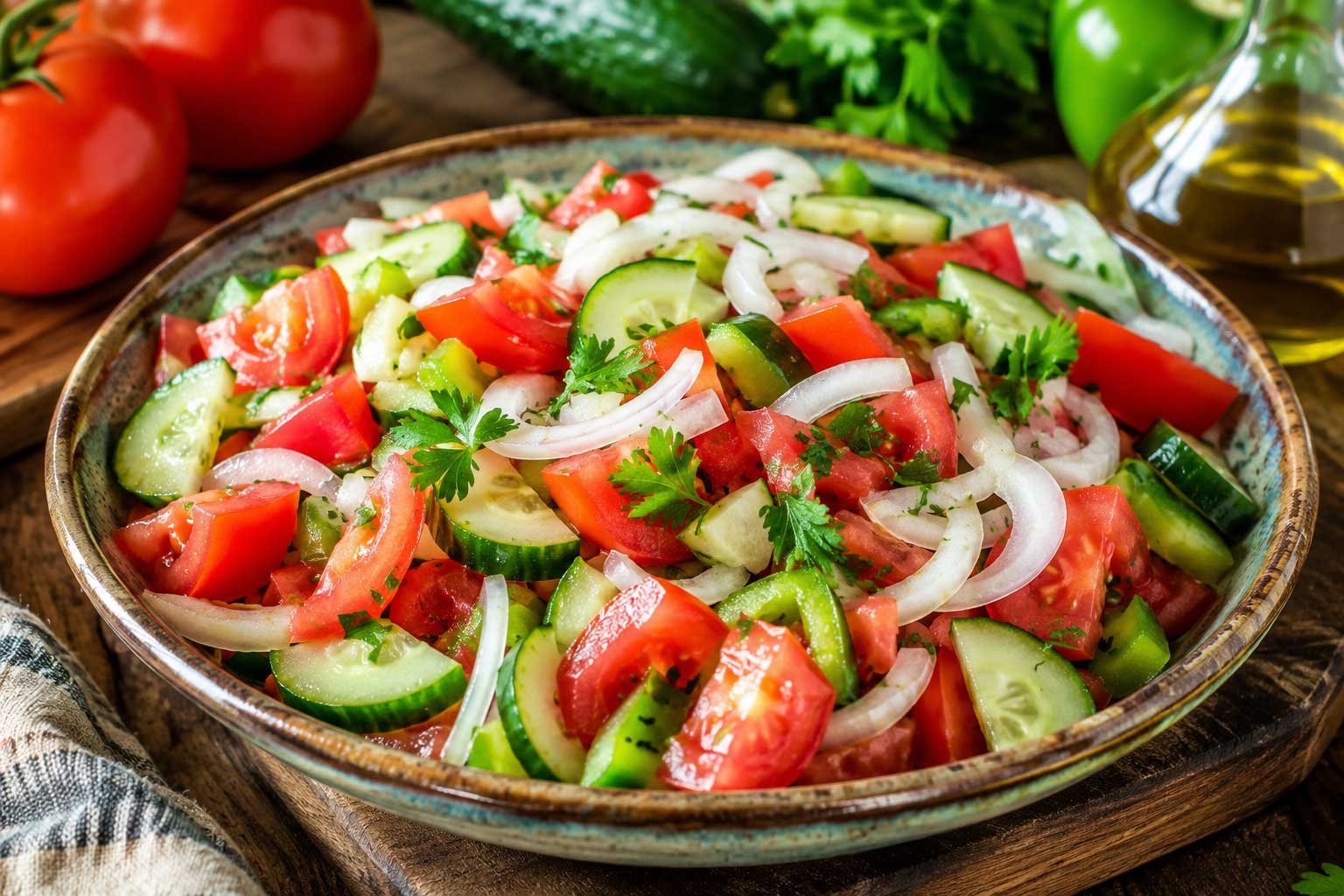
Serbian Salad, known locally as Srpska Salata, is one of the most popular fresh salads in Serbian cuisine. Made with ripe tomatoes, crisp cucumbers, onions, peppers, and parsley, this simple vegetable salad is a staple of summer dining throughout Serbia and the Balkans.
Often served alongside grilled meats, roasted dishes, and traditional Serbian meals, Serbian Salad celebrates the natural flavors of seasonal vegetables. Its light dressing with sunflower or olive oil lets the ingredients’ freshness shine, making it both refreshing and satisfying.
This traditional salad is similar to other Balkan and Eastern Mediterranean vegetable salads, but its simplicity and emphasis on fresh produce make it a beloved side dish that appears on family tables throughout the warm months of the year.
Serbian Salad is often served alongside traditional Serbian favorites like Ćevapi, Pljeskavica, and Prebranac, making it one of the country’s most popular side dishes.
What Is Serbian Salad?
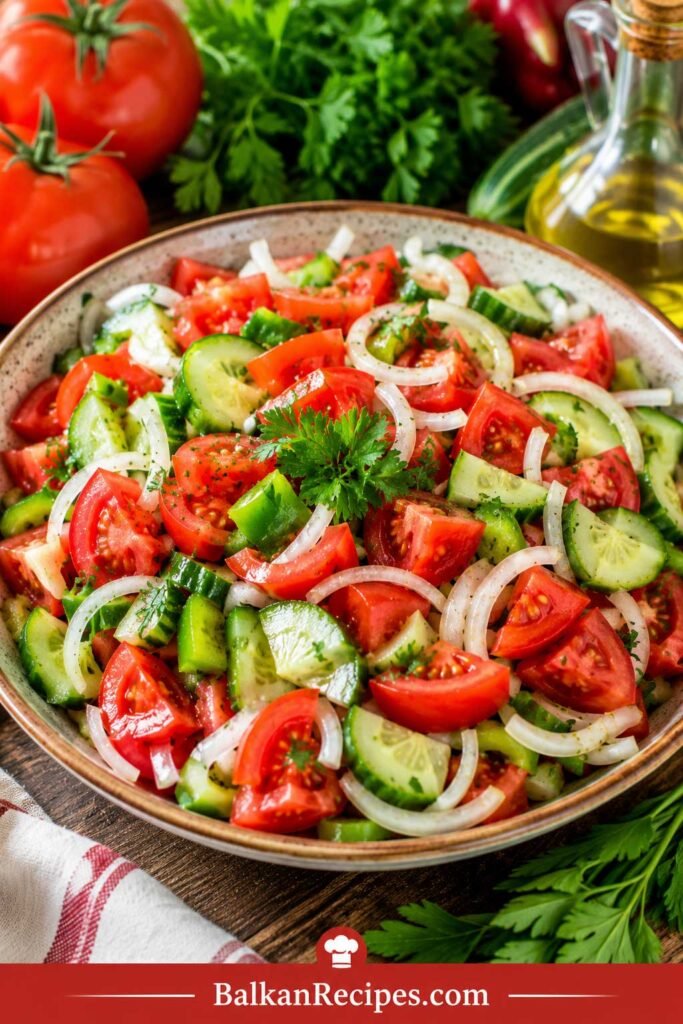
Serbian Salad, known in Serbia as Srpska Salata, is a traditional vegetable salad made primarily from tomatoes, cucumbers, onions, and peppers lightly dressed with oil and seasoned with salt.
The salad is especially popular during the summer months when vegetables are at their peak freshness. Many Serbian families prepare it daily as a side dish for lunch or dinner, particularly alongside grilled meats, roasted vegetables, and hearty Balkan specialties.
Unlike heavily dressed salads, Serbian Salad focuses on the natural taste of fresh vegetables. The dressing is intentionally simple, allowing the sweetness of the tomatoes, the crunch of the cucumbers, and the mild bite of the onions to shine.
Throughout the Balkans, you’ll find similar salads served under different names, reflecting the region’s shared culinary traditions and agricultural heritage.
It is also commonly enjoyed with Karađorđeva Steak and traditional Komplet Lepinja for a complete Serbian meal.
Why You’ll Love This Serbian Salad Recipe
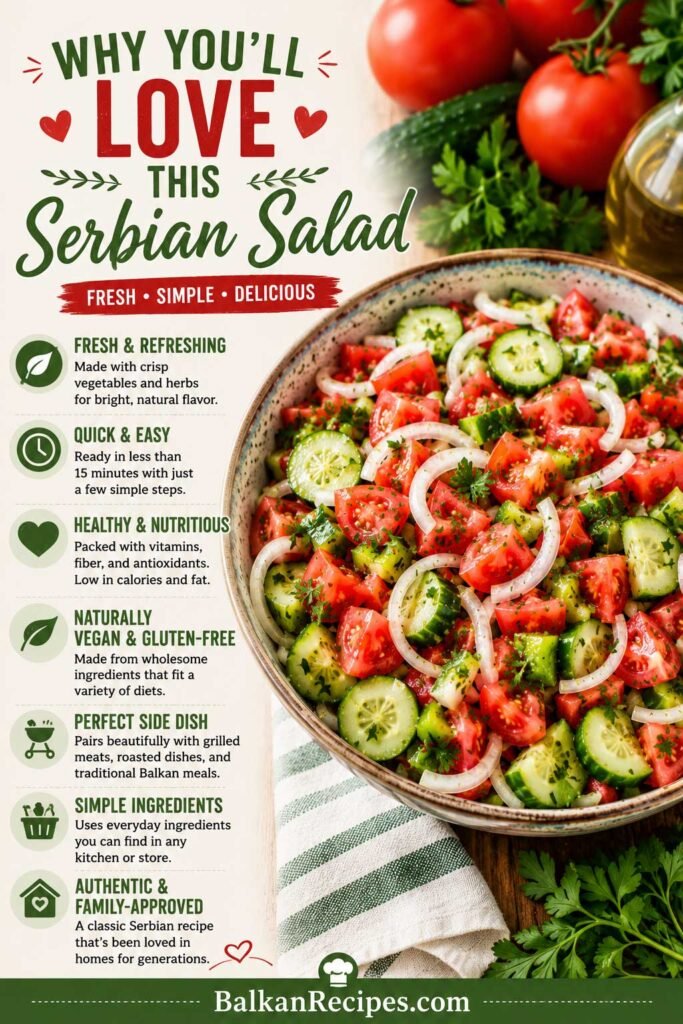
Sometimes the simplest recipes are the ones you’ll make again and again. Serbian Salad combines a handful of fresh ingredients to create a light, refreshing side dish that has been enjoyed in Serbian homes for generations. Whether you’re serving it with grilled meats, enjoying it as a light lunch, or bringing it to a summer barbecue, there are plenty of reasons this classic Serbian Salad deserves a place on your table.
Fresh and Refreshing
Made with juicy tomatoes, crisp cucumbers, onions, and fresh parsley, Serbian Salad delivers bright flavors and a refreshing crunch that is especially enjoyable during warm weather.
Quick and Easy to Prepare
With only a handful of ingredients and minimal preparation required, this traditional salad can be ready in less than 15 minutes, making it perfect for busy days.
Healthy and Nutritious
Packed with nutrient-rich vegetables, Serbian Salad provides vitamins, minerals, antioxidants, and fiber while remaining naturally low in calories and fat.
Perfect Summer Side Dish
This salad is a staple of Serbian summer cuisine because it makes the most of seasonal produce and complements outdoor meals, barbecues, and family gatherings.
Naturally Vegan and Gluten-Free
Made entirely from vegetables, herbs, and oil, Serbian Salad fits a variety of dietary preferences and can be enjoyed by vegans, vegetarians, and those following a gluten-free lifestyle.
Uses Simple Everyday Ingredients
Everything needed for this recipe can be found in most grocery stores and kitchens, making it an affordable and accessible dish to prepare anytime.
Authentic Serbian Flavor
This recipe reflects the simplicity and freshness that define many traditional Serbian salads, offering an authentic taste of Balkan home cooking.
Pairs Well with Grilled Foods
Serbian Salad is commonly served alongside grilled meats such as ćevapi, pljeskavica, pork, chicken, and fish, where its fresh flavors help balance richer dishes.
Light Yet Satisfying
Although simple, the combination of fresh vegetables, herbs, and oil creates a flavorful dish that feels both nourishing and satisfying without being heavy.
Ready in Minutes
Whether you’re preparing a quick lunch, a family dinner, or a side dish for guests, Serbian Salad comes together quickly and requires no cooking, making it one of the easiest traditional Serbian recipes to make.
The History of Serbian Salad
Serbian Salad has a long history that reflects Serbia’s agricultural heritage and appreciation for fresh, seasonal ingredients. While the recipe itself is wonderfully simple, it represents generations of home cooking, family gardens, and the tradition of serving fresh vegetables alongside hearty meals. Learning about its origins offers a deeper appreciation for why this humble salad remains one of Serbia’s most enduring culinary favorites.
Origins in Serbia’s Agricultural Traditions
Serbian Salad has its roots in the rich agricultural traditions of Serbia, where fresh vegetables have long been an essential part of everyday life. For centuries, Serbian families cultivated tomatoes, cucumbers, onions, peppers, and herbs in home gardens, relying on seasonal produce to create simple yet nourishing meals.
During the warmer months, when gardens were overflowing with ripe vegetables, fresh salads became a natural accompaniment to daily lunches and dinners. Rather than using elaborate dressings or complex preparation methods, Serbian cooks focused on highlighting the quality and flavor of the ingredients themselves.
The Arrival of Tomatoes and Peppers
Many of the vegetables that define Serbian Salad today were introduced to Europe centuries ago through global trade routes. Tomatoes and peppers, originally native to the Americas, gradually spread throughout the Balkans during the Ottoman period and became deeply integrated into local cuisines.
Over time, these ingredients adapted perfectly to Serbia’s climate and agricultural conditions. Tomatoes, peppers, and cucumbers became staples of home gardens, helping shape many of the country’s most beloved traditional dishes, including Serbian Salad.
Influence of Balkan and Ottoman Culinary Traditions
The Balkans share a long history of cultural exchange, and Serbia’s cuisine reflects influences from neighboring countries as well as centuries of Ottoman rule. Fresh vegetable salads dressed simply with oil and salt became common throughout the region, appearing in various forms across Serbia, Bosnia and Herzegovina, North Macedonia, Bulgaria, Croatia, Montenegro, and beyond.
Although each country developed its own variations, the underlying concept remained the same: combining fresh seasonal vegetables into a light and refreshing side dish that complemented heartier main courses.
A Daily Staple in Serbian Homes
By the nineteenth and twentieth centuries, Serbian Salad had become a regular feature of family meals. It was inexpensive, easy to prepare, and could be made using ingredients available in nearly every household garden.
The salad was especially popular during the summer, when vegetables were abundant and meals often centered around outdoor cooking, family gatherings, and communal dining. A large bowl of fresh salad is frequently accompanied by grilled meats, roasted dishes, homemade bread, and dairy products.
From Village Gardens to Modern Tables
Traditionally, most ingredients for Serbian Salad came directly from family gardens. Rural households often harvested tomatoes, cucumbers, onions, peppers, and parsley just hours before preparing the meal.
Even as Serbia became increasingly urbanized, the tradition of serving fresh vegetable salads remained strong. Farmers’ markets continue to play an important role in Serbian food culture, providing seasonal produce that helps preserve the authentic flavors associated with traditional recipes.
Serbian Salad Today
Today, Serbian Salad remains one of the most popular and widely consumed salads in Serbia. It is served in homes, restaurants, kafanas, and celebrations throughout the country. Its simplicity, affordability, and refreshing taste have helped it remain relevant despite changing food trends and modern culinary influences.
While contemporary cooks sometimes experiment with additional ingredients or dressings, the classic combination of tomatoes, cucumbers, onions, peppers, parsley, oil, and salt continues to represent the traditional version enjoyed by generations of Serbian families.
A Symbol of Serbian Home Cooking
More than just a side dish, Serbian Salad represents the values that define much of Serbian cuisine: fresh ingredients, seasonal cooking, hospitality, and uncomplicated preparation. Its enduring popularity demonstrates how simple foods can become cultural icons when they are deeply connected to family traditions and everyday life.
Whether served at a summer barbecue, a holiday gathering, or a weekday family dinner, Serbian Salad continues to bring the flavors of Serbia’s gardens directly to the table, preserving a culinary tradition that has been cherished for generations.
Ingredients You’ll Need

One of the defining characteristics of Serbian Salad is its simplicity. Made with a handful of fresh vegetables and basic pantry staples, this traditional dish highlights the natural flavors of seasonal produce. Because there are so few ingredients, choosing fresh, ripe vegetables will make a noticeable difference in the final result.
Fresh Tomatoes
Tomatoes form the foundation of Serbian Salad and provide much of its flavor. Ripe, juicy tomatoes add natural sweetness, vibrant color, and the refreshing character that makes this salad so popular during the summer months. Whenever possible, use locally grown or garden-fresh tomatoes for the best results.
Crisp Cucumbers
Cucumbers contribute a cool, refreshing crunch that balances the softness of the tomatoes. Fresh cucumbers with firm flesh and minimal seeds work particularly well and help create the salad’s signature texture.
Onion
Thinly sliced onions add a mild sharpness and depth of flavor. Traditional recipes often use white or yellow onions, though red onions can be substituted for a slightly sweeter taste and additional color.
Hot Pepper
A fresh hot pepper adds a subtle layer of heat that enhances the salad without overwhelming the other ingredients. The amount can easily be adjusted depending on your spice preference.
Fresh Parsley
Parsley provides a bright, herbaceous flavor that complements the vegetables and adds freshness to every bite. It also contributes color and visual appeal to the finished salad.
Oil and Seasoning
Serbian Salad is traditionally dressed with sunflower oil, a staple ingredient in Serbian cooking. Olive oil is also commonly used in modern kitchens. A simple sprinkle of salt is usually all that is needed to enhance the natural flavors of the vegetables.
Optional Additions
While the classic version remains the most popular, some families add extra ingredients such as sweet peppers, vinegar, white cheese, dill, or green onions. These variations allow cooks to customize the salad while maintaining its fresh and traditional character.
How to Make Serbian Salad
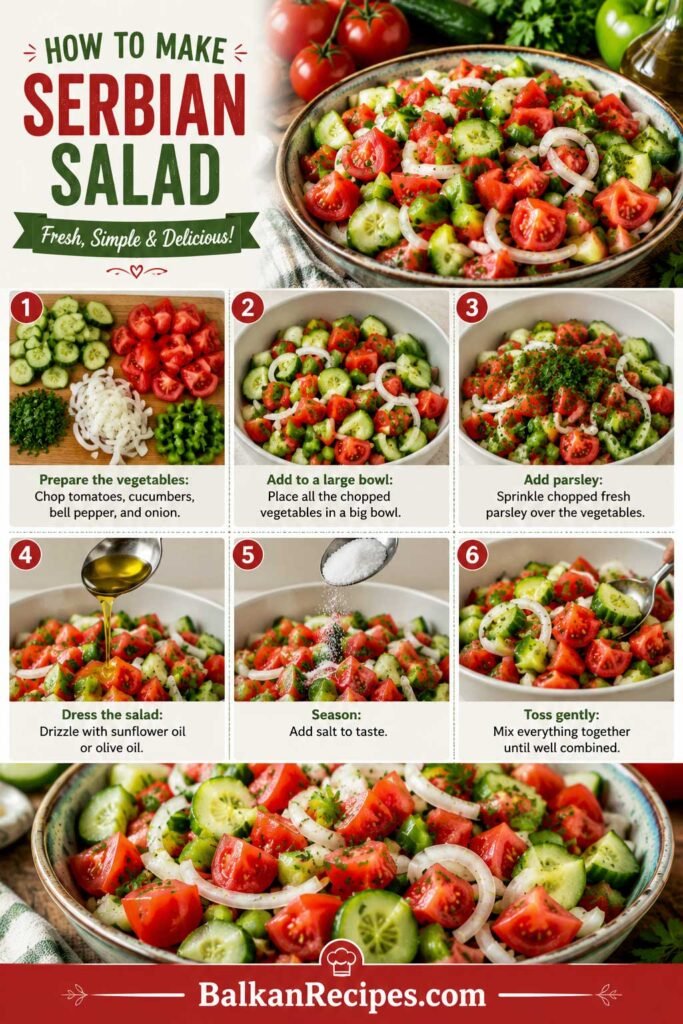
Serbian Salad has remained a favorite for generations because of its simplicity. There is no cooking required, and the entire dish comes together in just a few minutes. Simply prepare the vegetables, season them lightly, and toss everything together for a fresh, flavorful salad that’s perfect for any meal.
Step 1: Prepare the Onion
Peel the onion and slice it into thin rings or narrow strips. Thinly sliced onions blend more evenly with the other vegetables and provide a balanced flavor throughout the salad.
Step 2: Wash and Slice the Cucumbers
Thoroughly wash the cucumbers and peel them if desired. Slice them into thin rounds or half-moons, depending on their size. Fresh, crisp cucumbers add the refreshing crunch that is characteristic of Serbian Salad.
Step 3: Cut the Tomatoes
Wash the tomatoes and cut them into bite-sized wedges or chunks. Try to keep the pieces relatively uniform so the salad is easier to serve and eat.
Step 4: Prepare the Pepper
Wash the hot pepper, remove the stem, and slice it into thin strips. If you prefer a milder salad, you can remove the seeds before slicing.
Step 5: Combine the Vegetables
Place the tomatoes, cucumbers, onions, and pepper into a large mixing bowl. Distribute the ingredients evenly to ensure every serving contains a little of everything.
Step 6: Season the Salad
Sprinkle the vegetables with salt according to your taste. Drizzle the sunflower oil or olive oil evenly over the top of the salad.
Step 7: Mix Gently
Using a large spoon, gently toss the ingredients together until everything is evenly coated. Be careful not to overmix, as the tomatoes can become crushed and release too much liquid.
Step 8: Add the Parsley
Finely chop the fresh parsley and sprinkle it over the salad. Give the salad one final gentle toss to distribute the herbs evenly.
Step 9: Serve Immediately
Transfer the salad to a serving bowl and enjoy immediately while the vegetables are fresh, crisp, and full of flavor. Serbian Salad is best served shortly after preparation and pairs wonderfully with grilled meats, roasted dishes, and fresh bread.
Affiliate Disclosure: This article may contain affiliate links. If you purchase through these links, I may earn a small commission at no additional cost to you.
Essential Tools for Making Serbian Salad
Making a fresh Serbian Salad doesn’t require fancy equipment, but having a few quality kitchen tools makes prep quicker, easier, and more enjoyable.
| Product | Why It’s Useful | Buy |
|---|---|---|
| Chef’s Knife | Slices tomatoes, cucumbers, onions, and peppers quickly and cleanly. | Check Price |
| Large Cutting Board | Provides plenty of space for chopping fresh vegetables. | Check Price |
| Vegetable Peeler | Makes peeling cucumbers fast and effortless. | Check Price |
| Large Mixing Bowl | Allows you to toss the salad gently without crushing the tomatoes. | Check Price |
| Measuring Cup | Helps measure the correct amount of oil. | Check Price |
| Salad Serving Bowl | Perfect for serving Serbian Salad at family meals or gatherings. | Check Price |

Serbian Salad Recipe (Srpska Salata)
Equipment
- 1 Cutting board
- 1 Chef's Knife
- 1 Vegetable peeler (optional)
- 1 Large mixing bowl
- 1 Measuring cup
- 1 Serving bowl
Ingredients
- 500 g ripe tomatoes cut into wedges
- 200 g cucumbers peeled and sliced
- 150 g onion thinly sliced
- 1 hot pepper thinly sliced
- 1 bunch fresh parsley finely chopped
- 80 ml sunflower oil or olive oil
- Salt to taste
Instructions
- Peel and thinly slice the onion into rings or strips.
- Wash the cucumbers, peel if desired, and slice them into thin rounds.
- Wash the tomatoes and cut them into bite-sized wedges or chunks.
- Slice the hot pepper into thin strips, removing the seeds if you prefer a milder flavor.
- Place the tomatoes, cucumbers, onions, and pepper into a large mixing bowl.
- Sprinkle with salt to taste and drizzle the sunflower oil or olive oil over the vegetables.
- Gently toss everything together until evenly coated, taking care not to crush the tomatoes.
- Sprinkle the chopped parsley over the salad and give it one final gentle toss.
- Serve immediately for the freshest flavor and texture.
Notes
- Use ripe, in-season tomatoes for the best flavor.
- Traditional Serbian Salad is usually made with sunflower oil, but olive oil is an excellent alternative.
- Add the salt just before serving to help keep the vegetables crisp.
- For a milder salad, replace the hot pepper with sweet bell pepper or omit it altogether.
- This salad is best enjoyed fresh but can be refrigerated for up to 1 day.
Tips for the Best Serbian Salad
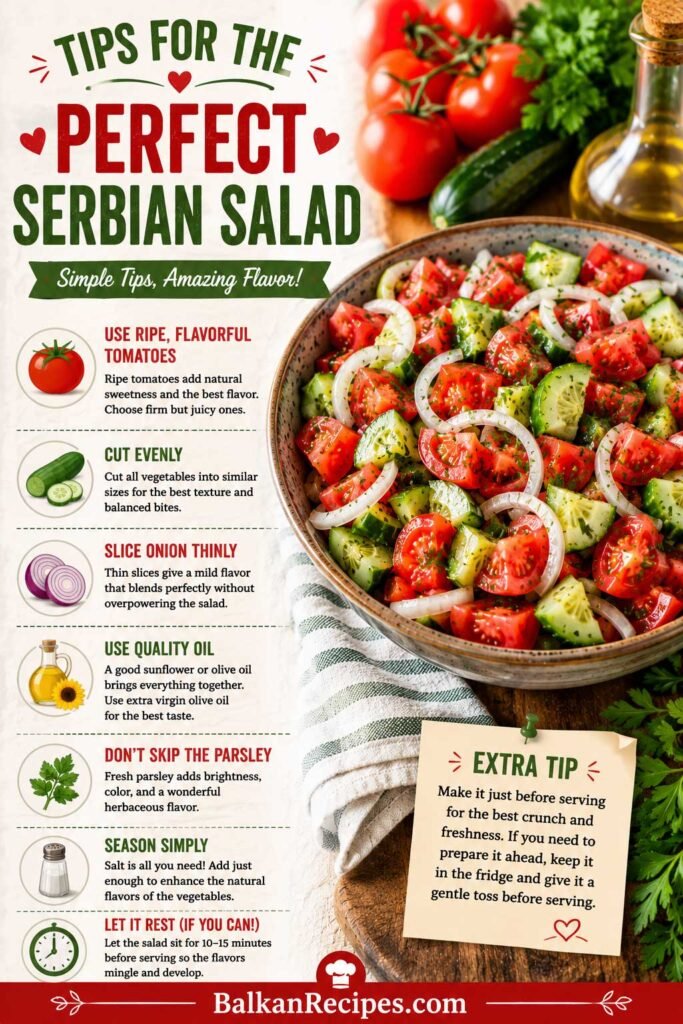
Although Serbian Salad is simple to prepare, a few small techniques can make a noticeable difference in flavor, texture, and presentation. These tips will help you create a salad that tastes as fresh and authentic as those served in Serbian homes and traditional restaurants.
Use the Freshest Vegetables Possible
Because the recipe contains so few ingredients, the quality of the vegetables is extremely important. Choose ripe tomatoes, crisp cucumbers, and fresh herbs whenever possible. Seasonal produce will provide the best flavor and texture.
Choose Ripe Tomatoes
Tomatoes are the star ingredient of Serbian Salad. Look for tomatoes that are firm yet fully ripe, with a rich color and sweet aroma. Garden-grown tomatoes are traditionally preferred and often produce the most flavorful results.
Slice Ingredients Evenly
Cutting the vegetables into similarly sized pieces helps create a balanced texture and ensures that each bite contains a good mix of ingredients.
Add Salt Just Before Serving
Salt draws moisture from vegetables, particularly tomatoes and cucumbers. For the freshest texture, season the salad shortly before serving rather than letting it sit for an extended period.
Mix Gently
The tomatoes can easily become crushed if handled roughly. Toss the salad carefully to coat the vegetables without breaking them apart.
Use Traditional Sunflower Oil
Many Serbian families prefer sunflower oil because of its light flavor, which allows the freshness of the vegetables to shine. Olive oil is also delicious, but sunflower oil provides a more traditional Serbian taste.
Adjust the Heat Level
The hot pepper can be increased, reduced, or omitted entirely depending on your preference. This flexibility makes the salad suitable for a variety of tastes.
Serve Chilled or Slightly Cool
Many people enjoy Serbian Salad slightly chilled, especially during hot summer weather. Refrigerating the vegetables for a short time before preparation can enhance the refreshing quality of the dish.
Enjoy It Fresh
Serbian Salad is at its best immediately after preparation. While leftovers can be refrigerated, the vegetables will gradually soften and release liquid over time, reducing the salad’s crisp texture.
Common Mistakes to Avoid When Making Serbian Salad
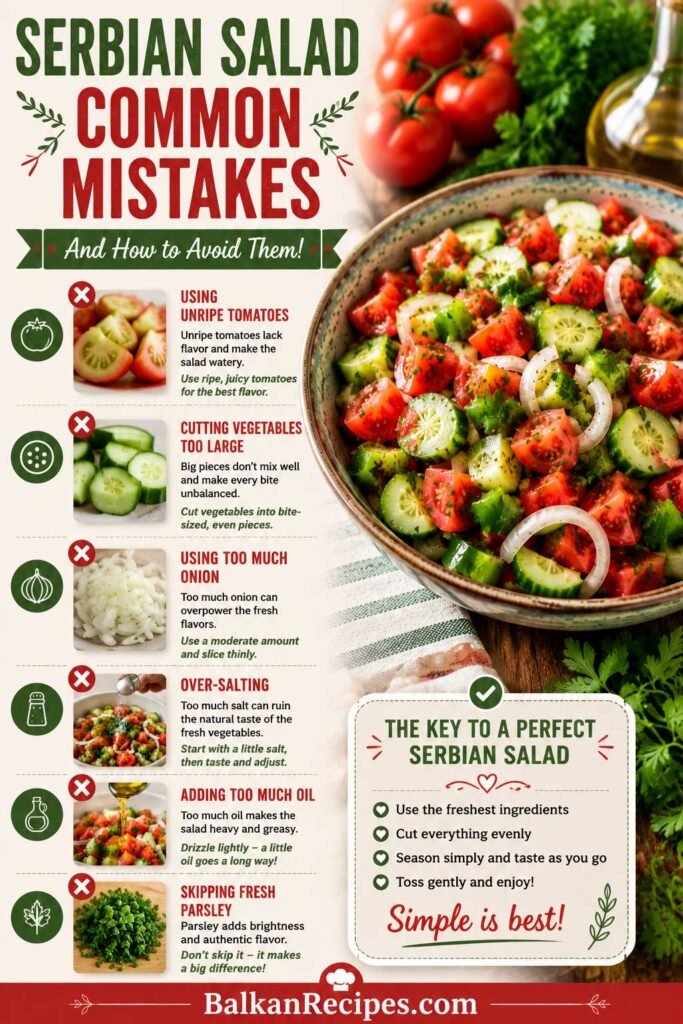
Although Serbian Salad is one of the easiest traditional Balkan dishes to prepare, a few small mistakes can affect its flavor and texture. Follow these simple tips to ensure your salad turns out fresh, colorful, and delicious every time.
Using Unripe Tomatoes
Tomatoes are the star of Serbian Salad, so their quality makes all the difference. Unripe or flavorless tomatoes can leave the salad tasting bland. Choose ripe, juicy tomatoes with a rich color and sweet aroma for the best results.
Cutting the Vegetables Too Large
Large pieces can make the salad more difficult to eat and prevent the flavors from blending evenly. Try to cut the tomatoes, cucumbers, onions, and peppers into similar bite-sized pieces for the perfect balance in every bite.
Adding Too Much Onion
Onions add wonderful flavor, but using too much can overpower the freshness of the other vegetables. Slice them thinly and use just enough to complement the tomatoes and cucumbers.
Overmixing the Salad
Tomatoes are delicate and can quickly become crushed if stirred too vigorously. Toss the salad gently so the vegetables stay intact and maintain their fresh appearance.
Seasoning Too Early
Adding salt too far in advance causes the tomatoes and cucumbers to release excess moisture, making the salad watery. For the best texture, season the salad just before serving.
Using Too Much Oil
A light drizzle of sunflower oil or olive oil is all that’s needed. Too much oil can overwhelm the fresh flavors and make the salad feel heavy instead of light and refreshing.
Skipping the Fresh Parsley
Fresh parsley adds color, aroma, and a bright herbal flavor that completes the salad. While it may seem like a garnish, it’s an important part of the traditional recipe.
Serving It Too Late
Serbian Salad is at its best shortly after it’s prepared. Allowing it to sit for too long softens the vegetables and dilutes their crisp texture. Whenever possible, prepare and serve it fresh for the most authentic flavor.
Traditional Variations of Serbian Salad
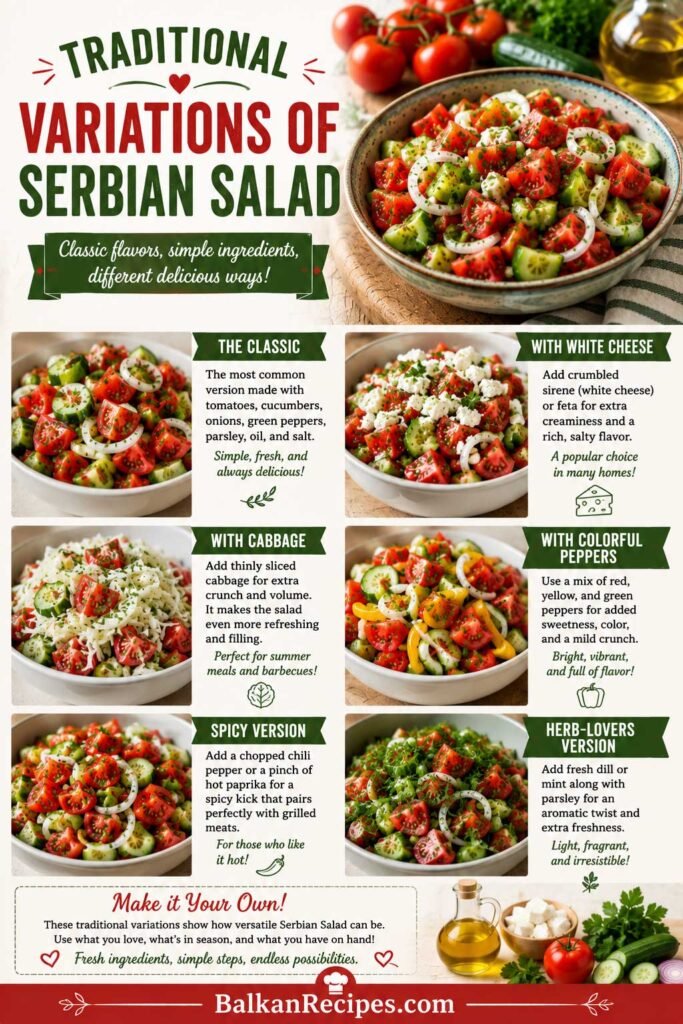
Like many beloved Serbian recipes, Serbian Salad has evolved over time and varies from household to household. While the classic version consists of tomatoes, cucumbers, onions, peppers, parsley, oil, and salt, regional influences and personal preferences have inspired numerous variations throughout Serbia and the wider Balkans.
Serbian Salad with White Cheese
One of the most popular variations includes crumbled white cheese, often similar to feta. The creamy, salty cheese adds richness and transforms the salad into a more substantial side dish. Although this version begins to resemble Shopska Salad, many Serbian families still add cheese and refer to it as Serbian Salad.
With Sweet Peppers
Instead of using hot peppers, some cooks prefer sweet green or red peppers. These add extra crunch and sweetness while keeping the salad mild and family-friendly.
Vinegar-Dressed Version
While many traditional recipes use only oil and salt, some households add a splash of vinegar for extra brightness and acidity. Red wine vinegar and white vinegar are both common choices.
Extra Herb Variation
Fresh herbs such as dill, basil, mint, or chives may be added alongside parsley. These herbs introduce new layers of flavor while maintaining the salad’s fresh character.
Garden Harvest Salad
During the summer growing season, families often expand the recipe using vegetables harvested from their gardens. Radishes, green onions, lettuce, and additional peppers are common additions.
Spicy Serbian Salad
For those who enjoy heat, extra hot peppers or spicy chili peppers can be added. This variation pairs particularly well with grilled meats and barbecue dishes.
Rustic Village Style
In rural areas, Serbian Salad is often prepared using larger chunks of vegetables and minimal mixing. This rustic approach emphasizes the freshness of the ingredients and reflects traditional farmhouse cooking.
Modern Serbian Salad
Contemporary versions sometimes incorporate ingredients such as olives, cherry tomatoes, arugula, or even avocado. While these additions are not traditional, they demonstrate how versatile and adaptable Serbian Salad can be while still retaining its fresh and simple foundation.
What to Serve with Serbian Salad
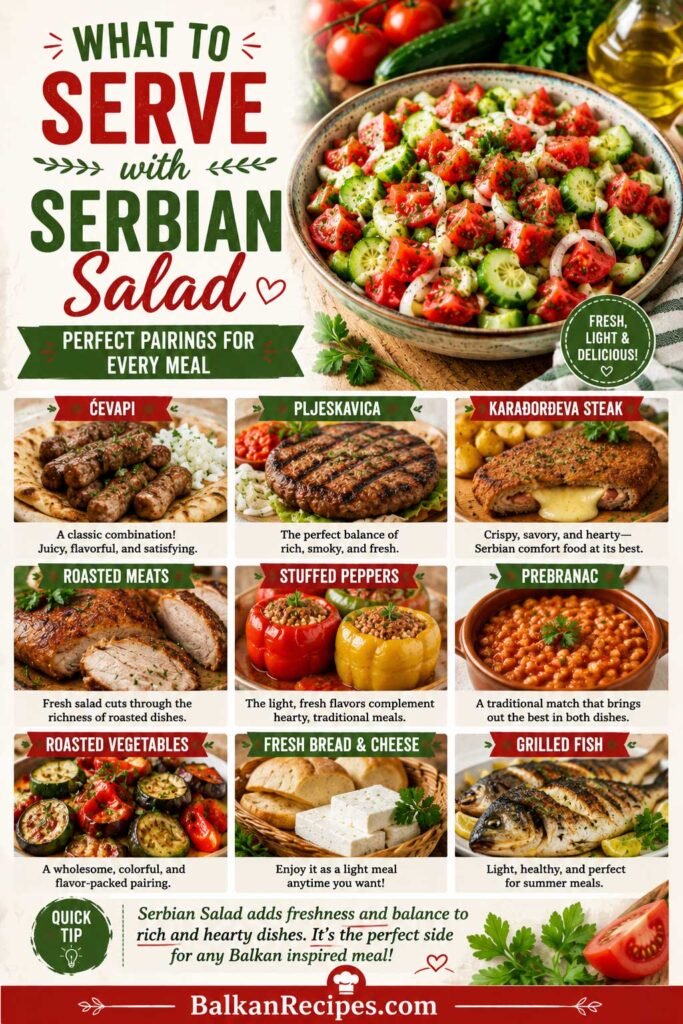
Serbian Salad is one of the most versatile side dishes in Serbian cuisine. Its fresh vegetables, light seasoning, and refreshing flavor make it an excellent accompaniment to a wide variety of traditional Balkan meals. The crisp texture and natural acidity of the tomatoes help balance richer dishes, making it a common feature on family tables throughout the year.
Grilled Meats
Serbian Salad is most commonly served alongside grilled meats. The freshness of the vegetables provides a refreshing contrast to smoky, savory flavors, making it a staple at Serbian barbecues.
It pairs especially well with Ćevapi, Pljeskavica, grilled pork chops, grilled chicken, grilled sausages, and grilled fish.
Traditional Serbian Main Dishes
This salad also complements many classic Serbian comfort foods. Its light, crisp texture balances rich baked dishes and slow-cooked meals while adding freshness to every plate.
Serve it alongside Sarma, Gibanica, Prebranac, Karađorđeva Steak, roasted lamb, roasted pork, or stuffed peppers.
Fresh Bread
A slice of fresh bread is one of the simplest and most traditional accompaniments to Serbian Salad. Many people enjoy using the bread to soak up the flavorful juices created by the tomatoes and oil.
Homemade white bread, lepinja, rustic country bread, flatbread, or warm dinner rolls are all excellent choices.
Dairy Pairings
Creamy dairy products are another classic addition to the table. Their rich, tangy flavor contrasts beautifully with the fresh vegetables and creates a more satisfying meal.
Traditional accompaniments include kajmak, white cheese, feta-style cheese, plain yogurt, or a spoonful of sour cream.
Summer Meals and Barbecues
Because it requires no cooking and comes together in just minutes, Serbian Salad is a favorite for summer lunches, family picnics, outdoor gatherings, and backyard barbecues. Its fresh flavors make it an ideal side dish for almost any grilled or roasted meal.
As Part of a Balkan Meze Spread
Serbian Salad also fits perfectly into a traditional Balkan meze platter. Serve it alongside olives, cured meats, roasted peppers, spreads like ajvar, a selection of cheeses, and fresh bread for a colorful appetizer that’s perfect for entertaining.
Recommended Serveware for Serbian Salad
Serve Serbian Salad like it’s enjoyed in Serbia with simple tableware that makes everyday meals feel even more authentic.
| Product | Why It’s Useful | Buy |
|---|---|---|
| Large Salad Bowl | Ideal for serving family-style salads. | Check Price |
| Wooden Salad Servers | Gently toss and serve delicate vegetables without crushing them. | Check Price |
| Olive Oil Dispenser | Makes drizzling oil neat and controlled. | Check Price |
| Ceramic Dinner Plates | Perfect for serving Serbian meals with salads and grilled meats. | Check Price |
| Bread Basket | Great for serving fresh pogacha or lepinja alongside the salad. | Check Price |
| Glass Storage Containers | Keep leftover salad fresh in the refrigerator. | Check Price |
How to Store Serbian Salad
Serbian Salad is best enjoyed fresh, shortly after it is prepared. The crisp vegetables and vibrant flavors are at their peak immediately after mixing. However, if you have leftovers, proper storage can help preserve the salad for a short period.
Refrigerate Promptly
Place any leftover salad in an airtight container and refrigerate it as soon as possible. Keeping the salad chilled helps maintain freshness and slows the breakdown of the vegetables.
Best Consumed Within One Day
For the best flavor and texture, Serbian Salad should be eaten within 24 hours. After this time, the tomatoes and cucumbers begin to soften and release more liquid, causing the salad to become watery.
Expect Some Natural Juices
As the salad sits, the salt draws moisture from the vegetables. This is completely normal and often results in a flavorful liquid collecting at the bottom of the container. Simply stir the salad gently before serving again.
Store Dressing Separately When Possible
If you’re preparing the salad in advance, consider storing the chopped vegetables separately and adding the oil and salt just before serving. This helps maintain a firmer texture and fresher appearance.
Avoid Freezing
Freezing is not recommended for Serbian Salad. Fresh vegetables lose their crispness and become soft and watery once thawed, significantly affecting the quality of the dish.
Refresh Before Serving
If refrigerated leftovers seem slightly wilted, you can refresh the salad by adding a few freshly chopped tomatoes, cucumbers, or a sprinkle of parsley before serving. This helps restore some of the freshness and texture.
Meal Prep Tip
For gatherings or busy weeknights, you can wash and chop all the vegetables several hours ahead of time. Store them separately in the refrigerator and combine them with the oil, salt, and parsley just before serving for the freshest results.
Frequently Asked Questions About Serbian Salad
Is Serbian Salad the Same as Shopska Salad?
No. While both salads contain similar fresh vegetables such as tomatoes, cucumbers, onions, and peppers, Shopska Salad is traditionally topped with a generous amount of grated white cheese. Serbian Salad is usually served without cheese and relies on the natural flavors of the vegetables.
Can I Make Serbian Salad Ahead of Time?
Yes, but it is best assembled shortly before serving. You can wash and chop the vegetables several hours in advance and store them in the refrigerator. Add the oil, salt, and parsley just before serving to maintain the freshest texture.
What Type of Tomatoes Work Best?
Ripe, juicy tomatoes with good flavor are ideal. Garden-grown tomatoes, Roma tomatoes, vine-ripened tomatoes, or heirloom varieties all work well. The better the tomatoes, the better the salad.
Do I Have to Peel the Cucumbers?
No. Peeling is optional and largely depends on personal preference. Many traditional recipes call for peeled cucumbers, while others leave the skin on for added texture and nutrients.
Can I Use Olive Oil Instead of Sunflower Oil?
Absolutely. Traditional Serbian recipes often use sunflower oil, but olive oil is a popular modern substitute and adds a slightly richer Mediterranean flavor.
Is Serbian Salad Spicy?
Not necessarily. The hot pepper can be adjusted or omitted completely. If you prefer a mild salad, use sweet peppers instead or leave peppers out altogether.
What Main Dishes Pair Best with Serbian Salad?
Serbian Salad pairs wonderfully with grilled meats, roasted dishes, stews, stuffed vegetables, cheese pies, and traditional Balkan barbecue. It is often served alongside ćevapi, pljeskavica, sarma, and roasted pork.
Can I Add Cheese?
Yes. Traditional Serbian Salad is usually served without cheese, but many families enjoy adding crumbled white cheese or feta for extra richness. If you’re looking for the classic version, simply leave the cheese out.
Is Serbian Salad Healthy?
Yes. It is rich in vitamins, minerals, antioxidants, and dietary fiber while remaining naturally low in calories. It is also suitable for many dietary lifestyles, including vegan and gluten-free diets.
Why Does the Salad Become Watery?
Tomatoes and cucumbers naturally release moisture after being salted. This is normal and one reason why Serbian Salad is best served shortly after preparation. Adding the salt just before serving helps minimize excess liquid.
Enjoy This Traditional Serbian Salad Anytime
Serbian Salad is a perfect example of how simple, fresh ingredients can create a dish that is both delicious and deeply rooted in tradition. With its combination of ripe tomatoes, crisp cucumbers, onions, peppers, and fresh parsley, this classic Serbian salad delivers vibrant flavor, refreshing texture, and natural goodness in every bite.
One reason Serbian Salad has remained a staple of Serbian cuisine for generations is its versatility. It pairs beautifully with grilled meats, roasted dishes, traditional Balkan specialties, or simply fresh bread and cheese for a light meal. Quick to prepare and full of fresh flavor, it’s perfect for everyday meals and special occasions alike.
Whether you’re exploring Serbian cuisine for the first time or recreating familiar flavors from home, this traditional Serbian Salad recipe offers an authentic taste of Balkan cooking. Fresh, healthy, and incredibly easy to prepare, it’s a timeless dish that celebrates the beauty of seasonal vegetables and the simplicity of Serbian home cooking.
Prepare a bowl, gather your freshest ingredients, and enjoy one of Serbia’s most beloved salads with family and friends. Every bite is a celebration of the fresh, simple flavors that have made Serbian Salad a favorite for generations.
Looking for more fresh Balkan side dishes? Try our Egg and Lettuce Salad, Serbian Cabbage Salad, or creamy Urnebes Salad.
Did You Make This Serbian Salad Recipe?
I’d love to hear how your Serbian Salad Recipe turned out! Leave a comment below and share your favorite way to serve this fresh Balkan classic. If you enjoyed the recipe, don’t forget to rate it and share it with your family and friends. Follow us for more authentic Serbian and Balkan recipes—sharing is caring!