Greek Fish en Papillote
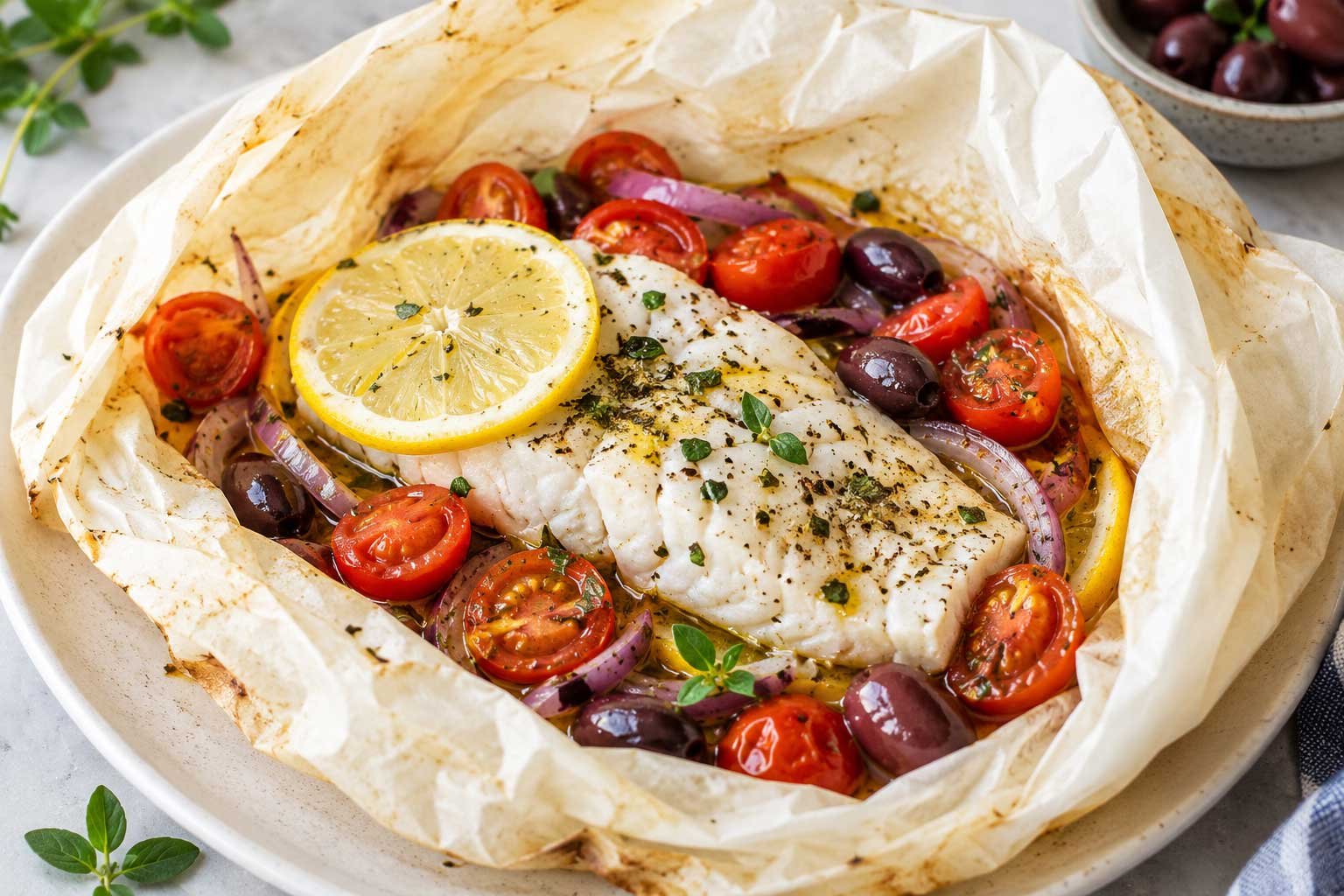
Looking for a healthy, flavorful seafood dinner that’s easy enough for busy weeknights but elegant enough for entertaining? This Greek Fish en Papillote Recipe combines flaky white fish with juicy cherry tomatoes, Kalamata olives, fresh oregano, red onion, lemon slices, and extra virgin olive oil, all sealed inside parchment paper and baked until perfectly tender.
Inspired by the fresh flavors of Mediterranean cuisine, this simple recipe uses the classic en papillote cooking method to gently steam the fish inside its own packet. As it bakes, the ingredients release their natural juices, creating a light, aromatic sauce that keeps the fish moist while infusing it with bright lemon, herbs, and rich olive oil.
Ready in just 20 minutes, this easy Greek fish recipe is naturally gluten-free, high in protein, low in carbohydrates, and packed with wholesome Mediterranean ingredients. Whether you’re preparing a quick family dinner or serving guests, Greek Fish en Papillote is an impressive yet effortless meal that pairs well with roasted potatoes, rice, crusty bread, or a fresh Greek salad.
If you enjoy fresh Mediterranean flavors, be sure to explore more of our Greek seafood recipes and traditional Greek dishes.
What Is Greek Fish en Papillote?
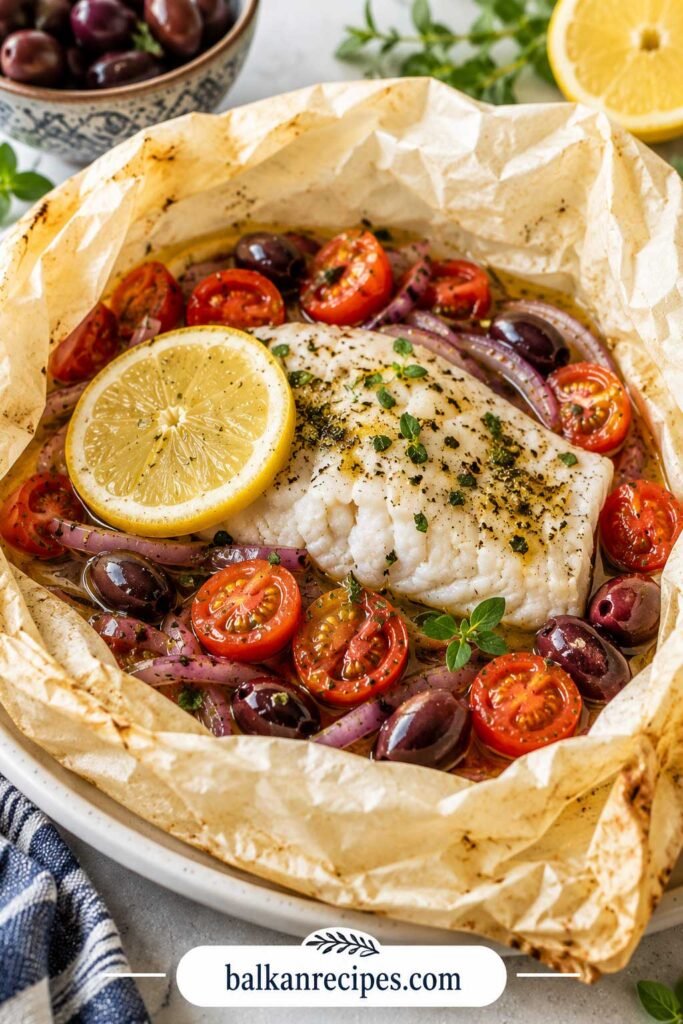
Greek Fish en Papillote is a light and healthy Mediterranean seafood dish in which fresh white fish is baked inside a sealed parchment paper packet with lemon, vegetables, herbs, and extra virgin olive oil. The name en papillote is French for “in paper,” referring to the cooking technique of enclosing food in parchment so it gently steams in its own juices while baking. This method locks in moisture and concentrates flavor, producing tender, flaky fish with very little added fat.
Although the technique originated in France, it pairs beautifully with the simple, vibrant ingredients that define Greek cuisine. Fresh lemon, oregano, Kalamata olives, cherry tomatoes, red onions, and high-quality olive oil create a delicious combination that reflects the bright, wholesome flavors of the Mediterranean. As the ingredients cook together inside the sealed packet, they release their natural juices to form a delicate broth that infuses every bite of fish.
One of the reasons this dish has become so popular is its simplicity. Everything is assembled in a single parchment packet, making preparation quick and cleanup remarkably easy. Because the fish cooks gently in steam rather than direct heat, it remains moist and succulent while the vegetables become perfectly tender without losing their freshness.
Greek Fish en Papillote is an excellent choice for both casual family dinners and elegant entertaining. Each packet can be served unopened, allowing guests to enjoy the fragrant burst of steam and Mediterranean aromas when the parchment is opened at the table. Ready in about 20 minutes, this nutritious recipe is naturally gluten-free, high in lean protein, and a wonderful example of healthy Mediterranean cooking at its finest.
If you love Mediterranean-inspired meals, you’ll also enjoy our Greek Pizza Recipe, another easy dish packed with classic Greek flavors.
The History of Fish en Papillote
The en papillote cooking method originated in France, where the phrase literally means “in paper.” French chefs developed this technique centuries ago as a way to gently cook delicate ingredients by sealing them inside parchment paper before baking. As the packet heats, steam becomes trapped inside, allowing the food to cook in its own juices while preserving moisture, flavor, and nutrients. The dramatic presentation of opening the packet at the table also made en papillote a favorite in both home kitchens and fine dining restaurants.
Over time, the technique spread throughout Europe as cooks discovered how versatile and reliable it was. While fish is the ingredient most commonly associated with en papillote, vegetables, poultry, and even fruit desserts have all been prepared using the same method. The simplicity of wrapping fresh ingredients together and allowing them to steam naturally has made it a timeless cooking technique that remains popular today.
Although en papillote has French roots, it complements Mediterranean cuisine exceptionally well. The method enhances the natural flavors of ingredients without requiring heavy sauces or complicated preparation. Olive oil, fresh herbs, garlic, citrus, tomatoes, and seasonal vegetables release their aromas inside the sealed packet, creating a light yet incredibly flavorful broth that perfectly accompanies seafood.
In Greece, seafood has long been an essential part of the traditional coastal diet. Fresh fish from the Aegean and Ionian Seas is often prepared simply with extra virgin olive oil, lemon, oregano, garlic, and locally grown vegetables. While traditional Greek recipes may be grilled, baked, or roasted, many home cooks have embraced the en papillote technique because it highlights these familiar Mediterranean ingredients while keeping the fish exceptionally moist and tender.
Today, Greek Fish en Papillote beautifully combines classic French cooking with the bright, wholesome flavors of Greece. The result is an elegant yet approachable dish that celebrates fresh seafood, quality olive oil, fragrant herbs, and the healthy simplicity that has made Mediterranean cooking admired around the world.
Why You’ll Love This Greek Fish en Papillote Recipe
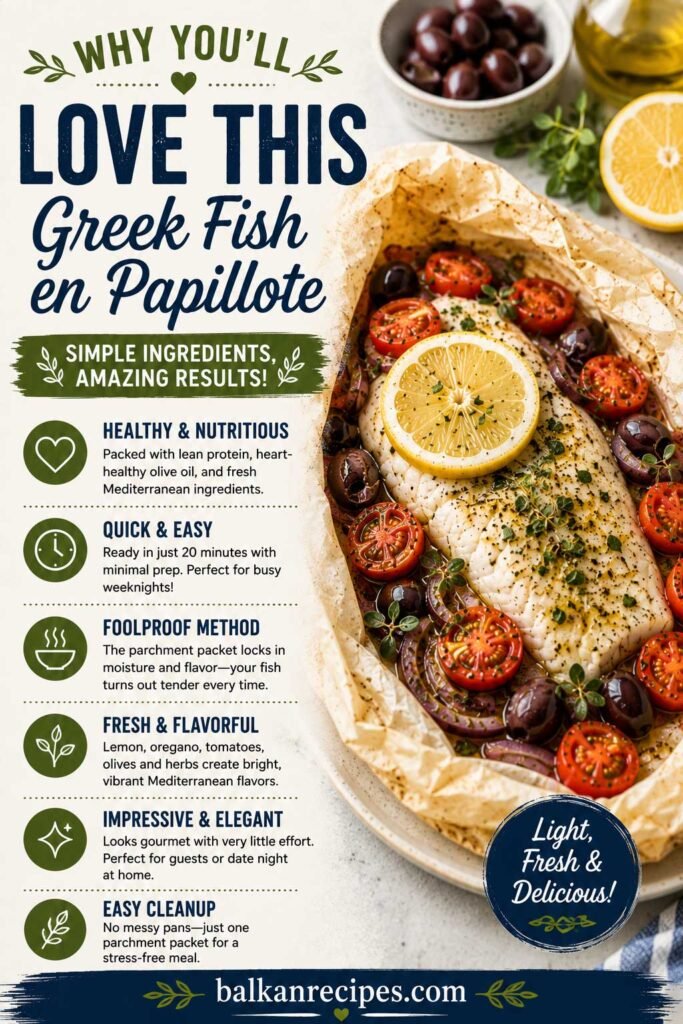
This Greek Fish en Papillote recipe proves that healthy cooking can be both effortless and incredibly flavorful. The parchment packet traps steam as the fish bakes, keeping every fillet moist, tender, and infused with the bright flavors of lemon, oregano, tomatoes, olives, and extra virgin olive oil. The result is a restaurant-quality meal that looks impressive but requires very little hands-on work.
Because everything cooks together in a single packet, the vegetables soften perfectly while releasing their natural juices to create a light, aromatic sauce. There are no heavy creams or complicated techniques involved—just fresh Mediterranean ingredients working together to produce a delicious, wholesome dinner.
Another reason to love this recipe is its versatility. You can prepare it with cod, snapper, halibut, tilapia, sea bass, or almost any firm white fish you have on hand. It’s naturally gluten-free, high in protein, low in carbohydrates, and easy to adapt by adding your favorite vegetables, herbs, or spices.
Whether you’re preparing a quick weeknight dinner, planning a healthy meal for the family, or serving guests at a special gathering, Greek Fish en Papillote delivers exceptional flavor with minimal preparation and almost no cleanup, making it a recipe you’ll come back to again and again.
Ingredients You’ll Need
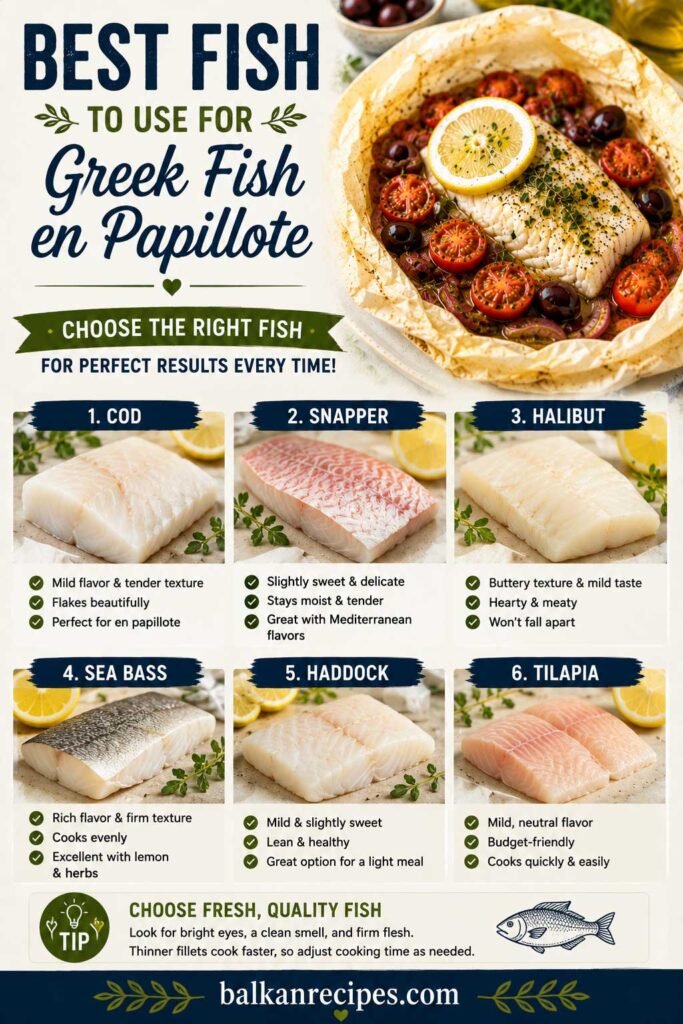
One of the best things about this Greek Fish en Papillote recipe is that it relies on a handful of fresh, wholesome Mediterranean ingredients. Each one contributes its own unique flavor while helping create a light, aromatic sauce inside the parchment packet as the fish bakes.
White Fish Fillets
Choose firm white fish such as cod, snapper, halibut, sea bass, haddock, or tilapia. These varieties hold their shape well during baking while becoming wonderfully flaky and tender.
Along Greece’s coastline, recipes like this often feature freshly caught sea bream, sea bass, or cod, depending on the region and the season.
Lemon
Fresh lemon slices add bright citrus flavor and help keep the fish moist. A squeeze of fresh lemon juice just before serving makes the dish even more vibrant.
Greek Seasoning
A blend of oregano, garlic, onion, parsley, thyme, marjoram, and black pepper adds classic Greek-inspired flavor with minimal effort.
Red Onion
Thinly sliced red onion softens as it cooks, providing natural sweetness that balances the briny olives and tangy lemon.
Cherry Tomatoes
Cherry or grape tomatoes become juicy and slightly caramelized inside the packet, creating a naturally flavorful sauce.
Kalamata Olives
Kalamata olives bring their signature rich, fruity, slightly salty flavor that pairs perfectly with seafood and fresh herbs.
Fresh Oregano
Fresh oregano provides an unmistakable Greek aroma and complements the lemon and olive oil beautifully. Fresh thyme or parsley can also be used if needed.
Extra Virgin Olive Oil
A drizzle of high-quality extra virgin olive oil ties all the ingredients together while adding richness and helping create delicate steam inside the packet.
Affiliate Disclosure: This article may contain affiliate links. If you purchase through these links, I may earn a small commission at no additional cost to you.
Mediterranean Pantry Essentials
Fresh, high-quality ingredients are what give this Greek Fish en Papillote recipe its bright Mediterranean flavor. Keeping these Mediterranean pantry staples on hand makes it easy to prepare healthy, restaurant-quality seafood meals whenever the craving strikes.
| Ingredient | Why It’s Worth Buying | Buy |
|---|---|---|
| Extra Virgin Olive Oil | The foundation of Mediterranean cooking, adding rich flavor and healthy fats. | Check Price |
| Greek Seasoning Blend | Delivers authentic Greek herbs and spices in one convenient blend. | Check Price |
| Kalamata Olives | Adds the signature briny, fruity flavor found in many traditional Greek recipes. | Check Price |
| Sea Salt Flakes | Enhances the natural flavor of the fish without overpowering it. | Check Price |
| Freshly Ground Black Pepper | Provides a fresher, more aromatic finish than pre-ground pepper. | Check Price |
| Dried Oregano | A classic Mediterranean herb that pairs perfectly with fish, lemon, and olive oil. | Check Price |
How to Make Greek Fish en Papillote
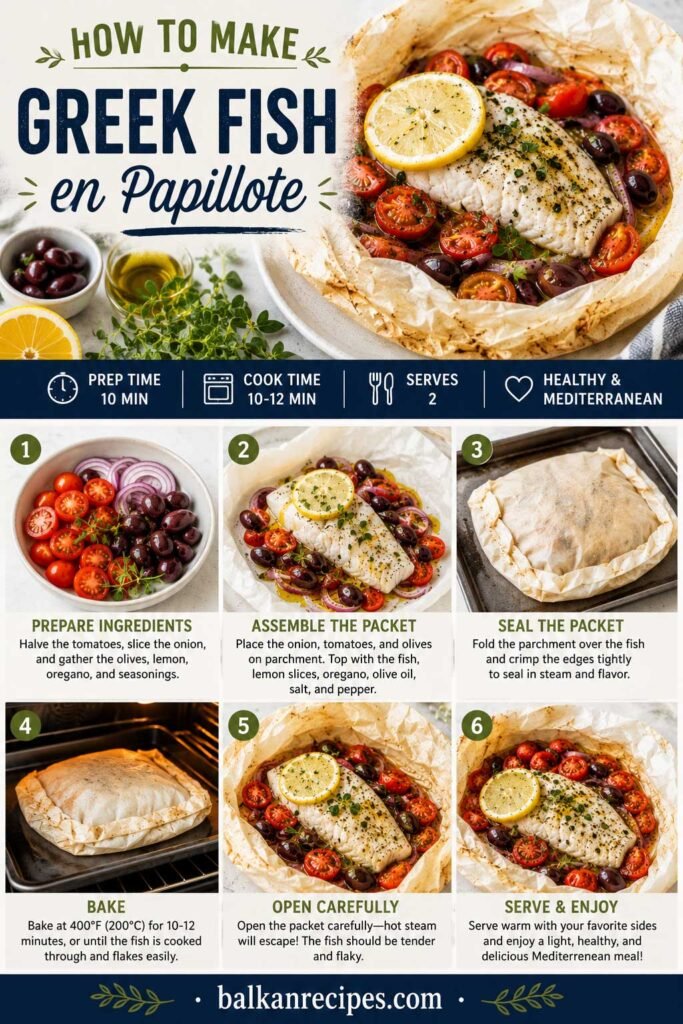
This Greek Fish en Papillote recipe comes together in just a few simple steps. Once the parchment packets are assembled, the oven does all the work, gently steaming the fish until it’s perfectly flaky and infused with classic Greek flavors.
Step 1: Preheat the Oven
Preheat your oven to 375°F (190°C). Cut two large sheets of parchment paper and fold each sheet in half to create a crease before opening them again.
Step 2: Prepare the Base
Arrange the sliced red onion on one half of each parchment sheet, leaving a border around the edges so the packets can be sealed later. The onions create a flavorful bed that keeps the fish from sticking.
Step 3: Season the Fish
Place one fish fillet on top of the onions. Sprinkle each fillet with Greek seasoning and drizzle lightly with extra virgin olive oil.
Step 4: Add the Toppings
Top each fillet with fresh lemon slices, then scatter the cherry tomatoes and Kalamata olives around the fish. Finish with fresh oregano sprigs for classic Mediterranean flavor.
Step 5: Seal the Packets
Fold the empty half of the parchment paper over the fish. Starting at one corner, fold and crimp the edges tightly all the way around to create a completely sealed packet that will trap the steam during baking.
Step 6: Bake
Place the packets on a baking sheet and bake for 8 to 12 minutes, depending on the thickness of the fish. The fish is done when it flakes easily with a fork and reaches an internal temperature of 145°F (63°C).
For additional food safety guidance, see the USDA Safe Minimum Internal Temperature Chart.
Step 7: Serve
Transfer each unopened packet to a serving plate. Carefully open the parchment at the table to release the fragrant steam, then enjoy immediately with crusty bread, roasted potatoes, rice, or a fresh Greek salad.
Recommended Kitchen Tools
Having the right kitchen tools makes preparing Greek Fish en Papillote even easier. These affordable essentials help create perfectly sealed parchment packets, ensure even cooking, and make meal preparation quick and stress-free.
| Product | Why You’ll Love It | Buy |
|---|---|---|
| Parchment Paper Sheets | Pre-cut sheets make creating sealed cooking packets fast and easy. | Check Price |
| Rimmed Baking Sheet | Supports the parchment packets and catches any juices during baking. | Check Price |
| Chef’s Knife | Perfect for slicing onions, lemons, and tomatoes with precision. | Check Price |
| Large Cutting Board | Provides plenty of room to prep all the fresh Mediterranean ingredients. | Check Price |
| Citrus Juicer | Makes squeezing fresh lemon juice quick and effortless. | Check Price |
| Instant-Read Meat Thermometer | Ensures the fish reaches the perfect 145°F without overcooking. | Check Price |
Greek Fish en Papillote Recipe
Equipment
- 1 Parchment paper
- 1 Baking sheet
- 1 Baking dish
- 1 Chef's Knife
- 1 Cutting board
- 1 Measuring spoons
Ingredients
- 2 6-ounce firm white fish fillets (cod, snapper, tilapia, or halibut)
- 1 lemon thinly sliced
- 2 tsp Greek seasoning
- 1 small red onion thinly sliced
- ½ cup cherry tomatoes halved
- ½ cup Kalamata olives pitted and halved
- 4 sprigs fresh oregano
- 2 tbsp extra virgin olive oil
Instructions
- Preheat the oven to 375°F (190°C).
- Cut two large sheets of parchment paper and fold each in half to create a crease before opening them.
- Divide the sliced red onion between the parchment sheets, placing it on one half of each sheet while leaving space around the edges.
- Place one fish fillet on top of the onions. Sprinkle each fillet with 1 teaspoon of Greek seasoning and drizzle with olive oil.
- Arrange the lemon slices over the fish, then scatter the cherry tomatoes and Kalamata olives around each fillet. Top with fresh oregano sprigs.
- Fold the parchment paper over the fish and tightly crimp the edges to completely seal each packet.
- Place the packets on a baking sheet and bake for 8–12 minutes, or until the fish flakes easily with a fork and reaches an internal temperature of 145°F (63°C).
- Carefully transfer each unopened packet to a serving plate. Open the parchment at the table to release the fragrant steam and serve immediately.
Notes
- Cod, snapper, halibut, haddock, sea bass, and tilapia all work well.
- Don’t overfill the packets or the fish may cook unevenly.
- Seal the parchment tightly to trap steam and keep the fish moist.
- Fresh oregano can be replaced with thyme, parsley, or dill.
- Finish with a squeeze of fresh lemon juice before serving for extra brightness.
Tips for the Best Greek Fish en Papillote
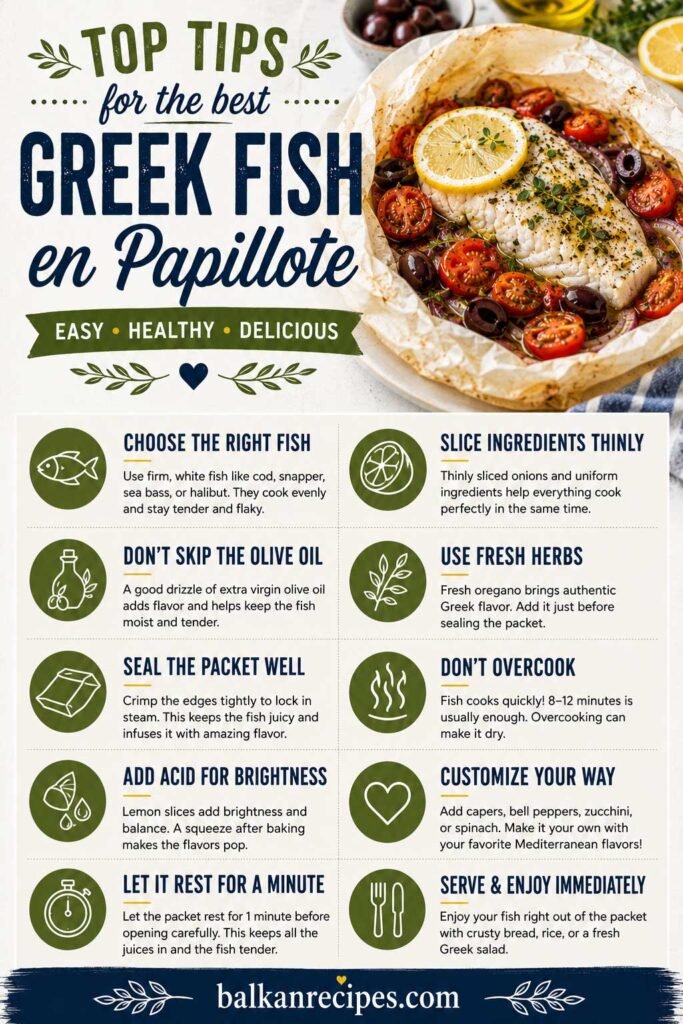
A few simple techniques will help you create perfectly cooked fish that’s moist, flavorful, and beautifully presented every time. These tips ensure the parchment packet works exactly as intended while bringing out the fresh Mediterranean flavors in every bite.
Use Fresh, Firm White Fish
Choose firm white fish such as cod, snapper, halibut, sea bass, haddock, or tilapia. These varieties hold their shape well during baking while becoming tender, flaky, and juicy. Try to select fillets that are similar in thickness so they cook evenly.
Seal the Parchment Packet Tightly
A tightly sealed packet is the secret to successful en papillote cooking. Carefully fold and crimp the edges of the parchment paper to create an airtight seal that traps the steam inside. This gentle steaming process keeps the fish moist while blending all the Mediterranean flavors together.
Don’t Overfill the Packet
It’s best to keep the vegetables in a single layer around the fish rather than piling them on top. Overcrowding can increase the cooking time and prevent the ingredients from steaming evenly.
Slice the Vegetables Evenly
Thinly sliced red onions become wonderfully sweet and tender during baking, while halved cherry tomatoes soften quickly and release their juices to create a delicate sauce. Evenly sized vegetables help everything cook at the same rate.
Watch the Cooking Time Carefully
Fish cooks much faster than many other proteins. Begin checking for doneness after about 8 minutes, especially if your fillets are thin. The fish is ready when it flakes easily with a fork and reaches an internal temperature of 145°F (63°C) without becoming dry.
Finish with Fresh Lemon Juice
Although lemon slices bake inside the packet, adding a final squeeze of fresh lemon juice just before serving brightens the flavors even more and complements the olive oil and oregano beautifully.
Serve the Packets Whole
For an elegant presentation, place each unopened parchment packet directly onto individual dinner plates. Allow everyone to carefully open their own packet at the table, releasing the fragrant steam and fresh Mediterranean aromas for a memorable dining experience.
Common Mistakes to Avoid
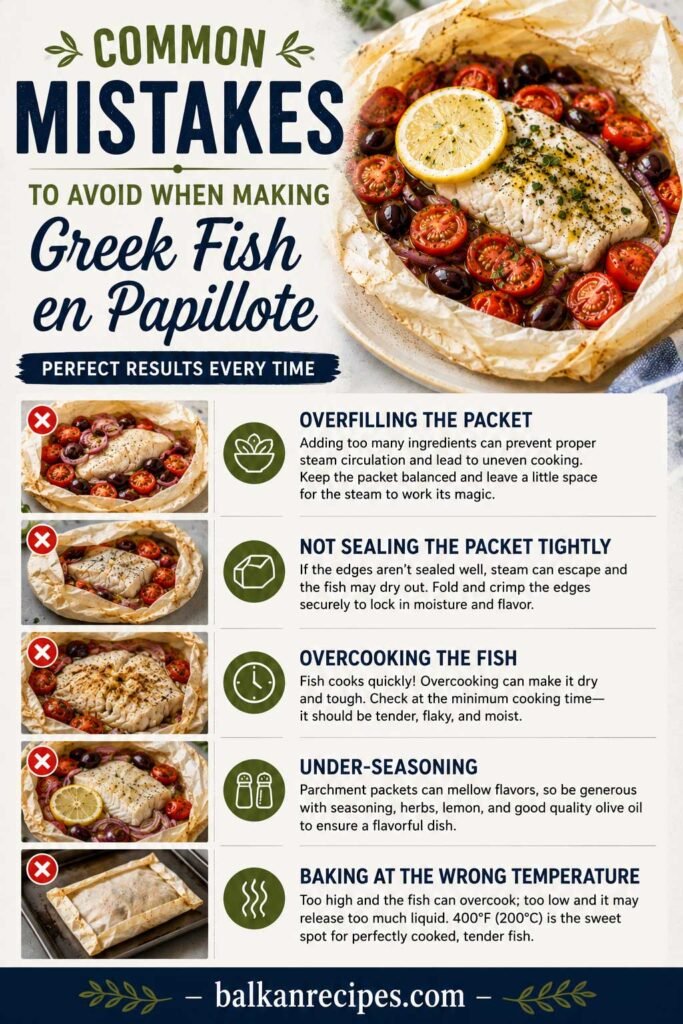
Even though Greek Fish en Papillote is one of the easiest seafood recipes to prepare, avoiding a few common mistakes will help ensure your fish comes out tender, juicy, and full of Mediterranean flavor every time.
Not Sealing the Packet Properly
A tightly sealed parchment packet is essential for successful en papillote cooking. If the edges aren’t crimped securely, steam escapes during baking, causing the fish to dry out instead of gently steaming.
Overcooking the Fish
Fish cooks quickly, especially thinner fillets. Leaving it in the oven too long can result in dry, tough fish. Start checking for doneness after about 8 minutes and remove it once it flakes easily with a fork.
Using Fish That’s Too Thin
Very thin fillets can overcook before the vegetables have softened. Choose firm white fish with evenly sized fillets for the most consistent results.
Overcrowding the Packet
Adding too many vegetables may seem tempting, but overcrowding prevents proper steam circulation and can lead to uneven cooking. Keep the ingredients in a single layer around the fish whenever possible.
Skipping Fresh Lemon
Fresh lemon is one of the signature flavors of this Greek recipe. Bottled lemon juice doesn’t provide the same bright, fresh taste, so use fresh lemon slices and finish with a squeeze of juice before serving.
Using Low-Quality Olive Oil
Extra virgin olive oil is one of the main flavor components in this dish. A good-quality olive oil adds richness and authentic Mediterranean character that’s difficult to achieve with lower-quality oils.
Opening the Packet Too Soon
Resist the urge to peek while the fish is baking. Opening the packet releases the trapped steam and interrupts the gentle cooking process. Wait until serving to open the parchment and enjoy the burst of fresh Mediterranean aromas.
Variations and Substitutions
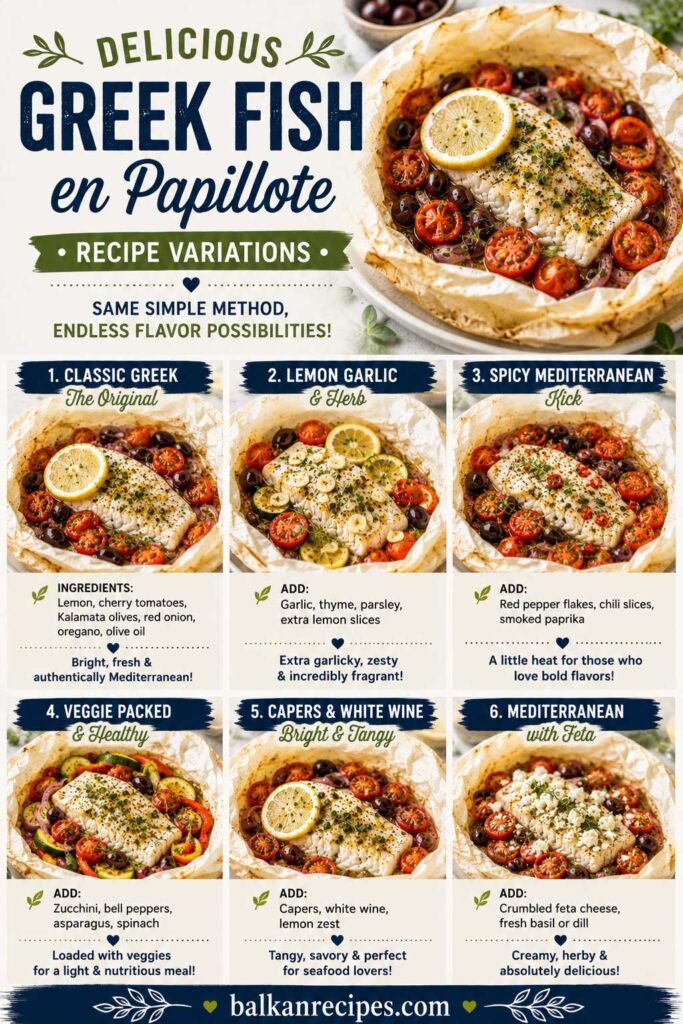
One of the best things about Greek Fish en Papillote is how easy it is to customize. While the classic combination of white fish, lemon, tomatoes, olives, and oregano is always delicious, you can easily adapt the recipe using different seafood, vegetables, herbs, and seasonings.
Try Different Types of Fish
Firm white fish such as cod, halibut, haddock, sea bass, grouper, and snapper all work beautifully. You can also use salmon or trout for a richer flavor and extra omega-3 fatty acids.
Add More Mediterranean Vegetables
Enhance the packets with zucchini slices, asparagus, bell peppers, spinach, fennel, mushrooms, artichoke hearts, or thinly sliced potatoes. Just keep the vegetables thin enough to cook within the baking time.
Use Different Fresh Herbs
Fresh oregano provides authentic Greek flavor, but parsley, dill, thyme, rosemary, or basil are excellent alternatives. Mixing two or three herbs creates even more depth of flavor.
Make It Spicy
Add a pinch of crushed red pepper flakes, sliced fresh chili peppers, or a drizzle of hot chili oil before sealing the packets for a gentle kick of heat.
Add Cheese
Scatter crumbled feta cheese over the fish just before serving for a creamy, salty finish that complements the tomatoes and olives perfectly.
Try Different Citrus
Replace the lemon with orange slices or combine lemon and lime for a slightly different citrus profile that still pairs beautifully with seafood.
Use Homemade Greek Seasoning
If you don’t have Greek seasoning, simply combine dried oregano, thyme, parsley, garlic powder, onion powder, black pepper, and a little sea salt to create your own Mediterranean seasoning blend.
What to Serve with Greek Fish en Papillote
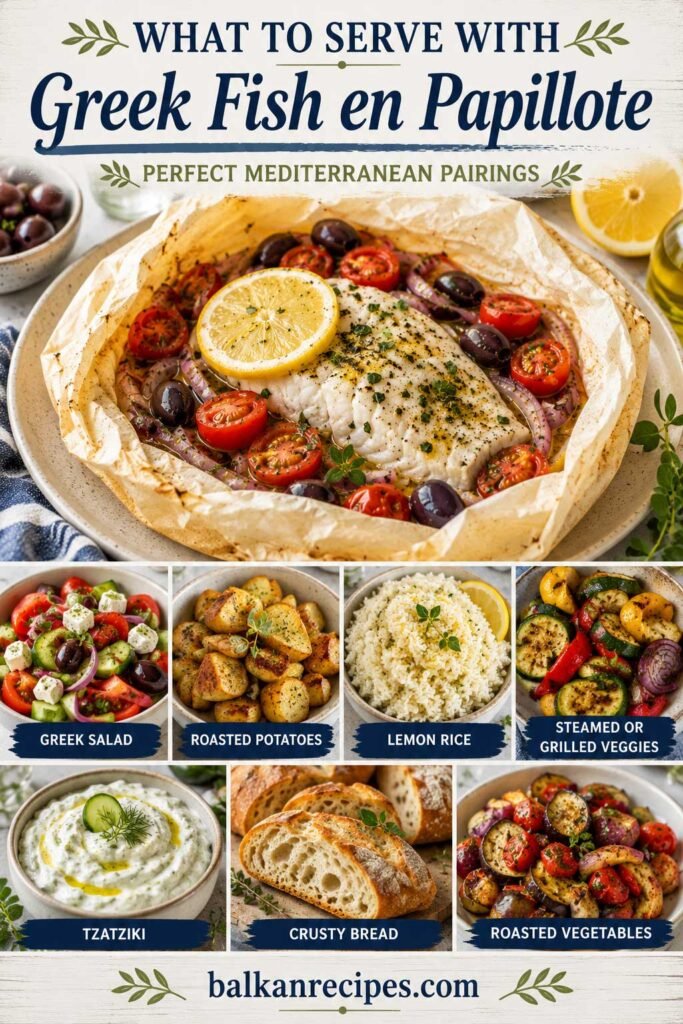
Greek Fish en Papillote is a light yet satisfying main course that pairs beautifully with a variety of Mediterranean-inspired side dishes. Whether you’re planning a simple weeknight dinner or a complete Greek feast, these accompaniments complement the fresh flavors of the fish without overpowering them.
Crusty Bread
Warm, crusty bread is perfect for soaking up the flavorful juices created inside the parchment packet. A rustic loaf or warm pita bread makes an excellent addition to the meal.
Greek Salad
A traditional Greek salad with tomatoes, cucumbers, red onions, Kalamata olives, feta cheese, and oregano provides a crisp, refreshing contrast to the tender baked fish.
For an authentic Mediterranean meal, pair it with our refreshing Greek Salad Recipe.
Roasted Potatoes
Crispy Greek-style roasted potatoes seasoned with lemon, garlic, oregano, and olive oil make one of the most popular side dishes for Mediterranean seafood.
Our crispy Greek Lemon Potatoes Recipe is another traditional side that complements baked fish beautifully.
Rice or Lemon Rice
Steamed white rice, brown rice, or fragrant Greek lemon rice absorbs the delicious broth from the fish packet while adding a satisfying, hearty element to the meal.
For even more Mediterranean vegetables, serve it alongside our classic Fasolakia Recipe.
Steamed or Grilled Vegetables
Broccoli, asparagus, zucchini, green beans, or grilled Mediterranean vegetables add extra color, nutrients, and freshness without making the meal feel heavy.
Tzatziki
Creamy tzatziki made with Greek yogurt, cucumber, garlic, dill, and lemon offers a cool, refreshing accompaniment that pairs wonderfully with baked fish.
A bowl of homemade Tzatziki Recipe also makes a cool, creamy accompaniment to this seafood dinner.
Roasted Vegetables
Oven-roasted eggplant, peppers, onions, zucchini, or carrots complement the Mediterranean flavors and create a complete, healthy dinner that’s both colorful and satisfying.
Health Benefits of Greek Fish en Papillote
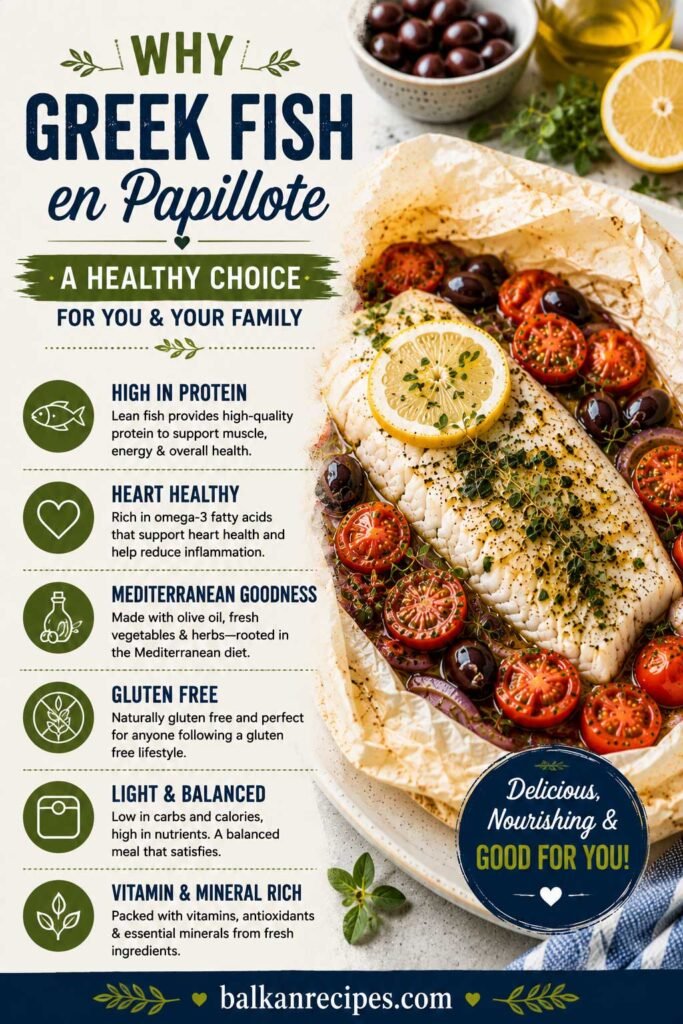
Greek Fish en Papillote is more than just a flavorful Mediterranean dinner—it’s also a nutritious meal made with wholesome ingredients that support a healthy lifestyle. By gently steaming the fish inside parchment paper, this cooking method preserves moisture and flavor without the need for heavy sauces or excessive fats.
High in Lean Protein
White fish is an excellent source of high-quality protein, which helps support muscle growth, tissue repair, and overall body function. Protein also helps you feel fuller for longer, making this recipe a satisfying meal.
Rich in Heart-Healthy Nutrients
Depending on the type of fish you choose, this recipe can provide beneficial omega-3 fatty acids that support heart health, brain function, and normal inflammation levels. Extra virgin olive oil also contributes healthy monounsaturated fats that are a cornerstone of the Mediterranean diet.
Naturally Low in Carbohydrates
With no breading or heavy starches, Greek Fish en Papillote is naturally low in carbohydrates, making it an excellent option for those following low-carb, keto-friendly, or diabetic-friendly eating plans.
Packed with Vitamins and Antioxidants
Fresh tomatoes, lemons, onions, oregano, and Kalamata olives provide vitamins, minerals, and antioxidants that help support a healthy immune system while adding vibrant Mediterranean flavor.
A Light Yet Filling Meal
Because the fish is gently steamed instead of fried, the dish remains light while still being satisfying. It’s an excellent choice for lunch or dinner when you’re looking for a nutritious meal that won’t leave you feeling overly full.
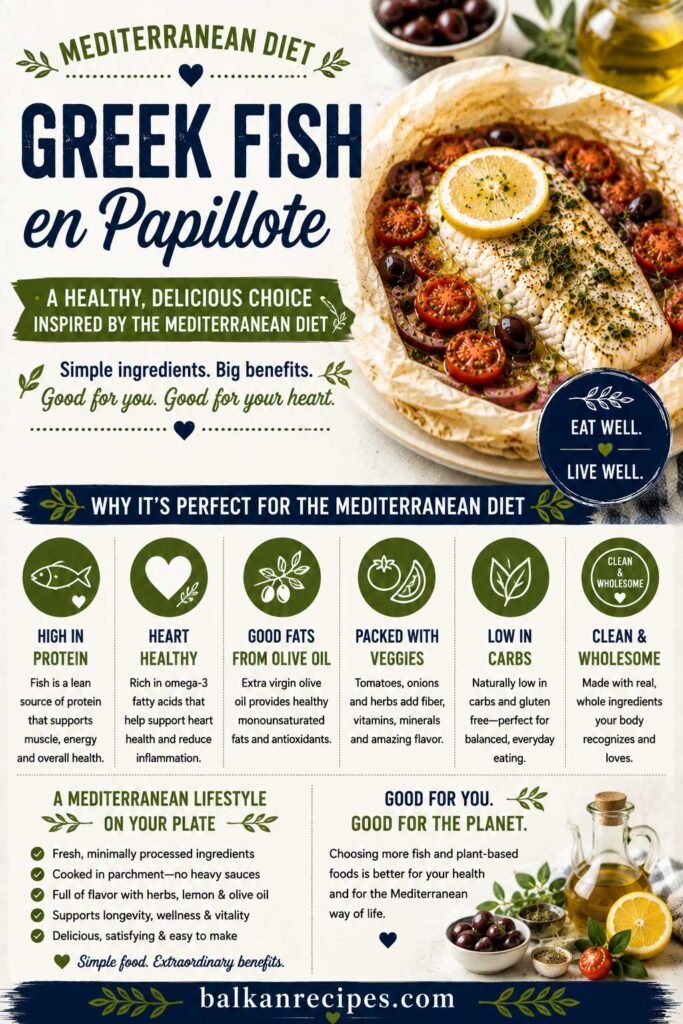
Supports the Mediterranean Diet
Greek Fish en Papillote follows many of the principles of the Mediterranean diet by emphasizing seafood, vegetables, extra virgin olive oil, herbs, and fresh ingredients. It’s a delicious way to enjoy one of the world’s most well-known healthy eating patterns.
How to Store and Reheat Greek Fish en Papillote
Greek Fish en Papillote is best enjoyed fresh from the oven, but leftovers can be stored safely and reheated while still maintaining much of their delicate flavor and texture.
Refrigerate
Allow the fish to cool completely before transferring it to an airtight container. Store it in the refrigerator for up to 2 days. If possible, keep some of the cooking juices with the fish to help maintain its moisture.
Freeze
Although fresh is always best, you can freeze cooked fish for up to 2 months. Place the cooled fish and vegetables in a freezer-safe container or freezer bag, removing as much air as possible before sealing. Thaw overnight in the refrigerator before reheating.
Reheat in the Oven
For the best texture, place the fish and vegetables in a baking dish, cover loosely with foil, and warm in a 325°F (165°C)oven for about 10–15 minutes, or until heated through. Adding a small drizzle of olive oil or a splash of lemon juice helps keep the fish moist.
Reheat in the Microwave
Transfer a portion to a microwave-safe dish, cover loosely, and heat in 30-second intervals until warmed through. Avoid overheating, as fish can become dry if cooked too long.
Enjoy Cold
Leftover Greek Fish en Papillote is also delicious served cold. Flake the fish over a fresh Greek salad, mix it into a grain bowl, or tuck it into warm pita bread with lettuce and tzatziki for a quick Mediterranean lunch.
Frequently Asked Questions
What does en papillote mean?
En papillote is a French cooking technique that means “in paper.” Food is sealed inside a parchment paper packet and baked, allowing it to steam gently in its own juices while retaining moisture and flavor.
Can I use aluminum foil instead of parchment paper?
Yes. Aluminum foil works well if parchment paper isn’t available. While parchment creates a gentler steaming environment, foil also seals in moisture and produces excellent results.
What is the best fish for Greek Fish en Papillote?
Firm white fish such as cod, snapper, halibut, haddock, sea bass, grouper, and tilapia are excellent choices because they remain tender and flaky without falling apart during cooking.
How do I know when the fish is done?
The fish is fully cooked when it flakes easily with a fork and reaches an internal temperature of 145°F (63°C). Thin fillets usually cook in about 8 minutes, while thicker fillets may require up to 12 minutes.
Can I prepare the packets ahead of time?
Yes. You can assemble the parchment packets several hours in advance and refrigerate them until you’re ready to bake. This makes the recipe ideal for entertaining or meal prep.
Can I add more vegetables?
Absolutely. Thinly sliced zucchini, asparagus, fennel, bell peppers, mushrooms, spinach, and artichoke hearts are all excellent additions. Just avoid overfilling the packet so everything cooks evenly.
Is Greek Fish en Papillote healthy?
Yes. This recipe is naturally high in lean protein, rich in Mediterranean ingredients, and requires very little added fat. Depending on the fish you choose, it can also be an excellent source of heart-healthy omega-3 fatty acids.
To learn more, visit the Harvard T.H. Chan School of Public Health’s guide to the Mediterranean diet.
Can I make this recipe dairy-free and gluten-free?
Yes. The recipe is naturally dairy-free and gluten-free as written, making it suitable for many dietary preferences without any modifications.
MMore Greek Seafood Recipes to Try
If you enjoyed this Greek Fish en Papillote recipe, there are plenty of other delicious Mediterranean seafood dishes worth exploring. From tender baked fish with lemon and herbs to flavorful shrimp, calamari, and traditional seafood stews, Greek cuisine offers endless inspiration for fresh, satisfying meals.
- Greek Baked Cod with Lemon and Oregano – Tender baked cod seasoned with fresh lemon, garlic, olive oil, and aromatic oregano.
- Greek Garlic Shrimp (Garides Saganaki) – Juicy shrimp simmered in a rich tomato sauce with garlic, herbs, and crumbled feta cheese.
- Grilled Mediterranean Sea Bass – Whole sea bass grilled with olive oil, lemon, and fresh Mediterranean herbs.
- Greek Lemon Herb Salmon – Flaky salmon infused with lemon, garlic, oregano, and extra virgin olive oil.
- Baked Mediterranean White Fish with Tomatoes and Olives – A simple one-pan dish featuring tender fish, ripe tomatoes, Kalamata olives, and fresh herbs.
- Greek Shrimp Souvlaki – Marinated shrimp skewers grilled until tender and served with lemon and tzatziki.
- Crispy Pan-Fried Calamari – Lightly coated calamari cooked until golden and served with fresh lemon wedges.
- Greek Octopus Salad – Tender octopus tossed with olive oil, lemon juice, herbs, and fresh vegetables.
- Mediterranean Mussels in Tomato Sauce – Fresh mussels gently simmered with tomatoes, garlic, olive oil, and parsley.
- Greek Seafood Rice (Seafood Pilaf) – Fragrant rice combined with shrimp, mussels, herbs, and Mediterranean seasonings.
Each dish celebrates the fresh ingredients and traditional cooking techniques that make Greek cuisine so popular. Whether you’re preparing a quick weeknight dinner or planning a special Mediterranean-inspired meal, these seafood recipes offer plenty of delicious inspiration.
Greek Fish en Papillote Recipe
This Greek Fish en Papillote recipe is proof that simple ingredients can create an elegant, restaurant-quality meal with very little effort. Tender white fish, juicy cherry tomatoes, Kalamata olives, fresh oregano, lemon, and extra virgin olive oil come together inside a parchment packet, where they gently steam into a light, flavorful Mediterranean dinner.
Whether you’re following the Mediterranean diet, cooking a healthy weeknight dinner, or simply looking for a new way to enjoy seafood, this Greek Fish en Papillote recipe is sure to become one of your favorite Mediterranean meals.
While en papillote is French in origin, Greek home cooks have long prepared seafood with lemon, olive oil, herbs, and seasonal vegetables. Combining these ingredients with the parchment cooking method creates a meal that feels perfectly at home on the Greek table.
If you try this Greek Fish en Papillote, I’d love to hear how it turned out! Leave a comment below, share your favorite variation, and don’t forget to rate the recipe. Happy cooking!
Did You Make This Greek Fish en Papillote Recipe?
I’d love to hear how your Greek Fish en Papillote turned out! Did you stick with the classic recipe, or add your own Mediterranean twist with different fish, herbs, or vegetables?
Leave a comment below, and share your favorite variation. If you enjoyed it, don’t forget to follow Balkan Recipes and share this recipe with your family and friends. Happy cooking!