Greek Couscous Pasta Salad
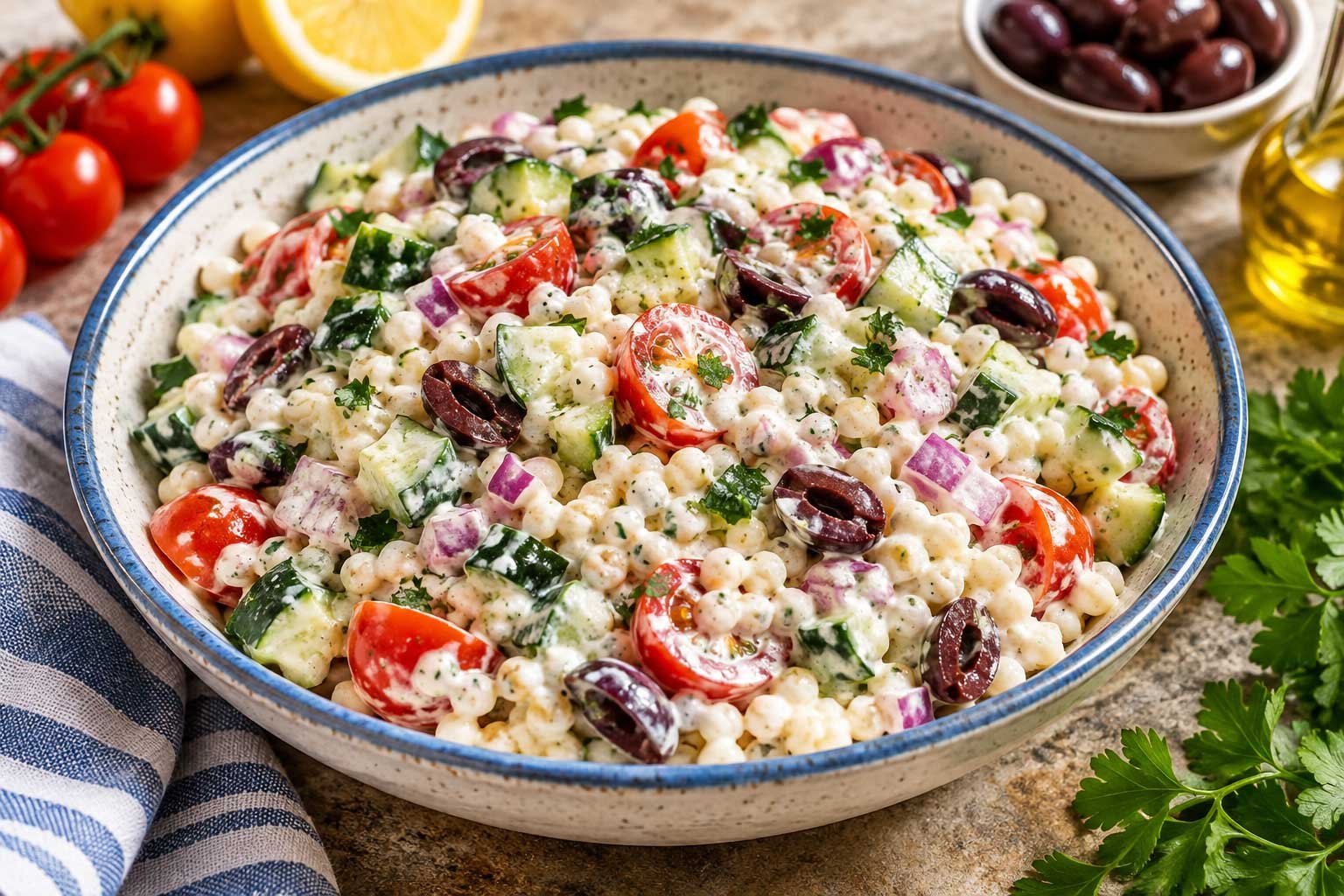
This Greek Couscous Pasta Salad brings together tender pearl couscous, crunchy cucumber, sweet cherry tomatoes, red onion, and Kalamata olives in a creamy lemon and Greek yogurt dressing. It’s the kind of salad that works just as well for a weekday lunch as it does for a backyard barbecue.
The pearl couscous gives each bite a pleasant chew, while the vegetables keep things crisp and colorful. The dressing is tangy without being overpowering, and the Kalamata olives add just enough saltiness to balance everything out.
You can prepare the ingredients in about 20 minutes, plus time for the couscous to cool. Make it ahead for a picnic, serve it with grilled chicken, or keep a bowl in the refrigerator for an easy lunch over the next couple of days.
What Is Greek Couscous Pasta Salad?
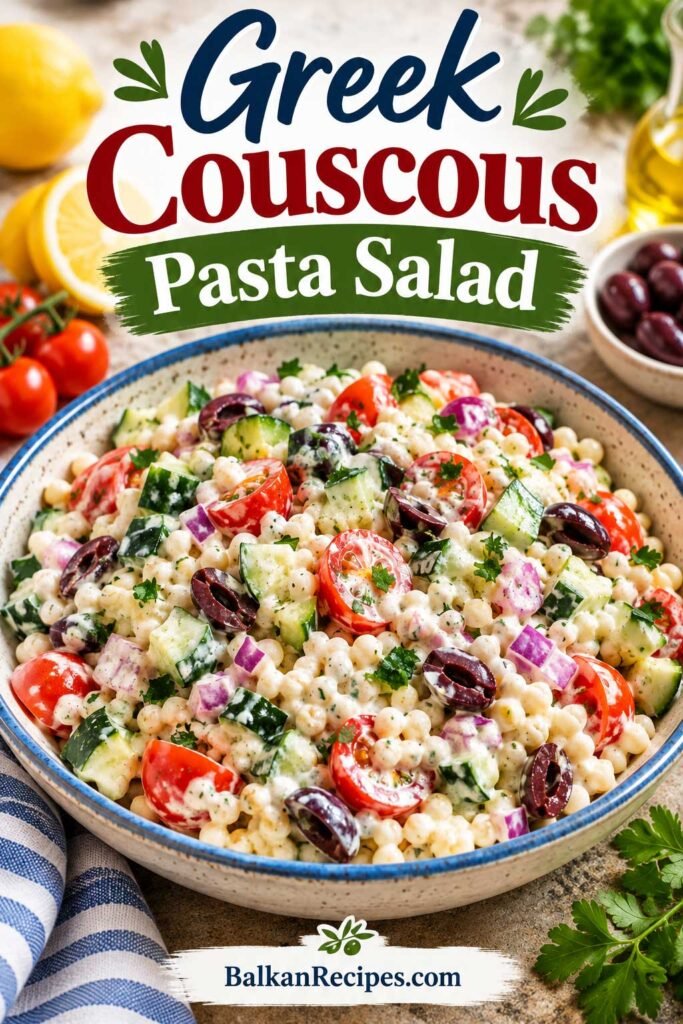
Greek Couscous Pasta Salad is a Mediterranean-inspired pasta salad made with pearl couscous, fresh vegetables, Kalamata olives, and a lemony Greek yogurt dressing.
Pearl couscous, also called Israeli couscous, is a small, round wheat-based pasta. Unlike fine North African couscous, it has a larger shape and a firmer, chewier texture that holds up well in salads.
Although this isn’t a traditional Greek dish, its combination of yogurt, olive oil, lemon, tomatoes, cucumber, and olives draws on familiar Greek flavors.
The Mediterranean Story Behind Greek Couscous Pasta Salad
Pearl couscous, also known as Israeli couscous or ptitim, was developed in Israel during the 1950s. Unlike the much smaller couscous commonly used in North African dishes, these toasted pasta pearls have a firm texture that makes them especially useful in salads.
This recipe brings pearl couscous together with ingredients familiar in Greek cuisine, including cucumber, tomatoes, Kalamata olives, Greek yogurt, lemon, and olive oil.
The result is a modern Mediterranean-inspired salad rather than a traditional Greek specialty. It’s a simple combination of ingredients from different culinary traditions that work particularly well together.
Why You’ll Love This Greek Couscous Pasta Salad
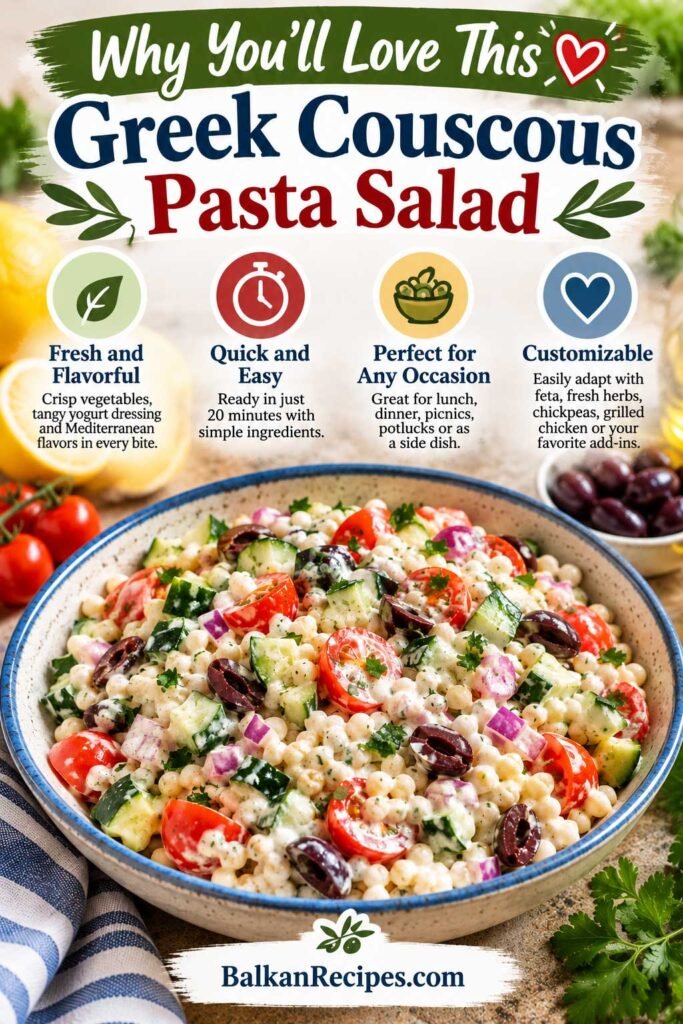
One of the best things about this Greek Couscous Pasta Salad is how easily it fits into different meals. It’s filling enough for lunch, but it also works as a side dish when you’re grilling outside. You can prep the ingredients ahead of time, and the recipe is easy to adjust based on what’s in your fridge.
Quick and Easy to Prepare
With about 10 minutes of hands-on preparation and roughly 10 minutes of cooking, most of the work is done quickly. Allow extra time for the couscous to cool before adding the yogurt dressing. You can also refrigerate the finished salad for 20–30 minutes if you prefer it chilled.
Fresh Mediterranean-Inspired Flavors
Juicy cherry tomatoes, crunchy cucumber, sharp red onion, and briny Kalamata olives bring plenty of fresh Mediterranean flavor to every bite. Lemon juice and extra virgin olive oil add brightness and balance the creamy yogurt dressing.
Satisfying Without Feeling Too Heavy
Pearl couscous has a pleasantly chewy texture that makes this salad more substantial than a simple vegetable salad. The Greek yogurt dressing adds creaminess while keeping the overall dish fresh and refreshing.
Perfect for Making Ahead
You can cook the couscous and prepare the dressing ahead of time, then keep them refrigerated separately. Chop the vegetables closer to serving time if possible. This helps keep the cucumber crisp and prevents the dressing from becoming watery.
Easy to Customize
You can easily adapt the recipe with ingredients such as crumbled feta cheese, fresh parsley, dill, roasted red peppers, chickpeas, or grilled chicken. It’s a flexible recipe that can be adjusted based on what you have available or how you plan to serve it.
Affiliate Disclosure: This article may contain affiliate links. If you purchase through these links, I may earn a small commission at no additional cost to you.
Ingredients You’ll Need
You don’t need anything complicated to make this Greek Couscous Pasta Salad. Most of the ingredients are familiar Mediterranean staples, and each one adds something different, from the chewy couscous and crisp cucumber to the salty olives and lemony yogurt dressing.
Pearl Couscous
Pearl couscous, also known as Israeli couscous, has a larger, rounder shape and chewier texture than traditional fine couscous. You’ll need 2 cups of uncooked pearl couscous for this recipe. Cook it until tender but not mushy, then drain and cool it completely before adding the vegetables and dressing.
Greek Yogurt
Use 1½ cups of plain Greek yogurt to create the creamy base for the dressing. Full-fat Greek yogurt provides the richest texture, although reduced-fat yogurt also works well if you prefer a lighter dressing.
Lemon Juice
The juice of one fresh lemon adds brightness and acidity, balancing the richness of the Greek yogurt and olive oil. Freshly squeezed lemon juice gives the best flavor.
Extra Virgin Olive Oil
Two tablespoons of extra virgin olive oil add richness and classic Mediterranean flavor to the creamy dressing. Choose a good-quality olive oil with a pleasant fruity flavor if possible.
Cucumber
Two cups of peeled and diced cucumber bring freshness and crunch to the salad. English or Persian cucumbers are especially convenient because they contain fewer seeds and generally release less water.
Cherry Tomatoes
Two cups of halved cherry tomatoes add natural sweetness, juiciness, and beautiful color. Grape tomatoes can be used as an alternative.
Red Onion
One medium red onion adds a crisp texture and pleasantly sharp flavor. Dice it finely so that it distributes evenly throughout the salad without overpowering the other ingredients.
Kalamata Olives
About ⅔ cup of pitted and halved Kalamata olives gives the salad its distinctive salty, briny Mediterranean character. Kalamata olives work particularly well with the creamy yogurt dressing, fresh vegetables, and lemon.
Greek Yogurt Dip Seasoning
The original recipe calls for 1 tablespoon of Greek yogurt dip seasoning to flavor the dressing. If you prefer to skip the packaged mix, try 1 teaspoon dried oregano, 1 small minced garlic clove, ¼ teaspoon black pepper, and salt to taste.
Because seasoning blends vary in sodium content, taste the dressing before adding extra salt.
Mediterranean Pantry Staples for This Recipe
The fresh vegetables are easy to pick up at almost any grocery store, but a few pantry ingredients are worth keeping on hand if you enjoy making Mediterranean salads.
Pearl couscous is useful for quick side dishes, Kalamata olives bring a rich, briny flavor, and a good extra virgin olive oil works in everything from salad dressings to roasted vegetables. Keeping these basics stocked makes it easier to put together a meal without an extra shopping trip.
Ingredients Worth Keeping in Your Pantry
| Pantry Essential | What to Look For | Where to Buy |
|---|---|---|
| Pearl Couscous | Plain, unseasoned pearl or Israeli-style couscous | See Today’s Price |
| Extra Virgin Olive Oil | Fresh, well-sealed olive oil with a flavor you enjoy | See Today’s Price |
| Kalamata Olives | Pitted olives packed in brine for easier preparation | See Today’s Price |
| Dried Greek Oregano | Fragrant dried oregano without added salt | See Today’s Price |
| Greek Yogurt Dip Seasoning | A savory blend; check the sodium and ingredients | See Today’s Price |
Our Pantry Tip
If you make Mediterranean recipes regularly, pearl couscous, Kalamata olives, olive oil, and dried oregano are particularly versatile ingredients to keep stocked. Buy plain Greek yogurt, lemons, and fresh vegetables closer to the day you plan to make the salad.
How to Make Greek Couscous Pasta Salad
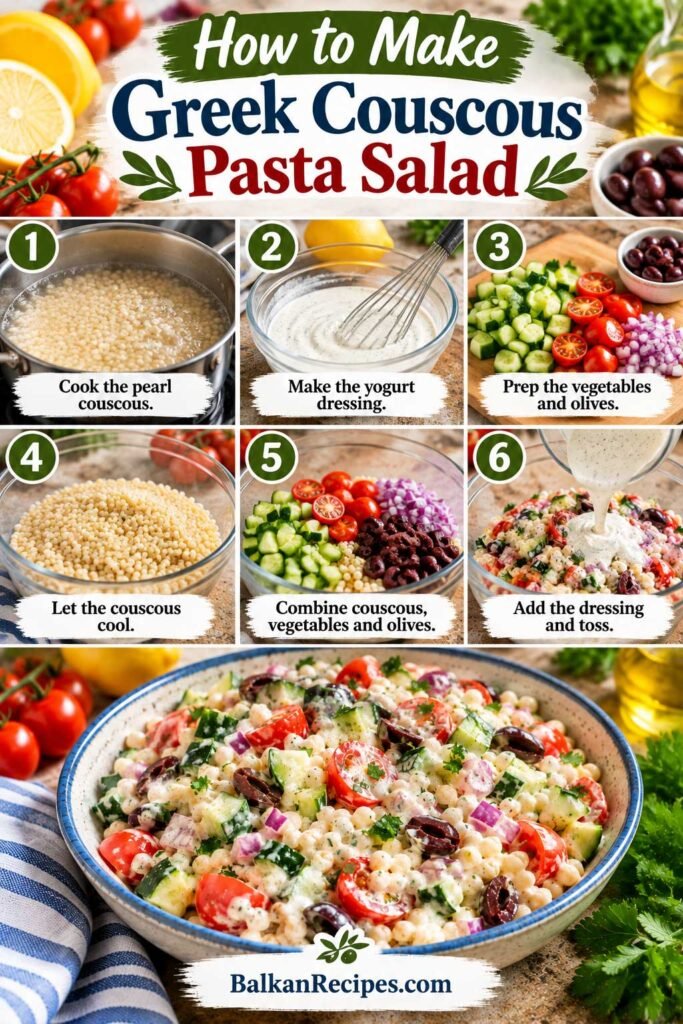
Making this Greek Couscous Pasta Salad takes about 20 minutes of preparation and cooking, plus time for the couscous to cool. The key is letting the pasta cool before mixing it with the vegetables and yogurt dressing so everything stays fresh and creamy.
Cook the Pearl Couscous
Bring water to a boil in a medium saucepan, using the amount recommended on your pearl couscous package for 2 cups of dry couscous.
Add the couscous, stir, and cook according to the package directions, usually about 8–12 minutes, until tender but still slightly chewy.
Drain and Cool
Drain any remaining water from the cooked couscous and transfer it to a large mixing bowl. Allow it to cool completely before adding the dressing.
For faster cooling, spread the couscous in a shallow layer on a large plate or baking sheet. This also helps prevent the individual pearls from becoming overly sticky.
Prepare the Creamy Yogurt Dressing
In a small bowl, whisk together the Greek yogurt, lemon juice, olive oil, and Greek yogurt dip seasoning until smooth.
If you’re using the homemade seasoning instead, add 1 teaspoon dried oregano, 1 small minced garlic clove, and ¼ teaspoon freshly ground black pepper. Taste before adding salt, especially if you’re using salty Kalamata olives.
If the dressing seems too thick, stir in a teaspoon of cold water at a time until it’s easy to spoon over the couscous.
Prepare the Vegetables
While the couscous cools, peel and dice the cucumber, halve the cherry tomatoes and Kalamata olives, and finely dice the red onion.
Try to cut the vegetables into relatively even pieces so you get a balanced combination of flavors and textures in every bite.
Combine the Salad
Transfer the cooled couscous to a large mixing bowl. Add the cucumber, cherry tomatoes, red onion, and Kalamata olives.
Spoon in about three-quarters of the yogurt dressing and toss gently. Add more dressing as needed until everything is lightly coated. This keeps the salad creamy without making it overly heavy.
Chill or Serve
The salad is ready to serve once the couscous has cooled and everything is combined. For a colder salad, cover and refrigerate for another 20–30 minutes.
Give it a gentle stir before serving. If the couscous has absorbed some of the dressing, add a little lemon juice or a spoonful of the reserved dressing.
Greek Couscous Pasta Salad Recipe
Ingredients
- 2 cups uncooked pearl couscous Israeli couscous
- 2½ cups water or as directed on the couscous package
- 1½ cups plain nonfat Greek yogurt (approximately 340 g)
- 1 tbsp Greek yogurt dip seasoning or to taste
- Juice of 1 lemon
- 2 tbsp extra virgin olive oil
- 2 cups peeled and diced cucumber
- 2 cups cherry tomatoes halved
- 1 medium red onion finely diced
- ⅔ cup pitted Kalamata olives halved
Instructions
- Bring 2½ cups of water to a boil in a medium saucepan over medium-high heat.
- Add the pearl couscous and stir well. Reduce the heat, cover the saucepan, and cook for approximately 8 minutes, or according to the package directions, until tender but still pleasantly chewy.
- Drain any remaining water and transfer the cooked couscous to a large mixing bowl. Allow it to cool completely.
- Meanwhile, prepare the dressing by combining the Greek yogurt, lemon juice, extra virgin olive oil, and Greek yogurt dip seasoning in a small bowl. Stir until smooth and creamy.
- Add the diced cucumber, halved cherry tomatoes, finely diced red onion, and Kalamata olives to the cooled couscous.
- Pour the Greek yogurt dressing over the salad and gently toss until all the ingredients are evenly coated.
- Taste and adjust the seasoning if needed. For the best flavor, chill the salad for 20 to 30 minutes before serving.
Notes
- For a more homemade Mediterranean-style dressing, replace the packaged seasoning with dried oregano, minced garlic, freshly ground black pepper, and salt to taste.
- Always allow the couscous to cool completely before adding the Greek yogurt dressing. Adding the dressing while the couscous is still warm can make it thin and watery.
- Store leftovers in an airtight container in the refrigerator for up to 3 days. Stir well before serving and refresh with a squeeze of lemon juice or a drizzle of extra virgin olive oil if needed.
Tips for the Best Greek Couscous Pasta Salad
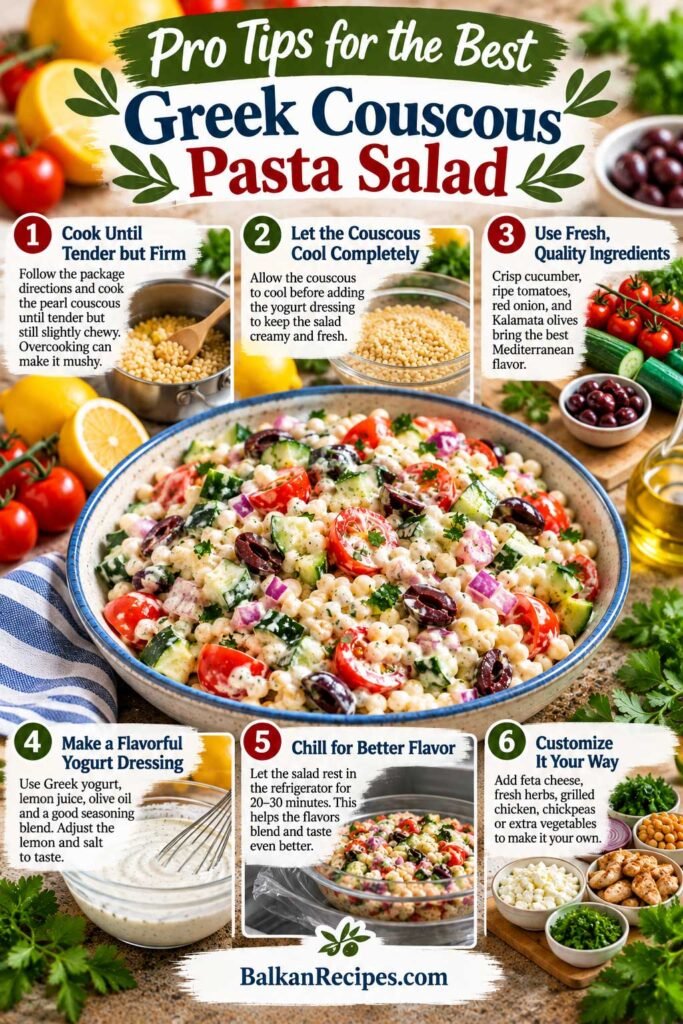
A few small details can make this Greek Couscous Pasta Salad noticeably better. Pay attention to the couscous texture, keep excess moisture out of the dressing, and taste everything before serving.
Don’t Overcook the Couscous
Pearl couscous should be tender but still pleasantly chewy. Overcooking can make it soft and mushy, especially once it is mixed with the creamy dressing. Begin checking it near the end of the recommended cooking time and drain it as soon as it reaches the right texture.
Let the Couscous Cool Completely
Avoid adding the Greek yogurt dressing while the couscous is still hot. Heat can make the dressing thinner and cause the fresh vegetables to lose their crisp texture. For the freshest results, let the couscous reach room temperature before assembling the salad.
Remove Excess Moisture from the Vegetables
Cucumbers and tomatoes naturally release water, which can thin the dressing as the salad sits. After chopping them, gently pat particularly juicy vegetables with a paper towel before adding them to the bowl.
Cut the Vegetables into Similar-Sized Pieces
Uniformly chopped vegetables make the salad easier to eat and help distribute the flavors evenly. Aim for bite-sized pieces that complement the size and texture of the pearl couscous.
Taste Before Serving
Kalamata olives and packaged seasoning can both contribute considerable saltiness, so avoid adding too much extra salt at the beginning. Taste the finished salad first, then adjust with additional lemon juice, black pepper, oregano, or salt as needed.
Give It Time to Chill
Although you can enjoy this salad immediately, chilling it for 20 to 30 minutes helps the Mediterranean-inspired flavors blend together. If the dressing thickens too much in the refrigerator, stir in a small splash of lemon juice or extra virgin olive oil before serving.
Kitchen Tools That Make This Couscous Salad Easier
You don’t need special equipment to make Greek Couscous Pasta Salad, but a few everyday kitchen tools can make preparation faster and less messy. A good saucepan helps cook the pearl couscous evenly, while a sharp knife and sturdy cutting board make quick work of the fresh vegetables.
If you prepare pasta salads, Mediterranean dishes, or meal-prep lunches regularly, these tools are worth having in your kitchen.
Essential Tools for Greek Couscous Pasta Salad
| Kitchen Tool | Why It’s Useful | Where to Buy |
|---|---|---|
| Medium Saucepan with Lid | Cooks pearl couscous evenly and helps control the simmer | See Today’s Price |
| Fine-Mesh Strainer | Drains excess cooking water without losing the small pasta pearls | See Today’s Price |
| Large Mixing Bowl | Provides enough room to toss the couscous and vegetables without spilling | See Today’s Price |
| Chef’s Knife | Makes it easier to dice cucumber, tomatoes, and red onion | See Today’s Price |
| Cutting Board | Gives you a stable surface for preparing the vegetables | See Today’s Price |
| Citrus Juicer | Helps extract lemon juice while catching most seeds | See Today’s Price |
Our Kitchen Tip
If you’re choosing just one upgrade, start with a reliable saucepan or a good chef’s knife. Both are useful far beyond this recipe, whether you’re cooking grains, chopping vegetables, or preparing homemade Mediterranean meals.
Common Mistakes to Avoid
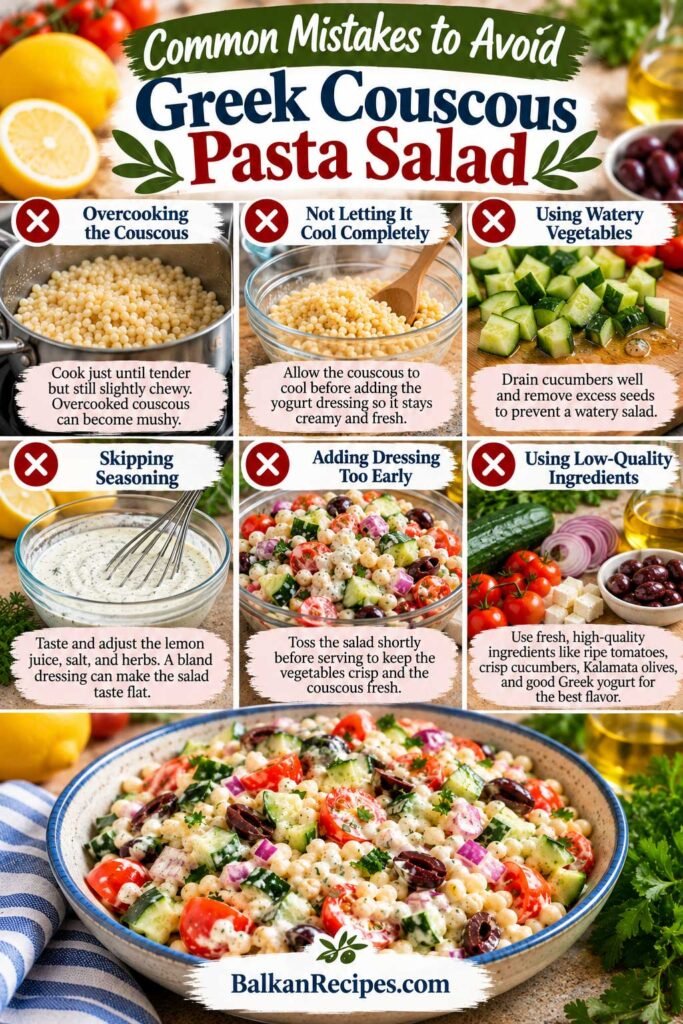
Even a simple pasta salad can turn out differently depending on how it’s prepared. These are a few things to watch for.
Dressing the Couscous While It’s Hot
Warm couscous can loosen the yogurt dressing and soften the vegetables. Spread the cooked pasta on a tray to help it cool faster before mixing everything together.
Adding Too Much Salt
Kalamata olives and packaged dip seasoning are already salty. Taste the dressing and the finished salad before reaching for the salt shaker.
Using Too Much Dressing at Once
Greek yogurt varies in thickness, and pearl couscous can absorb moisture as it sits. Add most of the dressing first, toss gently, and use the remainder only if needed.
Forgetting to Refresh Leftovers
After a night in the refrigerator, the salad may look drier or have a little liquid at the bottom. Give it a good stir and add a small squeeze of lemon juice if the flavor needs brightening.
Greek Couscous Pasta Salad Variations
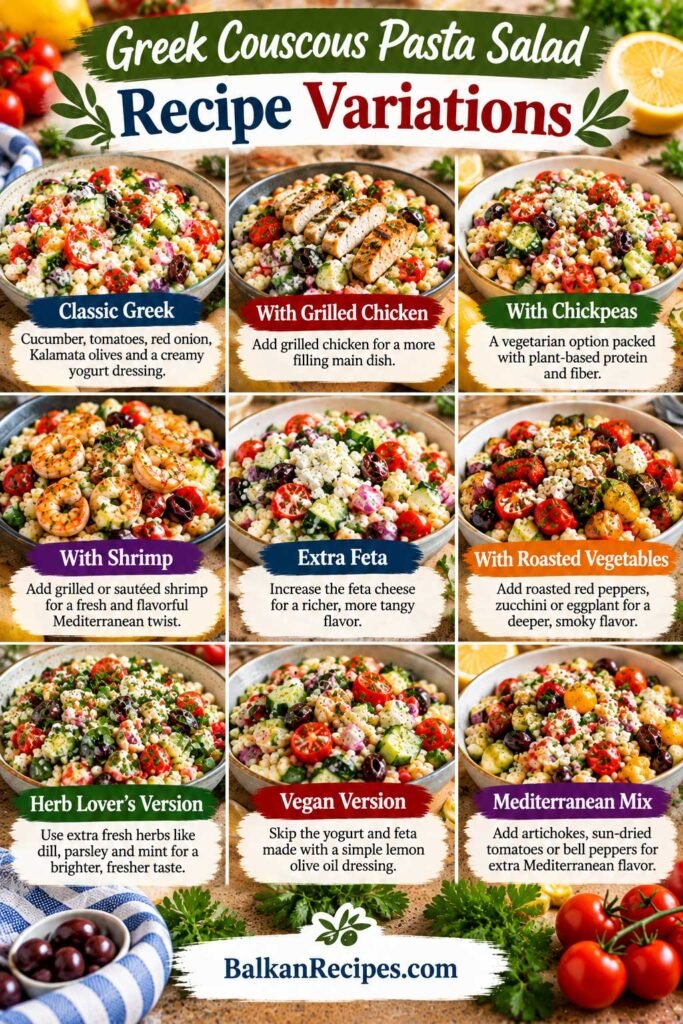
This Greek Couscous Pasta Salad is easy to customize with different Mediterranean ingredients, fresh herbs, proteins, and vegetables. The basic combination of pearl couscous and creamy yogurt dressing creates a versatile base for several delicious variations.
Greek Couscous Salad with Feta
Add crumbled feta cheese for a salty, creamy flavor that pairs beautifully with cucumber, cherry tomatoes, Kalamata olives, and lemon dressing. If you enjoy fresh Mediterranean salads with feta, try our Greek Green Bean and Feta Salad for another colorful side dish.
Greek Couscous Salad with Chickpeas
Stir in drained and rinsed chickpeas to make the salad more substantial. They add a pleasantly firm texture and turn the recipe into a more satisfying vegetarian lunch or light dinner.
Greek Couscous Salad with Grilled Chicken
Top the salad with sliced grilled chicken for a protein-rich main course. Chicken seasoned with lemon, garlic, oregano, and olive oil complements the Mediterranean flavors especially well. You can also serve it alongside Baked Greek Chicken for a satisfying family dinner.
Greek Couscous Salad with Shrimp
Add grilled or sautéed shrimp for a fresh seafood variation. A simple preparation with garlic, lemon, and olive oil works beautifully without overpowering the creamy dressing.
Extra-Herby Mediterranean Version
Add generous amounts of fresh parsley, dill, mint, or a combination of all three. Fresh herbs give the salad a brighter flavor and make it particularly refreshing during the warmer months.
Roasted Vegetable Couscous Salad
Add roasted red peppers, zucchini, eggplant, or artichoke hearts for deeper Mediterranean flavor. Allow roasted vegetables to cool before mixing them with the couscous and yogurt dressing.
Spicy Greek-Inspired Version
For a little heat, add crushed red pepper flakes, finely chopped pepperoncini, or a small amount of spicy red pepper paste. Start with a little and adjust according to your preference.
What to Serve with Greek Couscous Pasta Salad
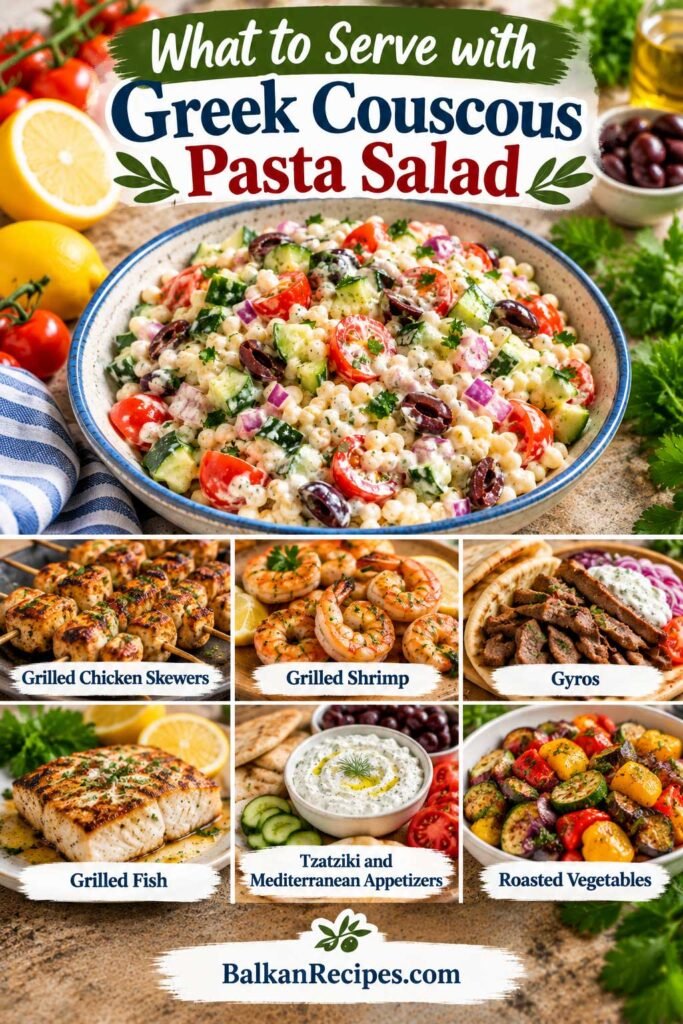
This Greek Couscous Pasta Salad is satisfying enough to enjoy as a light lunch on its own, but it also makes an excellent side dish for grilled meats, seafood, roasted vegetables, and other Mediterranean favorites. Its creamy yogurt dressing, fresh vegetables, and bright lemon flavor pair especially well with simple dishes that aren’t overly heavy.
Grilled Chicken or Souvlaki
Serve the salad alongside Greek Chicken Skewers, lemon and oregano grilled chicken, or pork souvlaki. The smoky flavor of grilled meat contrasts beautifully with the cool cucumber, juicy tomatoes, and creamy yogurt dressing.
Grilled Fish and Seafood
The fresh lemon and olive oil flavors make this couscous salad a natural companion for grilled fish, shrimp, or other seafood. It’s particularly delicious with simply seasoned salmon, sea bass, or Greek-style fish prepared with herbs and lemon.
Greek Meatballs
Pair the salad with Greek meatballs for a satisfying Mediterranean-inspired dinner. The tender, savory meatballs add richness, while the fresh vegetables and tangy dressing help keep the meal balanced and refreshing.
Roasted or Grilled Vegetables
For a vegetarian meal, serve it with roasted eggplant, zucchini, bell peppers, mushrooms, or asparagus. The deeper flavor of roasted vegetables works especially well with the cool and creamy salad.
Warm Pita Bread and Dips
Turn the salad into part of a Mediterranean-style spread with warm pita bread, hummus, Greek Skordalia, or Greek Feta and Red Pepper Dip. These flavorful dips complement the fresh vegetables and creamy couscous salad, making them ideal for entertaining or family gatherings.
As Part of a Greek-Inspired Mezze Spread
Serve smaller portions alongside stuffed grape leaves, olives, feta cheese, fresh vegetables, dips, and warm bread. Add Santorini Tomato Fritters for a crispy Greek appetizer that pairs wonderfully with the cool and creamy couscous salad.
Health Benefits of Greek Couscous Pasta Salad
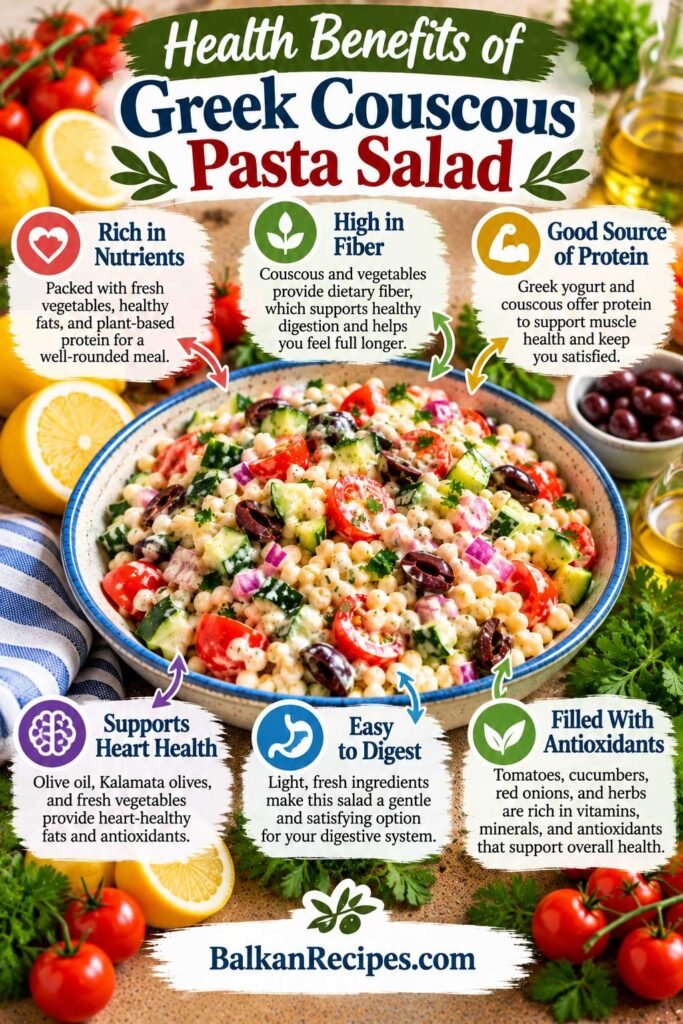
This Greek Couscous Pasta Salad brings together fresh vegetables, pearl couscous, Greek yogurt, extra virgin olive oil, and Kalamata olives to create a satisfying Mediterranean-inspired dish. Beyond its refreshing flavor, the salad provides carbohydrates for energy, protein, unsaturated fats, and a variety of vitamins and minerals.
Although its nutritional value depends on the ingredients and portion sizes, this colorful salad can be part of a balanced diet when enjoyed alongside other nutritious foods.
Provides Protein and Calcium from Greek Yogurt
Plain Greek yogurt gives this couscous salad its creamy texture while contributing protein and calcium. Protein supports muscle maintenance and helps make meals more satisfying, while calcium plays an essential role in maintaining healthy bones and teeth.
Greek yogurt also provides vitamin B12 and phosphorus. Choosing plain, unsweetened yogurt keeps added sugars out of the dressing while allowing the lemon juice, olive oil, and herbs to provide flavor.
Contains Heart-Healthy Unsaturated Fats
Extra virgin olive oil and Kalamata olives provide mostly monounsaturated fats. The American Heart Association’s guidance on healthy cooking oils explains why replacing saturated fats with unsaturated fats can support heart health.
Extra virgin olive oil also contains naturally occurring plant compounds called polyphenols. These compounds have antioxidant properties and are one reason olive oil is widely studied as part of Mediterranean dietary patterns.
Keep in mind that Kalamata olives can contain considerable sodium, so taste the salad before adding extra salt.
Provides Vitamins and Antioxidants from Fresh Vegetables
Cherry tomatoes, cucumber, and red onion contribute vitamins, minerals, and beneficial plant compounds.
Tomatoes are particularly notable for their lycopene content, a carotenoid with antioxidant properties. They also provide vitamin C, which supports normal immune function and collagen formation.
Cucumber adds water and small amounts of vitamin K, while red onion contains naturally occurring flavonoids, including quercetin.
Together, these vegetables add nutritional variety, freshness, and color to the salad.
Supplies Carbohydrates for Energy
Pearl couscous is made from wheat-based pasta and provides carbohydrates, an important source of energy for the body.
Its pleasantly chewy texture also makes the salad more substantial than a simple vegetable salad.
However, regular pearl couscous is generally made from refined wheat flour and is not particularly high in fiber. The American Heart Association recommends choosing whole-grain foods when possible. For a higher-fiber variation, use whole-wheat pearl couscous when available or add chickpeas and extra vegetables.
Important: Pearl couscous contains gluten and is unsuitable for people with celiac disease or those who need to avoid gluten.
Can Support Digestive Health
The vegetables in this salad contribute dietary fiber, which supports normal digestion and bowel regularity.
Some Greek yogurts also contain live and active cultures. These may provide beneficial microorganisms, although the specific strains and potential benefits vary between products.
To increase the salad’s fiber content, try adding chickpeas, fresh parsley, spinach, or other vegetables.
Helps Create a Balanced and Satisfying Meal
With couscous for carbohydrates, Greek yogurt for protein, olive oil for unsaturated fats, and vegetables for additional nutrients, this salad brings several food groups together in one bowl.
For a more substantial lunch or dinner, add chickpeas, grilled chicken, or shrimp. You can also serve a smaller portion alongside fish or another protein-rich main dish.
The American Heart Association’s dietary guidance emphasizes vegetables, whole grains, healthy protein sources, and unsaturated fats as part of a heart-healthy eating pattern.
Easy Ways to Adjust the Nutrition
You can adjust the ingredients to add more fiber, reduce sodium, or change the balance of protein and vegetables to suit your preferences.
- Add more vegetables: Increase the cucumber, tomatoes, or leafy greens for extra nutrients and fiber.
- Include chickpeas: Add plant-based protein and fiber to make the salad more filling.
- Choose plain Greek yogurt: Use unsweetened yogurt and select the fat content that fits your dietary needs.
- Use fresh herbs: Parsley, dill, mint, and oregano add flavor without relying on additional salt.
- Watch the sodium: Kalamata olives and packaged dip seasoning can be salty. Consider using homemade garlic and oregano seasoning instead.
- Try whole-wheat pearl couscous: When available, it can provide more fiber than the refined-wheat version.
How to Store Leftovers
Greek Couscous Pasta Salad tastes best when the vegetables are still crisp and the dressing is creamy, but leftovers can make a convenient lunch the next day.
Store the salad in an airtight container in the refrigerator at 40°F (4°C) or below and use it within 3 days. Refrigerate promptly, within 2 hours of preparation or serving, or within 1 hour if the temperature is above 90°F (32°C).
The couscous may absorb some dressing overnight, while the tomatoes and cucumber can release moisture. Stir well before serving and add a little lemon juice if needed.
For meal prep, keep the cooked couscous, chopped vegetables, and dressing in separate covered containers. Combine them shortly before serving for the freshest texture.
Freezing isn’t recommended because the yogurt dressing can separate and the fresh vegetables become watery after thawing.
Frequently Asked Questions About Greek Couscous Pasta Salad Recipe
Is pearl couscous the same as regular couscous?
No. Pearl couscous consists of larger, round pieces with a pleasantly chewy, pasta-like texture, while traditional couscous is much smaller and finer. For this Greek Couscous Pasta Salad, pearl couscous works especially well because it holds its shape and pairs beautifully with chopped vegetables and creamy dressing.
Is pearl couscous gluten-free?
No. Pearl couscous is typically made from wheat flour, so it contains gluten. If you need a gluten-free alternative, quinoa or a certified gluten-free small pasta can provide a similar base for the salad.
Can I make Greek Couscous Pasta Salad ahead of time?
Yes. You can prepare the salad several hours in advance and keep it covered in the refrigerator until serving. For the freshest texture, you can also store the cooked couscous, chopped vegetables, and yogurt dressing separately and combine them shortly before serving.
Can I use regular couscous instead of pearl couscous?
Yes, but the texture will be quite different. Regular couscous is much finer and softer, while pearl couscous is larger and chewier. Orzo is another good substitute if you want to maintain a pasta-like texture.
Can I add feta cheese?
Absolutely. Crumbled feta cheese is a delicious addition that pairs naturally with cucumber, tomatoes, Kalamata olives, lemon, and extra virgin olive oil. Add it just before serving or gently fold it into the finished salad.
How long does Greek Couscous Pasta Salad last in the refrigerator?
When stored properly in an airtight container, the salad will keep for up to 3 days in the refrigerator. The vegetables may gradually release moisture, so stir the salad well before serving leftovers.
Can I make this salad without packaged seasoning?
Yes. Replace the packaged Greek yogurt dip seasoning with dried oregano, minced garlic, freshly ground black pepper, and a small amount of salt. Fresh dill or parsley can also be added for extra Mediterranean flavor.
Should Greek Couscous Pasta Salad be served warm or cold?
This salad is best served chilled or at room temperature. Allow the cooked pearl couscous to cool completely before adding the vegetables and Greek yogurt dressing for the best texture and consistency.
A Fresh Mediterranean Salad Worth Making Again
There’s something especially good about a chilled pasta salad on a warm day, and this one has plenty going for it. The pearl couscous is tender and chewy, the vegetables add crunch, and the lemony yogurt dressing brings everything together without hiding the other flavors.
Serve it with grilled chicken for dinner, pack it for a picnic, or make a batch to enjoy over the next couple of days. A little extra lemon juice and a handful of fresh herbs are all it needs before serving.
It’s an easy recipe to make your own, whether you prefer a little crumbled feta, more olives, or extra cucumber.
More Greek Recipes to Try
If you enjoyed this Greek Couscous Pasta Salad, here are a few more Greek and Mediterranean-inspired dishes worth trying. From fresh salads and creamy dips to chicken dishes and crispy appetizers, these recipes make it easy to put together a meal with something for everyone.
- Greek Panzanella – A refreshing Mediterranean bread salad with juicy tomatoes, crisp vegetables, and a flavorful dressing. Perfect for summer gatherings.
- Greek Black Eyed Peas Salad – A satisfying combination of black-eyed peas, fresh herbs, scallions, lemon juice, and extra virgin olive oil.
- Greek Green Bean and Feta Salad – Tender green beans tossed with tomatoes, feta cheese, and Mediterranean-inspired seasonings.
- Greek Skordalia – A creamy potato and almond dip flavored with garlic and olive oil. Serve it alongside the couscous salad with warm pita bread.
- Greek Feta and Red Pepper Dip – A creamy, tangy dip made with feta cheese and roasted red peppers that complements fresh Mediterranean salads.
- Santorini Tomato Fritters – Crispy, herb-filled tomato fritters inspired by the Greek island of Santorini. They make a delicious appetizer alongside this couscous salad.
- Greek Chicken Skewers – Juicy, flavorful chicken skewers seasoned with Mediterranean spices. Pair them with the creamy couscous salad for a satisfying lunch or dinner.
- Greek Braised Chicken Thighs – Tender, flavorful chicken thighs slowly cooked with Mediterranean ingredients for a comforting main course.
- Baked Greek Chicken – An easy oven-baked chicken dish with tomatoes, olives, garlic, and Mediterranean herbs that pairs wonderfully with a refreshing couscous salad.
For a complete Mediterranean-inspired meal, serve this Greek Couscous Pasta Salad alongside grilled chicken skewers, Santorini tomato fritters, warm pita bread, and a selection of Greek dips. The combination of fresh vegetables, creamy dressings, and savory grilled dishes makes a colorful spread for family dinners or entertaining.
Love Greek food? Explore our complete collection of traditional Greek recipes, featuring classic salads, appetizers, dips, breads, main dishes, and Mediterranean-inspired favorites.
Did You Make This Greek Couscous Pasta Salad?
I’d love to hear how your salad turned out! Did you keep the original yogurt dressing or add your own twist with feta, fresh herbs, or extra vegetables?
Leave a comment below and share what worked for you. And if you enjoyed the recipe, save it to Pinterest so you can find it again when you’re planning your next picnic or Mediterranean-inspired meal.
Καλή όρεξη (Kalí órexi) — enjoy your meal!
Recipe Inspiration and Adaptation: This recipe was adapted with inspiration from The Wanderlust Kitchen and Tasty Kitchen. Background information about pearl couscous was referenced from Wikipedia.